
The Hydro-Meteorological Data Gap and the Challenge of Flash Floods
For decades, the development of early warning systems (EWS) has been hampered by what meteorologists call the "hydro-meteorological data gap." While satellite imagery and global weather models provide a high-level view of atmospheric conditions, they often fail to capture the granular, ground-level reality of how water behaves in specific urban environments. Machine learning models, which are essential for modern predictive analytics, require vast quantities of historical data to establish baselines, train algorithms, and validate predictions.
In the context of riverine flooding—where water levels in large basins rise slowly over days—standardized observation networks consisting of river gauges and sensors are relatively well-established. However, flash floods present a different challenge. Characterized by their rapid onset, often occurring within minutes or hours of intense rainfall, flash floods are frequently localized and highly destructive. Because they often occur in urban areas with complex drainage systems, traditional river-based sensors are inadequate for monitoring them. Consequently, many of the world’s most vulnerable regions lack a formal historical record of where, when, and how severely flash floods have struck in the past.
Groundsource: A New Paradigm in Information Archaeology
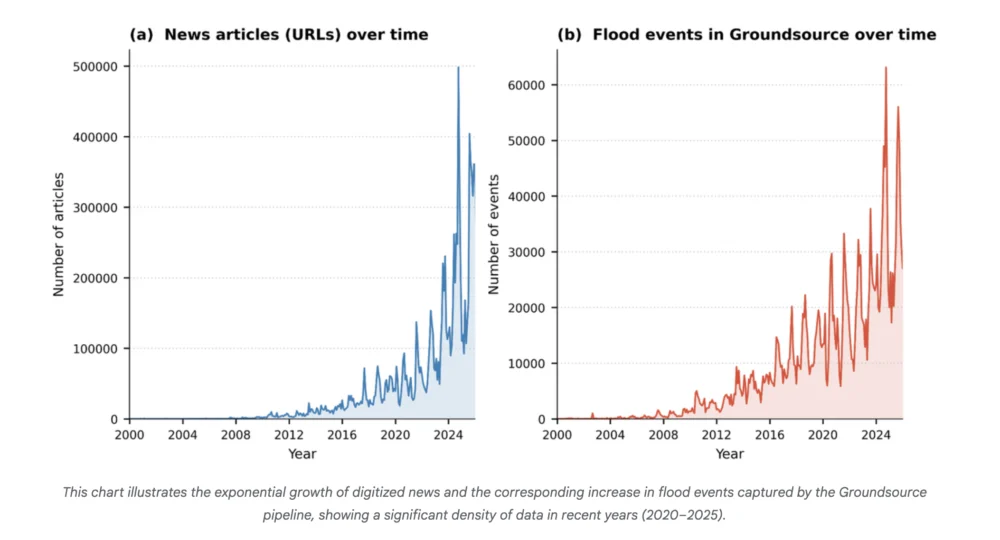
To overcome the absence of physical sensor data, the Google research team turned to a massive, underutilized resource: the global archive of local news reporting. For over a century, journalists have documented the impacts of weather events on their communities. These reports contain "ground truth" observations—mentions of specific streets that flooded, the depth of water in certain neighborhoods, and the exact timing of the deluge.
The Groundsource methodology functions as a form of "information archaeology," using the Gemini model to sift through millions of unstructured news articles to synthesize a coherent historical baseline. The pipeline developed by Google researchers involves a sophisticated multi-stage process:
- Data Acquisition and Aggregation: The system ingests vast quantities of digitized news archives spanning several decades, covering diverse geographical regions and languages.
- Contextual Extraction via Gemini: Unlike traditional keyword-based searches, which often produce "noisy" results (such as articles mentioning floods in a metaphorical or unrelated context), the Gemini model utilizes its advanced natural language understanding to identify relevant reports. It extracts specific parameters, including the precise date, geographic coordinates (latitude and longitude), and the reported severity of the event.
- Structuring and De-duplication: The AI converts qualitative descriptions—such as "heavy rains caused waist-deep water on Main Street in Nairobi last Tuesday"—into a structured data format. The system then reconciles multiple reports of the same event to ensure accuracy and prevent redundancy.
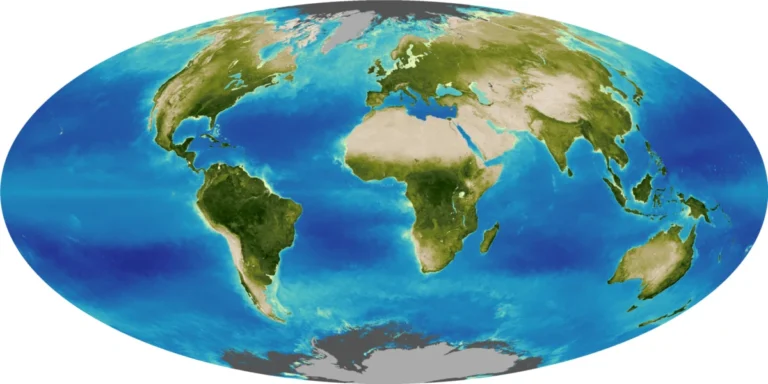
- Geospatial Mapping: The extracted data is mapped onto a global grid, allowing researchers to visualize flood patterns over time and correlate them with topographical and meteorological data.
This process effectively converts billions of words of qualitative journalistic reporting into a highly structured, machine-readable dataset that can be used to train high-fidelity predictive models.
Technical Implementation and the Gemini Advantage
The choice of the Gemini model is central to the success of Groundsource. Previous attempts to automate the extraction of disaster data often relied on simpler Natural Language Processing (NLP) techniques that struggled with the nuances of regional dialects, varying journalistic styles, and complex sentence structures. Gemini’s multimodal and large-scale reasoning capabilities allow it to interpret context with a level of sophistication previously reserved for human researchers.
By leveraging Gemini’s ability to process long-context windows, the Groundsource pipeline can analyze entire archives of local newspapers simultaneously, identifying trends and recurring flood zones that might be missed in a manual review. This automated approach is not only more accurate but also significantly more scalable than previous methods, enabling the creation of a global dataset that would have taken decades to compile by hand.
Application: Revolutionizing Flash Flood Forecasting
The primary application of the Groundsource dataset is the enhancement of Google’s Flood Forecasting Initiative. Historically, this initiative has focused on riverine floods, which are easier to track due to their slower development and the availability of upstream sensor data. However, the rapid nature of flash floods necessitated a different approach.
Using the 2.6-million-record dataset generated by Groundsource, the research team has trained a new AI model specifically designed to predict urban flash flood risks. This model can now provide forecasts up to 24 hours in advance, a significant improvement over previous capabilities. Empirical studies in disaster management have demonstrated that even a 12-hour lead time can reduce the damage caused by flash floods by as much as 60%. This window allows local authorities to clear drainage systems, set up temporary barriers, and, most importantly, evacuate residents from high-risk zones.
These advanced flash flood forecasts are now being integrated into Google’s Flood Hub platform. Flood Hub provides free, real-time flood forecasting and warning services to users and governments worldwide. By adding flash flood capabilities to the platform, Google is expanding its reach to urban centers that were previously underserved by existing flood models.
Economic and Humanitarian Implications
The implications of the Groundsource project extend far beyond the realm of computer science. Flooding remains one of the most expensive and deadly natural disasters globally, accounting for billions of dollars in annual economic losses and affecting millions of lives. In many developing nations, the lack of historical data has made it nearly impossible for insurance companies to assess risk or for governments to plan resilient infrastructure.

By open-sourcing the Groundsource dataset, Google is providing a foundational resource for the global data science and climate research communities. This allows local researchers, NGOs, and government agencies to:
- Develop Localized Models: Regional experts can use the data to train their own predictive models that account for specific local conditions, such as urban density and soil composition.
- Inform Infrastructure Planning: Urban planners can identify "hotspots" that have historically flooded but were not officially recorded, guiding the construction of better drainage and flood defense systems.
- Enhance Disaster Response: Humanitarian organizations can use historical frequency data to pre-position resources in areas most likely to be hit by flash floods during the monsoon or hurricane seasons.
Official Responses and Broader Impact
While official statements from international bodies are often pending such research releases, the Groundsource project aligns closely with the United Nations’ "Early Warnings for All" initiative, which aims to ensure that every person on Earth is protected by early warning systems by 2027. Experts in the field of hydrology have noted that the use of AI to "mine" historical data represents a major shift in how we approach climate adaptation.
The project also highlights a shift in corporate social responsibility within the tech industry. By moving from proprietary tools to open-source datasets, Google is positioning itself as a central player in the global effort to combat the effects of climate change through "AI for Social Good." The decision to make the underlying data available on platforms like Zenodo ensures that the benefits of this research are distributed equitably, particularly in the Global South, where data scarcity is most acute.
Future Directions: Beyond Flooding
The success of Groundsource suggests that the methodology could be applied to other types of natural disasters that suffer from similar data gaps. Wildfires, landslides, and extreme heat events are often documented in local news but lack comprehensive, global historical databases. Using Gemini to "read" the history of these events could provide the training data needed for the next generation of early warning systems.
As climate change continues to increase the frequency and intensity of extreme weather events, the ability to learn from the past becomes more vital. Groundsource demonstrates that the record of our past experiences is already written; we simply needed the right technology to read it. By turning news reports into actionable data, Google AI has provided a powerful new tool in the global effort to build a more resilient and prepared world.
The research team has encouraged the broader scientific community to explore the dataset and the pre-print paper, which details the technical architecture and validation metrics of the project. As these tools become more integrated into local governance and emergency response, the goal of reducing flood-related fatalities and economic ruin moves closer to reality. Through the marriage of historical journalism and cutting-edge artificial intelligence, Groundsource marks a significant milestone in the evolution of digital disaster management.