



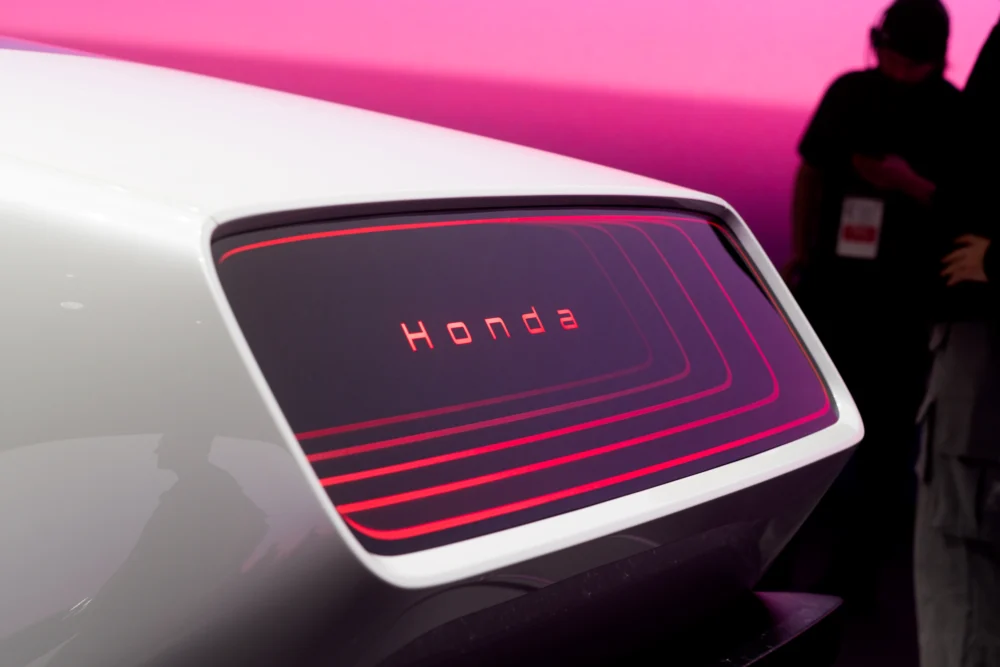
The global automotive industry is in the throes of its most profound transformation in a century, driven by the dual forces of electrification and digitalization. Yet, even as competitors accelerate their pivot towards electric vehicles (EVs) and software-defined architectures, Japanese automotive giant Honda has made a startling move, effectively dismantling its nascent EV programs. This decision, announced through a series of internal halts and external reports this past week, casts a long shadow over the company’s future competitiveness and raises critical questions about its ability to navigate the evolving landscape.
The immediate fallout began on Thursday with reports confirming the cessation of development for several key Honda and Acura EV models. These included the electric Acura RDX and the ambitious Honda 0 Series sedan and SUV concepts, which were touted as the company’s first "ground-up" EVs, designed specifically for electric powertrains rather than adapting existing internal combustion engine (ICE) platforms. The news was compounded on Friday when Automotive News reported that Honda would also cease production of the Prologue, an EV developed in collaboration with General Motors. This rapid retraction from multiple electric initiatives underscores a significant strategic pivot, or perhaps, a capitulation in the face of mounting pressures.
The Shifting Tides of the Global EV Market
Honda’s decision comes at a precarious time for legacy automakers. The EV market, while booming globally, presents unique challenges. According to the International Energy Agency (IEA), global EV sales surpassed 14 million in 2023, representing an 18% share of the total car market, a dramatic increase from just 4% in 2020. Projections suggest this growth will continue, with EVs potentially accounting for over 30% of global sales by 2030. However, this growth is not evenly distributed, and intense competition, particularly from Chinese manufacturers like BYD and Nio, along with established EV leaders like Tesla, is driving down prices and accelerating technological innovation.
Western legacy automakers, including Ford, GM, and Volkswagen, have committed tens of billions of dollars to their EV transitions, often incurring significant losses in the short term as they scale production and refine technology. Ford, for instance, reported over $4.7 billion in losses from its Model e EV division in 2023, yet remains steadfast in its long-term strategy. The challenge lies in managing this "awkward transition period," as the original article describes it, where high development costs, supply chain complexities, and evolving consumer expectations collide.
Honda’s Faltering EV Journey: A Chronology of Retreat
Honda’s path to electrification has been notably cautious and, at times, inconsistent. While the company has long been a pioneer in hybrid technology, its commitment to pure battery electric vehicles has appeared lukewarm compared to rivals.
- Early Forays (Pre-2020): Honda offered limited EV models like the Clarity Electric and the Honda e in select markets, but these were niche products with restricted range and availability, often criticized for their high price relative to performance.
- The GM Partnership (2020-2023): In 2020, Honda announced a strategic alliance with General Motors, aiming to co-develop two new EVs based on GM’s Ultium battery platform. This partnership resulted in the Honda Prologue and the Acura ZDX, both of which were largely designed and engineered by GM. The Prologue, intended to be a volume seller, commenced production in early 2024.
- The "0 Series" Ambition (CES 2024): At the Consumer Electronics Show (CES) in January 2024, Honda unveiled its "0 Series" concept, promising a new generation of "thin, light, and wise" EVs built on dedicated platforms. This was seen as a crucial step towards developing proprietary EV technology and moving beyond the GM collaboration. The 0 Series included a sleek sedan and SUV concept, with a planned global rollout starting in North America in 2026.
- The Abrupt Halt (March 2024): Just weeks after the fanfare of CES, the announcement came: development on the 0 Series models (the sedan and SUV) and the electric Acura RDX was being halted. This was quickly followed by reports of the Prologue’s impending production cessation. The speed and scope of this withdrawal have stunned industry observers, effectively gutting Honda’s near-term EV pipeline.
Blame and Reality: Dissecting Honda’s Rationale
Honda’s official statements, as referenced in the original article, attributed the decision to external factors such as "U.S. tariffs and Chinese competition." While these are indeed significant headwinds, they serve as convenient scapegoats for a deeper, more systemic issue: Honda’s failure to cultivate a viable, competitive EV strategy from the outset.
- U.S. Tariffs: The imposition of tariffs on imported goods, particularly from China, has indeed complicated global supply chains and increased costs for automakers. However, these tariffs are not unique to Honda, and other manufacturers have either adjusted their supply chains, absorbed costs, or focused on localizing production.
- Chinese Competition: China is the world’s largest and most competitive EV market. As Honda itself acknowledged in a recent earnings report, "Honda was unable to deliver products that offer value for money better than that of newer EV manufacturers, resulting in a decline in competitiveness." This admission is critical. Chinese brands like BYD, Nio, Xpeng, and Li Auto have rapidly innovated, offering technologically advanced EVs at competitive prices, often far below what legacy foreign brands can match. Honda’s struggles in China, where it reported nearly $16 billion in losses last year, are a stark warning of what could happen in other markets without a compelling EV offering.
However, the core issue appears to be internal. Honda’s approach to EVs has been characterized by hesitation and a reluctance to fully commit to the fundamental re-engineering required for successful electrification. Many legacy automakers initially attempted to "drop batteries into a car originally designed for an internal combustion engine." This shortcut, while seemingly efficient, often results in heavy, inefficient, and costly products that fail to capture the benefits of a dedicated EV architecture. Vehicles like the Prologue, being largely a GM Ultium platform product, demonstrate Honda’s reliance on external solutions rather than developing its core EV competencies. The cancellation of the "0 Series," which promised ground-up designs, is particularly telling, indicating a retreat from even these nascent proprietary efforts.
The Peril of Missed Opportunities: Two Critical Disconnects
Honda’s decision to sideline its EV programs will likely exacerbate its lag in two pivotal shifts sweeping the automotive industry: electric drivetrains and software-defined vehicles (SDVs).
-
The Electric Drivetrain Revolution:
- Dedicated Platforms vs. Conversions: The most successful EVs today, from Tesla’s Model 3/Y to Hyundai’s E-GMP-based Ioniq series, are built on dedicated EV platforms. These platforms allow for optimal battery placement, efficient packaging, superior handling due to a low center of gravity, and streamlined manufacturing. Attempting to modify ICE platforms often leads to compromises in range, efficiency, and cost. Ford CEO Jim Farley’s candid assessment of the Mustang Mach-E, noting its 70-pound heavier wiring harness compared to Tesla’s due to "legacy engineering decisions," highlights the compounding impact of such compromises. Honda, by backing away from ground-up EVs, is choosing to forgo the deep learning curves associated with designing, engineering, and manufacturing these optimized platforms.
- Supply Chain and Manufacturing Expertise: Developing EVs is not just about designing a new car; it’s about building entirely new supply chains for batteries, electric motors, power electronics, and charging infrastructure. It also demands new manufacturing processes and skills. By stepping back, Honda loses invaluable "learning by doing" opportunities in these critical areas, further widening the gap between itself and companies that are actively refining these processes.
- Customer Feedback and Iteration: The EV market is dynamic, with consumer preferences evolving rapidly. Understanding what customers truly value in an EV – whether it’s charging speed, range, interior tech, or driving dynamics – requires direct engagement and continuous product iteration. Honda’s retreat means it will be deprived of this crucial feedback loop, leaving it ill-equipped to design future products that resonate with EV buyers.
-
The Rise of Software-Defined Vehicles (SDVs):
- Beyond Hardware: The automotive industry is rapidly moving towards a future where vehicle capabilities are largely defined by software, enabling over-the-air (OTA) updates, advanced driver-assistance systems (ADAS), sophisticated infotainment, and personalized user experiences. Consumers, particularly those accustomed to Teslas, Rivians, Nios, and even new entrants like Xiaomi’s SU7, expect frequent software updates that improve performance, add features, and enhance safety.
- The Synergy with EVs: While an SDV doesn’t have to be an EV, the two concepts are highly synergistic. The large battery packs in EVs provide ample power for the high-performance computers needed for complex software, and the "always-on" nature of EVs facilitates seamless OTA updates. Legacy automakers often struggle with integrating advanced software into their traditional ICE architectures, which were not designed with this level of digital interconnectedness in mind. Honda’s lack of significant progress in ADAS, infotainment software, and OTA capabilities, combined with its EV retreat, places it at a severe disadvantage in the SDV race. The temptation to stick with "the old way of doing things" because it’s "easier and more profitable, for now" is a perilous short-term view that risks long-term obsolescence.
Honda’s Identity Crisis: What Does it Stand For?
At its core, Honda has historically been renowned for its engineering prowess, particularly its efficient and reliable internal combustion engines. Its vehicles have often been lauded as "driver’s cars" – lightweight, well-handling, and engaging. However, these traditional strengths are becoming less relevant in the new automotive paradigm.
- The Engine’s Diminishing Role: As the world transitions to electric powertrains, the mastery of ICE technology, while historically valuable, is a rapidly depreciating asset.
- Redefining the "Driver’s Car": In an era of increasing automation and self-driving capabilities, the very definition of a "driver’s car" becomes ambiguous. Even without full autonomy, the focus shifts from raw mechanical feel to seamless integration of technology, refined electric performance, and intuitive user interfaces.
- Reliability and Price Under Threat: Honda’s reputation for reliability and reasonable pricing has been a cornerstone of its appeal. However, EVs inherently promise higher reliability due to fewer moving parts. Furthermore, as Chinese automakers demonstrate, economies of scale and aggressive pricing strategies are rapidly driving down EV costs, making price competitiveness a brutal battleground. If Honda cannot compete on reliability (which EVs will inherently offer) or price (where Chinese brands excel), its traditional value proposition erodes.
The company’s own earnings report in the context of its China performance serves as a stark warning. The inability to offer "value for money better than that of newer EV manufacturers" is not just a localized problem; it’s a fundamental challenge to Honda’s global competitiveness.
Broader Implications and the Path Forward
Honda’s retreat from its EV ambitions is not an isolated incident but rather a symptom of the immense pressures facing traditional automakers. While some, like Toyota, have pursued a multi-pathway approach including hybrids and hydrogen, others have committed more fully to BEVs. Honda’s decision to essentially hit the pause button on its dedicated EV development suggests a profound lack of confidence in its ability to compete or a strategic miscalculation of market trends.
The implications are severe:
- Market Share Erosion: Honda risks losing significant market share in crucial growth segments, particularly in China, Europe, and eventually North America.
- Technological Disadvantage: Falling behind in EV platform development, battery technology partnerships, and software integration will create a chasm that becomes increasingly difficult and expensive to bridge.
- Brand Perception: Honda’s reputation as an innovative, forward-thinking company could be severely damaged, alienating environmentally conscious consumers and tech-savvy buyers.
- Investor Confidence: Such a dramatic shift away from a widely accepted industry direction could spook investors, leading to a devaluation of the company’s long-term prospects.
For Honda, this moment represents an existential crossroads. The global automotive landscape is not waiting. While the immediate financial relief of cutting unprofitable EV programs might be tempting, the long-term cost of being left behind in the twin revolutions of electrification and software could be insurmountable. Without a clear, ambitious, and well-executed strategy to embrace these changes, Honda risks becoming a relic of the automotive past, struggling to find its place in a rapidly evolving future.