


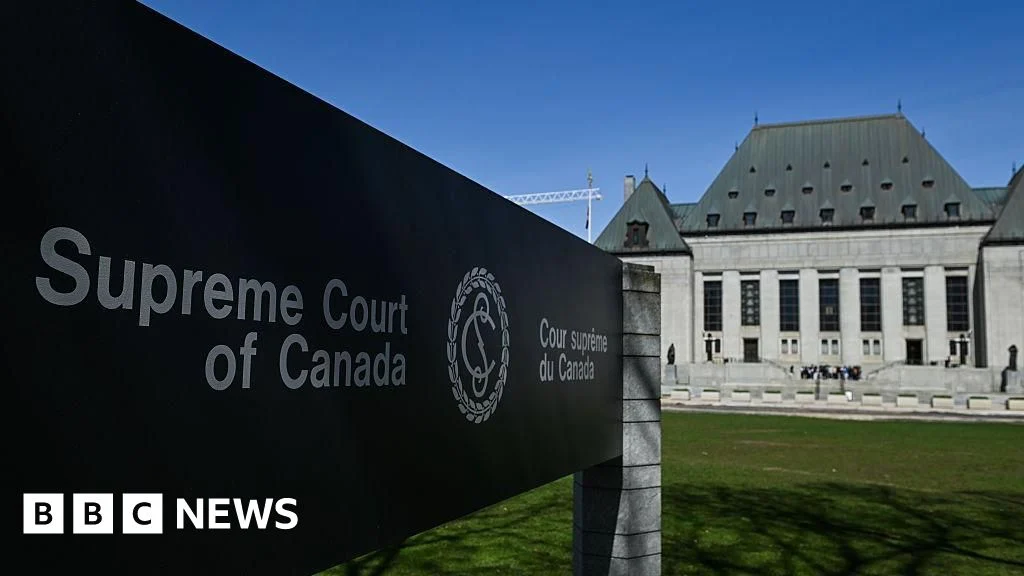
A landmark constitutional challenge to Quebec’s controversial secularism law, Bill 21, is currently before Canada’s Supreme Court, a case widely anticipated to profoundly reshape the nation’s legal and political landscape. Legal experts contend that the outcome will extend far beyond the immediate question of religious expression in Quebec, potentially redefining national unity, the delicate balance of power between Canada’s judiciary and its elected officials, and the fundamental interpretation of the Canadian Charter of Rights and Freedoms. Christine Van Geyn, executive director at the Canadian Constitution Foundation, underscored the gravity of the situation, stating, "This case is probably going to be the most important constitutional case in a generation."
At the heart of this intricate legal battle is Bill 21, officially titled "An Act respecting the laicity of the State," enacted in 2019 by the governing Coalition Avenir Québec (CAQ). The legislation prohibits public servants in positions of authority, including judges, police officers, prison guards, prosecutors, and public school teachers, from wearing religious symbols while at work. To shield the law from anticipated legal challenges based on Charter rights, Quebec’s legislators preemptively invoked the "notwithstanding clause," a unique and contentious provision of the Canadian Constitution. This legal mechanism allows governments to temporarily override certain constitutional rights, including freedom of religion and equality rights, for a renewable five-year period.
The Canadian Civil Liberties Association (CCLA), a key intervener in the case, has condemned Quebec’s legal arguments as "spine-chilling." In a recent op-ed published in the French-language newspaper Le Devoir, the CCLA raised alarming hypothetical scenarios: "Could a government invoke [the clause] to ban abortion? To criminalise political speech critical of the government? To legalise torture?" They concluded, "According to the Quebec government’s logic, even in such cases, the courts would not only be powerless but also bound to silence." The Supreme Court began four days of intensive hearings on Monday, with more than 50 interveners, including the federal government, presenting their arguments.
The Heart of the Matter: Quebec’s Secularism Law (Bill 21)
Bill 21 is a legislative expression of Quebec’s distinct concept of laïcité, or state secularism, which is deeply intertwined with its identity. Much like France, Quebec emphasizes the religious neutrality of state institutions. Proponents of laïcité argue that public institutions should remain neutral, ensuring equal treatment for all citizens regardless of their religious beliefs and preventing the appearance of state endorsement of any particular faith. However, the practical application of this principle in daily life has become a flashpoint for intense debate.
Supporters of Bill 21 maintain that it represents a reasonable and necessary step to enshrine the separation of church and state in Quebec, reflecting the will of the majority of its citizens. Public opinion polls have consistently shown significant support for Bill 21 within Quebec, often ranging between 60% and 70%. They argue that state employees in positions of authority must project an image of impartiality, and visible religious symbols could undermine this perception.
Conversely, critics vehemently contend that the law is discriminatory, infringes upon fundamental human rights, and disproportionately targets religious minorities, particularly Muslim women who wear the hijab, Sikh men who wear turbans, and Jewish individuals who wear kippahs. While the legislation does not explicitly name any specific religion, its impact is undeniably felt most acutely by these communities, making it more challenging for them to integrate into Quebec society and access certain public sector professions. Many individuals, like Ichrak Nourel Hak, a Muslim teacher in Quebec who wears a hijab, have found their career paths limited or entirely blocked by the law.
A Deep Dive into Laïcité: Quebec’s Unique Path
Quebec’s embrace of laïcité has deep historical roots, stemming from its transformation during the Quiet Revolution of the 1960s. For centuries, the Catholic Church wielded immense influence over Quebecois society, controlling education, healthcare, and social services. The Quiet Revolution marked a rapid and profound shift towards a more secular, modern state, as Quebec sought to shed the pervasive influence of the Church and assert its distinct cultural and linguistic identity within Canada. This historical trajectory led to a concept of secularism that differs significantly from the "separation of church and state" in other contexts, such as the United States, where the focus is primarily on preventing government endorsement of religion. In Quebec, laïcité often emphasizes the removal of religious symbols from the public sphere to ensure the state’s neutrality and protect individual freedom of conscience.
This drive for secularism has manifested in several legislative attempts over the past two decades. In the early 2000s, debates around "reasonable accommodation" for religious minorities sparked public discussions. The Bouchard-Taylor Commission on reasonable accommodation practices related to cultural differences (2007-2008) recommended limiting religious symbols for certain authority figures but stopped short of a broad ban. Subsequent attempts by various Quebec governments to legislate secularism, such as the Parti Québécois’s Charter of Quebec Values in 2013, faced widespread opposition and ultimately failed. Bill 21, however, succeeded where others did not, largely due to the CAQ’s strong mandate and its preemptive use of the notwithstanding clause.
The "Notwithstanding Clause": Canada’s Constitutional Safety Valve
The "notwithstanding clause," officially Section 33 of the Canadian Charter of Rights and Freedoms, is a contentious and uniquely Canadian constitutional invention. It allows a provincial or federal government to declare that a law shall operate "notwithstanding" certain sections of the Charter, specifically those related to fundamental freedoms (e.g., freedom of conscience, religion, expression, association), legal rights, and equality rights. This override lasts for a maximum of five years but can be renewed indefinitely.
The clause was born out of intense negotiations during the patriation of Canada’s constitution from the United Kingdom in the early 1980s. Several provinces, particularly Western provinces like Saskatchewan and Alberta, and Quebec, expressed concerns that a Charter of Rights would grant excessive power to unelected judges, potentially undermining the supremacy of democratically elected legislatures. The notwithstanding clause was thus conceived as a "grand bargain" or "safety valve"—a political compromise designed to secure the agreement of all provinces to the new constitutional package. It was intended to preserve parliamentary sovereignty by allowing legislatures, under certain circumstances, to have the final say on matters where their policy choices conflicted with specific Charter rights. However, the framers generally believed it would be used sparingly, only as a measure of last resort in extraordinary circumstances.
A Contentious History: Previous Uses of Section 33
While intended for exceptional circumstances, the notwithstanding clause has seen a more frequent and increasingly assertive application, particularly in recent years. Quebec has historically been the most frequent user, notably employing it in the 1980s to maintain its French-only sign laws following Supreme Court rulings that found them to violate freedom of expression. However, its use has expanded beyond Quebec, triggering growing national concern.
Recent examples include:
- Ontario (2018): Premier Doug Ford’s government invoked the clause to reduce the size of Toronto’s city council during a municipal election campaign, overriding a court decision that found the move unconstitutional.
- Alberta (2020): Premier Jason Kenney’s government used it to order striking teachers back to work, preventing a court challenge based on freedom of association.
- Saskatchewan (2023): Premier Scott Moe’s government invoked the clause to implement a policy requiring parental consent for students under 16 to change their names or pronouns at school, preempting a legal challenge citing equality rights.
These instances have fueled arguments that the clause is being normalized and used not as a last resort, but as a routine tool to circumvent judicial review and push through controversial legislation. Errol Mendes, a law professor at the University of Ottawa and an intervener in the current Supreme Court case for the International Commission of Jurists Canada, recalled that he and others had warned decades ago that the clause was overly broad and susceptible to misuse. "And our predictions were coming true now," Mendes noted, "because there slowly started to be more and more use of the clause." This week’s hearing marks the first time since 1988 that the Supreme Court will directly address a challenge involving the core provision of the notwithstanding clause itself.
Chronology of a Landmark Challenge
The journey of Bill 21 to the Supreme Court has been a multi-year saga marked by political maneuvering and legal battles:
- 2018: The Coalition Avenir Québec (CAQ) campaigns on a promise to ban religious symbols for public servants, framing it as a measure to strengthen Quebec’s secular identity.
- March 2019: The CAQ government introduces Bill 21, explicitly including the notwithstanding clause to preemptively shield it from Charter challenges.
- June 2019: Bill 21 passes into law with significant public support in Quebec, but immediate condemnation from civil liberties groups, religious minority organizations, and the federal government.
- September 2019: Legal challenges are launched by the Canadian Civil Liberties Association (CCLA), the National Council of Canadian Muslims (NCCM), and Ichrak Nourel Hak, among others.
- April 2021: The Quebec Superior Court issues a complex ruling. Justice Marc-André Blanchard largely upholds Bill 21, acknowledging that it violates fundamental rights but recognizing the protection offered by the notwithstanding clause. However, he strikes down provisions that apply to English school boards, citing Quebec’s constitutional obligations to protect minority language education rights, which are not subject to the notwithstanding clause. He also exempts members of the National Assembly.
- February 2022: The Quebec Court of Appeal largely overturns the Superior Court’s exemptions, finding that the constitutional rights of English school boards were not infringed by the law and that the notwithstanding clause applies broadly. The Court of Appeal’s decision reaffirms the validity of the clause in protecting Bill 21 from most Charter challenges.
- June 2022: The Supreme Court of Canada grants leave to appeal for the various parties challenging Bill 21, setting the stage for the current constitutional showdown.
- December 2023: The Supreme Court begins four days of hearings on the constitutionality of Bill 21 and, critically, the scope and application of the notwithstanding clause.
The Legal Battlefront: Arguments and Interveners
The current Supreme Court hearings are a convergence of diverse legal arguments and stakeholders:
- Challengers (e.g., CCLA, Ichrak Nourel Hak): Their core argument is that, notwithstanding the clause, Bill 21 fundamentally infringes upon the dignity, rights, and freedoms of individuals aspiring to or working in the public service. They emphasize the disproportionate impact on specific religious minority groups—Muslim, Sikh, and Jewish communities—who are often identifiable by their religious attire. While acknowledging the legal force of the notwithstanding clause, they argue that the Supreme Court still has a role in defining its limits, ensuring it cannot be used to entirely "annihilate" or "distort" Charter rights, as the federal government puts it. They also raise arguments based on the unwritten constitutional principles of Canadian democracy and the rule of law.
- Quebec Government (CAQ): Quebec’s legal team contends that the central question of whether Bill 21 restricts freedoms is irrelevant because the law is expressly shielded by the notwithstanding clause. They assert that Section 33 is a "cornerstone" of the Canadian Charter, reflecting a deliberate compromise during its creation. They argue that nothing in the clause restricts its preemptive use and that its application in Bill 21 is consistent with established Supreme Court precedent regarding parliamentary sovereignty. Quebec’s argument stresses the legislative assembly’s right to determine its own laws, particularly on matters of provincial jurisdiction and identity.
- Federal Government: Ottawa’s intervention is not about the merits of Bill 21 itself, but rather about the permissible scope of the notwithstanding clause. Federal Justice Minister Sean Fraser emphasized that the court’s decision "will shape how both federal and provincial governments may use the notwithstanding clause for years to come," calling the Charter a "pillar of our democracy and a reflection of our shared values." In its court documents, Ottawa argues that the clause cannot be treated as a "blank cheque." It urges the court to impose limits, suggesting the clause was not intended to "distort or annihilate the rights and freedoms guaranteed by the Charter," or to reduce them to "des peaux de chagrin" (shrivel them beyond recognition).
- Other Provinces: The federal government’s position has drawn swift and forceful condemnation from several provincial governments, who view it as an encroachment on provincial autonomy. A joint statement from the premiers of Saskatchewan, Alberta, Ontario, Quebec, and Nova Scotia accused Ottawa of "a direct attack on the foundational constitutional principles of federalism and democracy," asserting that the federal arguments "threaten national unity by seeking to undermine the sovereignty of provincial legislatures." Alberta, in its own filings, staunchly defends the clause as a "hard-fought and hard-won compromise" essential to "preserve parliamentary sovereignty." These provinces argue that interpreting the clause too narrowly would upset the delicate balance of power enshrined in the Constitution.
Societal Impact: Discrimination and Integration
Beyond the legal technicalities, Bill 21 has had a profound and tangible impact on the lives of many Quebecers. Reports from organizations like the National Council of Canadian Muslims document increased instances of discrimination and a chilling effect on religious minorities seeking public sector employment. Teachers wearing hijabs have been removed from classrooms, and individuals have been forced to choose between their religious identity and their careers. This creates a two-tiered system of citizenship, where certain individuals are denied full participation in public life based on their faith.
The law has also exacerbated tensions between Quebec and the rest of Canada, which generally views the Charter of Rights and Freedoms as sacrosanct and the notwithstanding clause as an exceptional tool. While polls consistently show strong support for Bill 21 within Quebec, public opinion outside the province is largely opposed, viewing it as discriminatory and illiberal. This divergence highlights a fundamental difference in how secularism and individual rights are perceived across the country, further straining the bonds of national unity. The debate surrounding Bill 21 is not merely about a piece of legislation; it is about the kind of society Canada aspires to be and the extent to which diversity and religious freedom are protected.
Broader Implications: Federalism, Rights, and National Unity
The Supreme Court’s decision will carry immense weight for Canada’s constitutional future. It could:
- Redefine the Balance of Power: The ruling will clarify the relationship between legislative bodies and the judiciary. A broad interpretation of the notwithstanding clause would solidify parliamentary supremacy, allowing elected officials greater leeway to enact laws even if they infringe on Charter rights. A narrower interpretation, as sought by the federal government and civil liberties groups, would empower the courts to review the manner in which the clause is invoked, thereby reinforcing judicial oversight.
- Impact on Charter Rights: The outcome will significantly influence the perceived strength and enforceability of the Charter. If the clause is deemed to be an unchallengeable legislative shield, it could diminish the practical protections afforded by fundamental freedoms and equality rights, potentially rendering them "shrivelled beyond recognition," as Ottawa suggested.
- Shape Federal-Provincial Relations: The case has already exposed deep fault lines in Canadian federalism. The united front of several premiers against the federal government’s intervention underscores the sensitivity around provincial autonomy and the use of Section 33. The ruling could either exacerbate these tensions or provide clearer guidelines that help to manage them.
- Influence Future Legislation: The Supreme Court’s pronouncements will serve as a precedent for all future uses of the notwithstanding clause across Canada. A permissive ruling might embolden other provinces to use it more frequently for a wider range of policies, potentially leading to a patchwork of rights across the country. Conversely, a restrictive ruling could deter its casual invocation, reserving it for truly extraordinary circumstances.
The Road Ahead: What the Supreme Court Decision Could Mean
The Supreme Court faces a monumental task: interpreting a constitutional clause that has been both a symbol of Canadian compromise and a source of enduring controversy. The Court could:
- Uphold Quebec’s Use of the Clause: If the Court finds that the notwithstanding clause was validly invoked and that its scope is broad, it would likely uphold Bill 21 as protected from Charter challenges. This would be a significant victory for Quebec’s sovereignty and for provinces seeking to assert legislative authority over Charter rights.
- Impose Limits on the Clause’s Invocation: The Court could accept the federal government’s arguments and rule that while the clause is powerful, it is not absolute. It might establish conditions or limits on how or when the clause can be invoked (e.g., requiring a clear declaration of which rights are being overridden, or prohibiting its use to entirely nullify rights). This could lead to partial invalidation of Bill 21 or set a precedent for future challenges.
- Find the Clause Inapplicable on Procedural Grounds: Less likely but possible, the Court could find that Quebec did not properly invoke the clause, or that certain parts of Bill 21 fall outside its protection for other constitutional reasons (e.g., impacting areas not covered by Section 33).
Regardless of the specific outcome, the Supreme Court’s decision on Bill 21 and the notwithstanding clause will undoubtedly be a defining moment in Canadian constitutional law, with far-reaching consequences for individual rights, intergovernmental relations, and the very fabric of national identity for generations to come. The entire country, from legal scholars to ordinary citizens, awaits a ruling that promises to shape the fundamental understanding of rights and responsibilities within the Canadian federation.