


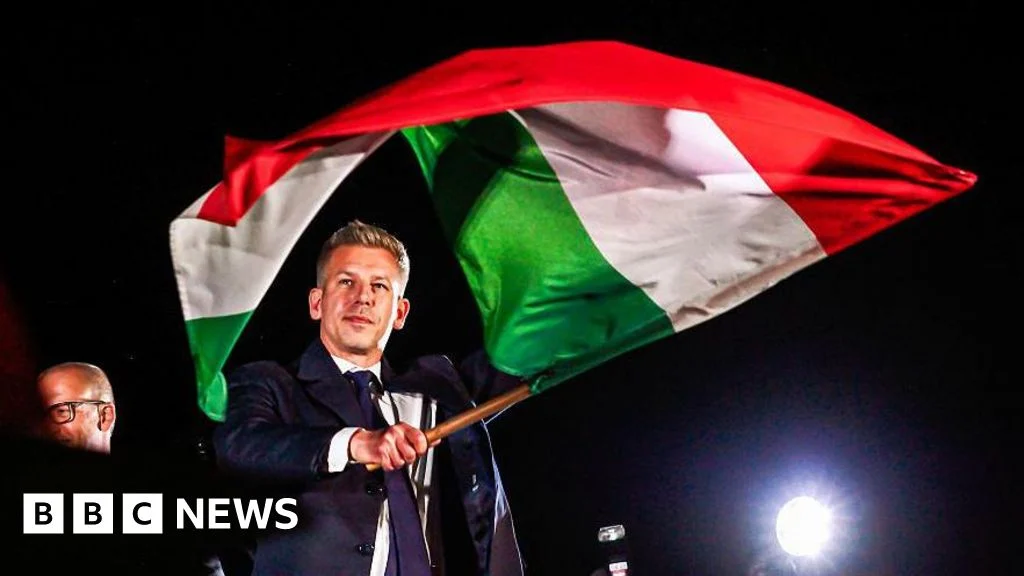
In a seismic shift in Hungarian politics, Péter Magyar and his nascent Tisza party have dramatically overthrown the long-standing government of Viktor Orbán and his Fidesz party, securing a commanding parliamentary majority in last Sunday’s election. The landslide victory, which saw Tisza garner 53% of the national vote, effectively concluded Fidesz’s unbroken 16-year grip on power, ushering in an era of anticipated profound change and reform. With the final vote count, including recounts in closely contested constituencies and ballots cast abroad, confirmed on Saturday, Tisza now commands a formidable 141 seats in the 199-seat National Assembly, a decisive super-majority that empowers Magyar to enact his ambitious legislative agenda. In stark contrast, Orbán’s Fidesz party suffered a dramatic collapse, seeing its representation plummet from 135 seats to a mere 52, marking its most significant defeat in recent history.
The Unprecedented Ascent of Tisza and the Decisive Fall of Fidesz
The electoral triumph of the Tisza party, which emerged from relative obscurity just months prior, represents a historic turning point for Hungary. Viktor Orbán, a towering figure in European politics who had cultivated an image of unassailable strength, had steered Hungary through nearly two decades, shaping its political landscape, media environment, and international relations with a strong nationalist and often Eurosceptic hand. His Fidesz party had skillfully consolidated power, leveraging control over state media, public institutions, and a vast network of business interests to maintain its dominance. However, underlying discontent over economic stagnation, perceived systemic corruption, and a growing sense of democratic backsliding had simmered, providing fertile ground for a new political force.
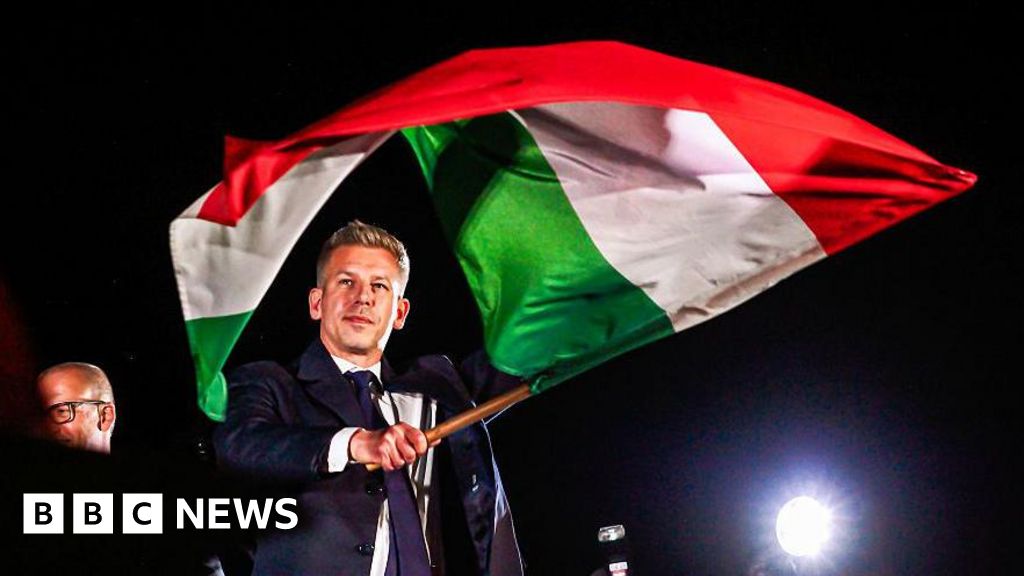
Péter Magyar, a former insider within Orbán’s administration and ex-husband of a prominent Fidesz minister, spectacularly broke ranks earlier this year, positioning himself as an anti-establishment crusader. His narrative, exposing alleged corruption and cronyism from within, resonated deeply with a disillusioned electorate, particularly younger voters and those fatigued by the political status quo. The 53% vote share for Tisza is not just a victory; it’s a resounding mandate for change, surpassing all expectations and signaling a nationwide desire for a fresh direction. The acquisition of 141 seats, significantly more than the two-thirds majority required for constitutional amendments, grants Tisza unprecedented legislative power, enabling them to dismantle and rebuild foundational elements of Hungary’s governance structure without needing cross-party consensus. This super-majority is a critical instrument for Magyar to implement his pledges to restore checks and balances, reform the judiciary, and tackle corruption, which were widely seen as eroded during Fidesz’s long tenure.
A Swift Transition and Magyar’s Immediate Reform Agenda
Wasting no time, Péter Magyar has already set the wheels of transition in motion, demonstrating an eagerness to capitalize on his mandate. He has successfully secured a pledge from President Tamás Sulyok to expedite the formation of the new parliament, bringing it forward to the week beginning May 4. This accelerated timeline is crucial, as it allows the new government to be elected swiftly and begin addressing the nation’s pressing challenges.
Magyar’s early actions also include a direct confrontation with the state-controlled media, a cornerstone of Fidesz’s power projection. Following his victory, he granted combative interviews to public service television and radio, platforms that had largely ignored or actively attacked him over the past two years. This engagement was not merely symbolic; Magyar has explicitly promised to introduce legislation aimed at suspending the news programs of these state broadcasters until impartial editors can be appointed, a clear signal of his intent to dismantle the government’s media monopoly and restore journalistic independence. This move is seen as a critical first step in re-establishing a fair and diverse media landscape, a key demand of democracy advocates in Hungary and the European Union.

Beyond media reform, Magyar’s administration is preparing to wield its super-majority to enact structural changes that could permanently alter Hungary’s political future. One of his most radical proposals is to pass laws retroactively limiting the number of terms a prime minister can serve to two. This particular measure, if successful, would directly impact Viktor Orbán, who has already completed five terms as prime minister. Such a law would effectively bar Orbán from any future return to the top political office, slamming the door on his potential resurgence and consolidating the end of his political era. This move, while potentially controversial, underscores Tisza’s determination to prevent the kind of long-term, centralized power accumulation that characterized the Fidesz years.
Orbán’s Concession and Fidesz’s Existential Crisis
The aftermath of the election saw a period of uncharacteristic silence from Viktor Orbán, who remained out of the public eye for several days following Sunday’s defeat. It was not until late Thursday that the outgoing prime minister finally addressed the nation, choosing a private interview on the Patrióta YouTube channel, rather than a traditional press conference, to break his silence. In a somber tone, Orbán acknowledged the gravity of the outcome, stating, "This is the end of an era. We must bear this defeat with dignity." He openly expressed feeling "pain and emptiness" about the loss and took full personal responsibility for what transpired.
However, his public introspection offered little analytical detail on the core mistakes of his campaign or the reasons for Fidesz’s spectacular decline. The only specific misstep he cited was the failure to complete the Russian-designed Paks 2 nuclear power station project, which is reportedly running six years behind schedule. This limited self-critique suggests either a reluctance to fully confront the party’s broader failures or a strategic decision to focus on a tangible project rather than ideological or governance issues.
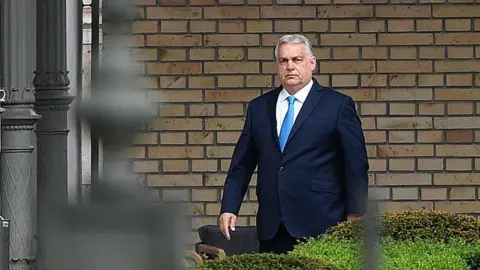
Looking ahead, a critical meeting of Fidesz’s top leadership is scheduled for April 28, to be followed by a party congress in June. In his interview, Orbán indicated his willingness to continue leading Fidesz if re-elected by the party, but he conceded that the party needed "a complete renewal." He specifically highlighted the composition of the new Fidesz parliamentary group, noting that of its 52 seats, only 10 were won in individual constituencies, with the remainder coming from party lists. Orbán suggested that many of these new deputies, unaccustomed to the rigors of opposition, would need to be replaced. This internal assessment signals an impending shake-up within Fidesz, a party where public dissent has historically been rare.
Indeed, calls for change are already emerging from within Fidesz’s ranks. András Cser-Palkovics, the Fidesz mayor of Székesfehérvár, a significant western city, publicly stated, "I think [Orbán] does not have to resign at the moment. He should wait for the national caucus and then start assessing [the result]. Then we should have a leadership election." This sentiment reflects a growing realization within the party that a fundamental reassessment is necessary. The absence of a clear and obvious successor to Orbán, coupled with his unique ability to integrate diverse opinions and ambitions within Fidesz, presents a significant challenge for the party’s future.
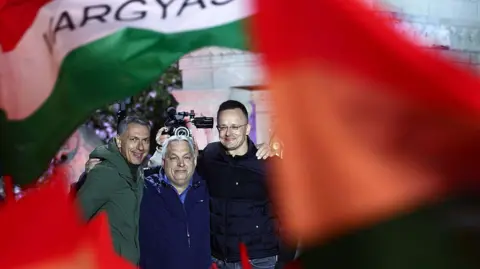
Observers and analysts had criticized Fidesz’s main campaign slogan, "the safe choice," for its perceived inability to resonate with younger voters seeking change. While it was challenging for a party that had been in power for so long to present itself as the party of change, the campaign’s lack of dynamism was evident. The attempts to inject youthful vigor by featuring younger politicians like Foreign Minister Péter Szijjártó (47) and Transport Minister János Lázár (51) at Orbán’s rallies paradoxically underscored the leader’s own perceived aging. Orbán, who will turn 63 next month, is showing the wear and tear of 38 years in frontline politics, a reality evident even to his most loyal supporters. The mood within the outgoing governing party is reportedly one of fear and recrimination, with widespread rumors of imminent arrests for corruption swirling through Budapest.
Battling Corruption and Rebuilding Democratic Institutions
Péter Magyar’s incoming administration faces immediate and significant challenges, particularly concerning corruption and the restoration of institutional integrity. On social media, Tisza supporters are vocally demanding accountability for those who allegedly enriched themselves illegally under the previous government. Magyar himself is leading this charge with powerful rhetoric. In a recent Facebook post, he declared, "My message to Fidesz leaders and their stooges: It’s no use playing the innocent little ballet girl now, and acting as if nothing happened. We know what you’ve done to our beloved homeland and the Hungarian people. And don’t doubt for a single moment that ‘you will reap what you sow’."
This combative tone is both emotional and tactical, reflecting a determination to take revenge for what Tisza views as a concerted campaign of demonization orchestrated by the government-controlled Central European Press and Media Foundation (Kesma), which controls 476 media titles. Beyond rhetoric, Tisza’s immediate concerns include preventing the clandestine removal of assets from Hungary by businessmen closely aligned with the former ruling party, with Dubai frequently cited as a preferred destination for Hungarian oligarchs. Crucially, the new government also faces the challenge of preventing the destruction of evidence of corruption within government ministries. Tisza insiders have reported that while papers are being shredded in some offices, certain officials are offering digital copies of incriminating documents to Tisza in exchange for job security or immunity from prosecution, highlighting the systemic nature of the alleged malfeasance.
Tisza claims that in the week leading up to the election, as opinion polls consistently predicted a large opposition majority, dozens of state contracts were hastily signed with favored companies, committing the state to future projects in IT, research, construction, and other sectors. These actions suggest a deliberate attempt to secure financial interests and influence before the transfer of power. With their new two-thirds majority, Tisza is poised to pass laws specifically designed to restore the checks and balances that were gradually eroded or dismantled by Fidesz over the past 16 years. During his campaign, Magyar promised to establish a dedicated office to recover stolen state assets, a pledge he reiterated this week. He also reaffirmed his commitment for Hungary to join the Luxembourg-based European Public Prosecutor’s Office (EPPO), a move that would signal to the European Union his eagerness to combat corruption, particularly in the misuse of EU funds. While EPPO’s mandate is limited to EU funds, its membership would be a crucial step towards greater transparency and accountability.
Economic Revival and Geopolitical Reorientation
Hungary’s economy is currently in a deep slump, characterized by high inflation, a struggling currency, and significant public debt. This economic reality means that Magyar and his team must hit the ground running, implementing policies that can stabilize the economy and foster growth. A crucial aspect of this economic recovery plan involves re-engaging constructively with the European Union. Hungary is currently withheld approximately €17 billion (£15 billion) in EU funds due to concerns over rule of law, corruption, and judicial independence under the Orbán government.
To access these vital funds, Magyar’s new government will need to meet 27 specific criteria related to the independence of the judiciary, robust anti-corruption measures, and the liberation of media from government control. The urgency of this task was underscored by the arrival of a high-level delegation from European Commission President Ursula von der Leyen’s office in Budapest on Friday for informal talks with Tisza officials led by Péter Magyar. This early engagement signals a mutual desire to mend relations and unlock the much-needed financial support, which could be instrumental in Hungary’s economic revival.
Beyond economic and institutional reforms, Tisza’s victory also signals a potential reorientation of Hungary’s foreign policy. Magyar has already held talks with Zsolt Hernádi, CEO of MOL, the Hungarian energy giant that operates two crucial refineries in Hungary and Slovakia, which are vital for both countries’ energy security. The urgent restoration of oil supplies through the Druzhba (Friendship) pipeline from Russia, which crosses Ukraine and has been closed since late January, is a shared concern. Ukrainian President Volodymyr Zelensky’s recent statement that oil could flow by the end of the month offers a glimmer of hope. However, Magyar has also expressed a desire to diversify Hungary’s oil supplies, specifically by making better use of an alternative pipeline from the Croatian island of Krk, reducing reliance on Russian energy, a significant departure from Orbán’s often pro-Russia stance.

Public sentiment, particularly among the youth, strongly supports this reorientation. Almost three-quarters of 18-29 year-olds are estimated to have backed Tisza, conveying powerful messages to their new leaders. Réka Szemerkényi, a former Hungarian ambassador to the US under Orbán and now at the Equilibrium Institute in Budapest, highlighted three recurring chants from young Hungarians: "’Ria, Ria Hungaria,’ meaning we love our country," followed by "Europa," and "Russians go home." These chants, she noted, collectively form a compelling foreign policy agenda, signaling a strong desire for deeper European integration and a distancing from Russian influence, aligning with Tisza’s stated goals.
The Road Ahead: Challenges and Enduring Hope
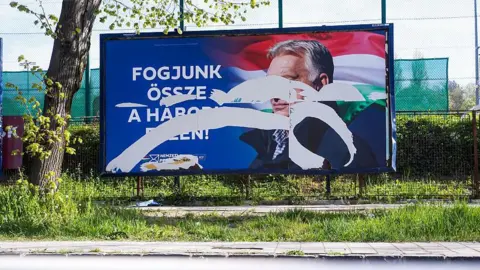
The task ahead for Péter Magyar and the Tisza party is monumental. They inherit a nation deeply divided, an economy in distress, and institutions that require significant rebuilding. The dramatic fall from grace of Fidesz, once seemingly invincible, is evident not just in the election results but also in the public landscape of Budapest, where nearly every Fidesz poster has been defaced with the word "Vége" (the end) or expletives. This widespread public defacement underscores the sudden and profound shift in popular sentiment.
Magyar’s administration will need to navigate not only the complexities of domestic reform but also the expectations of a hopeful electorate and a watchful international community. The implementation of ambitious anti-corruption measures, media reforms, and constitutional changes will undoubtedly face resistance from entrenched interests and potentially from the Fidesz opposition. However, the sheer scale of Tisza’s mandate provides a powerful platform for action. The symbolism of this victory extends beyond Hungary’s borders, offering a beacon of hope for democratic renewal in a region where illiberal tendencies have been on the rise. The new government’s success in restoring democratic norms, fighting corruption, and revitalizing the economy will be closely watched, shaping Hungary’s future trajectory within the European Union and on the global stage for years to come.