The Challenge of the British Climate
The journey began under circumstances that highlighted the inherent unpredictability of the British weather. At the starting point in Cornwall, the team was met not with the clear skies required for optimal solar harvesting, but with a thick Cornish sea fog. This atmospheric condition, historically favored by smugglers for its ability to mask movement, posed an immediate threat to the mission’s timeline. At Roskilly’s organic ice cream dairy, a site chosen for its robust independent solar infrastructure, the solar yield dropped to negligible levels as the blanket of gray mist obscured the sun.
Toby Roskilly, whose farm provides the initial energy for the journey, noted that the data on his monitoring systems showed a minuscule trickle of power compared to the surge expected on a clear day. This initial hurdle serves as a practical case study in the challenges of solar dependency in Northern Europe. It underscores the necessity of energy storage and the strategic management of charging windows—factors that are critical for the broader adoption of renewable-powered transportation.
The Vehicle: A Classic Reimagined for the Electric Age
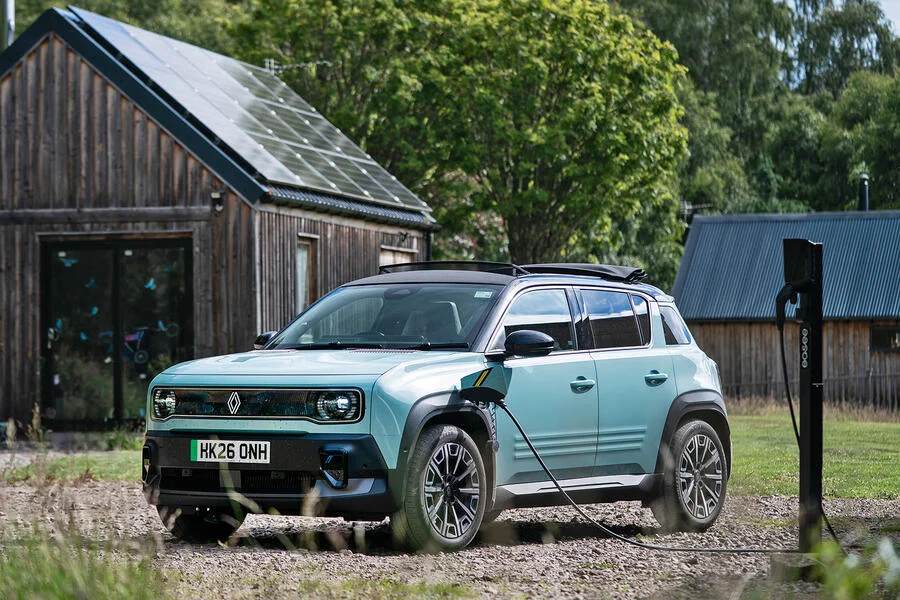
The centerpiece of the Sun Run is the Renault 4 Plein Sud, a car originally known for its simplicity and ruggedness. This specific model has undergone a comprehensive electric conversion, replacing its internal combustion engine with a modern electric motor and battery pack. The conversion is part of a growing "retro-fit" movement aimed at preserving classic vehicle aesthetics while eliminating tailpipe emissions.
The Renault 4’s lightweight chassis makes it an ideal candidate for such an experiment. In its electric form, the vehicle features a battery capacity optimized for a balance between weight and range. While modern mass-market EVs often prioritize large batteries for 300-plus mile ranges, the Plein Sud focuses on efficiency. It requires approximately 0.2 to 0.25 kWh per mile, making it highly responsive to the limited energy yields available from localized solar arrays. The "Plein Sud" variant, with its open-top design, further emphasizes the connection between the driver and the environment, though it offers little protection against the damp Cornish air that marked the start of the trek.
Chronology of the Sun Run
The expedition is structured around a series of "island" charging stops—private locations across the UK that have invested in significant solar photovoltaic (PV) arrays. The timeline of the journey is dictated not by a traditional clock, but by the solar cycle and meteorological forecasts.
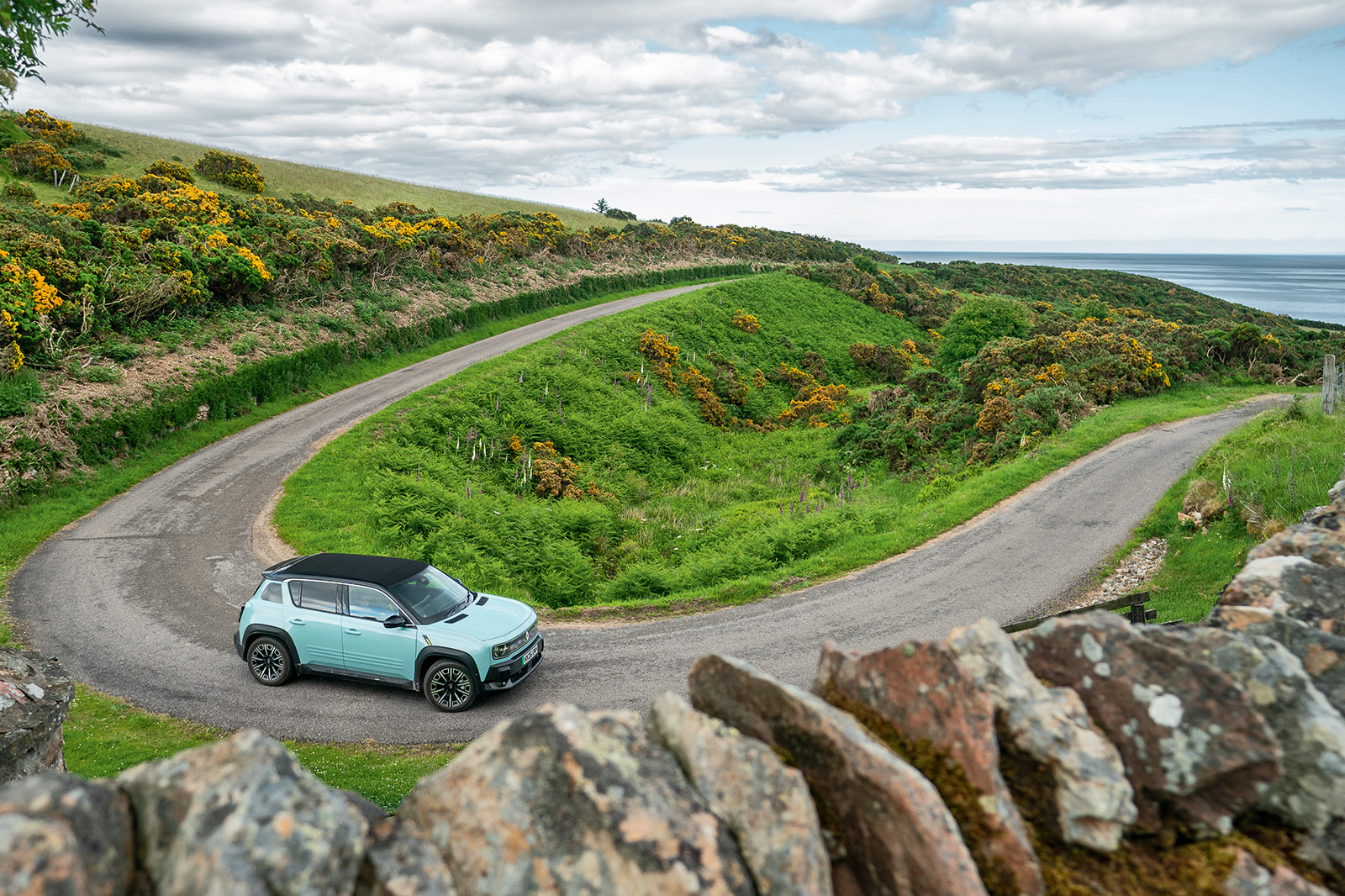
- Phase 1: The South West (Cornwall and Devon): The initial leg focused on navigating the hilly terrain of the West Country. Despite the early fog, the team utilized the 100-meter solar array at Roskilly’s to achieve the first full charge. This stage tested the regenerative braking capabilities of the Renault 4 on the steep inclines of the Cornish coast.
- Phase 2: The Midlands and Industrial Heartlands: Moving north, the route shifts toward agricultural and industrial sites that utilize large-scale rooftop solar. This phase demonstrates how commercial properties can serve as a secondary charging network for EVs, independent of public infrastructure.
- Phase 3: The Northern Ascent: As the team crosses into the North of England and toward the Scottish border, the challenge intensifies. Day length increases as they move north in the summer months, but the intensity of solar radiation can be more variable.
- Phase 4: The Highlands to John o’ Groats: The final 250 miles involve some of the most remote roads in the UK. Here, the team relies on small-scale domestic arrays and isolated renewable projects, proving that even the most distant reaches of the country can support electric mobility through localized generation.
Supporting Data: Solar Viability in the UK
Critics often argue that the UK’s climate is unsuitable for a solar-led transport revolution. However, data from the National Grid and the Microgeneration Certification Scheme (MCS) suggest otherwise. In 2023, solar power generated roughly 4.9% of the UK’s total electricity, with peak days in the summer seeing solar contribute up to 25% of the midday demand.
The Easee Sun Run aims to highlight "solar self-consumption." According to energy analysts, the average UK household with a 4kWp solar system generates around 3,400 kWh per year. Given that the average EV travels 7,000 miles a year at an efficiency of 3 miles per kWh, it would require approximately 2,333 kWh. This indicates that a standard domestic solar array can, in theory, provide more than enough energy to power a vehicle for a year’s worth of typical driving, provided the charging is managed intelligently.
For the Sun Run, the efficiency of the Renault 4 is paramount. By maintaining a steady speed and utilizing hypermiling techniques, the team aims to achieve an efficiency of nearly 5 miles per kWh. This would allow the 1,000-mile journey to be completed with a total energy consumption of just 200 kWh—roughly equivalent to the energy used by an average UK home in three weeks.
Official Responses and Strategic Partnerships
The project is supported by Easee, a firm specializing in smart charging technology. A spokesperson for the company emphasized that the Sun Run is not merely a promotional stunt but a "stress test for decentralized energy systems." By using smart chargers that can communicate with solar inverters, the vehicle only draws power when a surplus of solar energy is detected, ensuring that no "brown" energy from the grid is consumed.
"The goal is to show that the technology to live and travel sustainably already exists," the company stated. "We are moving away from a model of centralized power plants toward a distributed network where every roof is a power station. The Renault 4 is the perfect symbol for this transition—taking something familiar and making it future-proof."
Toby Roskilly, representing the agricultural sector’s role in this transition, noted that farms are uniquely positioned to support the EV transition. "We have the space for the arrays and a constant need for energy. Selling that energy back to the grid is one thing, but using it to power transport directly is a much more efficient closed-loop system."
Broader Implications and Analysis
The Easee Sun Run arrives at a pivotal moment in the UK’s transition to electric vehicles. With the government’s mandate to end the sale of new petrol and diesel cars by 2035, the pressure on the national grid is a point of significant public debate. This journey offers a counter-narrative to the "grid anxiety" often cited by skeptics.
1. Decentralization of Energy
The success of the journey would suggest that the future of EV charging may not lie solely in massive motorway "Electric Forecourts," but in the proliferation of small-scale, localized generation. This could reduce the need for multi-billion-pound upgrades to the national transmission network.
2. The Retrofit Economy
By using a Renault 4, the project highlights the environmental benefits of the circular economy. Manufacturing a new EV carries a significant carbon debt due to battery production and material sourcing. Retrofitting an existing vehicle chassis significantly reduces this initial footprint, offering a more sustainable path for car enthusiasts and commuters alike.
3. Energy Security
On a macro level, the Sun Run demonstrates how individual and local energy independence can contribute to national energy security. By decoupling transportation from global oil markets and even the national electricity price fluctuations, solar-powered EVs offer a degree of economic stability to the user.
Conclusion: The Road Ahead
As the fog lifted over the Cornish coast and the first solar electrons began to flow into the Renault 4’s battery, the Sun Run transitioned from a logistical challenge to a rolling laboratory. The journey to John o’ Groats remains a formidable task, requiring not just mechanical reliability but a constant synchronicity with the natural environment.
While the Renault 4 Plein Sud may not replace the modern family SUV for every consumer, its journey across the UK serves as a high-profile proof of concept. It illustrates a future where the "fuel" for our journeys is harvested from the sky, managed by smart technology, and utilized by vehicles that respect both heritage and the habitat. The data gathered over the coming days will provide valuable insights into the reality of solar-powered travel in a temperate climate, potentially shifting the conversation from if we can transition to renewable transport, to how quickly we can implement the infrastructure to support it.