


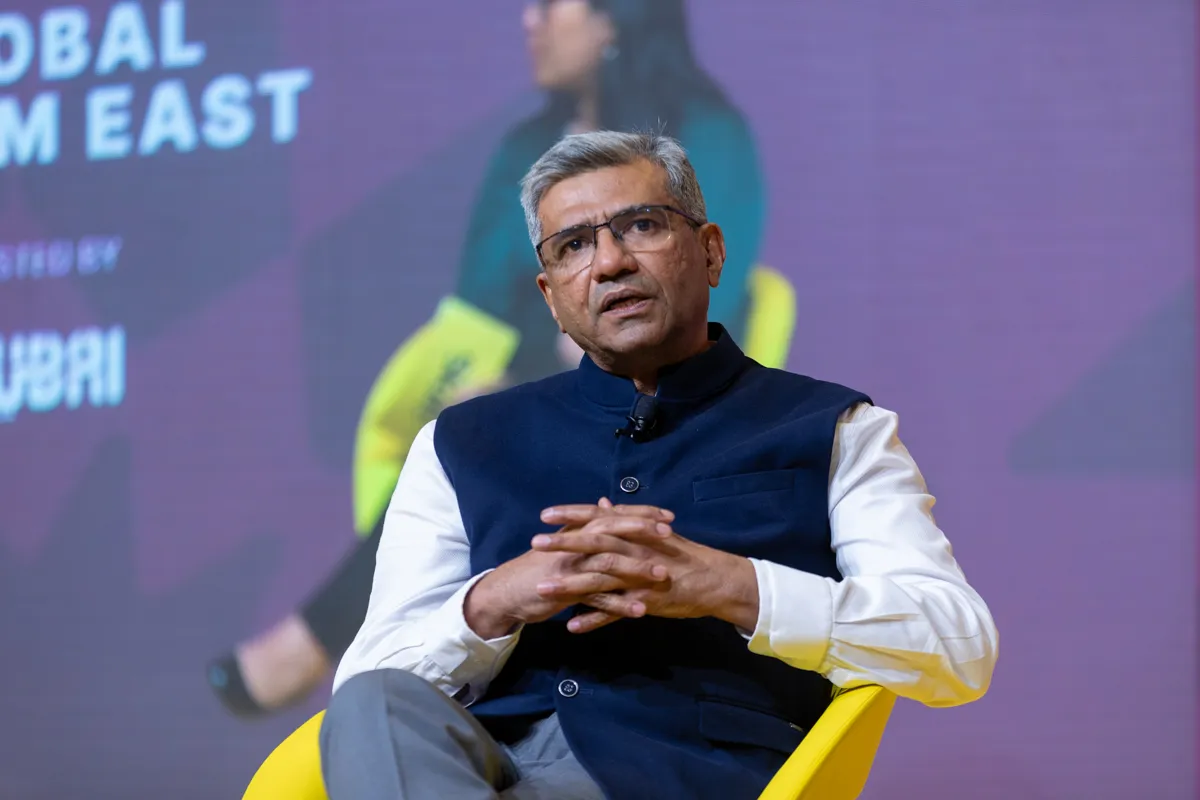
InterGlobe Aviation, the parent company of India’s largest airline IndiGo, has officially appointed Aloke Singh as its new Chief Strategy Officer, effective April 6, 2025. The announcement, made through a formal regulatory filing with the Bombay Stock Exchange (BSE) on Monday, marks the first significant executive appointment since the unexpected resignation of Chief Executive Officer Pieter Elbers earlier this month. Singh, a veteran of the aviation industry with over three decades of experience, joins the carrier at a pivotal moment as it navigates a transition in its top leadership and continues an aggressive international expansion strategy.
The move follows weeks of industry speculation regarding Singh’s future after his departure from the Air India Group, where he served as the Managing Director and CEO of Air India Express. While many market observers had initially anticipated that Singh might be positioned for the CEO role at IndiGo following Elbers’ exit, his appointment as Chief Strategy Officer suggests a strategic realignment within the airline’s executive committee. Singh will now be tasked with overseeing the long-term planning, network growth, and competitive positioning of an airline that currently commands over 60% of the Indian domestic market.
The Strategic Profile of Aloke Singh
Aloke Singh is widely regarded as one of the most seasoned architects of the modern Indian aviation landscape. His career spans more than 30 years, during which he has held senior leadership positions across various facets of airline management, including network planning, commercial operations, and corporate strategy.
Prior to his appointment at IndiGo, Singh was the driving force behind the transformation of Air India Express. Under his leadership, the airline underwent a complex and successful merger with AirAsia India, creating a unified low-cost subsidiary for the Tata-owned Air India Group. This merger was a cornerstone of the "Vihaan.AI" transformation plan, aimed at streamlining operations and scaling the group’s narrow-body fleet. Singh’s ability to manage large-scale integration while maintaining operational profitability earned him high regard within the industry.
Before his tenure at Air India Express, Singh held various roles at Air India and worked as a consultant in the Middle East, providing him with a unique perspective on both domestic Indian dynamics and the lucrative international corridors connecting India to the Gulf and Southeast Asia. At IndiGo, his expertise is expected to be leveraged to solidify the airline’s "Global Link" strategy, which aims to transform the carrier from a regional domestic powerhouse into a formidable international player.
Leadership Vacuum and the Exit of Pieter Elbers
The appointment of Singh comes on the heels of the departure of Pieter Elbers, the former KLM chief who took the reins of IndiGo in 2022. Elbers’ tenure was marked by a significant shift in IndiGo’s corporate identity. Under his guidance, the airline moved away from its strictly "no-frills" origins toward a more sophisticated, hybrid model. This included the historic order of 500 Airbus A320-family aircraft, the introduction of a frequent flyer program ("BluChip"), and the announcement of "IndiGo Stretch," a premium business-class product tailored for the busiest domestic routes.
Elbers’ resignation was described by the company as a personal decision to return to Europe, yet the timing—coming in the middle of a massive fleet expansion and the airline’s foray into wide-body operations—raised questions among investors. The search for a successor to Elbers remains the primary focus for the InterGlobe Aviation board. In the interim, the appointment of Singh as CSO provides a sense of continuity and strategic depth, ensuring that the airline’s long-term objectives remain on track while the CEO search continues.
A Timeline of Leadership and Expansion at IndiGo
To understand the significance of Singh’s appointment, it is necessary to examine the recent trajectory of IndiGo’s growth and its leadership shifts:
- September 2022: Pieter Elbers officially succeeds Ronojoy Dutta as CEO, signaling a shift toward internationalization.
- June 2023: IndiGo places a record-breaking order for 500 Airbus aircraft at the Paris Air Show, bringing its total order book to nearly 1,000 aircraft.
- January 2024: The airline achieves a historic milestone, becoming the first Indian carrier to fly 100 million passengers in a single calendar year.
- April 2024: IndiGo announces its first-ever order for wide-body aircraft, selecting 30 Airbus A350-900s to facilitate long-haul international flights to Europe and beyond.
- August 2024: The airline unveils "IndiGo Stretch," a business-class cabin, and "BluChip," its loyalty program, moving closer to a full-service offering.
- Early March 2025: Pieter Elbers announces his resignation, effective later in the year.
- March 2025: Aloke Singh resigns from Air India Express.
- Monday, Current Week: InterGlobe Aviation officially names Aloke Singh as Chief Strategy Officer, effective April 6.
Supporting Data: The Scale of the IndiGo Empire
IndiGo’s dominance in the Indian skies is supported by a robust operational framework that Aloke Singh will now help manage. As of early 2025, the airline’s scale is unprecedented in the history of Indian civil aviation:
- Market Share: IndiGo consistently maintains a domestic market share between 60% and 63%, nearly three times that of its nearest competitor, the Air India Group.
- Fleet Size: The airline operates over 360 aircraft, primarily consisting of the Airbus A320neo family and ATR-72s for regional routes.
- Network: It serves over 120 destinations, including 30+ international locations.
- Financial Performance: Despite rising fuel costs and global supply chain issues affecting engine availability (notably the Pratt & Whitney GTF issues), IndiGo has reported consistent profitability over the last several quarters, aided by high passenger load factors and increased yields.
- Future Capacity: With nearly 1,000 aircraft on order, IndiGo is expected to receive a new aircraft roughly every week for the next decade.
Implications for the Indian Aviation Market
The move of a top executive from the Air India Group to IndiGo is a significant development in the ongoing "duopoly" battle between the two giants. For years, the Indian market was fragmented with multiple players like Jet Airways, Kingfisher, and SpiceJet. Today, the market has consolidated into two major camps: the Tata-owned Air India (including Vistara and Air India Express) and IndiGo.
By hiring Aloke Singh, IndiGo has effectively "poached" a leader who knows the inner workings of its primary competitor. Singh’s experience in integrating Air India Express and AirAsia India gives him unique insight into the low-cost strategy of the Tata Group. His task at IndiGo will likely involve defending the carrier’s domestic turf against a resurgent Air India while ensuring that IndiGo’s international foray—particularly with the A350s—is executed with precision.
Industry analysts suggest that Singh’s role will be crucial in managing the "complexity" that comes with growth. "IndiGo is no longer a simple LCC," noted a senior aviation consultant based in Mumbai. "They are managing wide-bodies, business class, and complex international codeshares. Aloke Singh’s background in both legacy full-service environments and lean LCC environments makes him the ideal candidate to balance these two worlds."
Official Responses and Market Reaction
In the regulatory filing, InterGlobe Aviation stated that Singh’s appointment is part of a broader effort to strengthen the leadership team to support the airline’s next phase of growth. While the company has not commented specifically on the CEO search, the board expressed confidence that Singh’s "deep industry knowledge and proven track record in strategic planning" would be an asset to the organization.
The market reaction to the news was cautiously optimistic. Shares of InterGlobe Aviation saw a slight uptick following the announcement, as investors viewed the appointment of a seasoned veteran like Singh as a stabilizing factor following the uncertainty of Elbers’ resignation.
From the Air India side, the departure of Singh was acknowledged as part of a planned leadership transition within the group. Air India has recently appointed new heads for its various divisions as it nears the final stages of the Vistara merger, suggesting that Singh’s move was a calculated career step rather than a sudden rupture.
Future Outlook: The Road to 2030
As Aloke Singh prepares to take over the CSO role in April, several challenges and opportunities await him. The most pressing issue remains the grounding of aircraft due to engine supply chain disruptions. IndiGo has had to mitigate this by wet-leasing aircraft (including Boeing 777s from Turkish Airlines) to maintain its schedule. Singh will need to work closely with the operations and fleet teams to ensure that strategy aligns with actual aircraft availability.
Furthermore, the launch of the A350 fleet in the coming years will require a complete rethink of IndiGo’s network strategy. Moving from 4-hour regional flights to 10-hour long-haul flights requires different crew management, catering, and ground handling structures. Singh’s experience at the old Air India, which managed a vast international network, will be invaluable here.
The question of who will be the next CEO remains the final piece of the puzzle. Whether the airline chooses an internal promotion or another high-profile international hire, the new CEO will find in Aloke Singh a strategist who understands the intricacies of the Indian market better than almost anyone else in the cockpit of Indian aviation.
In conclusion, the appointment of Aloke Singh as Chief Strategy Officer signifies IndiGo’s commitment to maintaining its market lead through sophisticated planning and veteran leadership. As the airline prepares for its most ambitious decade yet, the synergy between its massive aircraft orders and its newly reinforced executive team will determine if IndiGo can successfully transition from a domestic leader to a global aviation titan.