


The ephemeral visit of interstellar comet 3I/ATLAS to our solar system is drawing to a close, as the celestial wanderer prepares to embark on an irreversible journey back into the vast expanse of interstellar space. While its physical presence will soon fade from our cosmic neighborhood, the wealth of observational data it has bequeathed to humanity, meticulously curated within NASA’s public data archives, ensures its scientific legacy will endure for generations. This unique object, only the third definitively identified visitor from beyond our sun’s gravitational embrace, became the subject of an unprecedented multi-mission observation campaign, providing scientists with an invaluable glimpse into the chemistry and formation processes of another star system.
A Rare Glimpse into the Cosmos Beyond
Interstellar objects, by their very definition, originate from outside our solar system. These cosmic nomads are ejected from their birth star systems, likely through gravitational interactions with massive planets or other stars, and then traverse the immense distances between stellar neighborhoods. Their rarity makes each detection a monumental event, offering a direct sample of material from other protoplanetary disks — the swirling nurseries where exoplanets are born. Understanding their composition, structure, and dynamics provides critical clues about the diversity of planetary formation environments across the galaxy. They serve as cosmic messengers, carrying information about the physical and chemical conditions in the distant corners of the Milky Way, allowing astronomers to test theories of star and planet formation beyond the confines of our own solar system.
Prior to 3I/ATLAS, only two other interstellar objects had been confirmed: ‘Oumuamua and 2I/Borisov. ‘Oumuamua, discovered in 2017, was the first and presented as a perplexing, elongated, and seemingly rocky object that defied easy categorization as either a comet or an asteroid. Its brief appearance and unusual trajectory spurred intense scientific debate and highlighted the urgent need for rapid response observational capabilities for such transient visitors. Then came 2I/Borisov in 2019, unequivocally a comet, exhibiting a dusty coma and tail, which provided the first opportunity to study the volatile composition of an interstellar object. 3I/ATLAS, also a comet, follows in this tradition, but its observation campaign stands apart due to its sheer scale and the integration of data from numerous advanced instruments. Scientists estimate that, on average, an interstellar object might pass through our solar system about once per year, a frequency that underscores the increasing importance of robust detection and data collection strategies as our telescopic capabilities advance. The ability to characterize these objects rapidly and comprehensively is crucial, as their fleeting nature means observing windows are often narrow.
The Unfolding Discovery: From Serendipity to Focused Observation
The initial detection of 3I/ATLAS occurred on July 1, 2025, through the NASA-funded ground-based ATLAS (Asteroid Terrestrial-impact Last Alert System) survey telescope located in Rio Hurtado, Chile. ATLAS, a robotic astronomical survey and early warning system, is primarily designed to detect near-Earth objects that might pose an impact threat. Its wide-field capabilities, however, also make it adept at spotting unexpected transient phenomena like interstellar comets. This initial discovery immediately triggered a global alert within the astronomical community, setting the stage for subsequent, more detailed investigations. The system’s rapid scanning capabilities, which cover the entire observable night sky several times per night, proved invaluable in catching such a fast-moving, non-repeating visitor.
What proved to be a pivotal turn in understanding 3I/ATLAS’s trajectory and origin was a retrospective query to another vast NASA data archive. Astronomers discovered that the comet had, in fact, been captured on camera long before its official identification in July. NASA’s Transiting Exoplanet Survey Satellite (TESS), a space telescope primarily tasked with scanning the sky for exoplanets using the transit method, possesses an exceptionally wide field of view. Fortuitously, TESS had imaged the region of sky where 3I/ATLAS was located as early as May 2025. This accidental capture provided an invaluable two-month head start on tracking the comet’s path. The TESS data, typically used for light curve analysis of distant stars, provided crucial astrometric points that extended the observational baseline significantly.
The TESS data allowed astronomers to precisely refine the comet’s orbital parameters, confirming its hyperbolic trajectory — a telltale sign of an interstellar origin, meaning its velocity was too high to be bound by the Sun’s gravity. This early data was crucial, enabling scientists to predict its future movements with greater accuracy and optimize the observation strategies for other missions. Without this earlier sighting, the window for detailed observations would have been considerably shorter, limiting the scientific yield. The publicly available TESS data is housed in the NASA-funded Barbara A. Mikulski Archive for Space Telescopes (MAST), a testament to NASA’s commitment to open science and the long-term utility of its archival resources. This incident highlights the unexpected value of broad-survey data archives for entirely unforeseen discoveries.
A Symphony of Space Telescopes: Unprecedented Data Collection
The sheer scale of the observational effort dedicated to 3I/ATLAS is unparalleled for an interstellar object. More than a dozen NASA science missions, spanning a range of observational wavelengths and scientific objectives, turned their instruments towards the inbound comet. This coordinated approach allowed scientists to gather a comprehensive dataset, providing a holistic view of the comet’s physical characteristics and chemical composition. Unlike comets formed within our own solar system, whose general chemical makeup and structure are relatively well understood from decades of observation, 3I/ATLAS presented a unique opportunity to study material from a foreign stellar nursery, potentially revealing different characteristics shaped by a distinct astrophysical environment.
The observation campaign involved a diverse array of instruments, each designed to capture different facets of the comet’s nature. For instance, visible light observations can reveal the morphology of the coma and tail, tracking the sublimation of ice and dust ejection. Infrared instruments, such as those aboard the James Webb Space Telescope and SPHEREx, are crucial for probing the temperature of the nucleus and coma, and for identifying the spectral signatures of various volatile molecular species like water, carbon dioxide, carbon monoxide, and organic compounds. Ultraviolet observations, provided by missions like MAVEN, can shed light on the interactions of the comet’s atmosphere with the solar wind and the presence of various atomic species. Radio telescopes, though not explicitly named in the original article, would typically contribute by detecting molecular rotational transitions, providing further insights into gas composition and outflow rates. This multi-wavelength, multi-instrument approach provides a robust, cross-referenced understanding that no single mission could achieve on its own, building a complete picture of this unique cosmic traveler.
Decoding the Comet’s Alien Chemistry
One of the most significant findings from the 3I/ATLAS campaign concerns its chemical composition. Researchers discovered that the relative production rates of water, carbon dioxide (CO2), and carbon monoxide (CO) in 3I/ATLAS differed markedly from those typically observed in comets originating from our own solar system. This crucial insight was achieved by skillfully combining spectral data from multiple cutting-edge instruments, showcasing the power of integrated scientific inquiry.
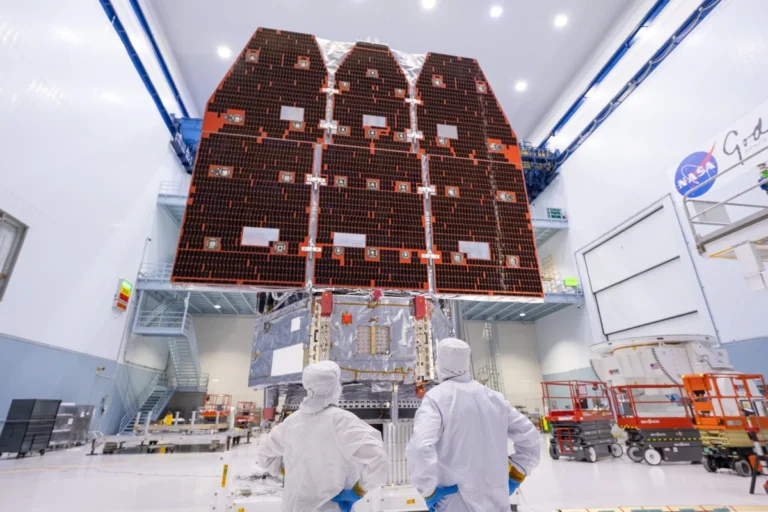
Specifically, scientists leveraged data from NASA’s MAVEN (Mars Atmosphere and Volatile EvolutioN) Mars orbiter. While MAVEN’s primary mission is to study the Martian atmosphere and its interaction with the solar wind, its Imaging Ultraviolet Spectrograph (IUVS) and Neutral Gas and Ion Mass Spectrometer (NGIMS) are capable of detecting various volatile compounds, making it a valuable contributor to cometary studies when positioned favorably. MAVEN provided critical insights into the comet’s hydrogen and oxygen production, indicative of water sublimation, as well as observations of carbon-bearing species.
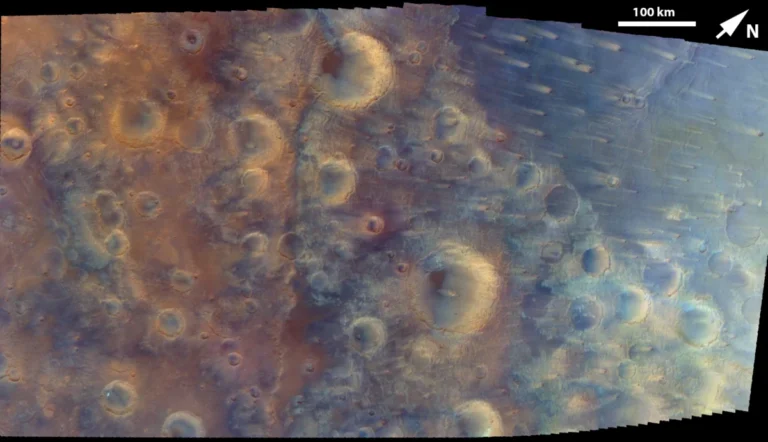
Complementing MAVEN’s spectral data were infrared observations from two of NASA’s most powerful space telescopes: the James Webb Space Telescope (JWST) and the SPHEREx (Spectro-Photometer for the History of the Universe, Epoch of Reionization, and Ices Explorer) mission. The James Webb Space Telescope, with its unparalleled sensitivity and spectroscopic capabilities in the infrared, is ideally suited for detailed chemical analysis of faint and distant celestial bodies. Its Mid-Infrared Instrument (MIRI) and Near-Infrared Spectrograph (NIRSpec) can precisely identify the spectral signatures of various molecules and their isotopic ratios, allowing for accurate measurements of their abundances in the comet’s coma. JWST provided crucial data on the composition of the ices sublimating from 3I/ATLAS, including the ratios of water, CO2, and CO.
SPHEREx, an all-sky spectral survey mission, is designed to map the entire celestial sphere in the near-infrared, providing a cosmic census of matter and light. Its wide-field spectroscopic observations contribute significantly to understanding the distribution and quantities of different ice species within the comet’s coma, offering a broader contextual view of the volatile outflow. The combination of these instruments allowed for a robust determination of the comet’s volatile inventory.
The observed deviations in water, CO2, and CO production rates suggest that 3I/ATLAS may have formed in a region of its home protoplanetary disk that had a different temperature profile or chemical inventory compared to the primordial solar nebula. For example, a higher abundance of CO or CO2 relative to water might indicate formation in a colder, outer region of its star system, where these more volatile ices could condense more readily. Conversely, different ratios could point to unique stellar metallicity, the influence of a nearby massive star, or even processes like planet migration in its birth system that stirred up icy materials from different radial zones. These findings offer tantalizing clues about the diverse conditions under which other planetary systems form and evolve, deepening our understanding of exoplanetary system architecture and the chemical building blocks available for life elsewhere.
The Bedrock of Discovery: NASA’s Open Science Commitment
The success of the 3I/ATLAS observation campaign and the profound insights it yielded are inextricably linked to NASA’s unwavering commitment to open science. This philosophy, which advocates for the public sharing of scientific data, tools, research, and software, is not merely an idealistic principle but a practical framework that maximizes the impact and return on investment of NASA’s extensive science missions. It democratizes access to cutting-edge research, fosters global collaboration, and accelerates the pace of scientific discovery.
Kevin Murphy, chief science data officer at NASA Headquarters in Washington, aptly summarized this ethos: "NASA’s scientific data archives are a gold mine of discoveries waiting to be made. The early observations of 3I/ATLAS from the TESS mission represent just one example of the exciting insights our open data can reveal." This statement underscores how readily accessible historical data can unlock new understanding when new questions arise or new objects are discovered. The ability to retroactively search archives for prior observations of a newly identified object, as was the case with TESS and 3I/ATLAS, significantly enhances the scientific yield, demonstrating the unforeseen utility of archived data.
Crucially, NASA’s commitment to open science extends to establishing robust infrastructure for data management and accessibility. The agency’s Planetary Data System (PDS), for instance, plays a vital role in setting rigorous standards that guide planetary science missions to store their data in uniform, well-documented formats. This standardization is not just about neatness; it’s about interoperability. By ensuring data from different missions and instruments are stored consistently, the PDS makes it significantly easier for researchers to combine and cross-analyze diverse datasets, an essential factor in the success of the 3I/ATLAS multi-mission study. Furthermore, the PDS actively develops tools that can work across data from several different missions, simplifying complex data integration tasks for scientists and lowering the barrier to entry for new researchers.
Thomas Statler, lead scientist for Solar System Small Bodies at NASA Headquarters, who coordinated the agency’s observation campaign for 3I/ATLAS, reiterated the foundational importance of this approach. "Open science, as a set of principles, has been pushing us as research communities and NASA to make data more accessible," Statler said. "It’s worked into the way we structure and establish standards for our data archives. That’s what makes our data usable." This emphasis on usability is paramount; data that is merely collected but not easily accessible or understandable loses much of its potential scientific value. The PDS, MAST, and IRSA ensure that the raw observations are not only stored but also accompanied by comprehensive metadata and calibration information, allowing any qualified researcher to re-analyze the data effectively.
The accessibility of the 3I/ATLAS data exemplifies this commitment. Data from SPHEREx, including its critical observations of 3I/ATLAS, can be readily accessed through the NASA/IPAC Infrared Science Archive (IRSA). MAVEN data is available through the comprehensive Planetary Data System. And as mentioned, Webb’s observations, alongside TESS data, can be found in the MAST archive. These interconnected and standardized archives represent a cornerstone of modern astrophysical research, fostering collaboration and accelerating the pace of discovery across the global scientific community, ultimately maximizing the public benefit derived from space exploration.
Paving the Way for Future Discoveries
In the short term, the rich dataset collected on 3I/ATLAS will enable scientists and researchers to delve even deeper into the comet’s intricate structure, precise composition, and evolutionary history. Advanced computational models will be refined based on these observations, theories about interstellar object formation and evolution will be tested, and our understanding of this specific interstellar visitor will continue to grow. This immediate impact will lead to numerous peer-reviewed publications and a refined scientific consensus on 3I/ATLAS. However, the impact of NASA’s extensive observations will resonate far beyond this single target, shaping the future of astrobiology and comparative planetology.
The era of interstellar object discovery is still in its infancy. While humanity has only recently developed the technological prowess to reliably spot these fleeting visitors as they traverse our solar system, the advent of increasingly powerful telescopes promises to make such discoveries much more common. Next-generation observatories, both ground-based like the Vera C. Rubin Observatory and space-based like future infrared missions, will dramatically enhance our ability to detect fainter, faster, and more distant interstellar objects, providing more lead time for observation campaigns. The increased cadence of discoveries will transform this niche field into a mainstream area of astrophysical research.
As our awareness of interstellar objects grows, scientists will be able to move beyond studying individual cases in isolation. The ability to compare and contrast multiple interstellar objects with each other, and with comets and asteroids formed within our own solar system, will enable a crucial shift in perspective. Researchers will begin to understand them not as isolated anomalies but as a distinct population, revealing statistical trends and patterns in their composition and properties. This comparative analysis will offer profound insights into the chemical diversity of protoplanetary disks across the galaxy, the mechanisms of planet formation, and the prevalence of water and organic molecules in other star systems – factors directly relevant to the search for extraterrestrial life. By building a catalog of these interstellar travelers, we can begin to piece together a census of the raw materials available for planet formation throughout the cosmos.
The