



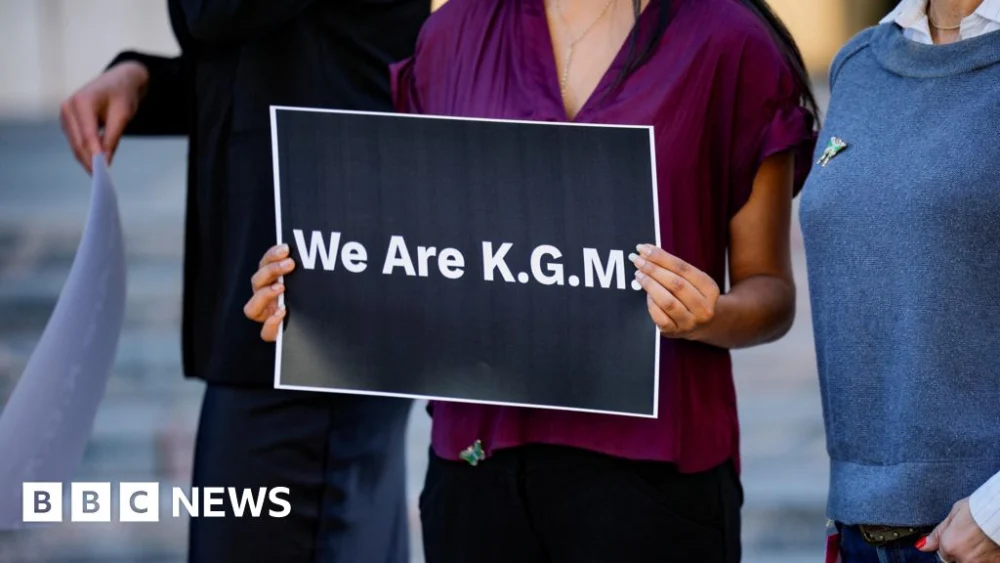
The legal landscape surrounding social media companies is undergoing an unprecedented shift as a landmark lawsuit against tech giants Meta and Google proceeds in Los Angeles, drawing intense scrutiny from legal experts, parents, and the global tech industry. At its heart is the compelling testimony of a young woman identified only as Kaley, whose experience with extreme social media usage has become the test case for over 2,000 similar lawsuits aiming to hold platforms accountable for alleged harm to the mental health of their youngest users. This five-week trial, the first of its kind, seeks to determine if social media platforms are intentionally designed to be addictive and if their creators bear responsibility for the severe psychological distress experienced by young individuals.
Kaley’s testimony painted a stark picture of digital immersion: she recounted habitually checking Instagram until she fell asleep, waking up in the dead of night to review notifications, and immediately opening the app upon rising. One day, her usage soared to an astonishing 16 hours. "I stopped engaging with my family because I was spending all my time on social media," Kaley told the Los Angeles jury. Her original lawsuit also named TikTok and Snapchat, both of which settled out of court, leaving Meta (owner of Instagram, Facebook, and WhatsApp) and Google (owner of YouTube) as the remaining defendants in this pivotal legal battle.
The profound impact of pervasive social media use on young lives resonated deeply in the courtroom through the testimonies of parents who believe their children were irrevocably damaged, even driven to suicide, by these platforms. Lori Schott, though not directly involved in the lawsuit, attended the trial for several days, compelled by the tragic loss of her 18-year-old daughter, Annalee, to suicide. Schott attributes this tragedy to Instagram’s alleged exposure of her daughter to psychologically damaging content, contending that the company knowingly disregarded the potential harm to young users. "They hid the research. They knew that it was addictive. They gave us a false sense of security," Schott stated, criticizing the public relations efforts that she felt painted an unrealistic, overly positive image of the platforms. Similarly, Aaron Ping shared the heart-wrenching story of his 16-year-old son, Avery, who also took his own life. Ping described Avery’s transformation from an "adventure companion" to a child with whom he frequently clashed over YouTube usage, necessitating structured screen time agreements with school counselors. These powerful accounts underscore the human cost that plaintiffs and their supporters argue is directly linked to social media design.
Central to Kaley’s case are two fundamental questions: whether she developed an addiction to social media and, crucially, whether social media companies intentionally engineered their platforms to foster such addiction. Should the jury affirm these claims, they must then deliberate on the extent of the companies’ liability and the compensation owed to young individuals like Kaley who have allegedly suffered harm due to these designs. The implications of this trial for Meta, Google, and the broader social media industry are immense, potentially ushering in a new era of accountability. Judge Carolyn Kuhl repeatedly characterized many of the legal issues, particularly the assertions of platform addictiveness and intentional design, as "completely unprecedented." The gravity of the situation was further underscored by the rare personal appearance of Mark Zuckerberg, the billionaire co-founder and chief executive of Meta, who testified in defense of his platforms—a first in his company’s extensive legal history. A verdict in Kaley’s favor would challenge decades of legal and cultural precedent that have largely treated social media platforms as neutral conduits for user-generated content, potentially laying the groundwork for substantial settlements from tech giants. The outcome is expected to significantly influence thousands of other similar cases currently navigating the U.S. court system.
Beyond the courtroom, public and political pressure against large tech companies has been steadily mounting. Concerns range from platforms exposing children to unattainable beauty standards and self-harm content to facilitating interactions with sexual predators. This trial is seen as a potential catalyst for broader regulatory action, regardless of its specific outcome.
Kaley’s journey into the digital world began early, with YouTube usage at age six and Instagram at nine. Despite Meta’s stated policy prohibiting users under 13 from its platforms, and YouTube offering child-specific versions like YouTube Kids, Kaley easily circumvented these age restrictions. She soon created numerous accounts on both platforms, driven by a desire for likes and interactions for her selfies on Instagram and singing videos on YouTube, seeking validation and acceptance. This pursuit led to hours of scrolling and watching videos, reducing her engagement with the outside world and making offline social interactions challenging. Around age 10, Kaley recalled experiencing her first feelings of anxiety and depression, conditions for which she would later receive formal diagnoses. Her fixation on physical appearance intensified, fueled by Instagram filters that instantly altered her features—smaller nose, bigger eyes, added makeup. This ultimately led to a diagnosis of body dysmorphia, a condition characterized by excessive preoccupation with perceived physical flaws. When questioned by her lawyer, Mark Lanier, about whether she had experienced such feelings prior to social media, Kaley unequivocally stated, "No, I didn’t."
Meta’s defense contends that Kaley’s mental health struggles are rooted in her personal life and upbringing, rather than her Instagram use. Adam Mosseri, head of Instagram, famously testified that even 16 hours of daily Instagram use did not constitute an addiction in his view, instead labeling it "problematic." Mark Zuckerberg, in his testimony, reiterated Meta’s consistent policy against users under 13, emphasizing their efforts to remove underage accounts, albeit acknowledging imperfection. When confronted with internal company documents revealing discussions among Meta executives about millions of underage users, and even plans to grow this demographic, Zuckerberg expressed frustration, stating, "I don’t see why this is so complicated… It’s been our consistent policy that they’re not allowed and we try to remove them. We’re not perfect." Lanier pressed Zuckerberg on his assertion that Meta’s goal was solely to create useful platforms, which naturally leads to increased usage. Lanier posited that addiction also drives increased usage, leaving Zuckerberg momentarily speechless: "I don’t know what to say to that," he conceded. "I think that may be true, but I don’t know if that applies. I’m trying to build a service here."
A significant challenge for Kaley’s legal team is the official recognition of "social media addiction." Her therapist, when questioned by Meta’s lawyers, admitted to never having formally diagnosed Kaley with such an addiction. Meta’s defense strategy largely hinges on presenting evidence of Kaley’s tumultuous home life, citing her own Instagram posts that depicted a girl grappling with unstable and critical parents, and at times, emotional, verbal, and physical abuse. The company’s overarching argument to the jury is rooted in the "but for" test of legal liability: if Kaley’s mental health issues would have occurred regardless of her social media use, then Meta cannot be held responsible for the harm.
The context of this lawsuit is set against a decade of escalating concerns about the impact of social media on youth. While platforms initially promised connectivity and community, a growing body of research and anecdotal evidence has highlighted potential detrimental effects. Studies from organizations like the Pew Research Center consistently show that a vast majority of teenagers (often upwards of 95%) use social media, with a significant portion reporting near-constant engagement. Concurrently, data from the Centers for Disease Control and Prevention (CDC) and reports from the U.S. Surgeon General have documented a worrying rise in rates of anxiety, depression, and self-harm among adolescents over the past decade, prompting serious questions about contributing factors.

A critical turning point came in 2021 with the revelations from whistleblower Frances Haugen, who leaked internal Facebook documents (dubbed the "Facebook Papers") suggesting that the company was aware of Instagram’s negative impact on the mental health and body image of teenage girls but prioritized growth over user well-being. These leaks intensified public and legislative scrutiny, fueling calls for greater transparency and regulation. Lawmakers in the U.S. have proposed legislation like the Kids Online Safety Act (KOSA), aimed at protecting children online, while the European Union’s Digital Services Act (DSA) and the UK’s Online Safety Act represent broader attempts at regulating online content and platform accountability.
Social media companies, including Meta and Google, typically respond to these criticisms by emphasizing their commitment to user safety, investing in mental health resources, and developing tools for parental control and age verification. They often argue that their platforms are vital tools for communication, creativity, and community building, and that the complexities of age verification are immense. Furthermore, they frequently assert that mental health challenges are multifaceted, and attributing them solely to social media overlooks a broader spectrum of societal and individual factors. The legal principle of Section 230 of the Communications Decency Act, which largely shields online platforms from liability for content posted by users, has historically protected tech companies. However, lawsuits like Kaley’s aim to circumvent this protection by focusing on the design of the platforms themselves and their alleged inherent addictiveness, rather than specific user-generated content.
The implications of this trial are far-reaching. A plaintiff victory could fundamentally reshape the social media landscape, compelling companies to drastically alter their algorithms, implement more stringent age verification processes, enhance parental controls, and potentially redesign platforms to prioritize user well-being over engagement metrics. Financially, it could trigger a cascade of similar successful lawsuits, leading to billions in payouts and significantly impacting the valuation and operational models of these tech giants. Even if the jury does not find Meta or Google liable in Kaley’s specific case, the intense public discourse and the sheer volume of similar legal challenges are likely to maintain pressure on the industry, spurring self-regulation or, more likely, accelerating legislative action. This trial could redefine the social contract between technology companies and their youngest users, shifting the perception of platforms from benign tools to potentially harmful environments requiring greater corporate responsibility.
Today, Kaley continues her education and works, maintaining a loving relationship with her mother. She admitted in court that she still uses social media and is even interested in a career in social media management. Yet, when asked if her life would have been better without early exposure to platforms like Instagram, her answer was a simple, poignant "Yes." This trial is not merely about one individual’s experience; it represents a pivotal moment in the ongoing global debate about the ethical responsibilities of technology companies and the future of digital well-being for generations to come.