

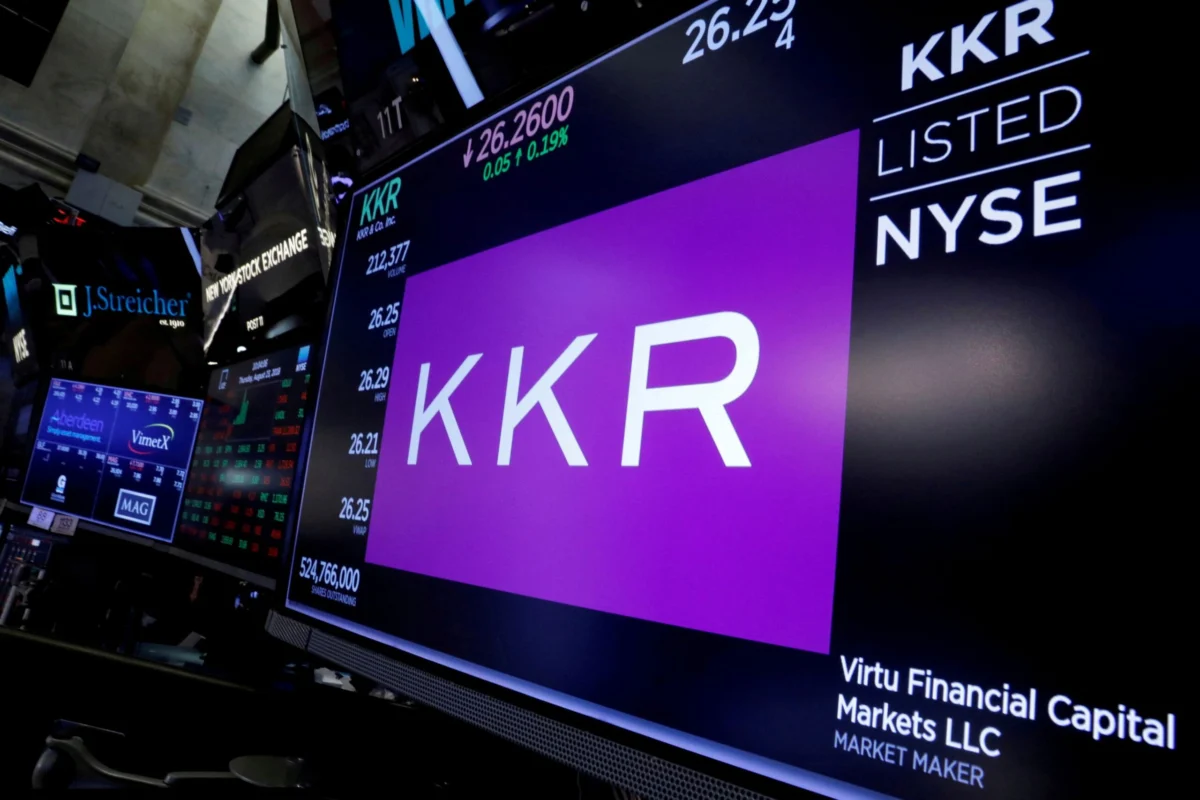
Moody’s Ratings on Monday delivered a significant blow to the private credit sector, downgrading FS KKR Capital Corp (FSK), a business development company (BDC) jointly managed by global investment giants KKR and Future Standard, to "junk" status. The debt ratings of FSK were lowered by one notch from Baa3 to Ba1, marking a critical shift from investment grade to speculative grade. This decision, detailed in a comprehensive report by the ratings firm, was primarily driven by a discernible deterioration in the fund’s underlying asset quality, a marked increase in non-accrual loans, and a sustained period of weak financial performance, including significant net asset value erosion when compared to its peers within the BDC landscape.
The downgrade reflects a growing unease within the financial markets regarding the health of certain segments of the burgeoning private credit industry, which has seen explosive growth in recent years. For FS KKR Capital Corp, a publicly traded entity designed to provide financing to middle-market companies, the immediate implications of this revised rating are substantial. A junk rating typically translates to higher borrowing costs, as lenders demand a greater premium for taking on increased credit risk. This escalation in capital expenses could, in turn, compress the fund’s profitability and dampen future returns for its investors, complicating its operational and growth strategies in an already challenging economic environment.
Unpacking Moody’s Rationale: A Deep Dive into Asset Quality Concerns
Moody’s articulated its decision by pinpointing several critical weaknesses within FSK’s portfolio. The core of the issue, as highlighted by the ratings agency, is the "continued asset quality challenges" that have led to "weaker profitability and greater net asset value erosion over time relative to business development company (BDC) peers." This assessment is not merely theoretical; it is underpinned by concrete financial indicators.
One of the most alarming metrics cited was the surge in non-accrual loans. These are loans where borrowers have ceased making regular interest or principal payments, signaling significant financial distress. By the end of 2025, FSK’s non-accrual loans had climbed to 5.5% of its total investments. This figure stands out as one of the highest rates among rated BDCs, according to Moody’s analysis, placing FSK in a precarious position compared to its contemporaries who have generally managed to maintain lower default rates despite broader economic headwinds. Such a high proportion of non-performing assets directly impairs the fund’s ability to generate income and ultimately erodes its capital base.
Beyond the immediate concern of non-accrual loans, Moody’s flagged several structural and compositional aspects of FSK’s portfolio that expose it to greater losses over time. These include:
- Higher Leverage: FSK reportedly operates with higher leverage ratios compared to many of its peers. While leverage can amplify returns in favorable market conditions, it also magnifies losses when asset quality deteriorates, making the fund more vulnerable to downturns.
- Higher Proportion of Payment-in-Kind (PIK) Loans: PIK loans are a type of debt where interest payments are not made in cash but are instead added to the principal balance of the loan. While this can provide flexibility to borrowers, particularly those facing cash flow constraints, it defers cash interest income for the lender and effectively increases the debt burden on the borrower, potentially signaling underlying financial weakness and increasing the risk of default down the line. A higher reliance on PIK loans can mask cash flow issues and inflate reported income without corresponding cash generation.
- Lower Percentage of First-Lien Loans: First-lien loans are secured by a borrower’s assets and hold the highest priority in repayment in the event of a liquidation or bankruptcy. Conversely, a lower percentage of first-lien loans implies a higher proportion of second-lien or unsecured debt, which carries significantly greater risk as these positions are subordinate to senior debt. This means that in a default scenario, FSK would have less protection and a lower likelihood of recovering its invested capital compared to funds predominantly holding first-lien positions.
These factors collectively paint a picture of a fund with an elevated risk profile, less resilient to economic shocks, and more susceptible to capital erosion, directly justifying Moody’s decision to reclassify its debt to speculative grade.
A Closer Look at FSK’s Financial Performance
The downgrade did not emerge in a vacuum; it followed a period of visibly weak financial performance for FS KKR Capital Corp. The fund reported a net loss of $114 million in the fourth quarter of 2025 alone. This substantial quarterly loss significantly overshadowed its full-year performance, where it managed to earn a meager $11 million in net income for all of 2025, according to Moody’s.
These figures underscore the severe impact of asset quality deterioration on the fund’s bottom line. A net loss indicates that expenses, including provisions for loan losses and operational costs, outweighed income generation. The paltry full-year net income for a fund of FSK’s scale further emphasizes the struggle to maintain profitability in an environment where non-performing assets are consuming a larger share of its resources and eroding its capital base. Such financial results are a direct manifestation of the underlying asset quality issues and the increased cost of managing a portfolio laden with distressed loans.
The Broader Landscape: Private Credit Under Scrutiny
The move by Moody’s is not an isolated incident but rather the latest and most prominent signal of distress emanating from the rapidly expanding private credit world. Over the past decade, private credit has surged in popularity, offering an alternative financing source for companies, particularly those in the middle market, that might find traditional bank lending less accessible or more restrictive. Investors, lured by the promise of higher yields compared to public debt markets and the perceived diversification benefits, poured trillions into these funds. Business Development Companies (BDCs) like FSK serve as a key vehicle for individual and institutional investors to access this market, as they are publicly traded companies that invest primarily in debt and equity of private companies, passing on the bulk of their income to shareholders.
However, the golden era of seemingly endless growth and robust returns in private credit has begun to face significant headwinds. Rising interest rates, which have soared globally in response to inflationary pressures, have increased the cost of borrowing for many private companies. This, coupled with a slowing global economy and tighter liquidity conditions, has placed considerable strain on the financial health of many borrowers.
Concerns about "upcoming credit losses" have become increasingly pervasive across the sector. A particular area of vulnerability highlighted by market observers and now implicitly by Moody’s action is exposure to software loans. Many software companies, especially those with high growth but often limited immediate profitability, rely heavily on debt financing. Their valuations soared during periods of low interest rates, making their debt more attractive. However, with higher rates and a tougher fundraising environment, these companies face increased debt service burdens, making them more prone to default.
The market has already witnessed retail investors attempting to withdraw funds from certain private credit vehicles, leading some funds to implement "gates." These gates are mechanisms that limit the amount of capital investors can redeem during a specific period, designed to prevent fire sales of illiquid assets during periods of high redemption requests. While FSK, as a publicly traded BDC, does not face direct "withdrawal" requests in the same manner as non-traded funds, the underlying sentiment and concerns about credit losses universally affect investor confidence and can lead to downward pressure on its share price and its ability to raise new equity. The broader market sentiment about private credit distress directly impacts the valuation and perceived risk of all players in the sector, including BDCs.
Implications of a Junk Rating for FS KKR Capital Corp
The downgrade to junk status carries a multifaceted array of implications for FS KKR Capital Corp, both operational and financial:
- Increased Borrowing Costs: As a speculative-grade issuer, FSK will likely face higher interest rates on any new debt it issues or when refinancing existing debt. This directly impacts its cost of capital, making it more expensive to fund its operations and new investments. Since BDCs often use leverage to enhance returns for shareholders, an increase in borrowing costs directly eats into their net investment income and, consequently, their dividend capacity.
- Reduced Access to Capital Markets: Some institutional investors, particularly those with mandates against holding non-investment-grade debt, may be forced to divest their FSK holdings or be restricted from making new investments. This narrows FSK’s potential investor base, making it harder to raise capital through debt or equity offerings.
- Erosion of Investor Confidence: A downgrade by a reputable agency like Moody’s can signal to the broader market that the fund’s financial health is deteriorating, leading to reduced investor confidence. This could put further downward pressure on FSK’s stock price and potentially trigger additional outflows from indirectly held BDC-focused funds.
- Impact on Future Returns: The combination of higher borrowing costs and potential difficulties in raising new capital could significantly constrain FSK’s ability to "juice returns," a common strategy in private credit. Lower returns could then make the fund less attractive to investors, creating a negative feedback loop.
- Reputational Damage: While KKR and Future Standard are global leaders, the downgrade of a fund they co-manage can have a subtle but lasting impact on their reputation in the private credit space, especially as the sector faces increasing scrutiny.
Official Responses and Market Reactions
As is common in such situations, FS KKR Capital Corp did not immediately return a request for comment following the announcement. However, fund management and KKR will undoubtedly be formulating a comprehensive response. Historically, companies facing downgrades often emphasize their long-term strategy, portfolio diversification efforts, and proactive risk management measures to reassure investors. They might also highlight any recent improvements not fully captured in the rating agency’s backward-looking assessment.
Market analysts and investors will be closely watching for any official statements from FSK or KKR regarding their strategy to address the asset quality challenges, manage their leverage, and mitigate the impact of the downgrade. The immediate market reaction will likely be reflected in FSK’s share price, as investors digest the implications of moving into "junk" territory.
A Chronology of Growing Concerns
The journey to FSK’s downgrade can be traced through several key phases of the private credit market:
- Early 2010s – Mid-2020s: A period of sustained growth for private credit, fueled by low interest rates, banks retreating from certain lending segments post-financial crisis, and investor demand for higher-yielding assets. FSK, benefiting from the expertise of KKR and Future Standard, expanded its portfolio.
- Late 2022 – Early 2024: Central banks globally initiate aggressive interest rate hikes to combat inflation. This period marks a turning point for private credit, as the cost of debt for borrowers rises significantly, increasing default risk.
- Throughout 2025: FSK’s asset quality begins to noticeably deteriorate. Non-accrual loans start to climb, and the fund experiences weaker profitability. Specific financial metrics, such as the Q4 2025 net loss of $114 million and a full-year net income of only $11 million, highlight these challenges.
- End of 2025: Non-accrual loans reach a critical 5.5% of total investments, a figure that becomes a focal point for Moody’s analysis.
- Monday (Implicit): Moody’s officially announces the downgrade of FS KKR Capital Corp’s debt rating from Baa3 to Ba1, pushing it into "junk" status, reflecting the culmination of the observed asset quality deterioration and financial underperformance.
- Immediate Future: The market will assess the downgrade’s impact, and FSK/KKR will likely articulate strategies to navigate the new rating environment and address the underlying portfolio challenges.
Looking Ahead: Navigating a More Treacherous Landscape
The downgrade of FS KKR Capital Corp serves as a potent reminder that the private credit market, despite its attractive returns, is not immune to economic cycles and credit risk. For FSK, the immediate priority will be to stabilize its portfolio, potentially through intensified loan monitoring, restructuring troubled credits, or even divesting problematic assets, albeit at potentially unfavorable prices. Managing its leverage effectively and communicating transparently with investors will be crucial.
More broadly, this event will likely intensify scrutiny on the entire private credit sector. Regulators, investors, and rating agencies will be watching closely for signs of contagion or further deterioration in asset quality across other funds and BDCs. The challenges of valuing illiquid assets in a volatile market, the concentration of risk in certain sectors like software, and the implications of higher-for-longer interest rates will continue to dominate discussions.
The "junk" status for FS KKR Capital Corp is not just a technical rating change; it’s a recalibration of risk in a segment of finance that has grown exponentially. It signals a shift from an environment of relatively easy credit and benign conditions to one where disciplined underwriting, robust risk management, and superior asset quality will be paramount for survival and success. The private credit market, once seen as a largely unblemished growth story, is now entering a phase of greater differentiation, where the strong will likely consolidate their positions, while those with weaker portfolios and less robust strategies may face significant challenges.