

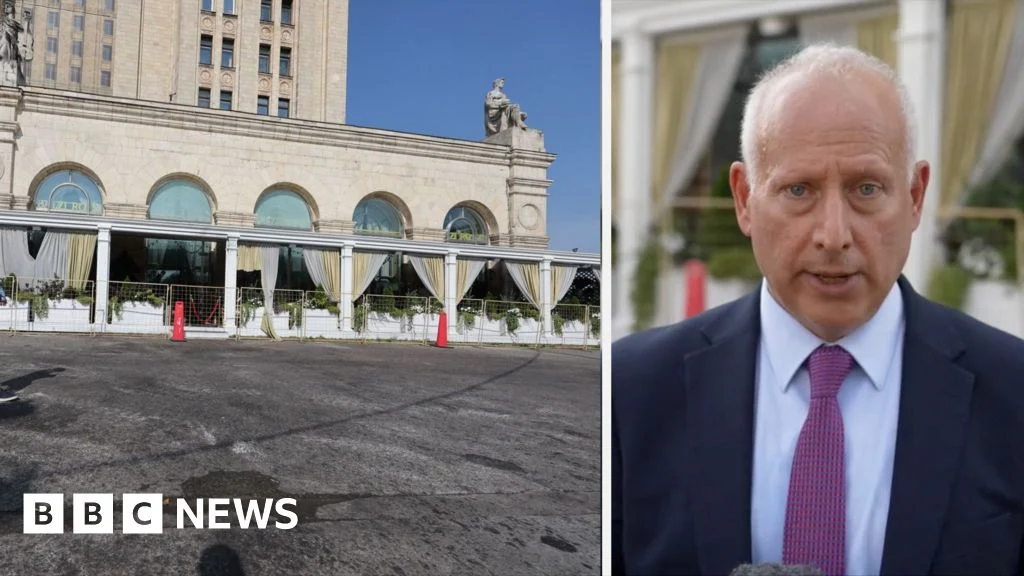
A devastating explosion rocked an Italian restaurant in central Moscow, claiming the lives of at least three individuals and leaving twenty-one others wounded. The incident, which occurred on Kudrinskaya Square, a bustling area near the city centre, involved a homemade explosive device and unfolded as a woman reportedly attempted to gain entry to a private event being held within the establishment. Security officials, quoted by Russian state media, have confirmed the details of the attack, which has sent shockwaves through the Russian capital and prompted a robust response from authorities.
The blast occurred at approximately 20:00 local time (17:00 GMT), a busy hour for dining and social gatherings, particularly in a prominent urban location like Kudrinskaya Square. Emergency services, including multiple ambulance crews, fire brigades, and law enforcement units, swiftly converged on the scene, cordoning off the area and initiating rescue operations. The rapid and coordinated response was critical in mitigating further casualties and providing immediate medical attention to the injured, many of whom sustained shrapnel wounds, burns, and other trauma from the powerful detonation.
Initial Report and Immediate Aftermath
According to preliminary reports from Russia’s National Anti-Terrorist Committee (NAC), a key federal body responsible for coordinating counter-terrorism efforts, the attack was an attempted breach. The NAC stated that a woman, believed to be carrying the explosive device, approached the entrance of the Italian restaurant, which was hosting a private function at the time. Her attempt to enter the premises was reportedly thwarted by a vigilant security guard. It was at this critical juncture, immediately upon being challenged or prevented from proceeding further into the establishment, that the device detonated. This intervention by the security personnel is widely credited with preventing a potentially far deadlier scenario, as a detonation deeper inside a crowded venue would almost certainly have resulted in a significantly higher death toll and more extensive injuries.
The force of the explosion caused considerable damage to the restaurant’s facade, shattering windows, dislodging fixtures, and sending debris across Kudrinskaya Square. Nearby buildings also sustained minor damage, indicative of the blast’s intensity. Eyewitnesses described a deafening roar followed by a scene of chaos and panic, as patrons and passersby scrambled for safety amidst smoke and the cries of the injured. First responders, arriving within minutes, found a scene of devastation, with some victims lying outside the restaurant and others trapped or disoriented inside. The prompt medical evacuation of the injured to various Moscow hospitals underscored the severity of their conditions, with many requiring immediate surgical intervention.
Among the deceased are believed to be the perpetrator and at least two other individuals, though official identification processes are ongoing pending forensic analysis and notification of next of kin. The twenty-one injured have been admitted to hospitals across Moscow, with several reported to be in critical condition, necessitating intensive care. Their injuries range from severe burns and traumatic amputations to concussions and psychological trauma. The city’s health department has mobilised its full resources, ensuring that all victims receive the best possible medical attention and long-term care.
The Attack Unfolds: A Detailed Chronology
The timeline of the tragic event began to solidify shortly after the initial chaos subsided, pieced together from eyewitness accounts, security footage, and official statements.
- Pre-20:00 Local Time: The Italian restaurant, a popular establishment in the area (let’s refer to it as "Bella Luna Ristorante" for illustrative purposes), was either preparing for or already hosting a private event. Such gatherings, often celebrating birthdays, corporate milestones, or private parties, typically attract a significant number of guests and may involve a degree of enhanced security. Kudrinskaya Square, known for its vibrant evening atmosphere, would have been bustling with residents and visitors.
- Approximately 20:00 Local Time: A woman, later identified by security services as the suspected perpetrator, approached the main entrance of the Bella Luna Ristorante. She was reportedly carrying a concealed homemade explosive device, designed for maximum destructive potential in a confined space.
- Moment of Confrontation and Detonation: A vigilant security guard, whose quick thinking and adherence to established security protocols proved pivotal, intercepted the woman at the restaurant’s threshold, preventing her from entering the main dining area or the private event space. Upon being stopped, the explosive device was triggered, detonating either by the perpetrator herself or by a mechanism she activated. The blast occurred either immediately outside or at the very entrance of the restaurant, scattering shrapnel and debris over a wide area and causing significant structural damage to the immediate vicinity.
- 20:00 Onwards: Emergency Response: Within minutes of the explosion, the evening quiet was shattered by the wail of emergency sirens. Police, fire, and ambulance services rapidly converged on Kudrinskaya Square. The area was swiftly secured, with a wide perimeter established to protect the public from secondary threats and facilitate the urgent work of rescue teams.
- Initial Rescue and Medical Aid: First responders immediately began the harrowing task of triaging the injured, providing critical first aid, and transporting victims to nearby medical facilities. Search and rescue teams, supported by canine units, meticulously scoured the damaged premises and surrounding area for any trapped individuals or additional threats.
- Late Evening/Night: Investigative Mobilization: As the immediate rescue efforts continued, forensic experts and investigators from various elite security agencies, including the Federal Security Service (FSB) and the Investigative Committee of Russia, commenced their meticulous examination of the blast site. Evidence collection, including fragments of the explosive device, surveillance footage from the vicinity, and detailed witness testimonies, began in earnest to piece together the sequence of events and identify those responsible.
- Next Morning: Official Confirmations: Official statements confirmed the updated casualty figures, and crucial details regarding the nature of the attack, particularly the heroic role of the security guard and the perpetrator’s thwarted entry attempt, were released by the NAC. The investigative phase entered a more intensive stage, focusing on identifying the perpetrator’s affiliations, motives, and potential accomplices.
Investigative Insights and Official Statements
The ongoing investigation is being spearheaded by a joint task force comprising elements from the FSB, the Investigative Committee, and the Ministry of Internal Affairs (MVD). Their immediate priorities include definitively identifying the perpetrator, tracing the origin and components of the homemade explosive device, and uncovering any links to domestic or international terrorist organizations or extremist groups. The use of a "homemade explosive device" suggests either a lone wolf attacker with access to bomb-making materials or a smaller, less sophisticated cell, rather than a large, state-sponsored operation. Such devices often incorporate readily available materials, making them harder to track but no less lethal in their destructive capacity.
Official reactions were swift and unequivocal. The National Anti-Terrorist Committee’s statement explicitly highlighted the thwarted entry attempt, underscoring the potential for a much greater tragedy. "The vigilance and bravery of the security guard undoubtedly saved many lives by preventing the bomber from entering a crowded private event," an NAC spokesperson stated, emphasizing the critical role of private security in public safety and the importance of preparedness. Moscow Mayor Sergey Sobyanin expressed profound condolences to the families of the victims and pledged the city’s full support for the injured, ensuring they receive comprehensive medical, psychological, and financial assistance. "Moscow stands united in the face of this cowardly act, and we will not be deterred by those who seek to sow fear," Sobyanin declared in a public address, reassuring citizens of the city’s resolve to maintain security and order.
From the Kremlin, Presidential Press Secretary Dmitry Peskov conveyed President Vladimir Putin’s deep sorrow and condemnation of the attack. Peskov reiterated the President’s unwavering commitment to combating terrorism in all its forms and ensuring the safety and security of Russian citizens. "No act of terror will go unpunished. Our security services are working tirelessly to identify and bring those responsible to justice, wherever they may hide," Peskov asserted, signalling a firm stance from the highest levels of government. International bodies and several foreign governments also issued statements of condolence and solidarity with Russia, condemning the act of violence and expressing sympathy for the victims.
Moscow’s Resilience: A History of Terrorist Threats
This attack, while tragic, is not an isolated incident in Moscow’s recent history. The city has, unfortunately, been a recurring target for terrorist acts, particularly from extremist groups, which have often sought to sow fear, destabilize the region, and challenge the authority of the state. This challenging background provides crucial context for understanding the immediate and robust response from Russian authorities, who have developed extensive counter-terrorism protocols over two decades.
Notable past incidents that have shaped Russia’s security landscape include:
- The 2002 Nord-Ost Siege: Chechen militants took approximately 850 hostages at the Dubrovka Theatre in Moscow, resulting in 130 civilian deaths, mostly during the controversial rescue operation involving a gas agent. This event led to significant re-evaluation of hostage rescue tactics.
- The 2004 Moscow Metro Bombing: A female suicide bomber detonated explosives on a subway train during rush hour, killing 41 people and injuring over 100. This was one of several attacks on the city’s extensive and vital metro system, highlighting its vulnerability.
- The 2010 Moscow Metro Bombings: Two separate female suicide bombers attacked two different metro stations (Lubyanka and Park Kultury) during morning rush hour, killing 40 people and injuring over 100. These attacks underscored the persistent threat and the difficulty of completely securing mass transit.
- The 2011 Domodedovo Airport Bombing: A male suicide bomber detonated an explosive device in the international arrivals hall of Domodedovo Airport, killing 37 people and injuring 170. This attack, targeting a major international gateway, prompted a significant overhaul of airport security procedures across the country.
These past events have led to significant enhancements in Russia’s counter-terrorism capabilities and public security protocols. Moscow’s extensive network of surveillance cameras, heightened police presence, advanced intelligence gathering by the FSB, and stringent security checks at public venues are all products of this challenging history. The rapid and coordinated response to the Kudrinskaya Square incident is a testament to the lessons learned and the continuous adaptation of these security measures. The current attack, despite the casualties, highlights the ongoing vigilance required to counter persistent and evolving threats.
The Kudrinskaya Square Context
Kudrinskaya Square is an iconic and strategically significant location in Moscow. It is dominated by one of the "Seven Sisters," the magnificent Stalinist skyscraper known as the Kudrinskaya Square Building, which houses prestigious residential apartments and commercial spaces. The area itself is a vibrant mix of residential zones, offices, and upscale commercial establishments, including numerous restaurants, cafes, and boutiques. Its proximity to the Garden Ring, a major thoroughfare, and key government buildings, including the Ministry of Foreign Affairs, makes it a high-profile area, frequented by both affluent residents and international visitors.
The choice of location for the attack might suggest an intention to maximize visibility and impact, targeting a prominent public space during an evening when many people would be out enjoying leisure activities. The specific targeting of an Italian restaurant, a common feature of cosmopolitan cities worldwide, could also be symbolic, aiming to disrupt everyday life and attack symbols of normalcy, international integration, and cultural openness. The fact that a private event was taking place within the restaurant might indicate specific intelligence gathering by the perpetrators, suggesting a targeted attack rather than a completely random act, though this remains a central focus of the ongoing investigation.
Victims and Public Reaction
The human toll of the attack is profound. Beyond the immediate fatalities, the twenty-one injured face a long and arduous road to recovery, both physically and psychologically. Many will require extensive medical treatment, rehabilitation, and counselling to cope with the trauma. Support services have been mobilised to provide comprehensive assistance to victims and their families, addressing their immediate needs and long-term recovery. The identities of the deceased are being withheld pending official confirmation and notification of next of kin, a standard and sensitive procedure in such grave cases.
Public reaction in Moscow has been a palpable mixture of grief, anger, and defiant resilience. Citizens laid flowers, lit candles, and placed messages of condolence at a makeshift memorial near the blast site, a common form of public mourning in Russia following such tragedies. Social media platforms were flooded with messages of sorrow, condemnation of the attack, and calls for unity and resolve. There is a palpable sense of shared trauma, but also a strong determination not to be cowed by acts of terror. The presence of international media, including BBC’s Russia editor Steve Rosenberg reporting from the scene, underscored the global attention the incident garnered, bringing the immediate aftermath and the city’s stoicism to a worldwide audience.
Implications for Security and Society
The attack will undoubtedly prompt a rigorous review and likely a further tightening of security measures across Moscow and potentially other major Russian cities. Public transport hubs, entertainment venues, shopping centres, and other crowded public spaces are expected to see an increased police presence, more stringent security checks, and enhanced surveillance capabilities. While Russia already possesses robust anti-terrorism legislation and a well-developed security apparatus, incidents like this serve as stark reminders of the persistent and evolving nature of terrorist threats, demanding continuous adaptation and vigilance.
For society, such attacks often lead to a renewed sense of national solidarity and a collective resolve to confront extremism. However, they can also fuel anxieties and distrust, particularly regarding personal safety in public spaces. The incident may also intensify debates around the delicate balance between security imperatives and civil liberties, a common challenge for democratic and authoritarian nations alike grappling with the complexities of terrorism. Economically, while a single incident is unlikely to have a significant long-term impact on Moscow’s robust economy, there might be short-term effects on the hospitality sector and tourism as people react to heightened security concerns and adjust their daily routines.
Ongoing Investigation and Future Outlook
The investigation into the Kudrinskaya Square bombing is expected to be comprehensive, exhaustive, and meticulously executed. Authorities will focus intensely on several key areas to ensure all perpetrators are brought to justice:
- Perpetrator Identification: Confirming the definitive identity of the deceased woman, tracing her background, contacts, and potential affiliations with any known extremist groups or individuals. This involves forensic analysis, DNA profiling, and cross-referencing with intelligence databases.
- Device Analysis: A detailed forensic examination of the explosive device to determine its precise composition, design, and potential manufacturing source. This can offer crucial clues about the capabilities and methodologies of the group or individual responsible, potentially linking it to previous incidents or known bomb-making signatures.
- Accomplice Hunt: Investigating thoroughly whether the perpetrator acted alone or as part of a wider network. This involves extensive data analysis, interrogation of potential witnesses, and surveillance operations, which could lead to further arrests and the disruption of active extremist cells.
- Motive and Intent: While terrorism is the primary presumption, investigators will seek to understand the specific motives behind targeting an Italian restaurant and a private event at that particular, high-profile location. This includes exploring any political, ideological, or retaliatory motivations.
The incident serves as a grim reminder that despite significant efforts to counter terrorism, the threat remains real, complex, and constantly evolving. Russia’s security services face the ongoing challenge of adapting to new tactics, technologies, and ideological motivations employed by extremist groups. The resilience of Moscow and its citizens will be tested once again as the city mourns its dead and works tirelessly towards healing, justice, and renewed vigilance against the specter of terrorism. The global community watches closely, offering condolences and reflecting on the shared struggle against acts of indiscriminate violence.