

The National Aeronautics and Space Administration (NASA) is meticulously preparing for the monumental Artemis II mission, a pivotal crewed flight test that will send four astronauts on a roughly 10-day journey around the Moon. This mission marks a critical step in humanity’s return to lunar exploration and serves as a foundational precursor for establishing a sustainable human presence on the Moon and ultimately venturing to Mars. The agency has set a target launch date no earlier than Wednesday, April 1, with a two-hour launch window opening at 6:24 p.m. EDT. Additional launch opportunities extend through Monday, April 6, allowing flexibility for optimal conditions.
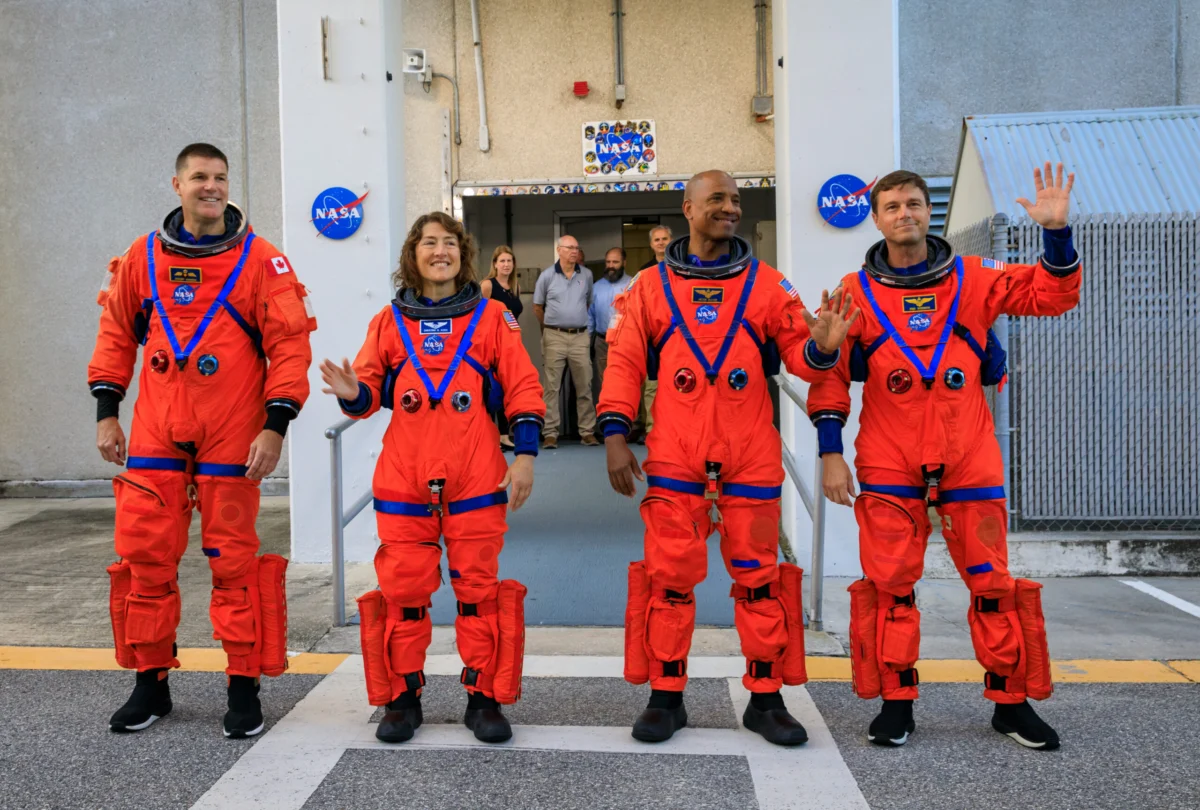
Artemis II is the first crewed mission under NASA’s ambitious Artemis program, designed to push the boundaries of human spaceflight. Launching from the historic Kennedy Space Center in Florida, the mission will carry NASA astronauts Reid Wiseman, Victor Glover, and Christina Koch, alongside Canadian Space Agency (CSA) astronaut Jeremy Hansen. Their voyage aboard the Orion spacecraft, propelled by NASA’s powerful Space Launch System (SLS) rocket, will primarily focus on testing Orion’s critical life support systems with humans on board for the first time in deep space, validating the spacecraft’s capabilities for future, more complex crewed missions.
The Artemis Program: A New Era of Lunar Exploration
Artemis II is not merely a single mission but an integral part of a multi-phase program aimed at re-establishing a robust human presence on the Moon. The program’s initial phase, Artemis I, successfully completed an uncrewed flight test of the SLS and Orion spacecraft in late 2022. That mission demonstrated the hardware’s capabilities, including Orion’s performance in a lunar flyby and its high-speed re-entry and splashdown, providing invaluable data for the upcoming crewed flight. Artemis II builds directly on this success, introducing humans into the equation to rigorously evaluate every aspect of the spacecraft’s human-rated systems.
The ultimate goal of the Artemis program is to land humans on the Moon, including the first woman and first person of color, through the Artemis III mission. Beyond these initial landings, NASA envisions establishing a sustainable long-term human presence on and around the Moon, utilizing resources like lunar ice, and constructing the Gateway, a lunar-orbiting outpost. This sustained lunar presence will serve as a crucial testbed for technologies and operational procedures necessary for future deep-space exploration, specifically missions to Mars. The experience gained from living and working on the Moon will be directly applicable to the challenges of sending astronauts to the Red Planet.
The Crew: Pioneers of the Next Generation
The four astronauts selected for Artemis II represent a blend of experience and pioneering spirit. Commander Reid Wiseman, a veteran of a previous space station mission, will lead the crew. Pilot Victor Glover, who has also served on the International Space Station (ISS), will be responsible for spacecraft operations. Mission Specialist Christina Koch, known for her record-breaking spacewalks and long-duration stay on the ISS, brings extensive expertise in human adaptation to space. Completing the quartet is CSA astronaut Jeremy Hansen, making his first journey into space, signifying the strong international partnership underpinning the Artemis program. Their diverse backgrounds and extensive training are crucial for the complex demands of this pioneering mission. Their presence aboard Orion will provide real-time human feedback on the spacecraft’s environment, systems, and operational procedures, data that no uncrewed flight could ever replicate.
The Space Launch System and Orion: Engineering Marvels
The Space Launch System (SLS) rocket, specifically the Block 1 configuration, stands as the most powerful rocket ever built for NASA. Its immense thrust, generated by four RS-25 engines and two solid rocket boosters, is necessary to propel the Orion spacecraft and its crew beyond Earth orbit and onto a trajectory toward the Moon. The SLS has undergone extensive testing and its performance during Artemis I validated its design and capabilities for deep-space missions.
The Orion spacecraft is the cornerstone of the Artemis missions, designed to transport astronauts farther into space than any human-rated vehicle before it. It features advanced life support systems, robust heat shielding for high-speed atmospheric re-entry, and sophisticated avionics. For Artemis II, the critical test will be the performance of these life support systems, ensuring they can sustain the crew for the duration of the 10-day mission in the harsh environment of deep space. The data gathered will be vital for refining systems for longer-duration missions, including those to Mars.
Mission Objectives and Milestones
Artemis II’s primary objective is to thoroughly test Orion’s systems with crew aboard. This includes verifying the functionality of environmental control and life support systems, propulsion, communications, and navigation in a deep-space environment. The mission profile will take the crew on a lunar flyby trajectory, bringing them within approximately 6,400 miles (10,300 kilometers) of the Moon’s surface before returning to Earth.
A significant milestone anticipated during the mission, specifically if the launch occurs on April 1, is for the crew to surpass the record for the greatest distance from Earth ever achieved by humans. This record was previously set by the Apollo 13 mission at 400,171 kilometers (248,655 miles). Breaking this record underscores the unprecedented nature of the Artemis II journey and its role in pushing the boundaries of human exploration. The mission will also provide crucial data on crew operations, human factors, and potential psychological impacts of extended deep-space travel, informing future mission planning.
Extensive Live Coverage and Public Engagement
NASA is committed to providing comprehensive, real-time coverage of the Artemis II mission, ensuring global public access to this historic endeavor. Live coverage of pre-launch events, the launch itself, and continuous mission activities will be broadcast 24 hours a day (in English) on the agency’s official YouTube channel. Additionally, individual events will feature dedicated streams as their start times approach.
For an even more immersive experience, the agency will offer coverage of the launch, lunar flyby, and splashdown via its streaming platforms, NASA+ and Amazon Prime. These platforms, along with various online channels and social media, provide multiple avenues for the public to follow the mission’s progress. A dedicated Spanish-language launch broadcast will also be available on NASA’s Spanish YouTube channel and NASA+, beginning at 4:45 p.m. EDT on launch day and continuing for approximately 15 minutes after liftoff, ensuring broad accessibility.
The agency’s commitment to transparency extends to media relations. While the deadline for in-person media accreditation for launch and mission events has passed, detailed information regarding media accreditation policy is available online. Journalists requiring access to specific NASA centers for inquiries can contact [email protected] for Kennedy Space Center or [email protected] for Johnson Space Center in Houston. Limited seating will be available for previously accredited journalists at the Kennedy auditorium for pre-launch briefings on a first-come, first-served basis. Media wishing to participate by phone in briefings must RSVP at least two hours prior to each session by emailing [email protected] for Kennedy-based events or [email protected] for Johnson-based events, which will commence from April 2.
Chronology of Key Events (All Times EDT, Subject to Change)
The mission timeline is meticulously planned, with key events leading up to and throughout the 10-day journey. NASA leadership and the crew are expected to offer insights and updates at various points.
-
Friday, March 27:
- 2:30 p.m.: The Artemis II crew arrives at Kennedy Space Center, participating in a Q&A session. NASA Administrator Bill Nelson, along with CSA President Lisa Campbell, are anticipated to be present, underscoring the international significance of the mission and expressing confidence in the preparations.
-
Sunday, March 29:
- 9:30 a.m.: The Artemis II crew will engage with journalists virtually from their quarantine facility, likely sharing their readiness and excitement for the upcoming journey.
- 2:00 p.m.: A pre-launch status briefing will be held by NASA officials, providing updates on final preparations, weather forecasts, and any potential issues.
-
Monday, March 30:
- 5:00 p.m.: Following a crucial mission readiness review, NASA will host a press conference to provide a final update on the launch preparations, signifying the agency’s confidence in proceeding.
-
Tuesday, March 31:
- 1:00 p.m.: A pre-launch press conference will inform the public on the countdown status, offering insights into the final technical checks and procedures.
-
Wednesday, April 1 (Launch Day):
- 7:45 a.m.: Live coverage begins for the SLS rocket fueling operations, a critical and visually impressive phase of the countdown.
- 12:40 p.m.: NASA+ initiates full launch coverage, transitioning to YouTube once Orion’s solar arrays deploy in space.
- 4:45 p.m.: Spanish-language launch coverage commences on NASA’s Spanish YouTube channel and NASA+.
- 6:24 p.m. EDT: Launch window opens from Kennedy Space Center, aiming for liftoff of Artemis II.
- Approximately 2.5 hours post-launch: A post-launch press conference will take place after the SLS upper stage performs the orbital maneuver to propel Orion and its crew into a high Earth orbit, signifying a successful initial phase of the mission. NASA officials will likely express relief and satisfaction with the launch and initial orbital insertion.
Mission Coverage and In-Flight Activities
NASA’s real-time coverage will continue throughout the entire mission on YouTube. A separate live stream featuring views from the Orion spacecraft will also be available, bandwidth permitting, offering unprecedented perspectives of deep space.
Daily mission status briefings will be provided from NASA’s Johnson Space Center, beginning Thursday, April 2 (with an exception on April 6 due to the lunar flyby). These briefings will keep the public informed of the crew’s health, spacecraft status, and mission progress. The crew will also participate in live "downlinks" – direct communications with Earth – offering unique opportunities for them to share their experiences and observations from deep space. Exact schedules for these downlinks will be communicated via the Artemis blog and launch events page.
-
Thursday, April 2:
- 8:30 p.m.: Mission status briefing following the critical translunar injection maneuver, which sets Orion on its course toward the Moon.
- 10:24 p.m.: Live downlink event with the crew.
-
Friday, April 3:
- 3:30 p.m.: Mission status briefing.
- 8:44 p.m.: Live downlink event.
-
Saturday, April 4:
- 12:59 a.m.: Live downlink event with CSA participation.
- 4:34 p.m.: Live downlink event.
- 5:15 p.m.: Mission status briefing.
-
Sunday, April 5:
- 12:14 a.m.: Live downlink event with CSA participation.
- 3:30 p.m.: Mission status briefing.
-
Monday, April 6 (Lunar Flyby Day):
- 12:45 p.m.: NASA+ begins coverage of the lunar flyby.
- 1:45 p.m.: If launched on April 1, the crew is expected to break the Apollo 13 distance record. During the flyby, video transmission may be limited due to Orion traversing an eclipse, and communications with Earth are expected to be lost as the spacecraft passes behind the far side of the Moon, a critical test of autonomous systems.
- 10:39 p.m.: Live downlink event.
-
Tuesday, April 7:
- 2:29 p.m.: Artemis II crew will engage in an audio-only conversation with astronauts aboard the International Space Station, a symbolic bridge between different human spaceflight endeavors.
- 4:00 p.m.: Mission status briefing.
-
Wednesday, April 8:
- 3:30 p.m.: Mission status briefing.
- 7:09 p.m.: Live downlink event with CSA participation.
-
Thursday, April 9:
- 3:30 p.m.: Mission status briefing.
- 5:59 p.m.: Crew press conference, offering direct insights from the astronauts about their journey.
- 7:54 p.m.: Live downlink event.
-
Friday, April 10 (Return to Earth):
- 6:30 p.m.: NASA+ begins coverage for the crew’s return.
- 8:06 p.m.: Orion is expected to splash down in the Pacific Ocean. NASA and Department of Defense personnel will assist the crew from the capsule and transport them via air to a waiting recovery vessel.
- 10:35 p.m.: Post-splashdown press conference at NASA’s Johnson Space Center, marking the formal conclusion of the mission and providing initial assessments of its success.
Details regarding the astronauts’ return to Houston will be announced at a later date.
Digital Resources and Virtual Participation
NASA will provide continuous updates on the launch countdown and throughout the mission on the Artemis blog (in English). The latest imagery and multimedia assets will be available at Artemis II Multimedia, allowing the public to visually track the mission’s progress. To follow Orion’s precise trajectory in space, the public can visit Nasa.gov/trackartemis.
For those unable to attend in person, NASA offers a virtual launch program. Individuals can register to attend the launch virtually, gaining access to selected launch resources, notifications, and a virtual guest passport stamp after launch. Audio-only coverage of fueling and launch operations will also be available by dialing +1-256-715-9946 (access code 682-040-632). Local residents on Florida’s Space Coast can tune into VHF radio frequency 146.940 MHz or UHF radio frequency 444.925 MHz for live launch audio.
Broader Impact and Future Implications
The Artemis II mission transcends a simple lunar flyby; it is a critical investment in humanity’s future in space. Its success will significantly de-risk future Artemis missions, particularly Artemis III, by validating the human-rated systems of Orion. This mission lays the groundwork for establishing a sustained human presence on the Moon through programs like the Gateway lunar outpost, which will facilitate scientific research, technology development, and resource utilization.
Furthermore, Artemis II is a vital stepping stone towards the ultimate goal of sending humans to Mars. The experiences gained in terms of deep-space operations, long-duration human health, radiation exposure mitigation, and autonomous system performance will directly inform the design and execution of crewed missions to the Red Planet. This era of exploration, marked by innovation and international collaboration, promises scientific discovery, economic benefits through space commerce, and an expansion of humanity’s reach beyond Earth.
For more information on NASA’s Artemis program, please visit:
https://www.nasa.gov (English)
https://ciencia.nasa.gov/artemis (Spanish)