

NASA has announced the commencement of media accreditation for two pivotal upcoming missions: the launch of the Nancy Grace Roman Space Telescope, set to revolutionize cosmology and exoplanet research, and the SpaceX Crew-13 mission, which will transport an international crew to the International Space Station (ISS) for an extended science expedition. These launches, both slated for the coming months, underscore NASA’s relentless pursuit of scientific discovery and its continued commitment to human spaceflight through strategic partnerships.
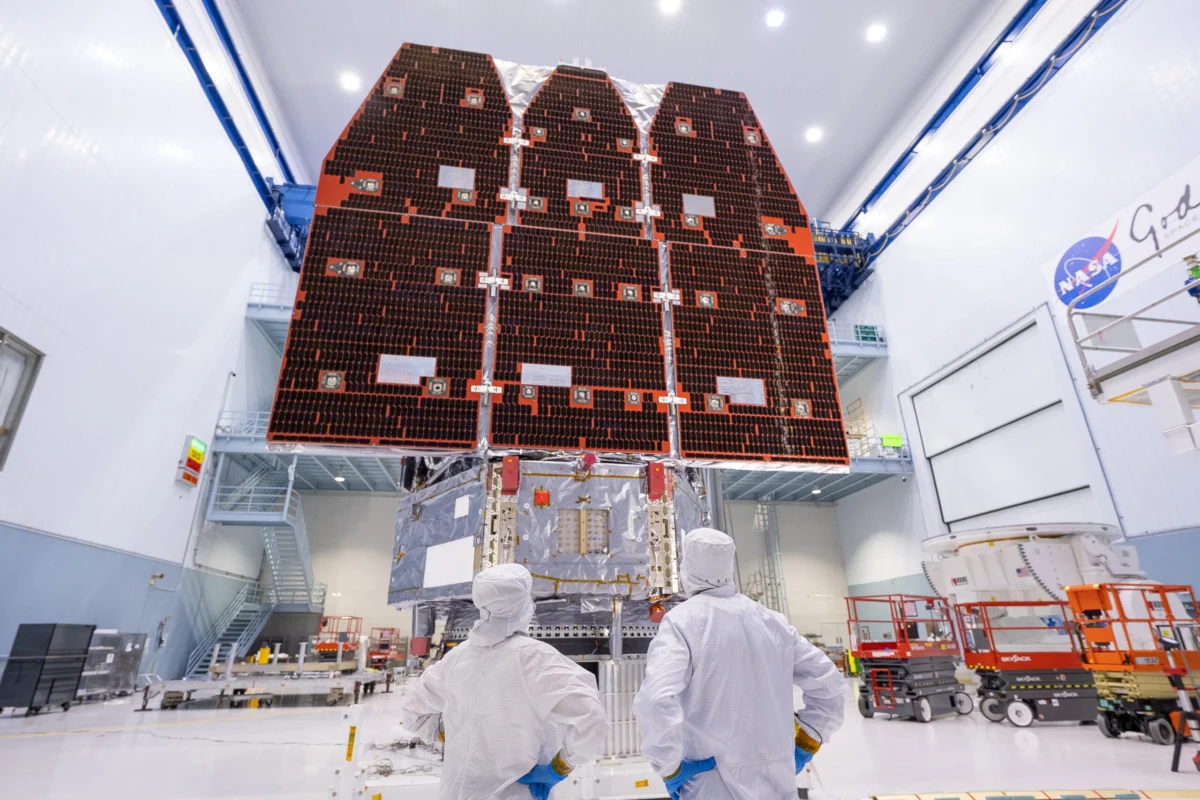
The Nancy Grace Roman Space Telescope, an observatory poised to deliver an unprecedented panoramic view of the cosmos, is scheduled for launch no earlier than 7:20 a.m. EDT on Sunday, August 30. This monumental mission will originate from Launch Complex 39A at NASA’s historic Kennedy Space Center in Florida, utilizing a powerful SpaceX Falcon Heavy rocket. Named in honor of Dr. Nancy Grace Roman, often hailed as the "Mother of Hubble" for her foundational role in establishing the Hubble Space Telescope program, this next-generation observatory is designed to tackle some of the most profound mysteries of the universe. Its primary scientific objectives include investigating the nature of dark energy and dark matter, charting the distribution of galaxies across vast cosmic distances, and discovering thousands of exoplanets through advanced microlensing techniques.
Following closely, the Crew-13 mission is targeting a launch no earlier than mid-September from Space Launch Complex 40 at Cape Canaveral Space Force Station, adjacent to Kennedy Space Center. This mission marks NASA’s thirteenth commercial crew rotation flight with SpaceX, utilizing the flight-proven Falcon 9 rocket and Crew Dragon spacecraft. The diverse four-person crew will comprise NASA astronauts Jessica Watkins and Luke Delaney, Canadian Space Agency (CSA) astronaut Joshua Kutryk, and Roscosmos cosmonaut Sergey Teteryatnikov. Their journey to the International Space Station will initiate a long-duration science and research expedition, contributing to a vast array of experiments that benefit life on Earth and pave the way for future deep-space human exploration.
The Nancy Grace Roman Space Telescope: A New Eye on the Universe’s Grand Design
The Roman Space Telescope represents a significant leap forward in infrared astronomy, building upon the legacies of its predecessors like Hubble and the James Webb Space Telescope (JWST) but with a unique focus on wide-field imaging. While JWST excels at observing distant, faint objects with unparalleled sensitivity over a narrow field, Roman’s strength lies in its expansive field of view, which is 100 times larger than that of the Hubble Space Telescope at the same resolution. This capability allows it to survey vast swathes of the sky much more efficiently, gathering colossal amounts of data crucial for statistical analyses of cosmic phenomena.
At its core, Roman features a 2.4-meter primary mirror, identical in size to Hubble’s, but equipped with two cutting-edge instruments: the Wide Field Instrument (WFI) and the Coronagraph Instrument (CGI). The WFI is the primary instrument, designed to conduct large-scale surveys of the universe in infrared light. It will capture images with 288 million pixels, providing unprecedented detail across its wide field. The CGI, on the other hand, is a technology demonstration instrument designed to block out the overwhelming light of host stars, enabling direct imaging and spectroscopic characterization of exoplanets and circumstellar disks. This technology is vital for future missions aiming to detect potentially habitable exoplanets.
Roman’s mission to understand dark energy and dark matter is paramount. Dark energy, a mysterious force thought to be accelerating the expansion of the universe, constitutes about 68% of the cosmos, yet its nature remains largely unknown. Roman will employ three distinct methods—baryon acoustic oscillations, Type Ia supernovae, and weak gravitational lensing—to precisely measure the universe’s expansion history and the growth of cosmic structures. By doing so, it aims to shed light on whether dark energy is a constant property of space or a dynamic field evolving over time. Similarly, its extensive surveys will help map the distribution of dark matter, the invisible scaffolding upon which visible galaxies are built, through its gravitational effects on light from distant galaxies.
The exoplanet survey capabilities of Roman are equally groundbreaking. Utilizing gravitational microlensing, a technique where the gravity of an intervening star or planet temporarily magnifies the light from a background star, Roman is expected to discover thousands of new exoplanets. This method is particularly sensitive to planets in orbits comparable to Earth’s and beyond, including free-floating planets not bound to any star. This will provide a more complete census of planetary systems across the Milky Way, helping scientists understand the prevalence and diversity of worlds beyond our solar system. The data from Roman will complement observations from other exoplanet missions, painting a richer picture of planetary formation and evolution.
The selection of the SpaceX Falcon Heavy rocket for Roman’s launch underscores the telescope’s substantial mass and the need for a precise insertion into its L2 halo orbit, approximately 1.5 million kilometers (930,000 miles) from Earth, directly opposite the Sun. The Falcon Heavy, currently the world’s most powerful operational rocket, with its three Falcon 9 first-stage cores strapped together, provides the necessary thrust and payload capacity to deliver the observatory efficiently to its operational position. This choice also highlights the growing reliance on commercial launch providers for critical NASA science missions, a testament to the reliability and cost-effectiveness offered by the private space sector.
SpaceX Crew-13: Sustaining Human Presence and Scientific Endeavor in Orbit
The Crew-13 mission represents the continuation of a highly successful partnership between NASA and SpaceX under the Commercial Crew Program, which has revitalized America’s capability to launch astronauts to the International Space Station from U.S. soil. Since its inception, the program has consistently delivered crews to the orbiting laboratory, ensuring continuous human presence and maximizing the scientific output of the unique microgravity environment.
The crew for this mission exemplifies international collaboration in space. NASA astronauts Jessica Watkins, a geologist and veteran of the Crew-4 mission, brings valuable experience in long-duration spaceflight and scientific research. Luke Delaney, making his first flight, is an experienced pilot and test engineer, representing the new generation of NASA explorers. From the Canadian Space Agency, Joshua Kutryk, a former Royal Canadian Air Force fighter pilot, will contribute to a range of Canadian scientific investigations aboard the ISS. Roscosmos cosmonaut Sergey Teteryatnikov’s inclusion further solidifies the enduring international partnership that underpins the ISS, demonstrating that scientific cooperation can transcend terrestrial geopolitical complexities. This integrated crew will collaborate on hundreds of experiments covering diverse fields such as human physiology, materials science, fluid physics, and Earth observation.
The International Space Station, a marvel of engineering and international diplomacy, serves as a unique laboratory where phenomena can be studied in ways impossible on Earth. Research conducted on the ISS spans a wide spectrum, from understanding how the human body adapts to long-duration spaceflight—crucial for future missions to the Moon and Mars—to developing new materials with enhanced properties, and growing protein crystals that could lead to new drug discoveries. The continuous rotation of crews, facilitated by missions like Crew-13, ensures that these vital experiments are maintained and progressed, generating a steady stream of data for scientists worldwide.

The SpaceX Crew Dragon spacecraft, launched atop a Falcon 9 rocket, has become a cornerstone of human spaceflight. The Dragon capsule is capable of carrying up to seven passengers, though typically four for ISS missions, and features an advanced abort system designed to protect the crew in the event of an emergency during launch. Its autonomous docking capabilities and reusability have proven highly efficient and reliable, significantly reducing the cost and complexity of crew transportation to the ISS. The Falcon 9, known for its reusability of the first stage, further exemplifies the innovative approach SpaceX has brought to the space industry, driving down launch costs and increasing flight cadence.
Media Accreditation and Public Engagement
NASA’s commitment to transparency and public engagement is evident in its robust media accreditation process for these high-profile launches. Journalists and media representatives interested in covering either the Roman Space Telescope or the Crew-13 mission launches are required to submit their accreditation requests online through the designated NASA Kennedy Space Center media portal (https://media.ksc.nasa.gov). Specific deadlines for application will be communicated through official NASA channels, underscoring the importance of timely submission due to the logistical complexities of managing access to secure launch facilities.
Accreditation typically grants media access to various vantage points for launch viewing, opportunities for interviews with mission personnel, and participation in pre-launch and post-launch briefings. This access is crucial for disseminating accurate, detailed, and engaging information to the global public, fostering a deeper understanding and appreciation for space exploration and scientific endeavor. NASA’s comprehensive media accreditation policy is available online, providing guidelines and requirements for all applicants. For specific inquiries regarding accreditation or special logistical arrangements, a dedicated email address ([email protected]) and phone number (321-867-2468 for NASA Kennedy’s newsroom) have been provided.
Broader Implications and the Future of Space Exploration
These two missions, while distinct in their immediate objectives, are deeply intertwined within NASA’s broader strategic vision for space exploration. The Roman Space Telescope will provide foundational scientific data that informs our understanding of the universe, helping to identify potential targets for future observation and guiding theoretical physics. Its discoveries could redefine our cosmic perspective and inspire new generations of scientists and engineers.
Simultaneously, the Crew-13 mission reinforces humanity’s continued presence in low Earth orbit, which is critical for developing the technologies and human health countermeasures necessary for venturing further into the solar system. The ISS serves as a testbed for the Artemis program, which aims to return humans to the Moon and establish a sustainable lunar presence, ultimately paving the way for human missions to Mars. The international collaboration exemplified by Crew-13 is also a vital component of these ambitious long-term goals, demonstrating the power of collective effort in tackling the challenges of space exploration.
The involvement of commercial partners like SpaceX in both scientific launches and human spaceflight missions highlights a paradigm shift in the aerospace industry. This public-private partnership model has proven highly effective in accelerating innovation, reducing costs, and increasing the frequency and reliability of access to space. It allows NASA to focus its resources on cutting-edge research and exploration, while leveraging the efficiency and agility of the private sector for operational aspects.
As the launch dates draw near, anticipation within the scientific community, space enthusiasts, and the general public continues to build. The Nancy Grace Roman Space Telescope promises to unlock secrets of the cosmos that have eluded humanity for centuries, while Crew-13 will further our understanding of living and working in space, bringing us closer to becoming an interplanetary species. These missions are not merely launches; they are stepping stones in humanity’s unending quest for knowledge and exploration.
For comprehensive information about these transformative missions and NASA’s broader initiatives, interested parties are encouraged to visit the agency’s official website at https://www.nasa.gov.
Media Contacts:
For specific inquiries related to the Roman Space Telescope:
Alise Fisher, Headquarters, Washington: 202-385-1287, [email protected]
Leejay Lockhart, Kennedy Space Center, Fla.: 321-747-8310, [email protected]
Claire Andreoli, Goddard Space Flight Center, Greenbelt, Md.: 301-286-1940, [email protected]
For specific inquiries related to the Crew-13 mission:
Joshua Finch, Headquarters, Washington: 202-358-2546, [email protected]
Steve Siceloff, Kennedy Space Center, Fla.: 321-867-2468, [email protected]