


Commercial launch providers are rapidly advancing propulsion technology, with a significant pivot towards liquid oxygen (LOX) and methane (CH4) — or "methalox" — propelled rockets and spacecraft. As these sophisticated systems scale up, designed to carry millions of pounds of propellant into orbit, the imperative to thoroughly understand their safety profiles becomes paramount. To address this critical need, engineers at NASA, leveraging decades of unparalleled expertise in cryogenic and test operations, are conducting a final, exhaustive series of tests at Eglin Air Force Base in Florida. The comprehensive data gathered from these experiments is intended to furnish government agencies and the burgeoning commercial space industry with the knowledge necessary to prepare for future operations with unwavering confidence.
The Rise of Methalox Propulsion and Its Safety Imperatives
The space industry is undergoing a transformative shift, with methalox emerging as a propulsion favorite for next-generation launch vehicles and deep-space missions. Companies like SpaceX, with its Starship program, and Blue Origin, developing New Glenn, are investing heavily in methalox, attracted by its numerous advantages: high performance, non-toxic nature, and potential for reusability and in-situ resource utilization (ISRU) on celestial bodies like Mars, where methane and oxygen could be produced from local resources. However, this promising technology also introduces unique safety challenges. Cryogenic propellants, stored at incredibly low temperatures (LOX at approximately -297°F/-183°C and liquid methane at -260°F/-161°C), are inherently volatile. The sheer scale of modern rockets, with their massive propellant tanks, means that any catastrophic failure involving the mixing and ignition of these propellants could result in an explosion of unprecedented magnitude for ground operations.
Historically, rocket propulsion has evolved through various fuel combinations, from early hypergolic propellants to kerosene-LOX (RP-1/LOX) and hydrogen-LOX (LH2/LOX) systems. Each new propellant type necessitates rigorous testing to establish safety parameters. While extensive data exists for RP-1/LOX and LH2/LOX, the specific explosive yield characteristics of large quantities of mixed liquid oxygen and methane have not been fully quantified for the scales now being contemplated by commercial ventures. This knowledge gap is precisely what NASA Stennis Space Center, a national leader in rocket propulsion testing, is now addressing.
NASA’s Critical Role in Safeguarding Space Operations
NASA’s involvement in these tests underscores its foundational role not only in space exploration but also in ensuring the safety and reliability of the broader space ecosystem. Joe Schuyler, Director of the Engineering and Test Directorate at NASA’s Stennis Space Center near Bay St. Louis, Mississippi, emphasized the agency’s unique capabilities. "NASA has a proven ability to safely execute high-risk testing," Schuyler stated, highlighting the agency’s long history of handling complex and dangerous operations with meticulous precision. He added, "This work shows how our expertise with cryogenic systems can go beyond propulsion testing and beyond our center to execute for the mission." This sentiment reflects NASA’s commitment to sharing its institutional knowledge and capabilities to support the entire aerospace community.
The current test series is a collaborative "tri-agency" effort, involving NASA, the Federal Aviation Administration (FAA), and the United States Space Force. Each agency plays a distinct yet interconnected role in the future of spaceflight. The FAA is responsible for licensing and regulating commercial space launches and reentries, making robust safety data indispensable for developing and enforcing appropriate regulations. The Space Force, tasked with organizing, training, and equipping forces to protect U.S. interests in space, requires this data for ensuring the safety of its own launch operations and infrastructure. NASA, beyond its scientific and exploratory missions, serves as a crucial technical authority, providing the foundational research and testing that informs both regulatory bodies and industry practices. This synergy is vital for establishing a unified and comprehensive safety framework for the rapidly expanding space domain.
Unveiling the "Big Boom": The Test Methodology
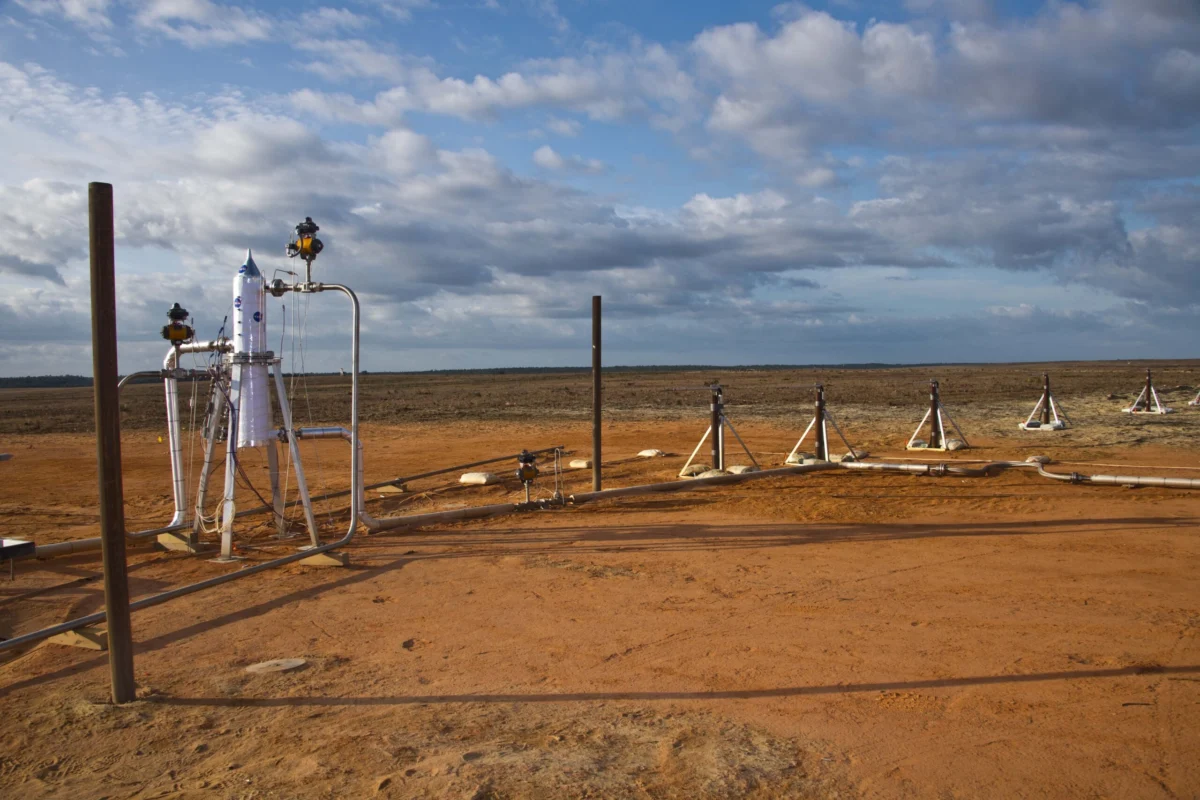
The core of this extensive test program lies in evaluating explosion hazards across three distinct scales, designed to model various real-world scenarios of propellant handling and storage. Test articles, meticulously developed by a dedicated team at NASA’s Wallops Flight Facility in Virginia, replicate generic fuel storage tanks. These tanks are configured with liquid oxygen and methane separated by a common bulkhead, a critical component in many rocket designs. The tests evaluate propellant weights of 100 pounds, 2,000 pounds, and a substantial 20,000 pounds, providing data points relevant to everything from smaller-scale fueling operations to the catastrophic failure of significant propellant volumes.
For a substantial portion of these tests, the barrier separating the two propellants is intentionally ruptured. This simulates a catastrophic failure scenario, allowing the highly reactive fluids to mix. Once mixed, the propellants are detonated. A sophisticated array of instruments, strategically placed both on the test articles themselves and throughout a expansive test field, meticulously measures the intensity of the resulting blast wave at predetermined distances. High-speed cameras are also employed, capturing not only the thermal aspects of the explosion — critical for understanding ignition and combustion characteristics — but also precisely how fast and where fragments travel. This comprehensive data collection provides a holistic understanding of the destructive potential.
Jason Hopper, NASA Stennis’s liquid oxygen methane assessment deputy project manager, offered a remarkably concise summary of the complex undertaking: "We put fuel in a rocket, blow it up in a remote location, and measure how big the boom is." Behind Hopper’s straightforward explanation lies an operation of immense complexity, executed entirely by NASA Stennis civil servants. This testing brings together diverse expertise in test operations, execution, logistics, and cryogenics in a manner rarely combined outside of actual launch operations. The interdisciplinary nature of the team, coupled with their deep experience, is what enables such high-stakes, precise experimentation.
Building the Battlefield: Site Preparation and Bespoke Infrastructure
The sheer scale and unique requirements of the explosive yield testing necessitated the creation of a purpose-built test site. An immediate and crucial connection formed between the NASA team and the 780th Test Squadron Ground Test Flight personnel from Eglin Air Force Base during an early site visit, facilitating rapid development. Starting from what was essentially a "greenfield" site with only a remote concrete pad, the NASA team, demonstrating remarkable ingenuity and efficiency, transformed the area into a fully operational test site in approximately four months. This impressive feat of engineering and logistics even navigated the complexities of a government furlough in October 2025, highlighting the team’s dedication.
The transformation involved extensive groundwork. Crews cleared the area, meticulously leveled the existing concrete pad, and orchestrated the transport of specialized cryogenic storage vessels from NASA’s Kennedy Space Center in Florida. These vessels are essential for safely holding the super-cold liquid propellants, maintaining them at temperatures ranging from minus 260 degrees to minus 297 degrees Fahrenheit. Custom infrastructure was a key component of the setup, including the fabrication of 700 feet of cryogenic transfer lines and the construction of robust support stands to precisely route these lines to the test article location.
Further enhancing the site’s capabilities, the team brought in powerful generators for electrical power and ingeniously modified a standard shipping container into a fully equipped fabrication workshop, enabling on-site repairs and modifications. A mobile control center, initially provided by NASA Wallops, was meticulously converted into a sophisticated control room at NASA Stennis before its final deployment to the Florida test site. For the initial, smaller-scale tests, this control room is positioned 1.6 miles from the blast site, providing both safety and optimal data acquisition. For the larger detonations planned later in the series, the control room will be relocated to a distance of 4 miles, further enhancing safety protocols.
A significant engineering challenge arose in the requirement to control the propellant transfer system without relying on standard, large-scale industrial control equipment typically used at NASA Stennis. The remote location and specific nature of these tests demanded a more compact and adaptable solution. The NASA Data Acquisition System (NDAS) team rose to the occasion, providing an innovative compact data acquisition and control system. This hardware is not only energy-efficient, running on lithium batteries and solar panels, but also highly robust. The team further customized existing redline software to create a bespoke control system tailored precisely to the project’s unique needs. During testing, operators utilize an intuitive on-screen diagram that displays all valves and instruments, allowing for precise control while the system simultaneously collects critical test data and manages the cryogenic propellant transfer system.
Adding another layer of capability, a dedicated crew from Eglin Air Force Base installed essential fiber optic lines for high-speed data transmission. They also deployed three pressure sensor arrays, positioned 120 degrees apart around the blast site. These arrays provide crucial interfaces for the blast team from NASA’s Marshall Space Flight Center in Huntsville, Alabama, to plug in their specialized sensors and cables, ensuring comprehensive capture of explosion dynamics.
A Precision Chronology of Explosions: The Test Series Unfolds
The meticulous preparation culminated in the completion of site construction and the installation of the initial test article by December 2025. This marked a significant milestone, transitioning from site development to the execution phase.
In January 2026, the team conducted two baseline tests utilizing C-4, a powerful explosive with well-documented blast characteristics. These tests were crucial for establishing a precise reference point, allowing for accurate comparison with the subsequent methalox detonations planned for February and beyond. Following these baselines, a successful cold shock test was performed, where crews flowed liquid nitrogen through the entire system. This vital step validated the integrity and functionality of the entire cryogenic infrastructure under extreme temperature conditions, ensuring all components could safely handle the super-cold propellants.
The first four tests of the main series were successfully completed in February 2026. For these initial tests, the test articles were filled with liquid oxygen and liquefied natural gas (a close surrogate for methane), but critically, the propellants were not mixed. Instead, C-4 was used to detonate the entire test article, providing data on the blast characteristics of the unmixed, but still hazardous, propellant containers. In subsequent tests, a key differentiator will be the intentional mixing of the cryogenics prior to detonation, allowing instruments to measure the resulting explosion under conditions simulating a true propellant mixing failure.
Looking ahead, March 2026 is slated for the scale-up to 2,000-pound test articles, with eight tests meticulously planned. These tests will delve into two critical failure configurations:
- Transfer Tube Failure: This scenario simulates a failure of the propellant line that runs from the top tank through the bottom tank, a common design element that could lead to inadvertent mixing.
- Common Bulkhead Failure: This configuration simulates a breach of the shared wall between the two propellant tanks, a high-risk scenario that could lead to rapid and uncontrolled mixing of propellants.
Understanding the explosive yield from these specific failure modes is paramount for designing safer rocket structures and operational procedures.
The largest and arguably most impactful test, involving a massive 20,000 pounds of propellants, is scheduled for June 2026. This culminating test will specifically simulate a common bulkhead failure scenario at an unprecedented scale for methalox propellants. The data collected from this test will provide invaluable insights into the maximum potential destructive force of such an event.
Implications for the Future of Spaceflight
Once this comprehensive test series is complete, the critical new data on methane-based propulsion systems will have far-reaching implications. The findings are expected to directly influence and shape launch site planning, dictating exclusion zones, bunker requirements, and emergency response protocols for years to come. Furthermore, this data will be instrumental in developing robust safety protocols for propellant loading, storage, and transfer operations, significantly mitigating risks for both personnel and surrounding communities.
Crucially, the results will inform and potentially redefine safety requirements for commercial space launch providers. The FAA will leverage this information to refine licensing criteria, ensuring that new methalox-fueled rockets meet the highest standards of safety before they are cleared for flight. The United States Space Force will also incorporate these findings into its operational guidelines for national security launches, enhancing the safety of critical space assets.
As Jason Hopper noted, "This type of testing only comes around once every few decades." Its long-term significance cannot be overstated. With the current surge in commercial space activity and the increasing ambition for larger, more powerful rockets, these tests are a proactive measure to ensure that innovation in space propulsion is matched by an unwavering commitment to safety. By quantifying the risks associated with methalox, NASA Stennis is directly contributing to public safety, site safety, and all the inherent risks involved with the ongoing work of launching humanity further into the cosmos. The ultimate goal is to foster greater confidence across the entire space industry, enabling safer, more frequent, and larger-scale space missions for decades to come.