

In a pivotal moment for the future of space exploration, NASA, following its high-level "Ignition" strategic review event held on Tuesday, announced a comprehensive suite of transformative agency-wide initiatives designed to rigorously pursue the objectives of President Donald J. Trump’s National Space Policy and solidify American preeminence in the vast expanse beyond Earth. These bold actions underscore not only the pressing urgency of the current geopolitical climate in space but also the immense scientific and discovery opportunities that stand poised to reshape our understanding of the cosmos and our place within it. The announcements signal a significant recalibration of NASA’s priorities, emphasizing a rapid, phased approach to lunar return, a robust transition to commercial operations in Low Earth Orbit (LEO), an acceleration of groundbreaking scientific missions, and a pioneering commitment to nuclear propulsion for deep space exploration.
The "Ignition" event served as a critical internal summit, rallying NASA’s diverse workforce and leadership around a unified vision. NASA Administrator Jared Isaacman articulated the agency’s renewed commitment with resolute clarity. "NASA is committed to once again achieving the near-impossible: returning to the Moon before the end of President Trump’s term, building a lunar base, establishing a permanent presence, and taking the other actions necessary to ensure American leadership in space," Isaacman stated. "It is essential that we emerge from an event like Ignition with full alignment around the national imperative that is our collective mission. The clock is ticking in this great power competition, and success or failure will be measured in months, not years." He further elaborated on the agency’s strategic leverage: "If we focus NASA’s extraordinary resources on the National Space Policy objectives, remove unnecessary roadblocks that slow progress, and unleash the potential of our workforce and the industrial might of our nation and our partners, then returning to the Moon and building a base will seem insignificant compared to what we will be capable of achieving in the coming years." This statement underscored a shift towards streamlined processes, enhanced collaboration with industry, and a focus on mission execution speed.
Echoing the Administrator’s sentiments, NASA Associate Administrator Amit Kshatriya provided a detailed breakdown of the strategic alignment. "Today we are aligning NASA around this mission. On the Moon, we are embracing a focused, phased architecture that builds capabilities one landing after another, incrementally and in concert with our industrial and international partners," Kshatriya explained. This phased approach aims to build a sustainable lunar presence rather than a series of isolated missions. Regarding LEO, Kshatriya highlighted the agency’s pragmatic approach: "In Low Earth Orbit, we are identifying where the market is and where it is not, recognizing the immense value of the International Space Station and developing a transition that fosters a competitive commercial ecosystem, rather than imposing a single outcome the market cannot sustain." This signifies a careful strategy to nurture a self-sustaining commercial space economy. On the scientific front, he noted, "In our science missions, we are creating opportunities on the lunar surface for researchers and students across the country, and with the SR-1 Freedom Space Reactor, we are finally putting nuclear propulsion on a trajectory that takes it out of the lab and into deep space." Finally, Kshatriya emphasized the foundational role of the workforce: "And all of this is possible by investing in our people, bringing critical skills back into the agency, putting our teams where the machines are built, and creating real pathways for the next generation of NASA leaders. Our workforce is the crown jewel of NASA, and they need clear mission objectives, the tools to execute them, and to be left to work without interference from their leadership. This is what Ignition is all about."
Accelerating the Return to the Moon: The Artemis Program and Lunar Base Strategy
These pivotal announcements build upon recent enhancements to the Artemis program, which aims to return humans to the lunar surface. Key updates include the standardization of the Space Launch System (SLS) rocket configuration, the addition of an extra mission in 2027, and a commitment to at least one surface landing annually thereafter. The SLS, a super heavy-lift expendable launch vehicle, is central to NASA’s deep space exploration plans, providing the power needed to send the Orion spacecraft and large cargo to the Moon. The Orion capsule, designed for long-duration human spaceflight beyond LEO, will carry astronauts to lunar orbit.
Under this updated architecture, Artemis III, now targeted for 2027, will focus on integrated systems testing and operational capabilities in Earth orbit. This crucial step is designed to thoroughly vet all components and procedures before the subsequent Artemis IV mission attempts a human landing on the lunar surface. This represents a strategic shift, prioritizing methodical verification over a direct-to-landing approach for the initial crewed mission.
Beyond Artemis V, NASA made a significant announcement on March 24, indicating a transition towards incorporating more commercially acquired and reusable hardware for frequent and cost-effective crewed lunar surface missions. The initial goal is to achieve lunar landings every six months, with the potential to increase this frequency as capabilities mature and commercial partners become more adept. This strategic pivot signals a growing reliance on the private sector to drive down costs and enhance the sustainability of lunar operations, leveraging the innovation and efficiency of commercial space companies.
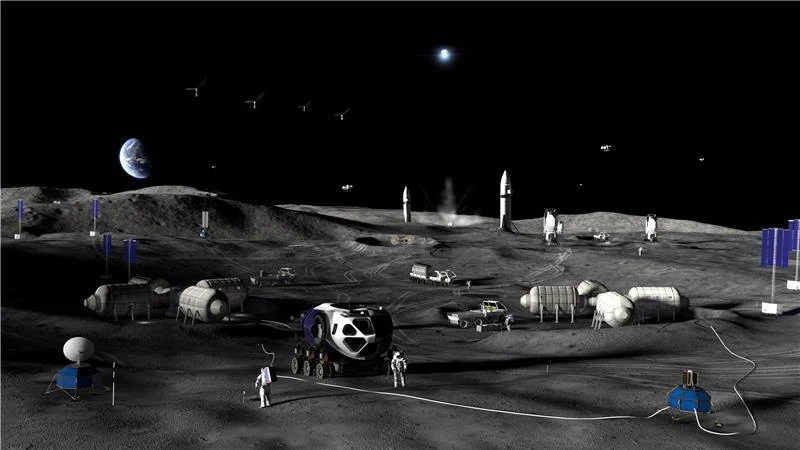
To establish a truly enduring human presence on the Moon, NASA also unveiled a phased approach to constructing a lunar base. As part of this strategy, the agency intends to pause the Gateway project in its current form and reorient its focus towards infrastructure that directly supports continuous surface operations. While Gateway, a planned lunar-orbiting outpost, was initially conceived as a staging point for lunar landings, its current iteration is being reconsidered to streamline efforts directly on the lunar surface. Despite challenges with some existing hardware components, NASA plans to repurpose usable equipment and leverage commitments from its international partners to support these redefined objectives. This adaptable approach demonstrates NASA’s commitment to optimizing resources and maintaining momentum.
In the coming days, NASA will issue Requests for Information (RFIs) and draft Requests for Proposals (RFPs) to ensure continuous progress toward these national objectives. These solicitations will invite industry and academic partners to contribute innovative solutions for lunar infrastructure, transportation, and scientific payloads.
Securing American Presence in Low Earth Orbit (LEO)
Concurrently with its lunar ambitions, NASA is reaffirming its commitment to Low Earth Orbit, recognizing the vital role it plays in scientific research, technological development, and commercial growth. For over two decades, the International Space Station (ISS) has stood as a world-class orbital laboratory, hosting over 4,000 scientific investigations, supporting more than 5,000 researchers, and welcoming visitors from 26 countries. The station’s construction was a monumental feat, requiring 37 Space Shuttle flights, 160 spacewalks, two decades of effort, and an investment exceeding $100 billion. However, this orbital laboratory cannot operate indefinitely. The transition to commercial stations in LEO must be thoughtful, deliberate, and structured to ensure the long-term success of this burgeoning industry.
NASA seeks to present and solicit industry feedback on an additional LEO strategy that maintains all current pathways while incorporating a phased approach anchored to the ISS. This strategy aims to prevent any disruption in continuous human presence for the United States and foster a robust commercial ecosystem. Under this alternative approach, NASA would acquire a government-owned Core Module that would dock with the ISS. This would be followed by commercial modules, which would be validated using the ISS’s capabilities before eventually undocking and operating as free-flying stations. Once technical and operational capabilities are consolidated and market demand materializes, these commercial stations would fully decouple from the ISS, and NASA would transition to being one of many customers acquiring commercial services. To stimulate the orbital economy, NASA plans to expand opportunities for industry, including private astronaut missions, commander seat sales, joint missions, module development competitions, and competency-based awards. This multi-pronged strategy is designed to create a vibrant and competitive commercial LEO market, reducing NASA’s operational burden and allowing it to focus on deeper space exploration.
An RFI process aimed at industry began on Wednesday, March 25, to guide the definition of collaboration, funding, and risk mitigation structures for this LEO transition. This collaborative approach ensures that NASA’s strategy is informed by industry expertise and market realities, fostering a sustainable future for human spaceflight in Earth’s orbit.
Advancing Transformative Discoveries with Current and Developing Scientific Missions
In what is widely considered a golden age of exploration and discovery, NASA is maximizing every opportunity to push the boundaries of space science. The James Webb Space Telescope (JWST) continues to revolutionize our understanding of the early universe, peering back billions of years to witness the formation of the first galaxies. Its infrared capabilities allow it to penetrate cosmic dust, revealing previously hidden celestial phenomena. The Parker Solar Probe has successfully flown through the Sun’s atmosphere, providing unprecedented data on solar wind and coronal heating, critical for understanding space weather. NASA has also demonstrated its planetary defense capabilities through the Double Asteroid Redirection Test (DART) mission, successfully altering the trajectory of an asteroid through kinetic impact. Earth science data, gathered by a fleet of satellites, is extensively utilized by U.S. businesses, the American agricultural sector, and disaster relief efforts, providing crucial insights into climate change and natural phenomena. On the International Space Station, NASA conducts pioneering experiments in quantum science, pushing the frontiers of physics in a microgravity environment.
Future opportunities are poised to further propel U.S. leadership in space science. The Nancy Grace Roman Space Telescope (NGRST), scheduled for launch as early as this autumn, will significantly enhance our understanding of dark energy and exoplanets, setting a new standard for the management of large scientific missions. Its wide-field view will capture vast swathes of the cosmos, enabling groundbreaking surveys. The Dragonfly mission, launching in 2028, will send a nuclear-powered octocopter to Titan, Saturn’s largest moon, arriving in 2034. This ambitious mission will explore Titan’s complex, organic-rich environment, searching for the building blocks of life and investigating its unique hydrological cycle driven by liquid methane. In 2028, NASA will also launch and send the European Space Agency’s (ESA) Rosalind Franklin rover to Mars, carrying NASA’s spectrometer for the Mars Organic Molecule Analyzer instrument. This collaboration could lead to the most advanced detection and analysis of organic matter ever conducted on the Red Planet, crucial for the search for past or present life. A new Earth science mission, slated for launch next year, will, for the first time, measure the evolution of internal convective storm dynamics, aiming to improve extreme weather event prediction by up to six hours, offering vital lead time for preparedness.
The agency has also detailed how advancements in lunar science will be fostered by the construction of the Lunar Base, underpinning future exploration of both the Moon and Mars. With an accelerated pace for the Commercial Lunar Payload Services (CLPS) program—targeting up to 30 robotic landings starting in 2027—NASA is streamlining the delivery of science and technology to the lunar surface. This program significantly reduces the cost and complexity of lunar missions by leveraging commercial landers. Numerous opportunities will exist for the transportation of diverse payloads, including rovers, rocket-propelled hopping vehicles, and drones, welcoming contributions from industry, academia, and international partners. Short-term payloads include the VIPER rover, which will search for water ice at the lunar South Pole, and the LuSEE Night mission, designed to observe the universe from the radio-quiet far side of the Moon. An RFI issued on March 24 will solicit payloads to support NASA’s scientific and technological objectives for additional planned flights in 2027 and 2028. This initiative will empower students and researchers nationwide to contribute scientific instruments for lunar surface deployment in the coming years. This RFI will also seek payloads for incorporation into future Mars missions, including the establishment of the Mars Telecommunications Network and a nuclear technology demonstration mission, further integrating lunar and Martian exploration pathways.
Furthermore, the agency plans to partner with philanthropic and privately funded research organizations that share objectives in space sciences, broadening the scope of scientific inquiry and leveraging diverse funding sources. Other RFIs released on March 24 will reinforce "Science as a Service" partnerships and commercial capabilities, allowing NASA to optimize its legacy operations and focus its investments on transformative missions that only the agency can lead, such as flagship observatories and complex planetary probes. Finally, to celebrate these scientific endeavors, NASA will reveal a pair of unprecedented images captured by the James Webb and Hubble Space Telescopes, showcasing Saturn in unparalleled detail across both infrared and visible wavelengths, highlighting the enduring power of these observational assets.
U.S. Advances in Space Nuclear Power
Beyond these scientific missions, and following decades of study and in direct response to the National Space Policy, NASA announced a significant leap forward in bringing nuclear power and propulsion from laboratories to space. This represents a crucial technological pivot for future deep space missions.
NASA will launch the SR-1 Freedom, the first interplanetary nuclear-powered spacecraft, to Mars before the end of 2028, demonstrating its advancements in nuclear electric propulsion (NEP) for deep space. NEP offers extraordinary capability for efficient mass transport in deep space, enabling high-power missions beyond Jupiter where solar panels become less effective due to increased distance from the Sun. Unlike nuclear thermal propulsion (NTP), which uses nuclear fission to heat a propellant and create thrust, NEP uses a nuclear reactor to generate electricity, which then powers an electric thruster (like an ion engine). This allows for much higher specific impulse and therefore more efficient use of propellant, though with lower thrust levels, making it ideal for long-duration, high-payload missions.
Upon its arrival at Mars, the SR-1 Freedom spacecraft will deploy the Skyfall payload, consisting of Ingenuity-class helicopters, to continue exploring the Red Planet’s diverse terrain. This mission is critical not only for its scientific objectives but also for establishing a flight heritage for nuclear hardware, setting regulatory and launch precedents, and activating the industrial base for future fission power systems destined for propulsion, surface power, and long-duration missions. By collaborating with its partner, the U.S. Department of Energy, NASA aims to unlock the capabilities necessary for sustained exploration beyond the Moon and for future journeys to Mars and the outer solar system. This commitment to nuclear power underscores a long-term vision for human expansion into the solar system, providing the energy independence required for extended stays and advanced scientific operations.
Strengthening NASA’s Workforce and Operational Reforms
None of these ambitious projects can succeed without the dedicated and skilled workforce of NASA. As previously announced, the agency is actively rebuilding its core competencies, converting thousands of contractor positions into civil service roles, and restoring the essential engineering, technical, and operational capabilities expected of the world’s leading space organization. This strategic move aims to retain institutional knowledge, foster long-term career paths, and enhance internal expertise.
NASA is also expanding opportunities for interns and early-career professionals, ensuring a pipeline of fresh talent and innovative ideas. In collaboration with the U.S. Office of Personnel Management and NASA Force, the agency is creating new pathways for experienced industry talent to serve through term appointments, bridging the gap between public and private sector expertise. Furthermore, NASA seeks to create opportunities for its existing employees to gain valuable experience working within the most technologically advanced space industry in history, fostering a dynamic exchange of knowledge and skills.
The changes announced on March 24 will be implemented over the coming months, with agency-wide personnel teams ensuring a smooth transition while driving key programs and partnerships forward. This methodical implementation reflects a commitment to minimizing disruption while maximizing strategic impact.
To further optimize operations and ensure mission success, NASA will embed subject matter experts throughout its supply chain—at every prime contractor, subcontractor, and critical path component. This direct engagement aims to challenge assumptions, resolve problems proactively, accelerate production timelines, and help ensure that the right outcomes are achieved. This hands-on approach reflects a renewed focus on accountability and efficiency in the complex process of space hardware development and manufacturing.
Through these comprehensive reforms and strategic initiatives, NASA is significantly strengthening its capacity to fulfill the directives of the President’s National Space Policy and guarantee continued American superiority and leadership in the challenging and competitive domain of space exploration. The "Ignition" event marks a profound realignment, signaling a new era of accelerated exploration, commercial collaboration, and technological advancement, poised to redefine humanity’s presence beyond Earth.