Natarajan Chandrasekaran, the Chairman of Tata Sons, officially announced on Wednesday that he will not seek a further term at the helm of India’s largest conglomerate, confirming his departure for February 20, 2027. This announcement marks the conclusion of a protracted six-month internal impasse within the board of the holding company regarding his reappointment. While the influential Sir Dorabji Tata Trust and Sir Ratan Tata Trust—which collectively hold a controlling 66% stake in Tata Sons—had recommended a five-year extension for Chandrasekaran, the proposal failed to achieve the necessary unanimous support during a pivotal board meeting held on February 24.
The decision to step down comes at a critical juncture for the Tata Group, particularly as its aviation flagship, Air India, navigates a turbulent restructuring process characterized by substantial financial losses and operational delays. In a formal statement, Chandrasekaran noted that after half a year of unresolved deliberations, he deemed it in the best interest of the group to provide clarity on his departure and requested the board to initiate a formal succession process. Reports from within the organization have identified Noel Tata, a prominent director and chairman of Trent, as the primary dissenting voice regarding the term extension, highlighting a rare public fracture in the governance of the century-old institution.
A Chronology of Leadership and the 2024 Deadlock
The timeline leading to Chandrasekaran’s decision is rooted in the complex governance structure of the Tata Group. Natarajan Chandrasekaran, formerly the CEO of Tata Consultancy Services (TCS), was appointed Chairman of Tata Sons in January 2017, following the high-profile and controversial ousting of Cyrus Mistry. His initial five-year term was renewed in early 2022, a move that was widely seen as a vote of confidence in his "One Tata" strategy, which emphasized synergy, simplification, and scale.
However, the path to a third term hit a significant roadblock in early 2024:
- February 24, 2024: The Tata Sons board convened to discuss a proposed five-year extension for Chandrasekaran, backed by the two major Tata Trusts. Despite the recommendation from the group’s philanthropic arm, the board failed to reach a unanimous consensus.
- March – July 2024: A six-month period of internal negotiations and "stand-off" ensued. During this time, discussions centered on the group’s capital allocation strategies, the performance of the newly acquired Air India, and the evolving role of the Tata family within the holding company’s governance.
- August 2024: Recognizing the lack of a resolution and the potential for prolonged leadership uncertainty to impact market sentiment, Chandrasekaran formally communicated his intent to step down at the end of his current tenure in February 2027.
The opposition from Noel Tata is particularly significant. As the half-brother of Ratan Tata and the head of the group’s successful retail arm, Trent, Noel Tata’s influence has grown within the Tata Trusts. His dissent suggests a shift in the internal power dynamics between the professional management led by Chandrasekaran and the traditional oversight provided by the Trusts.
The Air India Factor: A Challenging Turnaround
The timing of this leadership transition is arguably most sensitive for the group’s aviation ambitions. Since the Tata Group re-acquired Air India from the Indian government in early 2022, the airline has been the centerpiece of Chandrasekaran’s "New Tata" vision. However, the integration of Air India with Air India Express, AIX Connect, and Vistara has proven more arduous than initially projected.
Air India reported a net loss of approximately ₹11,381 crore (roughly $1.37 billion) for the fiscal year ending March 2023. While the group has committed billions of dollars toward a historic order of 470 aircraft from Boeing and Airbus, the airline continues to struggle with aging infrastructure, technical glitches, and a series of public relations challenges involving cabin crew and pilot dissatisfaction.
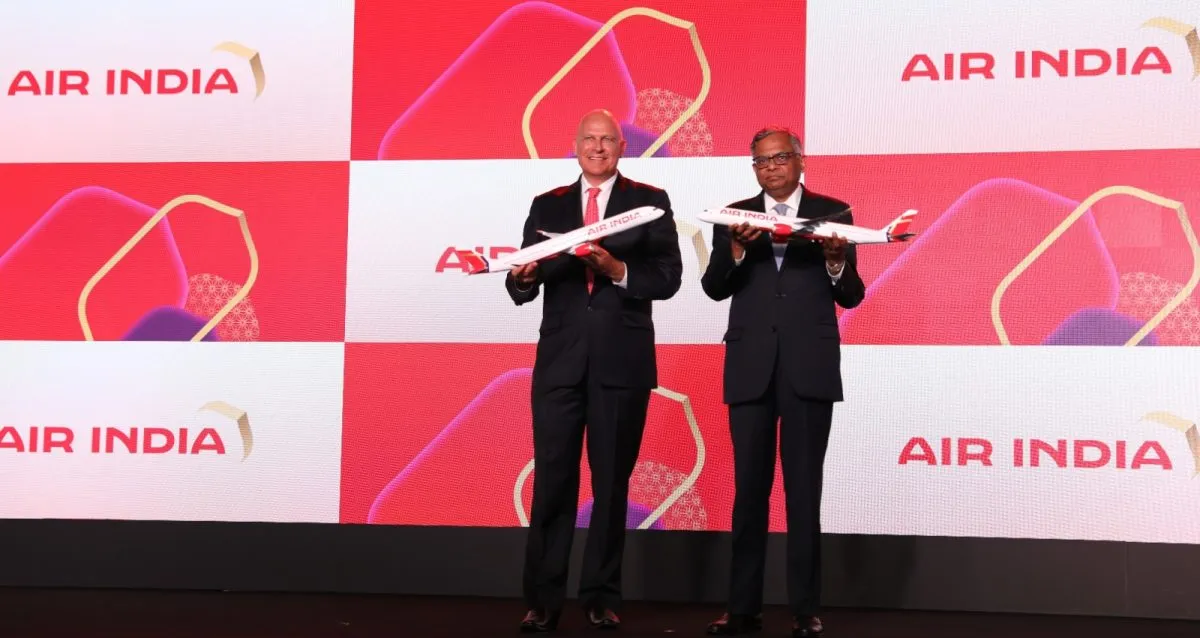
The group recently appointed a new CEO for the airline, Campbell Wilson, and has had to recalibrate its "Vihaan.AI" transformation roadmap. The original five-year plan to capture 30% of the domestic market share and significantly expand international footprint has faced headwinds due to global supply chain issues affecting aircraft deliveries and the complex regulatory requirements of the Vistara merger. For an incoming Chairman in 2027, the stabilization of Air India will remain the most significant operational and financial challenge on the agenda.
Financial Performance and Strategic Shifts Under Chandrasekaran
Despite the current friction, Chandrasekaran’s tenure has been marked by a massive expansion in the group’s market capitalization and a strategic pivot toward future-ready industries. When he took over in 2017, the Tata Group’s combined market valuation stood at approximately ₹8.2 trillion. By mid-2024, that figure had surged to over ₹30 trillion, driven largely by the stellar performance of TCS and a dramatic turnaround at Tata Motors.
Under his leadership, the group executed several high-stakes maneuvers:
- Debt Reduction and Consolidation: Chandrasekaran prioritized the balance sheets of "legacy" companies like Tata Steel, which underwent significant restructuring of its European operations to stem losses.
- The EV Revolution: Tata Motors emerged as the undisputed leader in India’s electric vehicle (EV) market. By aggressively investing in EV platforms, the company captured over 70% of the domestic passenger EV segment, a move that significantly boosted its valuation.
- Digital and Electronics: The launch of "Tata Neu," a super-app designed to consolidate the group’s consumer offerings, and the group’s foray into semiconductor manufacturing in Dholera, Gujarat, reflect a push toward high-tech manufacturing and digital ecosystems.
- Market Leadership in Retail: Under the guidance of the board (and Noel Tata’s operational leadership), Trent (Westside, Zudio) became one of the best-performing retail stocks in India, showcasing the group’s ability to dominate the value-fashion segment.
Data suggests that while the group’s traditional cash cows—TCS and Tata Steel—remain vital, the "new age" bets placed during the Chandrasekaran era have redefined the group’s growth trajectory. However, the lack of unanimity on the board suggests that some directors may feel the pace of capital expenditure or the focus on certain loss-making ventures requires a different perspective.
Internal Governance and the Role of the Tata Trusts
The disagreement over Chandrasekaran’s extension brings the unique governance structure of Tata Sons into sharp focus. Unlike most global conglomerates, Tata Sons is majority-owned by philanthropic trusts. This structure is designed to ensure that the group’s profits are channeled back into social development, but it also creates a complex layer of accountability for the Chairman.
The Sir Ratan Tata Trust and the Sir Dorabji Tata Trust hold the power to nominate directors and influence major strategic shifts. The recent friction indicates a potential divergence in philosophy between the professional executive leadership and the trustees. Observers suggest that the dissent may not be a critique of Chandrasekaran’s overall success, but rather a debate over the "post-Ratan Tata" era governance model. As Ratan Tata, the Chairman Emeritus, has taken a more withdrawn role due to age, the influence of other family members and veteran trustees has become more pronounced.
The opposition from Noel Tata is viewed by analysts as an assertion of the Trusts’ desire for more rigorous oversight of long-term capital commitments. With the group venturing into capital-intensive sectors like semiconductors and batteries (via Agratas), the board’s appetite for risk and the timeline for returns have become central points of discussion.
Implications and the Road to 2027
The announcement of a three-year "runway" before Chandrasekaran exits provides the Tata Group with a rare commodity in corporate transitions: time. By declaring his intent now, Chandrasekaran avoids a "lame duck" period and allows the Selection Committee to conduct a global search for a successor without the pressure of an immediate vacancy.
However, the next three years will be demanding. Chandrasekaran will need to oversee:
- The completion of the Air India-Vistara merger.
- The operationalization of the semiconductor assembly and testing plants.
- The continued deleveraging of Tata Steel’s UK operations amidst a transition to greener steelmaking technology.
- The scaling of Tata Electronics to become a global player in the Apple supply chain.
The search for the next Chairman will likely focus on a candidate who can balance the "Tata Values" with the aggressive growth requirements of a global economy. Potential internal candidates and external global Indian executives will be under scrutiny.
Conclusion
Natarajan Chandrasekaran’s tenure will be remembered as a period of "aggressive consolidation." He successfully stabilized the group after the Mistry-Tata fallout and modernized its portfolio. Yet, the inability to secure a unanimous board mandate for an extension highlights the complexities of managing an empire where philanthropy, family legacy, and corporate performance intersect.
As the group prepares for 2027, the focus remains on ensuring that the momentum built over the last seven years is not lost to internal friction. For investors and stakeholders, the clarity provided by Chandrasekaran’s statement is a stabilizing force, but the question of who will lead the $150-billion conglomerate into the next decade remains the most significant unanswered query in the Indian corporate landscape. The transition marks not just the end of a chairmanship, but the beginning of a new chapter in the evolution of the House of Tata.