


The global travel industry is currently navigating a period of unprecedented complexity, characterized by a confluence of geopolitical conflict, airspace restrictions, and fluctuating operational costs that are fundamentally altering the trajectory of growth in Asia. While the post-pandemic era was initially defined by a rapid surge in "revenge travel," the current landscape is marked by a more calculated and strategic "recalibration." Travel across the Asian continent is not merely pausing in the face of global instability; it is rerouting, reorganizing, and being structurally rewritten to accommodate a new era of volatility.
For aviation and hospitality leaders, the traditional models of network planning and market expansion are being tested by external pressures that remain largely outside their control. The closure of key airspace corridors in the Middle East and Eastern Europe has forced a reimagining of long-haul logistics, while the rising cost of aviation fuel has placed a premium on operational efficiency and yield management. As these dependencies are confronted in real time, the industry is shifting its focus toward precision, localized demand, and the integration of advanced digital platforms to maintain profitability in an increasingly fragmented global market.
The Geopolitical Map of Necessity: Airspace and Logistics
The primary driver of the current industry transformation is the reorganization of global flight corridors. Geopolitical tensions, most notably the ongoing conflicts in the Middle East and the protracted closure of Russian airspace following the invasion of Ukraine, have created a "map of necessity" for international carriers. These disruptions have ended the era of direct, efficient "Great Circle" routes between Europe and Asia for many operators.
According to data from Eurocontrol and various aviation analytics firms, flight times between major European hubs—such as London, Paris, and Frankfurt—and East Asian destinations like Tokyo, Seoul, and Beijing have increased by an average of 1.5 to 3 hours. This extension of flight time is not merely an inconvenience for passengers; it represents a significant economic burden for airlines. Longer flights require higher fuel loads, which in turn increase the weight of the aircraft, leading to even higher fuel burn. For an industry where fuel typically accounts for 25% to 30% of total operating expenses, these reroutings represent a direct hit to margins.
Furthermore, the decision-making process for network planners has shifted from long-term seasonal scheduling to short-cycle tactical adjustments. Airlines are now forced to make daily trade-offs between maintaining flight frequency to preserve market share and reducing capacity to protect yields. In many cases, the result is a reduction in long-haul capacity, which is being redirected toward regional routes within Asia where operational risks are lower and demand remains robust.
Chronology of Disruption and Adaptation (2022–2025)
To understand the current state of Asian travel, it is essential to trace the timeline of events that have led to this strategic pivot:
- February 2022: The closure of Russian airspace to Western carriers forces a massive rerouting of Asia-Europe traffic. Carriers like Finnair, which built their business models on the "shorter northern route," are forced to pivot their entire strategy toward North America and Southeast Asia.
- 2023: The "Indian Outbound" surge begins in earnest. Major orders from Air India and IndiGo, totaling over 1,000 aircraft, signal a shift in the center of gravity for Asian aviation toward the subcontinent.
- October 2023 – Present: Conflict in the Middle East leads to periodic closures of airspace over Jordan, Iraq, and Iran. Airlines operating between Europe and Southeast Asia must navigate narrow corridors or take significant detours over Egypt and Saudi Arabia.
- Early 2024: Fuel prices stabilize at a higher baseline than pre-pandemic levels, exacerbated by refining premiums. Airlines begin implementing more aggressive AI-driven dynamic pricing models to offset costs.
- Mid-2024: Southeast Asian nations, including Thailand, Malaysia, and Singapore, implement aggressive visa-liberalization policies to stimulate regional tourism and offset the slower-than-expected recovery of the Chinese outbound market.
The Rise of the Regional Loop and Secondary Hubs
As global corridors fragment, a significant reorganization of travel flows is occurring within Asia. Regional routes are increasingly absorbing the demand that was previously directed toward long-haul destinations. Southeast Asia, in particular, is strengthening its position as a self-sustaining "regional loop."
Data from the Singapore Tourism Board and Thailand’s Ministry of Tourism and Sports indicates a sharp rise in intra-regional travel. This trend is driven by the expansion of low-cost carriers (LCCs) and the increasing relevance of secondary cities. While primary hubs like Bangkok, Singapore, and Hong Kong remain critical, cities such as Da Nang, Chiang Mai, and Ahmedabad are gaining prominence. These secondary markets offer lower operational costs for airlines and provide fresh experiences for travelers who are increasingly price-sensitive but experience-driven.
The Indian outbound market is a pivotal factor in this reorganization. With a burgeoning middle class and a massive increase in passport issuance, Indian travelers are becoming the new engine of Asian tourism. However, this demographic exhibits "sharper price sensitivity" compared to traditional Western long-haul travelers. This has led hospitality operators across Thailand, Vietnam, and Indonesia to recalibrate their offerings, moving away from a one-size-fits-all luxury model toward "high-value precision."
From Volume to Precision: The New Hospitality Paradigm
The hospitality sector is undergoing a parallel transformation. For decades, the industry was obsessed with occupancy rates and scale. However, the current economic environment—characterized by high labor costs and inflation—has pushed operators toward a strategy centered on yield and personalization.
Travelers are increasingly trading volume for intent. Instead of taking multiple short, generic trips, consumers are prioritizing fewer journeys that offer higher perceived value and deeper cultural immersion. This shift has forced hotel groups to redesign their service models. The focus is no longer just on providing a room, but on curated experiences that can justify higher Average Daily Rates (ADR).
Market-level insights suggest that operators who leverage data to personalize the guest journey are outperforming those who rely on traditional distribution methods. By focusing on "intent-based" travel, hotels can capture a larger share of the traveler’s wallet through ancillary services, wellness programs, and localized dining experiences, thereby protecting their margins even if occupancy rates fluctuate.
Digital Hegemony: The Role of AI and Super Apps
The control of travel demand is increasingly concentrating within a few powerful digital ecosystems. Artificial Intelligence (AI) and "Super Apps"—such as Grab in Southeast Asia, WeChat in China, and various travel platforms in India—are compressing the decision-making cycle for travelers.
These platforms are no longer just booking engines; they are discovery engines. AI-led discovery tools can analyze a user’s past behavior, current location, and real-time pricing to offer highly relevant travel suggestions. This concentrates demand into fewer channels, making distribution a critical strategic advantage. For travel providers, being "platform-ready" is no longer optional. The ability to integrate with these ecosystems determines a brand’s visibility in a crowded and volatile market.
Policy as an Economic Tool: Visa Liberalization and Infrastructure
Governments across Asia are recognizing that tourism policy is a powerful economic lever. In a bid to secure a larger share of the reorganizing travel flows, many nations are moving in sync with capital investments and policy changes.
Visa regimes are being recalibrated at a record pace. Thailand’s decision to offer visa-free entry to citizens of over 90 countries and China’s recent move to grant visa-free access to several European and Asian nations are clear examples of this trend. These bilateral agreements are designed to lower the friction of travel and stimulate economic activity in the face of global headwinds.
Simultaneously, capital is concentrating on connectivity infrastructure. Investment is flowing into airport expansions, high-speed rail projects, and digital infrastructure that supports the "volatility-ready" operator. The goal is to create a resilient ecosystem that can withstand external shocks while maintaining the flow of people and capital.
The Strategic Importance of the Skift Asia Forum
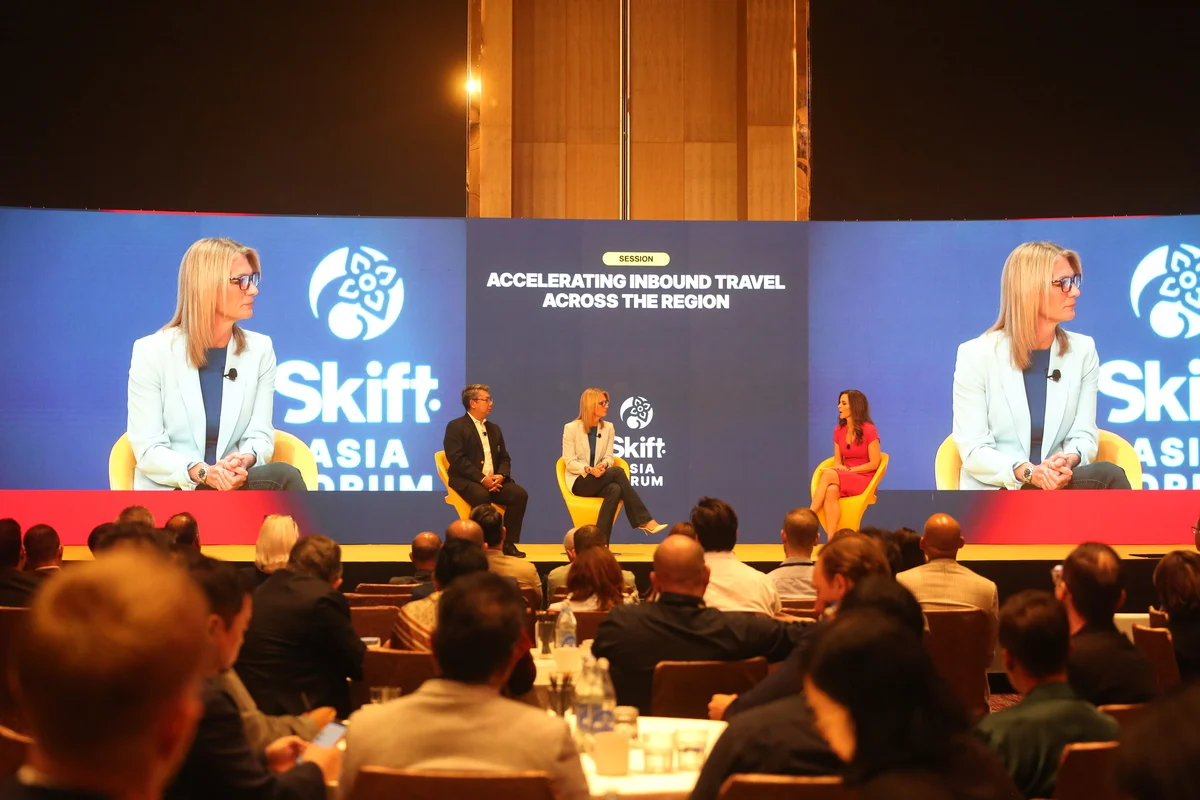
Against this backdrop of rapid change, the Skift Asia Forum, scheduled to take place in Bangkok this April, serves as a critical nexus for industry leaders. The forum is designed to provide direct, market-level insights into the decisions and trade-offs defining the future of travel.
Industry analysts suggest that the forum arrives at a "moment of compression," where the gap between strategy and execution must be minimized. For those responsible for network strategy, distribution, or capital allocation, the forum offers a focused exchange on how to navigate the current environment. The discussions are expected to center on:
- Network Resilience: How airlines can build flexible schedules that account for airspace volatility.
- Yield over Occupancy: Strategies for hospitality brands to maintain profitability in an inflationary environment.
- The India Factor: Deep dives into the preferences and behaviors of the world’s fastest-growing outbound market.
- Technological Integration: How to leverage AI without losing the "human touch" that defines the travel experience.
Broader Impact and Long-term Implications
The structural changes currently being witnessed in Asia are not temporary. The rerouting of flight paths and the reorganization of regional demand are likely to have long-term implications for global travel patterns. As Asia builds a more robust, intra-regional ecosystem, its dependence on traditional long-haul corridors may diminish.
Furthermore, the shift toward "precision travel" and yield-focused hospitality will likely lead to a more sustainable, albeit more expensive, travel industry. The era of cheap, mass-market long-haul travel is being replaced by a model that values efficiency, environmental considerations (driven by fuel costs), and high-quality experiences.
In conclusion, the Asian travel market is at a crossroads. While geopolitical and economic challenges are significant, they are also acting as catalysts for innovation and structural reform. The winners in this new era will be those who can navigate volatility with agility, leverage technology for distribution, and align their offerings with the evolving intent of the modern traveler. The upcoming Skift Asia Forum will undoubtedly play a pivotal role in shaping the strategies that will define this resilient and rapidly evolving industry.