

The escalating global demand for artificial intelligence (AI) has thrust the technology industry into a severe power crisis, prompting innovative, and sometimes audacious, solutions. With AI data centers consuming prodigious amounts of electricity, discussions have intensified around unconventional placements, from launching servers into Earth’s orbit to harness continuous solar power—a concept explored by figures like Elon Musk—to more grounded, yet still radical, proposals. One such proposition, gaining traction for its practicality and potential, involves submerging data centers beneath the ocean’s surface, leveraging offshore renewable energy and natural cooling.
The Escalating Energy Demands of AI and Data Centers
The explosion of AI, machine learning, and big data analytics has driven an unprecedented surge in demand for computational power, directly translating into a massive increase in energy consumption. Modern data centers, the backbone of the digital economy, are already voracious power users, accounting for an estimated 1% to 1.5% of global electricity consumption. However, the rise of AI, particularly large language models and complex neural networks, is poised to dramatically escalate these figures. Training a single large AI model can consume as much electricity as hundreds of homes in a year, and the continuous operation of AI-driven services adds to this burden. This trend has led to warnings from energy experts and governments about the strain on existing grids and the urgent need for sustainable power solutions. Traditional data center locations often face challenges related to grid capacity, land availability, and local opposition, pushing developers to explore novel environments.
Aikido Technologies Pioneers Submerged Data Centers with Offshore Wind
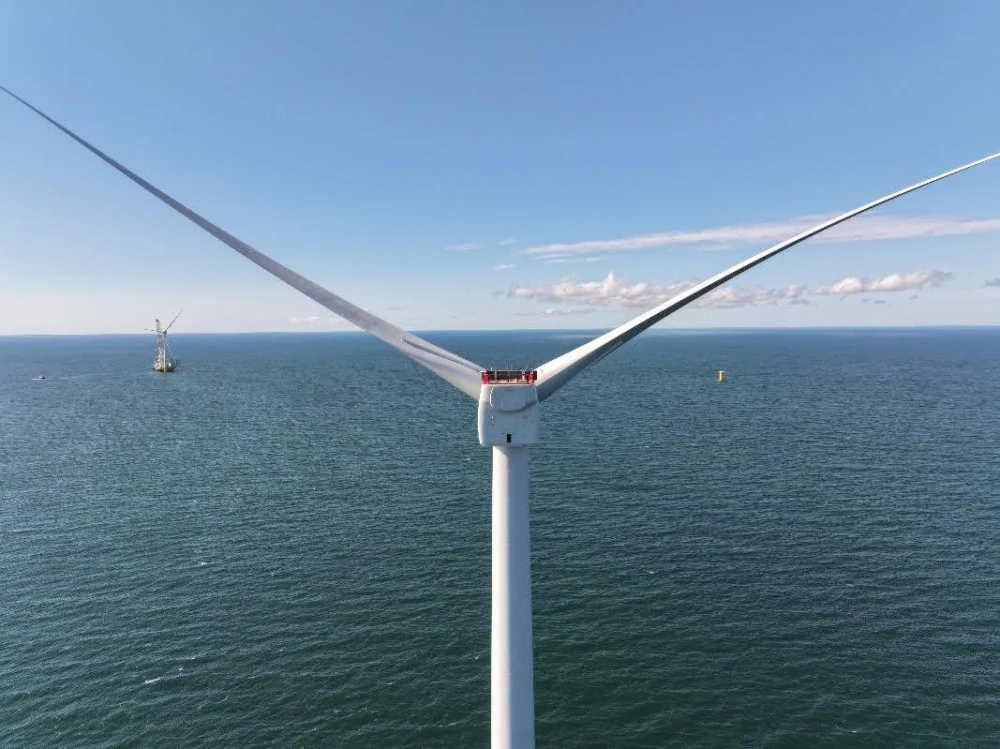
Amidst this energy crunch, Aikido Technologies, an offshore wind developer, is advancing a compelling solution: integrating data centers directly into floating offshore wind infrastructure. The company has announced ambitious plans to deploy a 100-kilowatt demonstration data center off the coast of Norway later this year. This pilot unit will be housed within the submerged pods of a floating offshore wind turbine, effectively creating a self-sustaining, energy-efficient computational hub. This initial deployment serves as a crucial testbed for the concept, evaluating the technical feasibility and operational stability of placing sensitive IT equipment in a marine environment.
Following a successful demonstration in Norway, Aikido intends to scale up its operations considerably. By 2028, the company envisions deploying a much larger version off the coast of the United Kingdom. This next-generation facility is planned to feature a robust 15 to 18-megawatt offshore wind turbine, capable of powering a substantial 10 to 12-megawatt data center. This significant increase in capacity underscores Aikido’s confidence in the viability of the submerged model and its potential to address the industry’s burgeoning energy needs at scale. The UK, with its extensive coastline and strong commitment to offshore wind energy, presents an ideal location for such an ambitious project.
Addressing Core Challenges: Power, Cooling, and Community Opposition
The strategic move offshore offers solutions to several pressing challenges faced by conventional data centers. The most evident benefit is the direct proximity to a renewable power source. By integrating the data center with an offshore wind turbine, Aikido ensures a consistent and dedicated supply of clean energy. Offshore winds are generally more consistent and stronger than their onshore counterparts, providing a more reliable power generation profile. A modest battery storage system could easily bridge any brief lulls in wind speed, ensuring uninterrupted operation.
Beyond power, submerged data centers present a compelling answer to the perennial problem of cooling. Cooling infrastructure typically accounts for a significant portion of a data center’s operational energy consumption and cost. By situating servers in cold seawater, the natural thermal properties of the ocean can be harnessed for passive cooling, drastically simplifying the cooling mechanism and reducing energy expenditure. This contrasts sharply with orbital data centers, which would require complex and energy-intensive active cooling systems to dissipate heat in the vacuum of space.
Furthermore, moving data centers offshore effectively circumvents "Not In My Backyard" (NIMBY) opposition groups. Traditional data centers often face community resistance due to concerns over noise pollution from cooling systems, the visual impact of large facilities, and perceived environmental impacts. Submerging these facilities mitigates these issues entirely, placing them out of sight and hearing, thus eliminating a common hurdle in infrastructure development. This allows for faster deployment and reduces the often protracted planning and approval processes associated with land-based projects.
Navigating the Ocean’s Demands: Technical Hurdles and Engineering Innovations
While the ocean offers numerous advantages, it also presents a formidable environment with unique engineering challenges. The marine environment is inherently harsh, characterized by corrosive saltwater, dynamic currents, and the potential for biofouling. Although submerged servers would be shielded from surface waves, they would still be subject to underwater currents and slight movements, necessitating robust structural design to ensure stability and protect sensitive equipment.
The corrosive nature of seawater demands that all components, including the data center container itself, power cables, and data connections, be meticulously hardened and sealed against saltwater intrusion. This requires advanced materials science, specialized coatings, and rigorous testing to guarantee long-term operational integrity. Maintenance and repairs also pose logistical challenges, requiring specialized subsea robotics or diving operations, which can be complex and costly. Connectivity to terrestrial networks is another critical consideration, necessitating resilient and high-bandwidth undersea fiber optic cables capable of withstanding the marine environment. Aikido Technologies, as an experienced offshore wind developer, is likely leveraging its expertise in marine engineering and robust offshore infrastructure design to tackle these issues.
A Precedent: Microsoft’s Project Natick
The concept of sinking data centers in seawater is not entirely new. Tech giant Microsoft famously explored this avenue over a decade ago with its Project Natick. In 2018, Microsoft launched an experimental data center pod off the Orkney Islands in Scotland. This trial involved a sealed, nitrogen-filled data hall containing over 850 servers, submerged for a 25-month period. The experiment proved remarkably successful, with only six servers failing during the entire trial—a significantly lower failure rate than typically observed in land-based data centers. The inert nitrogen gas environment, which eliminates oxygen and humidity, was speculated to be a key factor in the enhanced reliability of the servers.
Microsoft accrued a substantial portfolio of patents related to underwater data center technology, which it subsequently open-sourced in 2021, signaling a potential desire to foster broader industry innovation. However, by 2024, Microsoft had reportedly "deep-sixed" the project, confirming that Project Natick would not proceed to commercial deployment. While the reasons for its discontinuation were not fully elaborated, they likely involved a complex interplay of economic viability, scalability challenges, and the inherent complexities of long-term marine operations. Despite its cessation, Project Natick provided invaluable data and proof-of-concept for the technical feasibility of operating data centers underwater, paving the way for companies like Aikido to refine and re-approach the concept.
Broader Industry Reactions and Expert Perspectives
The renewed interest in submerged data centers, particularly integrated with renewable energy, is met with a mix of cautious optimism and strategic analysis from industry experts. Analysts from leading technology research firms suggest that while the capital expenditure for offshore deployments might be higher initially compared to traditional land-based facilities, the long-term operational savings, primarily from reduced cooling and energy costs, could make them economically competitive.
"The AI boom is forcing a fundamental rethink of data center infrastructure," stated Dr. Lena Hansen, a senior energy analyst specializing in technology infrastructure. "Traditional models simply cannot keep pace with the power demands sustainably. Solutions like Aikido’s, which couple compute directly with renewable energy at source, represent a crucial evolutionary step. The lessons learned from Microsoft’s Natick project are invaluable, and current advancements in materials science and subsea robotics could address some of the previous challenges."
Environmental advocacy groups, while generally supportive of initiatives that promote renewable energy and reduce carbon footprints, also emphasize the need for thorough ecological impact assessments. "Deploying large infrastructure projects in marine environments always requires careful consideration of local ecosystems," commented Sarah Jenkins of the Marine Conservation Alliance. "While the integration of clean energy is commendable, studies must ensure minimal disruption to marine life, currents, and habitats. Robust environmental monitoring will be essential."
Environmental and Economic Implications
The successful deployment of submerged, renewable-powered data centers could have profound environmental and economic implications. Environmentally, it offers a tangible pathway to decarbonize the increasingly energy-intensive data center industry. By directly utilizing offshore wind, these facilities would operate with a near-zero operational carbon footprint, significantly contributing to global climate goals. This model also alleviates pressure on terrestrial land use, preserving natural habitats and agricultural land.
Economically, the model could unlock new opportunities for coastal regions and maritime industries. It fosters innovation in marine engineering, subsea technology, and renewable energy integration. The initial investment might be substantial, but the long-term operational savings on energy and cooling, combined with reduced real estate costs and mitigated NIMBY issues, could lead to a lower total cost of ownership over the lifespan of the data center. Furthermore, the development of such infrastructure could create high-skilled jobs in design, construction, operation, and maintenance, bolstering local economies.
Regulatory Landscape and Future Outlook
The regulatory landscape for offshore data centers is still nascent, largely falling under existing frameworks for offshore energy infrastructure and subsea cabling. However, as these projects become more prevalent, specific regulations pertaining to data security, environmental impact, and international maritime law will likely evolve. Collaboration between national governments, international bodies, and industry stakeholders will be crucial in establishing clear guidelines and facilitating cross-border deployments.
Looking ahead, the convergence of AI’s exponential growth and the urgent need for sustainable energy solutions makes concepts like Aikido’s increasingly relevant. While orbital data centers remain largely in the realm of advanced conceptualization due to their immense cost and technological hurdles, the submerged data center model offers a more immediate and tangible path forward. The success of Aikido’s demonstration project in Norway will be closely watched, potentially marking a pivotal moment in the evolution of data center design and the sustainable future of artificial intelligence. If proven viable and scalable, the marriage of offshore wind and underwater computing could redefine where and how the world’s digital infrastructure is powered, charting a new course for sustainable innovation in the digital age.