

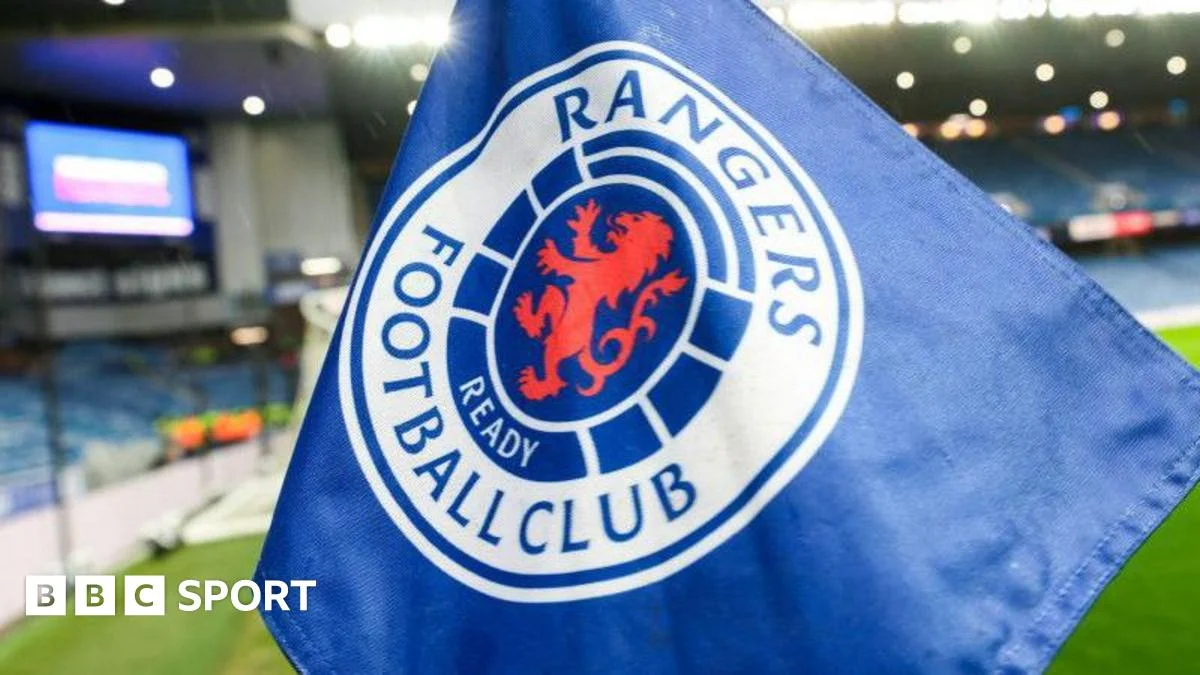
Rangers Football Club is poised to launch a significant capital raise, targeting £16 million through a new share issue, as announced by club chairman Andrew Cavenagh. This strategic financial manoeuvre is designed to directly fund crucial investment in the men’s first-team squad, a move that underscores the club’s ambition to compete at the highest level. The announcement comes alongside a 6.5% increase in adult season ticket prices, a decision Cavenagh emphasized is intrinsically linked to the club’s commitment to enhancing its playing resources.
The proposed share offer will reportedly be underwritten by Cavenagh’s consortium and supported by existing club shareholders, signalling a unified front in the pursuit of enhanced financial capacity. The injected capital is earmarked for "player acquisitions and other club needs," a broad statement that nonetheless points towards strengthening the playing personnel as a primary objective. This initiative represents a substantial step in the club’s ongoing financial strategy since Cavenagh’s consortium assumed control in the summer of 2025.
A New Financial Epoch for Rangers
Since the consortium’s takeover in the summer of 2025, the total investment in Rangers has reached an impressive £36 million. This latest share issue, if fully subscribed, will further augment this figure, demonstrating a sustained commitment to injecting capital into the club’s operations and playing ambitions. The timing of this announcement is particularly significant, occurring as Rangers are in a critical phase of the season, vying for league supremacy. The need for immediate and future squad enhancement is palpable, and this capital raise aims to address that directly.
Cavenagh articulated the rationale behind the share issue in a detailed letter addressed to the club’s supporters. He stressed that the decision to increase revenue streams, including ticket prices, comes with a concomitant obligation to deploy these funds judiciously and effectively. "Increasing the revenue and capital is only part of the path to allocating more resources to the men’s first team," Cavenagh stated. "If we are going to ask supporters to pay more for tickets, we have an obligation to spend those funds wisely." This statement highlights a conscious effort to align financial strategies with supporter expectations and the on-field performance goals.
Restructuring the Executive and Operational Framework
In a move that signals a significant shift in club governance, Rangers will not be appointing a replacement for the former sporting director, Kevin Thelwell, who was removed from his position in November. Similarly, the club will not seek a successor for Patrick Stewart, the former chief executive, who also departed at the same time. This decision reflects a deliberate strategic pivot by the current leadership.
"We do not plan to hire a sporting director. The executive team is committed to being smaller, nimbler, and more entrepreneurial," Cavenagh explained. This philosophy extends to the desired attributes of the executive team. Cavenagh expressed a desire for individuals who are proactive and deeply involved in the club’s operations, stating, "We want an executive team willing to get its fingernails dirty. If there is a hole to be dug, we want people fighting over shovels. We want fewer consulting firms and less bureaucracy." This aspiration for a more hands-on and results-oriented executive structure aims to streamline decision-making processes and foster a culture of efficiency and accountability.
The club is systematically reviewing all facets of its operations to identify areas for improved efficiency. The stated objective is to redirect a greater proportion of the club’s resources towards the men’s first team. This internal audit is crucial given the rising operational costs that are impacting football clubs globally. Cavenagh highlighted that "player wages, agents’ fees, security, food and beverage – are all rising faster than the overall rate of inflation." This inflationary pressure necessitates either a commensurate increase in club revenues or a reduction in expenditure, particularly on the playing squad. Rangers’ leadership has evidently chosen the former path, opting to increase revenue and capital to maintain, and indeed enhance, the football budget.
Shareholder Engagement and Investment Threshold
All shareholders will receive comprehensive documentation regarding the proposed share issue and the necessary resolutions for approval. A key detail for potential investors is the establishment of a minimum buy-in threshold of 1,000 shares. This stipulation ensures that the capital raised comes from a committed base of investors who are invested in the long-term success of the club. The success of this share issue will be a critical barometer of investor confidence in the club’s strategic direction and future prospects.
Addressing the VAR Debate
Beyond the immediate financial and squad-related developments, Rangers are also actively engaging with the broader Scottish football landscape, particularly concerning the contentious issue of Video Assistant Referees (VAR). The club is reportedly seeking to convene a meeting of Premiership clubs within the next fortnight to discuss the implementation and impact of VAR. This initiative comes at a time when a significant number of clubs have publicly voiced their concerns regarding VAR’s effectiveness and the overall standard of refereeing in Scotland.
While Rangers acknowledge the widespread debate, their stance on VAR appears nuanced. The club has not ruled out potentially withdrawing financial support for the system, indicating a willingness to reassess its commitment if improvements are not forthcoming. However, there is a prevailing belief within the club that VAR is an established technology that is likely to remain a feature of the game. Furthermore, Rangers might even be prepared to increase their investment in VAR technology, such as acquiring additional cameras, provided there is demonstrable confidence that such investment would lead to a tangible improvement in the quality of officiating and decision-making on the pitch. The forthcoming meeting of club representatives is expected to focus on collaborative strategies for enhancing the overall product of Scottish football and ensuring better value for money from its technological investments.
Executive Departures and Continuity
The club’s leadership structure has also seen recent changes. Paraag Marathe, who previously served as the club’s vice-chairman and chairman of Leeds United, stepped down from his role at Rangers last month. His departure followed discussions with UEFA concerning multi-club ownership regulations. Concurrent with Marathe’s exit, another Rangers director, Gene Schneur, also left his position at Ibrox. Neither of these roles will be filled, further reinforcing the stated commitment to a leaner executive team.
Unwavering Support for Manager Danny Rohl
Amidst these strategic shifts and financial manoeuvres, Chairman Andrew Cavenagh has publicly reaffirmed his unwavering support for manager Danny Rohl. With seven matches remaining in the season and Rangers positioned just three points behind the league leaders, the club’s title aspirations are very much alive. Cavenagh expressed his complete confidence in Rohl, his coaching staff, and the current playing squad. "We have complete confidence in Danny, his staff, and our squad," he stated. "We will approach each match as it comes, and fingers crossed, we will be at the top of the table after 38 matches." This endorsement is crucial at this pivotal stage of the campaign, providing a stable and supportive environment for the team as they push for silverware.
Broader Implications and Future Outlook
The proposed £16 million capital raise signifies a bold statement of intent from the Rangers hierarchy. It indicates a clear strategy to bolster the playing squad, which is a perennial concern for any club aiming for consistent success. The increased season ticket prices, while potentially unpopular with some segments of the fanbase, are presented as a necessary measure to fund these on-field ambitions. The club’s commitment to transparency and efficient resource allocation, as articulated by Cavenagh, will be key to maintaining supporter trust and buy-in.
The decision to forgo a sporting director and to streamline the executive team suggests a desire for a more agile and entrepreneurial operational model. This approach could lead to faster decision-making and a more direct line of responsibility, potentially enhancing the club’s ability to react to market dynamics and player opportunities. The success of this restructuring will depend on the calibre of individuals appointed to the reshaped executive team and their ability to implement the chairman’s vision.
The club’s engagement with the VAR debate reflects a broader concern within Scottish football regarding the efficacy and fairness of officiating. Rangers’ willingness to engage in dialogue and explore potential solutions, including further investment, indicates a constructive approach to addressing systemic issues. The outcome of these discussions could have a significant impact on the future of refereeing and technology in the Scottish Premiership.
Ultimately, the £16 million share issue, coupled with the strategic operational changes and vocal support for the manager, paints a picture of a club determined to move forward decisively. The coming months will be critical in observing how effectively these plans translate into on-field success and sustained financial health for Rangers Football Club. The commitment from the chairman’s consortium and existing shareholders to underwrite the share issue provides a strong foundation for optimism, but the true measure of success will be the tangible improvements witnessed on the pitch and the overall stability and growth of the club.