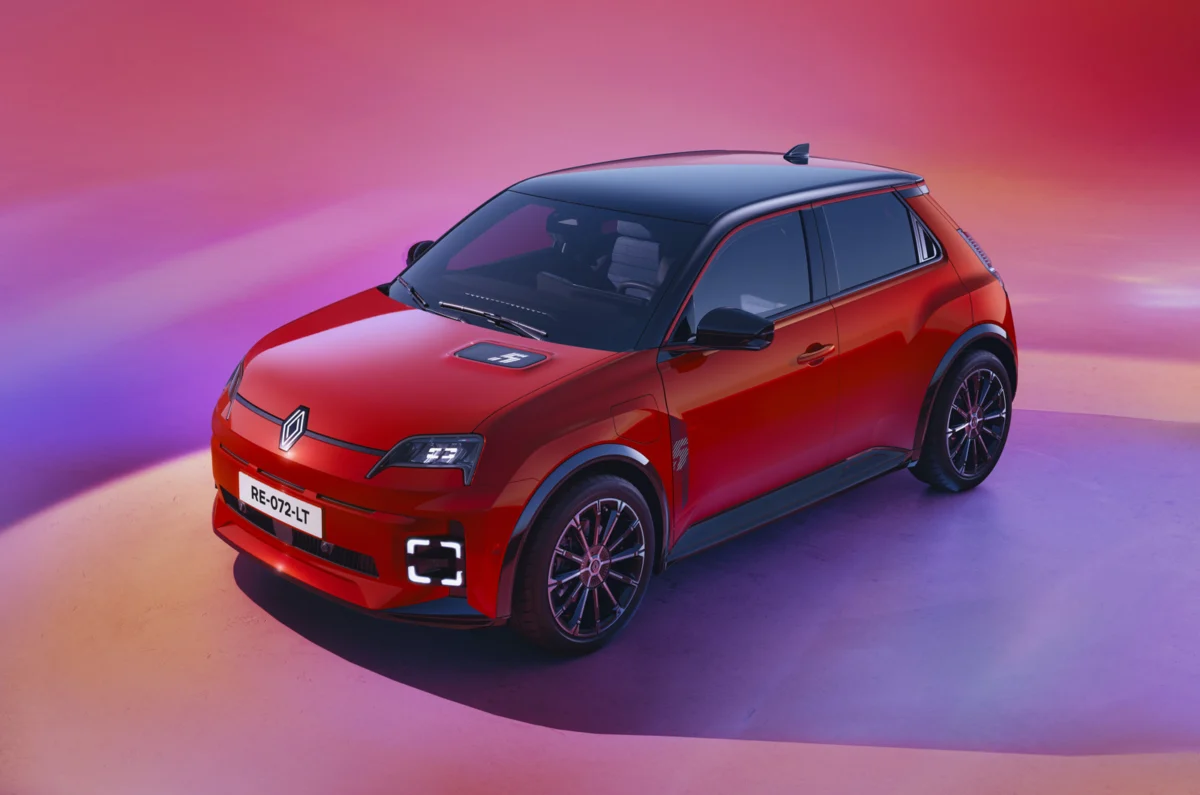
The Renault 5 E-Tech, the French manufacturer’s flagship retro-styled electric supermini, has undergone a series of technical and aesthetic revisions designed to enhance its efficiency and broaden its appeal in an increasingly crowded compact electric vehicle (EV) segment. After approximately two years in the global spotlight, the model has received aerodynamic refinements, a significant shift in battery chemistry for its entry-level variant, and a suite of new personalization options. These updates are intended to maintain the vehicle’s momentum as it faces stiff competition from new entrants such as the Volkswagen ID.2, the Citroën ë-C3, and the upcoming Fiat Grande Panda.
The most notable technical improvement involves a modest but meaningful boost to the vehicle’s official range figures across its two primary powertrain configurations. Through the implementation of more aerodynamic exterior mirrors and revised lower body trim, Renault engineers have succeeded in reducing the car’s drag coefficient. Consequently, the entry-level "Urban Range" variant, which utilizes a 40kWh battery, now achieves an official WLTP range of 196 miles, an increase of three miles over the previous iteration. The more performance-oriented "Comfort Range" model, equipped with a 52kWh battery, has seen a more substantial gain, with its range climbing from 255 miles to 267 miles.
The Strategic Shift to Lithium-Iron-Phosphate Technology
In a significant move for the model’s production lifecycle, Renault has confirmed that the entry-level Urban Range variant will transition from its current nickel-manganese-cobalt (NMC) battery chemistry to a lithium-iron-phosphate (LFP) pack. This 36.5kWh unit is borrowed from the new Renault Twingo EV, reflecting a broader trend within the Renault-Nissan-Mitsubishi Alliance to streamline components across the AmpR Small platform (formerly known as CMF-BEV).
The transition to LFP technology is a calculated trade-off. While LFP batteries typically offer lower energy density than NMC alternatives, Renault asserts that the new pack is sufficiently optimized to ensure the car concedes only six miles of range compared to the outgoing 40kWh NMC unit. The primary advantages of LFP chemistry include lower manufacturing costs, enhanced thermal stability, and a longer lifecycle, as LFP cells can typically withstand more charge-discharge cycles before degrading.
From a consumer standpoint, the charging performance of the new LFP-equipped model, dubbed the "Five," will differ slightly from its predecessors. The vehicle will support domestic AC charging at up to 6.6kW and public DC fast charging at up to 80kW. This DC charging rate is marginally slower than the higher-tier 52kWh version, which supports up to 100kW, but remains competitive for the B-segment supermini class.
While LFP batteries are inherently more cost-effective to produce, Renault has yet to finalize pricing for the updated entry-level model in several key markets, including the United Kingdom. The current entry price for the Renault 5 stands at £21,495. Industry analysts suggest that the shift to LFP could either allow Renault to lower the starting price to compete with the £18,000–£20,000 price point targeted by the Citroën ë-C3 or, alternatively, help the manufacturer maintain its current margins amidst rising energy and material costs.
Aesthetic Refinements and Heritage-Inspired Design
Beyond the mechanical updates, Renault has introduced a series of cosmetic enhancements aimed at the "personalization" market, which has historically been a strong driver of sales for stylish small cars like the Mini Cooper and Fiat 500.
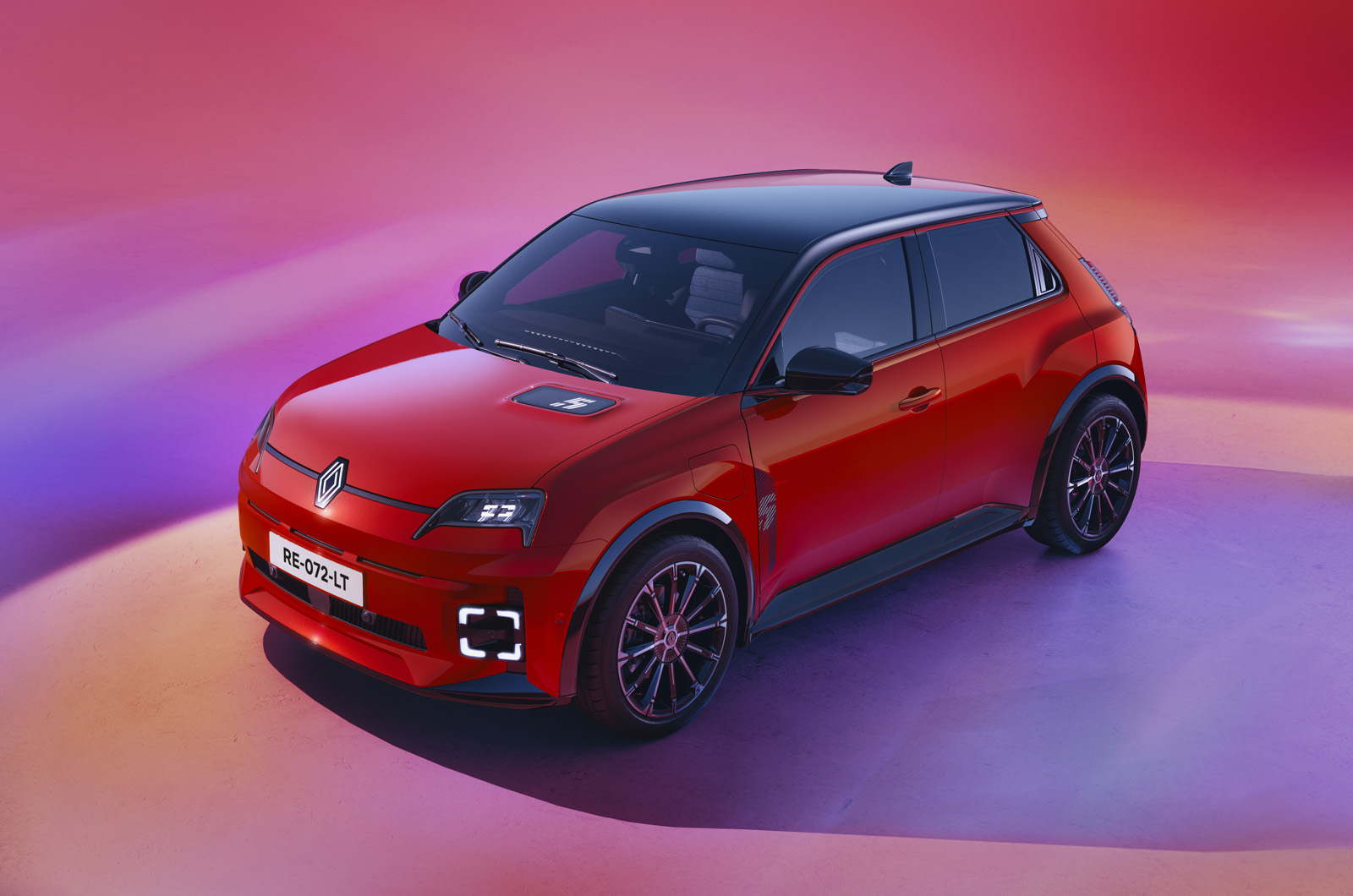
A new exterior paint option, a vibrant shade of red, has been added to the palette. Notably, this color is shared with the upcoming Nissan Micra EV. This synergy is a direct result of the industrial partnership at Renault’s Douai plant in Northern France, where both the Renault 5 and the Nissan Micra are manufactured on the same assembly lines. This "ElectriCity" production hub is central to Renault’s strategy of localized, high-efficiency EV manufacturing.
Further exterior options now include a star-patterned roof decal and the introduction of a grey roofline finish, providing a more understated alternative to the previously standard red accents. Enthusiasts of the brand’s sporting history will particularly note the new gold-finished wheels available on the high-specification Techno and Iconic trims. When paired with the "Midnight Blue" exterior paint, the combination serves as a deliberate visual homage to the iconic 1990s Clio Williams, a vehicle that remains a benchmark for hot hatch performance and design.
The interior has also seen a material refresh. In the range-topping Iconic trim, the seat upholstery has transitioned from the previous yellow-themed finish to a more sophisticated blue and grey palette.
Technological Evolution and User Experience
Renault has utilized this update to refine the interior technology and ergonomics of the 5 E-Tech. A new wireless smartphone charger has been integrated into the center console. Unlike many existing wireless pads that suffer from slow charging speeds and excessive heat generation, Renault’s new system is reportedly capable of delivering a 50% charge to a standard smartphone within one hour while utilizing active thermal management to prevent the device from overheating.
Perhaps the most significant change to the driver interface is the removal of the physical "Multi-Sense" drive mode selector button. In its place, Renault has introduced a "Smart" function. This software-driven system utilizes algorithms to monitor throttle inputs and driving conditions in real-time, automatically adjusting the vehicle’s mapping between efficiency and performance. While the automation of drive modes is intended to simplify the driving experience, the manufacturer has retained manual control for those who prefer it; drivers can still toggle between Sport, Eco, Comfort, and Individual modes via the central touchscreen or through voice commands integrated into the Renault OpenR Link system.
Chronology of the Renault 5 Revival
The journey of the modern Renault 5 began in January 2021, when CEO Luca de Meo unveiled the "Renaulution" strategic plan. The Renault 5 Prototype was the centerpiece of this announcement, signaling a shift away from the utilitarian design language of the Renault Zoe toward a more emotive, heritage-led approach.
- January 2021: Renault 5 Prototype revealed as part of the Renaulution plan.
- February 2024: Production version of the Renault 5 E-Tech debuts at the Geneva Motor Show.
- Late 2024: Initial market launch in France and mainland Europe.
- Mid-2025: UK deliveries commence, and the first "light update" (the subject of this report) is integrated into the production cycle.
- Late 2025/Early 2026: Full integration of the LFP battery technology and the "Five" entry-level trim.
This timeline illustrates Renault’s rapid development cycle, moving from concept to a revised production model in less than four years. This agility is largely credited to the use of the AmpR Small platform, which shares approximately 70% of its components with the existing CMF-B platform used for the internal combustion Renault Clio and Captur.
Market Context and Competitive Implications
The updates to the Renault 5 arrive at a critical juncture for the European automotive industry. As subsidies for electric vehicles are scaled back in major markets like Germany, manufacturers are under immense pressure to deliver EVs that are not only affordable but also possess enough "character" to entice buyers away from traditional petrol-powered hatchbacks.
The decision to boost the 52kWh model’s range to 267 miles is a direct response to the "range anxiety" that still persists among B-segment buyers. By exceeding the 250-mile threshold, Renault positions the 5 as a viable primary vehicle rather than just a secondary city car.
Furthermore, the collaboration with Nissan at the Douai facility highlights the importance of industrial scale. By sharing paint colors, battery technology, and platform architecture with the Nissan Micra, Renault achieves the economies of scale necessary to keep the R5’s price point competitive. This "co-opetition" model is increasingly seen as the only way for European manufacturers to withstand the influx of low-cost electric vehicles from Chinese brands like BYD and MG.
Analysis of Broader Impact
The move to LFP batteries for the entry-level model is perhaps the most telling indicator of where the small EV market is heading. For years, NMC was the preferred choice for its superior energy density, but the volatility of nickel and cobalt prices has made it a liability for budget-conscious vehicles. By adopting LFP, Renault is insulating itself against supply chain shocks and aligning with a global trend; even Tesla and Ford have shifted toward LFP for their standard-range models.
Moreover, the removal of the physical Multi-Sense button reflects a broader trend in automotive design toward "software-defined vehicles." By moving functions to the touchscreen or automating them through "Smart" logic, manufacturers can reduce mechanical complexity and interior assembly costs. While some traditionalists may lament the loss of physical switchgear, the success of this move will depend on the intuitiveness of Renault’s software.
In conclusion, the latest updates to the Renault 5 E-Tech represent a strategic maturation of the product. By focusing on aerodynamic efficiency, sustainable battery chemistry, and a deep connection to the brand’s heritage, Renault is attempting to prove that the future of the electric car can be both technically proficient and emotionally resonant. As the "Five" variant prepares for its market debut, the industry will be watching closely to see if these technical tweaks translate into the sustained sales volume Renault needs to lead the European EV transition.