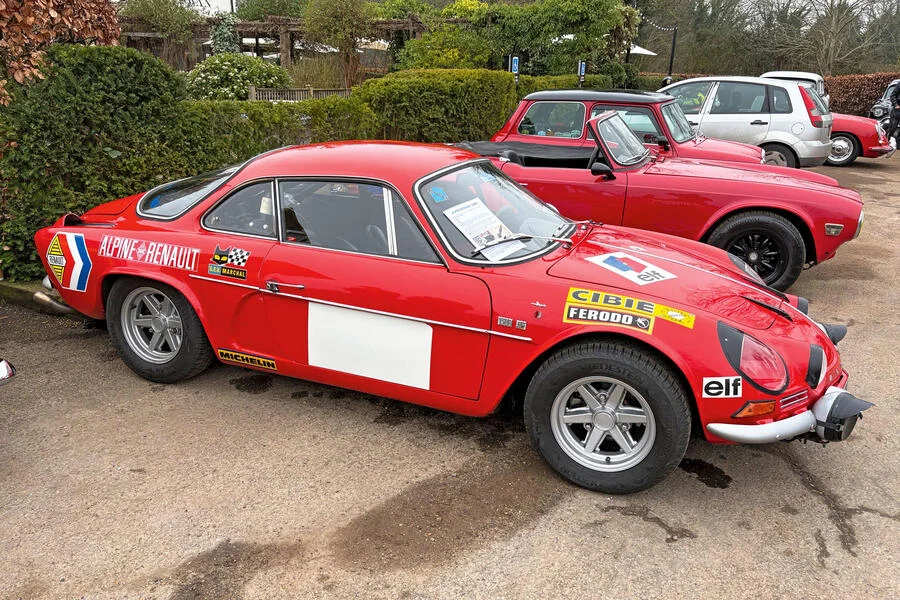
The pursuit of a rare automotive icon often leads enthusiasts across international borders, driven by the belief that the finest examples of a nation’s motoring heritage must surely reside within its own frontiers. For Roger Hick, a dedicated aficionado of the Alpine marque, this journey involved an exhaustive search through the French countryside, the traditional heartland of the Alpine A110. However, in a turn of events that underscores the unpredictable nature of the classic car market, his quest concluded not in Dieppe or Paris, but in the Buckinghamshire town of Milton Keynes. This discovery highlights the depth of the United Kingdom’s classic car ecosystem and the enduring, cross-border appeal of one of France’s most celebrated sports cars.
The Semantic Distinction and Brand Identity
To understand Hick’s devotion to the brand, one must first understand the nomenclature that defines it. A central tenet of Hick’s philosophy—and one shared by many purists—is the specific ordering of the brand’s title. "Alpine comes first in the name, as in Alpine Renault," Hick asserts, correcting a common misconception among casual observers. "There’s never been a Renault Alpine." This distinction is more than mere semantics; it represents the historical independence of the brand founded by Jean Rédélé in 1955.
While Alpine utilized Renault components, including engines and transmissions, it remained a distinct entity until its eventual acquisition by Renault in 1973. The A110 "Berlinette" was the ultimate expression of this partnership, utilizing the rear-engine layout of the Renault 8 but housing it within a lightweight, aerodynamic fiberglass body designed by Giovanni Michelotti. By insisting on the "Alpine Renault" designation, Hick pays homage to the engineering spirit of Rédélé, who prioritized lightness and agility over raw power—a philosophy that continues to define the brand’s modern revival.
A Comprehensive Search Across the Channel
The journey to Hick’s acquisition of the Alpine A110 1300 S was characterized by meticulous research and physical exploration. Given the A110’s status as a French national treasure, France was the logical starting point. The French market historically offers the highest volume of A110 models, ranging from the early 1100cc versions to the high-performance 1600S and 1600VD variants.
Hick’s search involved navigating the complexities of the European classic car market, which includes verifying provenance in a field where "replica" or heavily modified rally cars are common. The Alpine A110 was a dominant force in international rallying, famously winning the inaugural World Rally Championship (WRC) in 1973. Consequently, many surviving examples have been subjected to decades of competition stress or have been rebuilt using non-original parts. Finding a "clean" example—one that retains its original character while remaining mechanically sound—is a challenge that often takes years. After exhaustive trips to various regions of France, Hick found that the logistical hurdles of importing, coupled with the varying conditions of the vehicles viewed, left his search unfulfilled.
The Milton Keynes Discovery: A Local Resolution
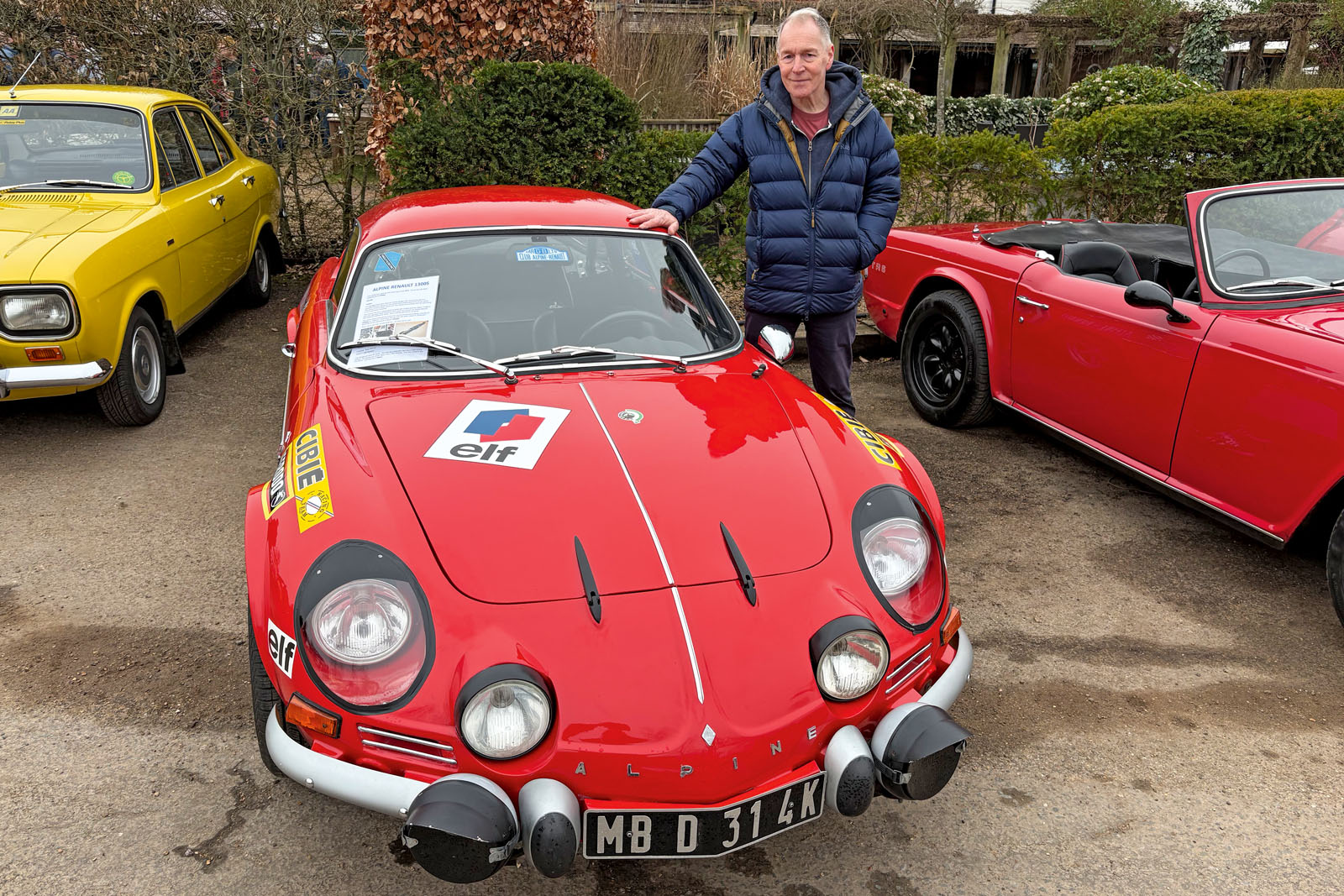
The resolution to Hick’s international search occurred unexpectedly close to home. Milton Keynes, primarily known for its grid-based urban planning and as a hub for modern automotive engineering and Formula 1 teams, became the unlikely setting for the discovery of a pristine A110 1300 S.
The vehicle in question represents a significant era in Alpine’s development. The "1300 S" variant is particularly prized by collectors for its balance. While the 1600cc models offer more power, the 1300cc engines—specifically those derived from the Renault 8 Gordini—are celebrated for their high-revving nature and the purity of the driving experience they provide. Finding such a specific model in the United Kingdom is a rarity, as the A110 was produced in relatively small numbers (approximately 7,000 to 8,000 units across its entire 1961–1977 production run) and original right-hand-drive conversions are virtually non-existent. The fact that a high-quality, left-hand-drive 1300 S was available in Milton Keynes suggests a history of careful ownership by a UK-based collector who understood the car’s intrinsic value.
Technical Specifications: The Heart of the 1300 S
The Alpine A110 1300 S is a masterclass in power-to-weight efficiency. To appreciate the vehicle Hick acquired, one must examine the technical data that made the A110 a giant-killer on the rally stages of Europe:
- Engine: 1296cc inline-four, overhead valve (OHV), derived from the Gordini-tuned Renault units.
- Aspiration: Twin Weber 40 DCOE carburetors, providing a sharp throttle response and a distinctive induction roar.
- Power Output: Approximately 115–120 bhp (SAE), which, while modest by modern standards, was exceptional for a 1.3-liter engine in the late 1960s.
- Chassis: A steel backbone chassis, a signature Alpine design that provided high torsional rigidity while keeping weight to a minimum.
- Body: Lightweight fiberglass-reinforced plastic (FRP) bodywork, contributing to a total kerb weight of roughly 625 kg (1,378 lbs).
- Performance: A top speed approaching 130 mph and a 0–60 mph acceleration time in the 8-second range, figures that allowed it to outpace contemporary sports cars with much larger engines.
This combination of a low center of gravity, rear-engine traction, and extreme lightness made the 1300 S a formidable machine on winding alpine passes—the very terrain for which it was named.
The Alpine Legacy and Ownership Context
Roger Hick is not a newcomer to the Alpine brand; his acquisition of the A110 1300 S is the culmination of a long-standing relationship with the marque. Hick has previously owned two Alpine Renault V6 Turbos (the GTA model), which represented the brand’s evolution in the 1980s toward the "Grand Tourer" market. The V6 Turbo was Alpine’s attempt to compete with the likes of Porsche, featuring a more luxurious interior and a turbocharged 2.5-liter engine.
Furthermore, Hick’s daily driver is a current-generation Alpine A110, the mid-engined revival launched in 2017. This modern iteration has been universally acclaimed by the automotive press for staying true to the original A110’s core values of lightness and driver engagement. Hick’s ownership of both the classic 1300 S and the modern A110 provides him with a unique perspective on the brand’s lineage, bridging the gap between the raw, mechanical purity of the 1960s and the sophisticated engineering of the 21st century.

Market Analysis and the Value of Provenance
The market for classic Alpine A110s has seen a significant upward trajectory over the past decade. Several factors contribute to this appreciation:
- The Brand Relaunch: The success of the modern A110 has introduced a new generation of enthusiasts to the brand’s history, driving up demand for the original "Berlinette."
- Rally Heritage: As a foundation member of the WRC winners’ circle, the A110 holds a prestigious position in motorsport history, making it a "must-have" for serious competition car collectors.
- Scarcity: With fewer than 8,000 units produced over 16 years, and many lost to the rigors of racing, surviving examples in original condition are increasingly difficult to locate.
Current market data suggests that a well-maintained Alpine A110 1300 S can command prices ranging from £80,000 to over £120,000, depending on its history and state of preservation. High-performance 1600S models often exceed £150,000 at auction. Hick’s decision to search in France was financially motivated as much as it was by passion, yet the discovery in Milton Keynes likely saved significant costs related to international transport, import duties, and the administrative complexities of registering a foreign vehicle in the UK post-Brexit.
Broader Impact and Implications for Collectors
The story of Roger Hick and his Alpine A110 serves as a case study for the modern classic car collector. It highlights the "globalized" nature of the car market, where significant vehicles can be found in unexpected locations. It also reinforces the importance of brand knowledge; Hick’s insistence on the "Alpine Renault" nomenclature reflects a deeper understanding of the vehicle’s soul, which in turn informs better purchasing decisions.
For the wider automotive community, Hick’s experience validates the UK as a premier destination for sourcing high-quality European classics. Despite the car’s French origins, the British infrastructure for classic car maintenance, restoration, and trade remains world-class. The presence of such a specialized machine in Milton Keynes is a testament to the vibrant "car culture" that exists within the UK, extending far beyond domestic brands like Jaguar or Aston Martin.
Future Outlook for the Alpine Brand
As Alpine moves toward an electrified future, with plans to transition to an all-electric lineup by the mid-2020s, the significance of internal combustion icons like the A110 1300 S will only grow. These vehicles serve as the "DNA" for the brand, providing a reference point for future engineers tasked with maintaining Alpine’s reputation for agility in an era of heavy battery packs.
Roger Hick’s Alpine A110 1300 S is more than just a weekend toy; it is a preserved piece of automotive history. By bringing it back to the roads—whether in the UK or on return trips to the French Alps—Hick ensures that the legacy of Jean Rédélé and the "Alpine Renault" name continues to be recognized. The irony of finding a French dream in a British new town is a fitting chapter in the storied life of a car that has always been about the journey as much as the destination.