


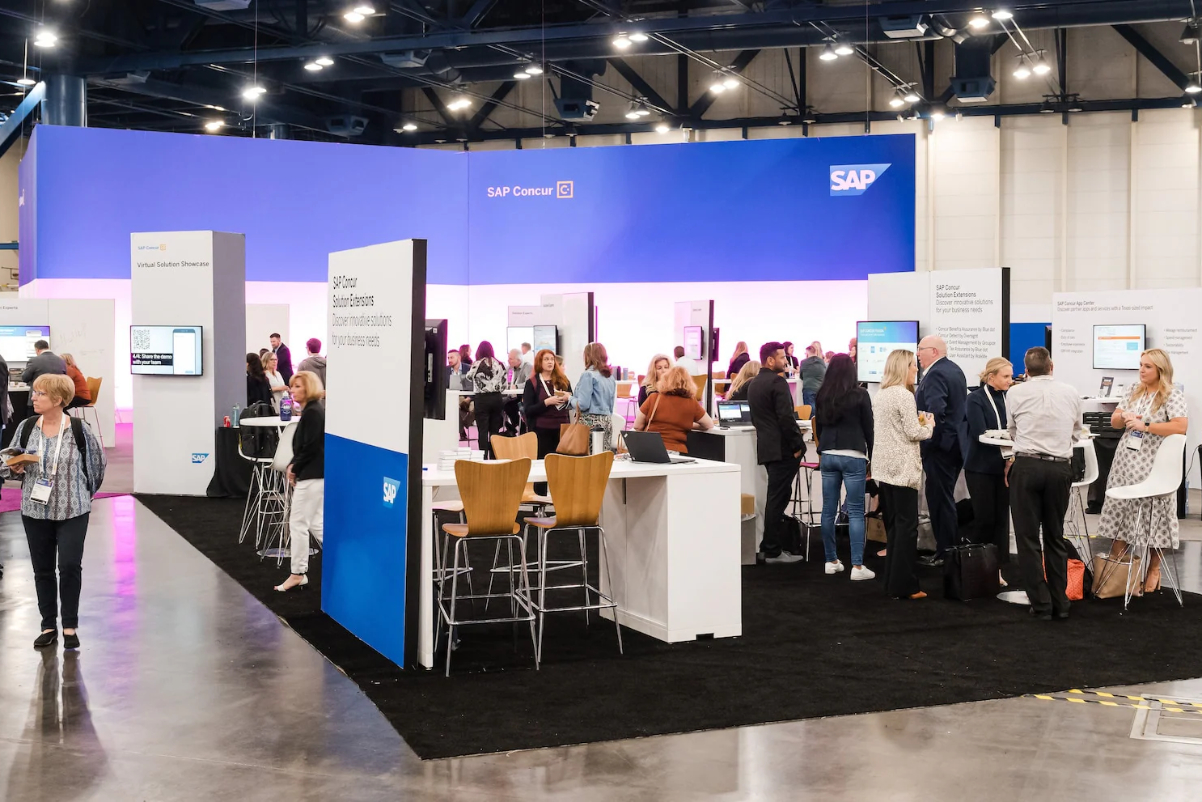
At the annual Fusion conference held this week in New Orleans, SAP Concur announced a sweeping suite of technological advancements designed to fundamentally alter how global enterprises manage business travel and employee spending. The centerpiece of these announcements is the deeper integration of Joule, SAP’s agentic AI platform, which aims to transition travel and expense (T&E) management from a destination-based software experience into an invisible, embedded utility within the tools employees use daily. By leveraging generative AI and expanding its ecosystem through high-profile partnerships with Microsoft, Visa, and American Express Global Business Travel (Amex GBT), SAP Concur is positioning itself at the vanguard of a productivity-first approach to corporate finance.
The Shift Toward Agentic AI and Embedded Travel Booking
For decades, the process of booking a client visit or filing a reimbursement claim required employees to leave their primary work environments—such as email clients or CRM systems—to log into a dedicated travel portal. SAP Concur’s latest update to Joule seeks to eliminate this "context switching." Salespeople and consultants will soon be able to book comprehensive travel itineraries directly through the Joule interface using natural language processing.
Unlike traditional chatbots that merely provide information, Joule is an "agentic" AI, meaning it possesses the capability to execute tasks across different software modules. If a salesperson tells Joule they need to visit a client in Chicago next Tuesday, the AI can cross-reference the employee’s calendar, check the company’s travel policy, browse flight and hotel availability via the Concur Travel engine, and complete the booking without the user ever opening a separate browser tab.
This development is part of a broader industry trend toward "invisible" enterprise software. By embedding travel functions into the workflow, SAP Concur aims to increase policy compliance and reduce the administrative burden on employees. According to internal SAP data, administrative tasks related to travel and expense can consume several hours of a frequent traveler’s week; the automation provided by Joule is projected to reduce this time investment significantly.
Expanding the Microsoft 365 Copilot Integration
Building on its long-standing relationship with Microsoft, SAP Concur announced a new integration between Joule and Microsoft 365 Copilot. This collaboration allows the two AI entities to communicate, sharing context to streamline the user experience. For instance, a user working within Microsoft Outlook can trigger a Concur-related task, such as approving an expense report or checking a flight status, through the Copilot interface.
The synergy between Joule and Copilot is designed to leverage the vast amount of data residing within the Microsoft ecosystem—such as meeting invites and email threads—to pre-populate travel requests. If a meeting is scheduled in a different city, the system can proactively suggest travel arrangements. This integration represents a major step in SAP’s "Business AI" strategy, which focuses on delivering AI that is relevant, reliable, and responsible within a corporate context.
Real-Time Expense Generation through the Visa Partnership
One of the most significant pain points in corporate finance is the delay between a transaction and its appearance in an expense report. To solve this, SAP Concur has entered into a strategic partnership with Visa to utilize real-time transaction data.
Through this partnership, when an employee swipes a linked Visa corporate card, the transaction data is pushed immediately to the SAP Concur mobile app. The system then uses AI to categorize the expense, match it with a digital receipt, and generate an expense line item in real-time. This "swipe-to-expense" capability aims to eliminate the end-of-month scramble to find lost receipts and manually enter data.
From a corporate governance perspective, this real-time data flow provides CFOs and finance managers with immediate visibility into company spend. Traditionally, companies have had to wait for bank statements to reconcile accounts; now, they can monitor budgets with a level of granularity and speed that was previously impossible. This integration also enhances fraud detection, as AI can flag non-compliant or suspicious transactions the moment they occur.
Progress Report on the American Express Global Business Travel Alliance
The Fusion conference also served as a platform to provide updates on SAP Concur’s five-month-old alliance with American Express Global Business Travel (Amex GBT). The partnership, which combines the world’s leading travel management company (TMC) with the leading expense platform, has moved into a new phase of technical maturity.
The updates focus on creating a more unified "booking-to-settlement" flow. By integrating Amex GBT’s specialized travel services more deeply into the Concur platform, the two companies are offering a premium service tier for large-scale enterprises. This includes enhanced support for sustainable travel choices and more robust data analytics for travel managers. The alliance is particularly focused on mid-market and large enterprise customers who require both high-touch human support from a TMC and the high-tech automation of a modern expense platform.
Chronology of SAP Concur’s Evolution
To understand the magnitude of the New Orleans announcements, it is essential to view them through the lens of SAP Concur’s historical trajectory:
- 1993: Concur is founded, focusing on moving paper-based expense reports to a software-based environment.
- 2014: SAP acquires Concur for approximately $8.3 billion, the largest acquisition in SAP’s history at that time, signaling a shift toward cloud-based business services.
- 2023: SAP introduces Joule, its generative AI assistant, across its entire cloud portfolio.
- Late 2023: SAP Concur announces a total redesign of its "Concur Travel" core engine to support modern retailing (NDC) and a mobile-first experience.
- 2024 (Fusion Conference): The transition to "Agentic AI" begins, shifting from a tool that records data to an agent that executes complex business processes autonomously.
Supporting Data and Market Analysis
The move toward AI-driven expense management is backed by significant market shifts. According to the Global Business Travel Association (GBTA), global business travel spending is expected to reach $1.5 trillion by the end of 2024, surpassing pre-pandemic levels. However, the labor market remains tight, and companies are increasingly looking for ways to improve the "employee experience" to retain talent.
A recent study by Forrester Research indicated that employees who use modern, integrated T&E tools are 20% more likely to report high job satisfaction compared to those using legacy systems. Furthermore, organizations utilizing AI for expense auditing have reported a 30% reduction in "maverick spend" (purchases made outside of company policy).
SAP Concur’s focus on the "agentic" nature of AI also aligns with broader tech trends. Industry analysts at Gartner predict that by 2028, 40% of enterprise applications will have embedded AI agents capable of autonomous task execution. SAP Concur is among the first major SaaS providers to move this concept from the laboratory into a production environment for travel.
Official Responses and Industry Reaction
While official keynote addresses emphasized the technological "magic" of the new tools, the underlying message from SAP Concur leadership focused on trust and reliability. Executives at the conference noted that while AI can automate tasks, the "human in the loop" remains a critical component of the Concur philosophy.
"Our goal is not just to automate for the sake of automation, but to provide a level of intelligence that understands the nuances of corporate policy and personal preference," noted a senior SAP Concur product lead during a breakout session. "When Joule suggests a flight, it isn’t just looking at the price; it’s looking at whether that flight aligns with the company’s carbon-neutral goals and the traveler’s preferred airline loyalty program."
Industry observers have largely reacted positively to the Visa and Microsoft integrations. Financial analysts suggest that the Visa partnership, in particular, creates a "moat" around SAP Concur’s expense business by making the data entry process so frictionless that companies would find it difficult to switch to a competitor without similar banking integrations.
Broader Implications for the Corporate Landscape
The implications of these developments extend beyond the travel department. For the Chief Information Officer (CIO), the integration with Microsoft 365 Copilot simplifies the enterprise tech stack by centralizing interactions within a few key hubs. For the Chief Financial Officer (CFO), the real-time data from the Visa partnership offers a more accurate "cash-on-hand" picture, allowing for more agile financial planning.
However, the shift to AI-driven management also raises questions about data privacy and the changing role of travel managers. As AI takes over the logistical heavy lifting of booking and auditing, the role of the corporate travel manager is expected to evolve from a transactional supervisor to a strategic advisor focused on duty of care, sustainability, and vendor negotiations.
Furthermore, the "agentic" AI model requires a high degree of data integrity. For Joule to book a trip accurately, it must have access to clean, up-to-date data across HR systems, CRM platforms, and travel providers. This reinforces the value of the broader SAP ecosystem, where such data is already interconnected.
Looking Ahead: The Future of Autonomous Spend
As the New Orleans Fusion conference concludes, the roadmap for SAP Concur is clear: the future of spend management is autonomous. The company’s focus for the remainder of 2024 and into 2025 will be the global rollout of these AI agents and the expansion of the "Direct Capture" program with other financial institutions beyond Visa.
By moving travel and expense from a chore that employees must do to a service that happens for them, SAP Concur is attempting to solve one of the most persistent frustrations in the corporate world. If successful, the "agentic" approach could become the blueprint for how all enterprise software operates—not as a collection of silos, but as a cohesive, intelligent assistant that anticipates and fulfills the needs of the modern workforce.