


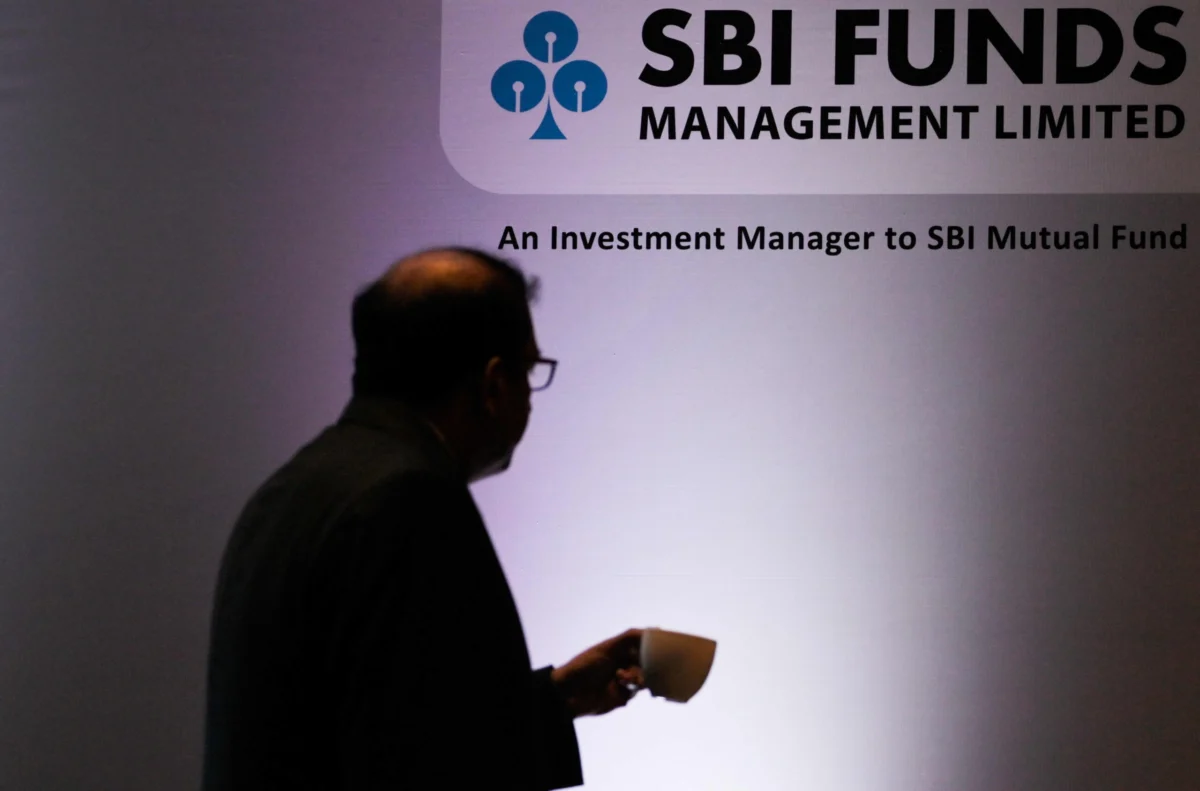
The recent initial public offering (IPO) of SBI Fund Management, India’s pre-eminent asset management company, has concluded with an overwhelming response, garnering bids worth an astounding 2.97 trillion rupees ($30.7 billion). This colossal demand, significantly oversubscribing the offering by 41.6 times, unequivocally underscores the profound depth of liquidity presently circulating within the Indian financial system and signals a potent resurgence in investor confidence. The success of this public market offering, the largest in India this year, establishes a crucial precedent for a series of even more substantial market introductions anticipated later in 2026, setting a positive tone for the remainder of the fiscal year.
A Deep Dive into the SBI Fund Management IPO Performance
SBI Fund Management, a strategic joint venture between the colossal State Bank of India, the nation’s largest public sector bank, and Europe’s globally recognized Amundi Group, sought to raise a more modest 97.9 billion rupees ($1 billion) through its share sale. The disparity between the targeted raise and the actual bids received highlights an eager appetite among investors, particularly institutional players, for high-quality Indian equities.
The most striking aspect of the IPO’s performance was the phenomenal engagement from qualified institutional buyers (QIBs). This segment, comprising large financial entities such as domestic banks, insurance companies, mutual funds, and foreign institutional investors, oversubscribed their allocated portion by an extraordinary 140 times. The bulk of these bids emanated from domestic institutional investors, indicating a strong belief in the Indian growth narrative and a readiness to deploy significant capital within the national economy. This robust demand from sophisticated investors is often viewed as a strong endorsement of the company’s fundamentals, management quality, and future growth prospects.
In contrast, participation from retail investors, while still positive, was comparatively muted, with subscriptions reaching 3.6 times the shares reserved for them. This differential in subscription rates between institutional and retail investors is not uncommon in the Indian market, where large institutional blocks can often dominate the bidding process, driven by mandates for diversified portfolios and long-term strategic investments. The IPO officially closed for subscriptions on Thursday, July 16, 2026, marking a significant milestone for the Indian primary market.
SBI Fund Management: A Pillar of India’s Financial Landscape
SBI Fund Management stands as a behemoth within India’s asset management industry. As of March 2026, the company boasted an impressive 29.5 trillion rupees ($395 billion) in assets under management (AUM), solidifying its position as the largest asset manager in the country. Its extensive product portfolio spans a wide array of mutual funds, including equity, debt, hybrid, and exchange-traded funds, catering to a diverse investor base ranging from individual savers to large institutional clients. The company’s strong brand recall, backed by the credibility of State Bank of India, and the global expertise of Amundi Group, has consistently positioned it as a leader in India’s rapidly expanding financial services sector. The decision to go public reflects a strategic move to unlock value for its shareholders, enhance corporate governance, and potentially fund future growth initiatives in an increasingly competitive market.
A Market in Flux: From Subdued Start to Resurgent Optimism
The overwhelming success of the SBI Fund Management IPO arrives at a critical juncture for India’s capital markets. While India has distinguished itself as the most prolific IPO market globally over the preceding two years, recording an unparalleled number of listings, the initial half of 2026 presented a considerably more subdued landscape. This slowdown was primarily attributed to a confluence of challenging global and domestic economic headwinds.
The Shadow of Geopolitics: The Iran War’s Impact
A significant factor dampening market sentiment during the first half of the year was the escalating geopolitical tensions stemming from the Iran war. The conflict exerted immense upward pressure on global energy prices, directly impacting India, a major net importer of crude oil. Elevated energy costs translated into higher input prices for industries, increased transportation expenses, and ultimately, inflationary pressures that began to erode the purchasing power of consumers. This "squeeze" on the Indian economy directly threatened its celebrated domestic consumption story, a key driver of its robust GDP growth in recent years. The uncertainty surrounding the conflict also led to a cautious approach from foreign investors, who typically seek stability before committing large sums.
Simultaneously, the global investment landscape witnessed a significant rally in artificial intelligence (AI) stocks. Capital flowed rapidly into technology companies perceived to be at the forefront of AI innovation, predominantly in the United States and other developed markets. India, despite its burgeoning IT services sector, currently lacks global champions in the pure-play AI space on the scale of its Western counterparts. This meant that while global markets saw a surge in certain tech segments, Indian equities, largely driven by traditional sectors and a nascent tech ecosystem, did not fully benefit from this global thematic shift.
Market Correction and Partial Recovery
The combined weight of rising energy prices, inflationary concerns, and the global shift towards AI stocks had a tangible impact on Indian benchmark indices. Since the start of 2026, the bellwether Sensex, a barometer of the Indian economy, had shed over 9.4% of its value, positioning it among the worst-performing large stock markets globally. The broader Nifty 50 index, encompassing the top 50 companies listed on the National Stock Exchange, also saw a decline of 7.9% year-to-date. This period of correction tested investor resolve and led to a temporary deferment of fundraising plans by several companies.
However, a glimmer of hope emerged in June 2026, following a crucial ceasefire agreement between Iran and the United States. This de-escalation of geopolitical tensions provided a much-needed respite, leading to a partial recovery in global crude oil prices and a significant improvement in market sentiment. With the reduction in uncertainty, Indian markets began to regain some lost ground, and companies, emboldened by the improved outlook, started to re-evaluate and announce their fundraising plans. The SBI Fund Management IPO is a direct beneficiary and a key indicator of this renewed confidence.
Anticipation for Mega IPOs: NSE and Jio Platforms
The robust institutional interest witnessed in the SBI Fund Management IPO is particularly good news for two of India’s most eagerly awaited public issues: the National Stock Exchange (NSE) and Jio Platforms. Both companies are expected to launch their IPOs later this year and are projected to be significantly larger, each estimated to raise in excess of $3 billion, according to Mumbai-based IPO intelligence firm Prime Database.
The National Stock Exchange, India’s largest stock bourse by trading volume, represents a unique investment opportunity, offering exposure to the underlying growth of India’s capital markets. Jio Platforms, the digital and telecommunications arm of Reliance Industries, led by Mukesh Ambani, is set to be one of the largest tech IPOs globally, given its immense subscriber base and diversified digital ecosystem. The successful absorption of a $1 billion IPO from SBI Fund Management provides compelling evidence that the market possesses the necessary liquidity and investor appetite to comfortably accommodate these multi-billion dollar offerings. Analysts suggest that the strong performance of SBI Fund Management’s listing, expected next week, will serve as a critical bellwether, further influencing investor sentiment for these upcoming mega-IPOs.
Analysis of Investor Sentiment and Market Dynamics
The overwhelming response from qualified institutional buyers underscores a fundamental belief in India’s long-term growth trajectory and the structural reforms undertaken to bolster its financial markets. Domestic institutional investors, including large public and private sector banks and insurance companies, often play a crucial counter-cyclical role, providing stability and capital when foreign flows might be more volatile. Their substantial participation in the SBI Fund Management IPO indicates a strategic allocation of capital towards robust, well-managed entities within the Indian financial sector.
Conversely, the relatively lower retail participation, while still healthy, could be attributed to several factors. Retail investors often exhibit greater sensitivity to short-term market volatility, and the challenging first half of 2026 might have fostered a degree of caution. Furthermore, some retail investors might prefer to invest in larger, more easily recognizable consumer brands or technology companies, which have historically garnered significant media attention and high listing gains. However, the overall success of the IPO is a positive signal that could encourage greater retail involvement in subsequent offerings as market confidence solidifies.
Regulatory Environment and Future Outlook
The Securities and Exchange Board of India (SEBI), the country’s capital markets regulator, plays a pivotal role in ensuring the integrity and transparency of the IPO process. Its stringent disclosure requirements and robust oversight mechanism are crucial for building investor trust and fostering a healthy primary market. The successful execution of the SBI Fund Management IPO, under SEBI’s watchful eye, reinforces the strength of India’s regulatory framework.
Looking ahead, market prognosticators suggest that stock market offerings worth an astonishing $50 billion could potentially flood the Indian markets this year. This ambitious pipeline reflects a backlog of companies that deferred their IPO plans during the earlier market downturn, now eager to tap into the renewed investor enthusiasm. However, the continuation of the Iran war, or any re-escalation of geopolitical tensions, remains a key risk that could quickly dampen this burgeoning optimism. Global crude oil prices, inflation, and the broader global economic environment will continue to be closely monitored by investors and policymakers alike.
The upcoming listing of SBI Fund Management next week will be a moment of keen observation for market participants. Strong post-IPO gains would undoubtedly amplify the appetite for new issues, potentially paving the way for a vibrant second half of 2026 for India’s capital markets. The IPO’s success is not merely a testament to SBI Fund Management’s strength but also a powerful indicator of India’s resilience and its enduring appeal as a prime destination for capital investment, even amidst a complex global economic landscape.