


The rise of the creator economy has fundamentally altered the global tourism landscape, shifting the focus from destination discovery to the commodification of cultural tropes for algorithmic gain. As digital platforms like YouTube, TikTok, and Instagram become the primary search engines for the next generation of travelers, a troubling pattern has emerged: the reduction of complex, multifaceted nations into narrow, sensationalized narratives designed to trigger high engagement rates. This phenomenon, often referred to as the "Sensation Economy," prioritizes shock value and external validation over cultural nuance, creating a feedback loop that rewards creators for reinforcing stereotypes rather than challenging them.
In the second installment of this series on the creator economy’s impact on travel, the focus shifts from the "Validation Economy"—where Western creators monetize the desire for recognition among South Asian audiences—to the systemic narrowing of national identities in less-visited destinations. Using Mauritania and Bulgaria as primary case studies, it becomes evident that the economic incentives of digital platforms are increasingly at odds with the reality of global cultural diversity.
The Case of Mauritania: From Saharan Landscapes to Sensationalized Tropes
Mauritania, a vast nation of 4.5 million people situated at the crossroads of North and West Africa, offers a rich tapestry of history, geography, and culture. It is home to the ancient "library cities" of Chinguetti and Ouadane, the dramatic Adrar Plateau, and the world-renowned iron ore train that traverses the Sahara. However, a search for "Mauritania" on major video-sharing platforms reveals a starkly different reality. The YouTube algorithm, optimized for click-through rates (CTR) and average view duration, consistently surfaces a remarkably narrow set of tropes.
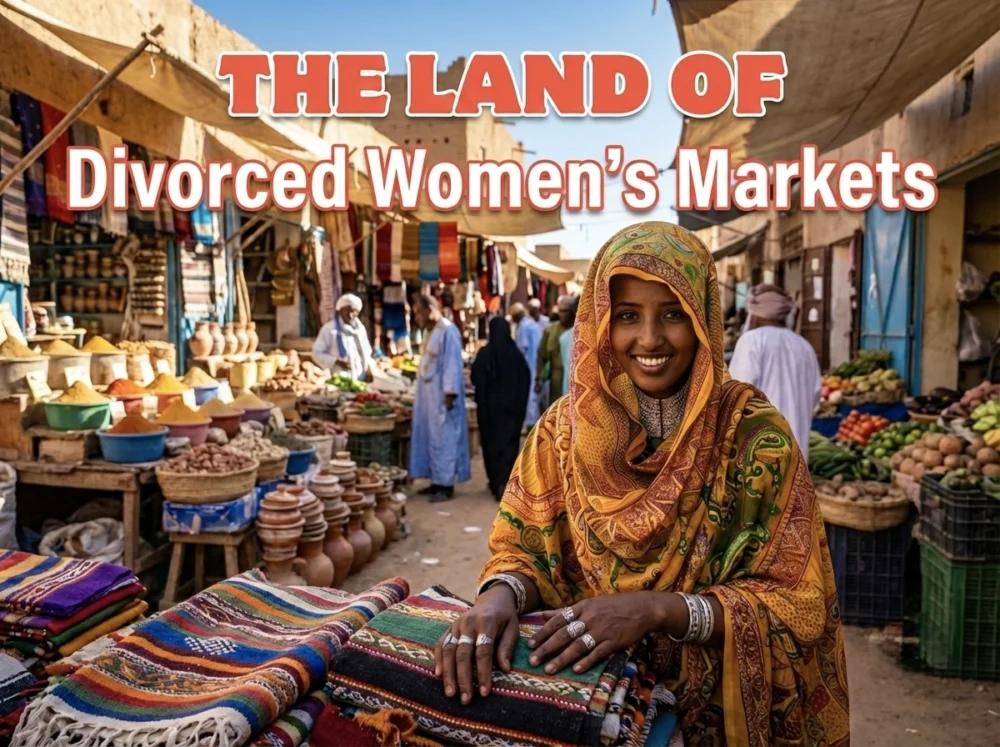
The most prevalent narratives involve the celebration of divorced women and the historic practice of leblouh, or force-feeding young girls to conform to local beauty standards. While these cultural elements exist and hold sociological significance, they are often presented by creators with breathless framing and clickbait titles. The result is a digital landscape where a country’s entire identity is reduced to two or three "shocking" facts. This reductive approach serves the creator’s need for views—often racking up millions—but leaves the viewer with a distorted understanding of Mauritanian life.
For example, the celebration of divorce in Mauritania is a nuanced social custom rooted in the idea of removing the stigma of a failed marriage and signaling a woman’s availability for a new union. In the hands of travel creators, however, it is frequently portrayed as an exotic oddity, stripped of its social context and historical evolution. Similarly, the practice of force-feeding, which has seen a significant decline due to government-led health awareness campaigns and changing social norms, is often presented as a ubiquitous and contemporary phenomenon to maximize the "shock factor."
The Bulgarian Narrative: The Myth of the "Bride Market"
The pattern of algorithmic reductionism is not limited to the African continent. In Eastern Europe, Bulgaria faces a similar challenge regarding the portrayal of the Kalaidzhi Roma community. For years, travel creators and international media outlets have flocked to the city of Stara Zagora to document the so-called "Roma bride market."
To a creator looking for a viral "hook," the narrative is irresistible: a marketplace where young women are sold to the highest bidder. However, anthropologists and local community leaders point out that this framing is deeply misleading. The event is essentially a traditional community gathering where families from a specific, historically semi-nomadic subgroup meet to socialize and arrange marriages in a highly regulated, culturally specific manner. By labeling it a "market," creators lean into sensationalism that borders on the dehumanizing, ignoring the agency of the participants and the complexities of Roma tradition in a modernizing Bulgaria.
The persistence of this narrative is driven by the same economic engine that powers the Mauritanian tropes. Videos titled "I Visited a Bride Market" or "Buying a Wife in Bulgaria" consistently outperform nuanced documentaries about Bulgarian history, the tech boom in Sofia, or the preservation of Balkan folk traditions.
A Chronology of the Travel Media Evolution
To understand how travel storytelling reached this point, it is necessary to examine the timeline of travel media evolution over the last two decades:
- 2005–2010: The Era of the Travel Blog. Early digital travel media was dominated by long-form written content. Bloggers relied on SEO and personal storytelling. The pace was slower, and the focus was often on practical advice and personal growth.
- 2010–2015: The Instagrammable Aesthetic. The rise of Instagram shifted the focus to visual perfection. Travel became about "the shot." This era popularized specific locations (e.g., Bali, Iceland) but began the trend of "cookie-cutter" travel experiences.
- 2016–2019: The Rise of the Personality-Driven Vlogger. YouTube became a dominant force. Creators like Casey Neistat changed the format to high-energy, personality-led storytelling. Authenticity became a currency, but the need for "hooks" began to intensify.
- 2020–Present: The Algorithmic and Short-Form Revolution. With the advent of TikTok and YouTube Shorts, the window to capture attention shrank to seconds. This accelerated the need for sensationalism. Creators now optimize for the "Algorithm" rather than the audience, leading to the repetition of successful tropes.
Supporting Data: The Economics of Attention
The financial incentives for creators to lean into sensationalism are backed by significant data. According to industry reports, the creator economy is currently valued at approximately $250 billion and is expected to double by 2027. In this highly competitive market, attention is the primary commodity.
Data from social media analytics firms suggests that "high-arousal" content—videos that evoke shock, anger, or intense curiosity—receives 30% to 50% more engagement than educational or neutral content. For a travel creator, this means that a video about the "Ancient Libraries of Chinguetti" might garner 50,000 views, while a video titled "They Force-Feed Girls Here" could easily surpass 2 million. Given that YouTube’s AdSense revenue and brand sponsorships are directly tied to view counts, the economic pressure to choose the latter is immense.
Furthermore, a 2023 study on travel trends revealed that 75% of Gen Z and Millennial travelers use social media as their primary source of travel inspiration. When the algorithm consistently pushes sensationalized tropes, these tropes become the "truth" for a significant portion of the global population, influencing tourism patterns and cultural perceptions.
Reactions from Stakeholders and Local Communities
The impact of this reductive storytelling has drawn criticism from various quarters. Tourism boards in less-visited nations find themselves in a difficult position. On one hand, any publicity is often seen as good publicity in a bid to increase foreign currency influx. On the other hand, the "wrong" kind of publicity can damage a country’s brand for decades.
Official representatives from Mauritania’s Ministry of Commerce, Industry, and Tourism have occasionally expressed frustration over the international media’s obsession with leblouh, noting that it distracts from the country’s efforts to promote its UNESCO World Heritage sites and its burgeoning renewable energy sector. Similarly, Bulgarian NGOs working with the Roma community have argued that "bride market" videos reinforce systemic racism and make it harder to integrate marginalized communities into broader society.
Local residents also feel the sting of these narratives. In many cases, travelers arriving in these destinations expect to see the sensationalized version of reality they saw online. When they encounter a modern, complex society instead, there is often a sense of disappointment, or worse, a concerted effort to "find" the trope to create their own content, further perpetuating the cycle.
Broader Implications and Fact-Based Analysis
The "algorithmic colonization" of travel has several long-term implications for the global community:
1. The Erasure of Cultural Complexity
When a country is reduced to a single trope, its internal diversity is erased. Mauritania is not just its divorce parties; it is a nation of poets, scholars, and entrepreneurs. Bulgaria is not just its "bride markets"; it is a leader in IT and a custodian of some of Europe’s oldest gold artifacts. The current creator economy model fails to provide space for these multifaceted identities.
2. The Feedback Loop of Sameness
As creators see what works, they replicate it. This leads to a "sameness" in travel content where different creators visit the same three spots in a country, interview the same types of people, and use the same dramatic music and editing techniques. This homogeneity stifles original journalism and creative exploration.
3. Ethical Concerns in Digital Storytelling
There is a growing ethical divide between "content creation" and "journalism." While journalists are theoretically bound by codes of ethics regarding accuracy and context, creators are often bound only by the terms of service of the platforms they use. This lack of oversight allows for the proliferation of "poverty porn" and the exploitation of vulnerable communities for views.
4. Impact on Sustainable Tourism
Sensationalism often drives "hit-and-run" tourism, where travelers visit a location only to see the "shocking" thing they saw online and then leave. This does little to support the local economy in a sustainable way and can lead to the "Disneyfication" of culture, where locals begin to perform their traditions as a spectacle for tourists rather than living them as a reality.
Conclusion
The creator economy has democratized travel media, allowing voices from all over the world to share their experiences. However, the current algorithmic structures of major platforms are incentivizing a race to the bottom, where sensationalism and stereotypes are the most profitable products. The reduction of Mauritania and Bulgaria to narrow, outdated, or misinterpreted tropes is a symptom of a larger systemic issue. As the digital landscape continues to evolve, the challenge for both creators and consumers will be to prioritize nuance over noise and to recognize that the world is far more complex than a thirty-second vertical video can ever portray.