The seemingly insurmountable 800-meter world record for women, a blistering 1 minute and 53.28 seconds, has stood as a titan of athletic achievement since 1983, set by Czech athlete Jarmila Kratochvílová. This mark, etched into the annals of track and field, has not only defied challengers for four decades but has also become a focal point for discussions surrounding the historical integrity of athletic records and the relentless advancement of human potential. While Kratochvílová’s performance in Munich remains officially recognized, it has, like several other long-standing records from a similar era, been subject to scrutiny due to the context of systematic doping prevalent in some nations during that period.
The shadow of doping concerns, though strenuously denied by Kratochvílová herself, inevitably falls upon performances of such extraordinary magnitude. This situation is not unique to the women’s 800 meters. A stark parallel can be drawn to the women’s 400-meter record, established by East Germany’s Marita Koch in 1985. At that time, East Germany was widely known to operate a state-sponsored doping program designed to enhance athletic prowess. Koch, however, never failed a drug test throughout her illustrious career and has consistently maintained her innocence, asserting that her achievements were the result of rigorous training and dedication.
These lingering questions about the validity of pre-2005 records prompted European Athletics in 2017 to propose a radical measure: the retrospective wiping of all records set before that year. While this proposal never gained traction and was ultimately not implemented, it served as a potent signal. It underscored the athletic community’s growing awareness of the potential for past records to be tainted by unfair advantages, particularly in an era before sophisticated biological passport systems and the systematic storage of athlete samples by World Athletics (formerly the IAAF) commenced around 2005. This shift in data collection marked a significant turning point in the fight against doping, allowing for retrospective testing and a more robust verification of performances.
A Record Forged in a Different Era
Jarmila Kratochvílová’s record-breaking run in 1983 was nothing short of spectacular. At 32 years old, she crossed the finish line in Munich more than seven seconds ahead of her nearest competitor, Poland’s Jolanta Januchta. This colossal margin of victory highlights the sheer dominance of her performance. For a remarkable 25 years following Kratochvílová’s feat, no athlete managed to come within a full second of her astonishing time, a testament to its perceived untouchability.
The closest anyone has come to challenging this enduring record in recent times is Swiss sensation Audrey Werro. In June of this year, Werro clocked a formidable 1 minute and 53.80 seconds, a time that would have secured victory in many major championships. Yet, even this exceptional performance falls short of Kratochvílová’s mark by a considerable 0.52 seconds, illustrating the immense gulf that still separates current athletes from the 1983 benchmark.
The Dawn of a New Era: Athletes Closing the Gap
Despite the historical context and the lingering questions surrounding Kratochvílová’s record, the current landscape of women’s 800-meter running is experiencing an unprecedented surge in performance. A new generation of athletes is not only challenging existing standards but is pushing the boundaries of what was once considered humanly possible.
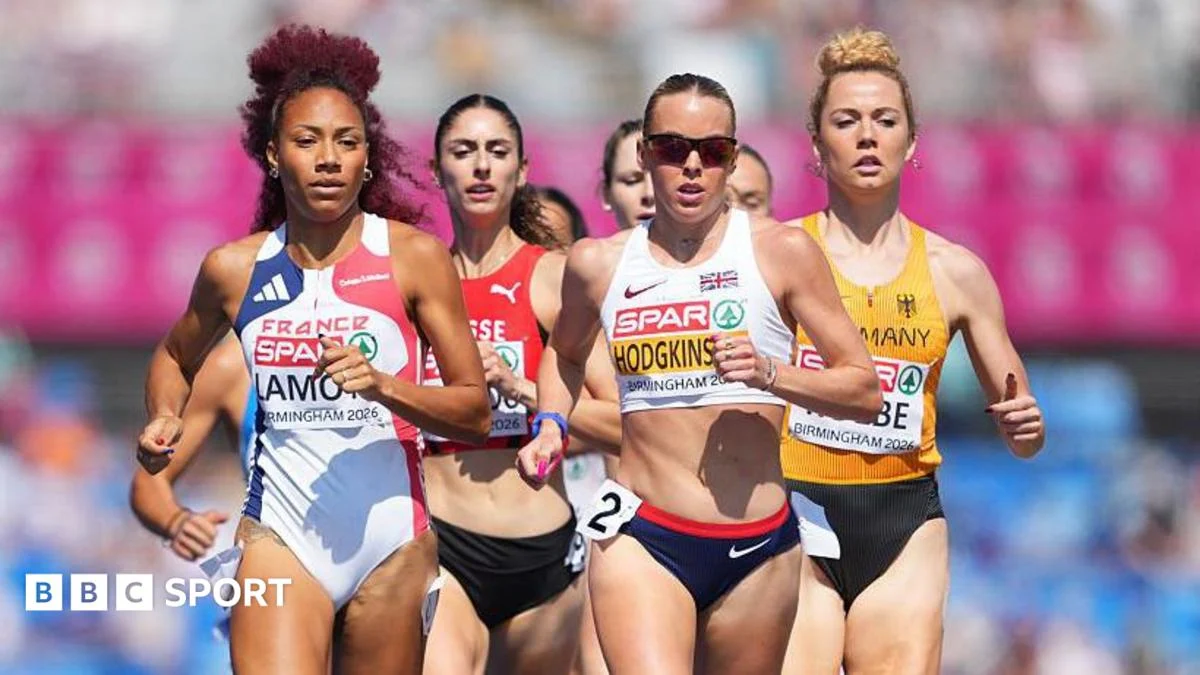
Jenny Meadows, a former accomplished British runner and now a coach to rising star Keely Hodgkinson, articulated the sheer disbelief that Kratochvílová’s record evokes. "Believe you me, that time of 1:53.28 is astonishing," Meadows stated in an interview with BBC Sport. "I won medals on a global level and I could not even comprehend that a female could run that sort of time." This sentiment is echoed by many who have competed at the highest echelons of the sport, underscoring the extraordinary nature of Kratochvílová’s achievement, regardless of the circumstances surrounding it.
However, the gap is narrowing. Audrey Werro’s consistent performances this year, having dipped under 1:54 on two occasions, demonstrate a sustained high level of competition. The emergence of Keely Hodgkinson, the reigning Olympic champion, has been a significant catalyst. In February, Hodgkinson shattered the women’s 800-meter indoor record, a mark that had stood since 2002, by clocking an impressive 1:54.87. This indoor triumph, achieved under different atmospheric and competitive conditions, signals her readiness to challenge outdoor records.
Adding to the growing depth of talent is Femke Broodje-Bol of the Netherlands. Though relatively new to the 800-meter discipline after switching from the 400-meter hurdles, Broodje-Bol has rapidly made her mark. Her performance of 1:55.60 seconds at the Paris Diamond League event in June, with limited experience in the 800m, is a remarkable indicator of her potential and the accelerating pace of progress in the event.
Jessica Ennis-Hill, a celebrated Olympic heptathlon gold medalist, observed this rising tide of talent. "They’re all dragging each other to these incredible times. The level of the 800m has risen significantly in the past two years," she commented, highlighting the positive feedback loop created by elite competition. This collective advancement suggests a fundamental shift in the capabilities of female middle-distance runners.
The Scientific and Technological Revolution in Athletics
The remarkable improvements in women’s 800-meter running are not solely attributable to increased competition and individual talent. A confluence of advancements in sports science and technology has played a crucial role in edging athletes closer to previously unthinkable times.
Professor Andrew Jones from the University of Exeter, a specialist in applied physiology who works with middle and long-distance runners, explained the pervasive impact of these innovations. "Everyone is going faster than they used to be because the shoe technology is so much better," he told BBC Sport. The development of advanced running shoe designs, incorporating lightweight materials and energy-returning foams, has demonstrably improved running economy, allowing athletes to sustain faster paces with less effort.
Beyond footwear, a deeper understanding of nutritional strategies and ergogenic aids has also contributed significantly. "We know more about various supplements, things like creatine, nitrate, but in particular bicarbonate," Professor Jones elaborated. These substances, when used appropriately and within regulatory guidelines, can enhance endurance, reduce fatigue, and improve performance.
Furthermore, scientific insights into the fundamental physiological limits of performance have been refined. "And we know more about what limits performance," Jones added. This includes a more nuanced understanding of carbohydrate metabolism and optimal fueling strategies for middle-distance events. The analogy of a Formula One race car, where precise fuel management is critical, perfectly encapsulates this scientific approach: "It’s a bit like a Formula One race car. You want the car to cross the line almost empty of fuel. If you’ve got half a tank left, you’ve been weighing yourself down." This suggests that athletes are now being trained and fueled with an unprecedented level of precision, optimizing their energy reserves for the entirety of the race.
The Future of the 800m: A Tactical and Speed-Driven Spectacle
The convergence of exceptional talent, rigorous scientific application, and technological advancements has created a thrilling era for the women’s 800 meters. As athletes gather for major championships, the anticipation is palpable. The upcoming races, with the world’s top three 800-meter runners likely to compete, promise a captivating spectacle. Whether these finals will evolve into strategic battles of pacing and positioning or devolve into outright speed duels remains to be seen, but the outcome is expected to be fiercely contested.
Keely Hodgkinson herself encapsulates the exciting momentum within the event. "All it takes is one person to raise the bar and you think more things are possible," she remarked to BBC Sport. This sentiment highlights the infectious nature of progress in elite sports. The realization that previously unattainable performances are becoming within reach inspires others to push their own limits. "Everyone knows that to keep up you have to keep getting better. It’s a really exciting time for the women’s 800m."
The ongoing pursuit of Kratochvílová’s seemingly mythical record, coupled with the undeniable surge in current athletic capabilities, presents a compelling narrative. It raises profound questions about the evolution of human performance, the role of science and technology, and the historical context of athletic records. While the integrity of past achievements may continue to be debated, the present and future of the women’s 800 meters are undeniably bright, filled with the promise of new benchmarks and the exhilaration of witnessing athletes redefine the boundaries of speed and endurance. The journey to eclipse Kratochvílová’s 1983 mark is not just a race against the clock, but a testament to the relentless human drive for improvement.