



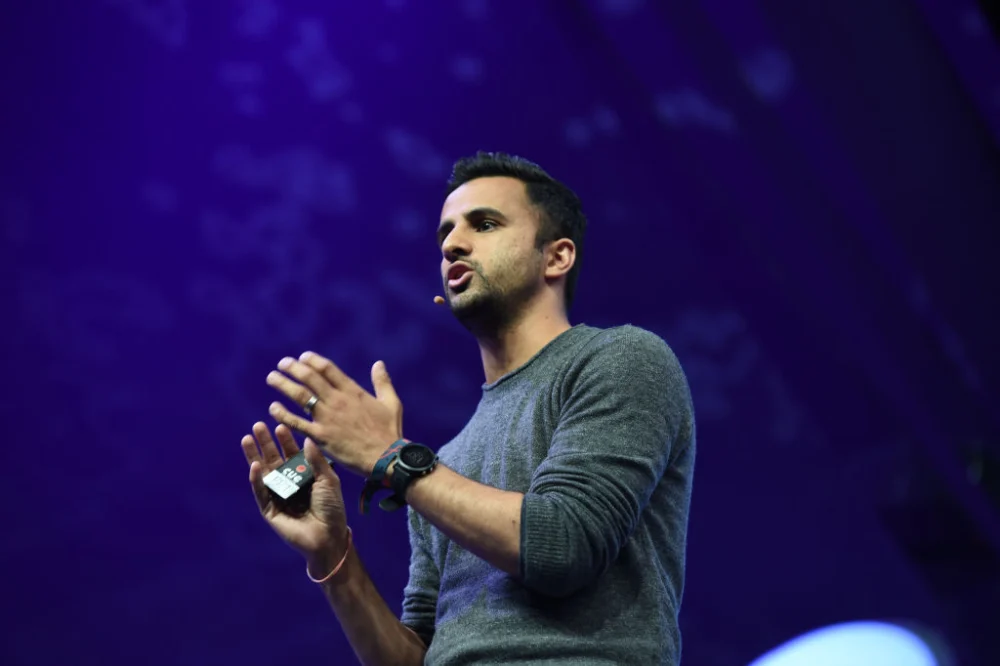
The long-simmering speculation regarding Silicon Valley’s billionaire class actively seeking a challenger to Representative Ro Khanna has now materialized into a concrete political reality. On Tuesday morning, tech entrepreneur Ethan Agarwal, 40, formally declared his intention to run for California’s 17th congressional district, setting the stage for what is anticipated to be one of the most expensive and closely watched primary contests of the 2026 election cycle. Agarwal, a political newcomer with a robust background in the technology sector, confirmed his candidacy to TechCrunch on Monday evening, marking a significant escalation in the ongoing ideological tensions between a segment of the tech elite and the increasingly progressive stance of the sitting Democratic congressman.
The Incumbent: Ro Khanna’s Evolving Profile
Representative Ro Khanna, 49, a Democrat, has carved out a national profile, often mentioned as a potential contender for the 2028 presidential nomination. His political journey in the 17th district, encompassing a significant portion of Silicon Valley, has been marked by a notable evolution. Khanna first ran for the seat in 2014 as a tech-backed outsider, supported by prominent figures such as Marc Andreessen, Sheryl Sandberg, and Eric Schmidt. He challenged the popular Democratic incumbent Mike Honda, losing his initial bid but returning triumphantly in 2016. At the time, critics labeled Khanna an "owned man" of the tech industry, a charge that, ironically, is now being leveled against his new challenger, Agarwal.
In recent years, Khanna has shifted incrementally leftward, aligning himself with the progressive wing of the Democratic Party. This ideological pivot became particularly pronounced with his public endorsement of a one-time wealth tax in California. This stance has reportedly "infuriated" some of the state’s wealthiest founders and investors, who view such proposals as detrimental to innovation and economic growth. Doubling down on his progressive agenda, Khanna subsequently partnered with Senator Bernie Sanders to introduce national legislation proposing a 5% annual wealth tax on all Americans with a net worth of $1 billion or more. Their offices estimate this ambitious proposal could generate an astonishing $4.4 trillion in revenue over a decade, intended to fund investments in working families. Khanna’s progressive legislative initiatives and burgeoning national recognition have undoubtedly contributed to his considerable campaign war chest, currently estimated at $15 million, positioning him as a formidable incumbent.
The Challenger: Ethan Agarwal’s Entry into Politics
Ethan Agarwal brings a distinct Silicon Valley pedigree to his nascent political career. A graduate of the Wharton School, he spent three years at the prestigious management consulting firm McKinsey before venturing into entrepreneurship. His first significant success was founding Aaptiv, an audio fitness company that he successfully sold in 2021. More recently, Agarwal co-founded Coterie, a financial services startup, which notably received backing from Andreessen Horowitz, a venture capital firm deeply embedded in the Silicon Valley ecosystem and a former supporter of Khanna.
Agarwal’s entry into the congressional race for CA-17 represents a strategic pivot from his earlier political ambitions. Last summer, he had announced plans to run for Governor of California, a decision he made, he stated, when the field was "really thin." However, with the entry of "strong candidates" like San Jose Mayor Matt Mahan, Agarwal reconsidered his path. He revealed that he had been tracking Khanna’s career since his first congressional race in 2012, having initially been a "big supporter." The "straw that broke the camel’s back" for Agarwal was Khanna’s public support for the wealth tax at the end of December. This, he asserted, led him to conclude that he could have a more significant impact by challenging Khanna directly in the 17th district.
Agarwal’s Policy Platform and Financial Backing
Agarwal’s campaign, while still in its nascent stages, has already garnered significant attention for its high-profile tech endorsements and a policy platform designed to counter Khanna’s progressive proposals. Agarwal acknowledged that while his campaign was still in the process of "pulling papers" and establishing a bank account, key figures from the tech community were already rallying behind him. He specifically named Garry Tan, CEO of Y Combinator, and Stanley Tang, co-founder of DoorDash, as early financial backers, with promises of more names to emerge in the coming days and weeks. This immediate influx of tech-industry support is likely to fuel the narrative that Agarwal is a "vehicle for billionaire grievances," a charge that, as noted, Khanna himself faced early in his career.
Agarwal presented several policy ideas aimed at generating revenue without resorting to a direct wealth tax. He proposed:
- Taxing Loans Against Assets: This suggestion, which has circulated in wealthy circles and been notably espoused by figures like VC Chamath Palihapitiya and hedge fund giant Bill Ackman, targets a longstanding strategy. Wealthy individuals often take loans against their stock holdings to access capital without selling assets, thereby avoiding capital gains taxes. Agarwal believes treating these loans as taxable events is "very reasonable."
- Increasing California’s Capital Gains Rate: Currently at 13.4%, Agarwal suggested that considering an increase to this rate is a viable option for revenue generation.
- Higher Property Taxes on Investment Homes: Agarwal advocated for significantly higher property taxes on homes held as investments by private equity firms or other entities, as opposed to primary residences. He argued this would both raise revenue and alleviate pressure on families seeking to own homes in the state.
Beyond fiscal policy, Agarwal outlined his top three priorities if elected to Congress:
- Banning Stock Trading for Members of Congress and Their Families: A direct response to ongoing controversies surrounding congressional ethics.
- Banning Corporate PAC Money: Aimed at reducing corporate influence in politics.
- Term Limits for Members of Congress: A popular reform proposal intended to prevent career politicians.
Notably, Agarwal had earlier in the conversation described making the 17th district – the wealthiest congressional district in the country – "the first congressional district in history to completely eradicate childhood poverty" as one of his proposals. The fact that this did not make his "top three" priorities might be a point of scrutiny for his campaign.
Scrutiny and Allegations Regarding Ro Khanna
Agarwal did not shy away from directly criticizing Khanna, particularly concerning the issue of congressional stock trading. He accused Khanna of being "more prolific stock trader than any Democratic congressman in the history of the country," alleging 4,000 trades last year across sectors including tobacco, oil and gas, Big Pharma, and big tech. Agarwal contrasted this with Khanna’s public introduction of a congressional stock trading ban, arguing that "nothing is stopping him from imposing it on himself." Agarwal pledged to "divest my entire portfolio the first day I’m elected," to ensure transparency and avoid conflicts of interest.
Khanna’s office has consistently addressed these allegations by clarifying that he does not personally own or trade individual stocks. The trades in question, he states, belong to his wife, whose pre-marital assets are held in an independently managed trust. Khanna asserts that this arrangement adheres to all Office of Government Ethics rules, effectively eliminating any conflict of interest. While Khanna has indeed co-sponsored the TRUST in Congress Act and introduced reform resolutions calling for a ban, he has not authored standalone legislation on the matter. The effectiveness of this distinction in the eyes of voters will undoubtedly be a central theme of the campaign.
Tech Regulation: Section 230, AI, and Prediction Markets
Agarwal also offered insights into his views on critical tech regulation issues, many of which directly impact the companies located within the 17th district.
On Section 230 of the Communications Decency Act, which shields social media platforms from liability for user-posted content, Agarwal acknowledged its original intent in 1996 as a hosting protection. However, he noted that platforms have evolved to "determining what we see because of the algorithms they push." While he opposes making companies "entirely liable" due to the sheer volume of content and the dangers of third-party subjective determinations, he believes it is "worth revisiting when it comes to long-term impacts on teenagers’ mental health." He suggested a common ground with platforms, as "they’ll all say they don’t benefit from hurting teenagers."
Regarding Artificial Intelligence (AI) regulation, a topic of intense debate given the concentration of AI firms in the region, Agarwal prioritized national security. He expressed confidence that "having the most powerful models is critical for America," warning that "if we don’t build them, China will beat us." He supported "some restrictions," such as preventing AI from being used to "hurt yourself or someone else," but strongly cautioned against limiting companies’ ability to "build and strengthen these models."
The idea of an "FDA for AI" was also discussed. Agarwal found the concept appealing, praising the FDA’s track record in public health and safety. He expressed trust in the FDA’s personnel and suggested that if such an authority could be built to be "independent, apolitical… with rotating terms," it would "make sense." His primary caveat was ensuring its design "strengthens America’s national security, not for political purposes."
Finally, on prediction markets like Polymarket and Kalshi, Agarwal clarified that both are already regulated by the CFTC (Commodity Futures Trading Commission). He suggested that the regulatory confusion surrounding sports betting apps has inadvertently boosted these alternatives, but concluded that their current regulation is "actually pretty good."
Campaign Strategy and Personal Philosophy
Agarwal plans an intensive, ground-focused campaign, declaring it "110% of my life." Having grown up near the district and attended Harker, a private school within it, he claims to know "hundreds, maybe thousands of people who live there." His strategy involves extensive community engagement, attending Chinese and Hindi educational schools, cultural events like Holi, Chinese New Year, and Purim, and meeting small businesses.
A core tenet of Agarwal’s campaign is to draw a sharp contrast between his approach and Khanna’s. He frames Khanna as building a "national profile" with potential presidential aspirations, arguing that this comes at the cost of "abandoning the people of his own district." Agarwal, in contrast, pledges to be "local," stating, "I’m not leaving California. I’m not using this as a stepping stone. He’s national; I’m local. And I think people in the 17th know they need someone focused on them alone."
Agarwal’s motivation for entering politics stems from a personal narrative of opportunity and concern for the current system. He recounted his father’s immigrant journey, arriving with "absolutely nothing" and earning $14,000 a year, only to build a company and take it public. Agarwal acknowledged being "born on third base" due to his father’s success, having founded and sold two companies himself. He now observes that "people around me no longer benefiting from the same system that made all of that possible." His entry into the race is a response to this perceived systemic failure, driven by a desire to "stand up and do something" after years of "complaining."
In a final reflection that again echoes Khanna’s early campaigns, Agarwal stated this is "not a career pivot." He intends to impose self-term limits, serving "no more than five terms," before returning to the private sector. He firmly believes that "service should be a calling, not a job," and that a prolonged political career does not serve constituents well. This commitment, even if a national term limits bill does not pass, underscores his stated belief in citizen-led governance.
Broader Implications and Outlook
The primary challenge mounted by Ethan Agarwal against Ro Khanna is poised to be a significant litmus test for the Democratic Party’s evolving relationship with its tech-donor class. It represents a direct ideological confrontation within the party, pitting progressive populism against a more tech-aligned, wealth-creation focused approach. The 17th congressional district, known as the wealthiest in the nation, is a complex demographic landscape, home to both immense tech wealth and pockets of social challenges, including thousands of children living below the poverty line. How voters in this diverse district will weigh Khanna’s national progressive agenda against Agarwal’s local focus and alternative economic proposals will be crucial.
The race will undoubtedly be among the most expensive primaries of the cycle, with Khanna’s substantial war chest facing off against a challenger who has already secured significant backing from influential Silicon Valley figures. While Khanna enjoys the advantages of incumbency, national recognition, and robust campaign funds, Agarwal’s challenge highlights potential vulnerabilities: Khanna’s national ambitions, the ethical questions surrounding his wife’s stock trading (regardless of legal compliance), and the direct opposition to his wealth tax proposals from a powerful segment of his constituency. Agarwal, on the other hand, must overcome his lack of political experience and the potential "billionaire grievance" narrative, while proving his sincere commitment to local issues despite his tech-industry funding. This contest is set to be a compelling narrative of ambition, ideology, and the enduring influence of Silicon Valley in American politics.