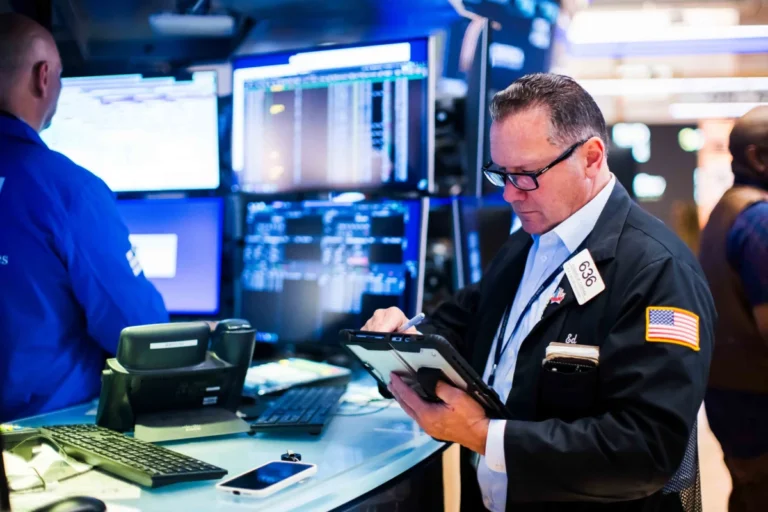
Five years removed from the unprecedented initial public offering (IPO) boom of 2021, public markets present a significantly altered landscape, characterized by a prevailing trend of companies opting to remain private for extended periods. The exuberant rush to public exchanges that defined the post-pandemic recovery has given way to a more cautious, even reticent, approach, fundamentally reshaping the trajectory of corporate growth and capital formation.
The Echoes of 2021: A Period of Unprecedented Public Market Expansion
The year 2021 stands as a landmark in recent financial history, an era when public markets witnessed an extraordinary influx of new listings. Fuelled by historically low interest rates, abundant investor liquidity, and a surge in digital transformation driven by the global pandemic, companies across diverse sectors capitalized on an eager market. The Nasdaq exchange proudly announced welcoming 743 IPOs that year, a testament to the fervent activity. Similarly, the New York Stock Exchange (NYSE) reported adding over $1 trillion in new market capitalization, marking its second consecutive year of record new listings. This period was not merely about quantity; it also saw some of the decade’s most anticipated debuts. Giants like cryptocurrency exchange Coinbase, immersive digital platform Roblox, electric vehicle innovator Rivian, and eyewear disruptor Warby Parker, alongside numerous others, successfully navigated their public transitions. According to comprehensive research from Morningstar, the companies that went public in 2021 collectively raised an astonishing nearly $500 billion. This figure represented roughly double the number of deals and the total capital raised in 2020, a year itself marked by intense uncertainty and fluctuating consumer and investor confidence amidst the nascent stages of the pandemic. The market’s appetite for growth and innovation appeared insatiable, and going public was often seen as the ultimate validation and accelerant for burgeoning enterprises.
2026: A Stark Contrast and the Struggle for Traction
Fast forward to 2026, and the IPO market has undergone a profound cooling. While the year did witness a singular blockbuster event with the highly anticipated IPO of Elon Musk’s SpaceX, which garnered significant attention and capital, it remains an outlier rather than a trendsetter. For the vast majority of companies, the allure of public listing has diminished, and many of those that have ventured forth have struggled to gain and maintain momentum under prevailing market conditions.
The recent experiences of two consumer-focused companies underscore this challenging environment. Sandwich chain Jersey Mike’s and clothing retailer Reformation both made their public debuts on a recent Thursday, July 30, 2026, and their performances were largely uneventful, if not underwhelming. Reformation’s stock remained essentially flat on its first day of trading, failing to generate significant investor excitement. Jersey Mike’s, meanwhile, opened $2 below its initial IPO pricing and concluded the day down nearly 6%. These lukewarm receptions are indicative of a broader market sentiment. According to data compiled by Renaissance Capital, these companies join only a handful of other consumer entities that have gone public in 2026, collectively representing a minuscule fraction of the overall IPO activity observed in prior years. The once-clear path to public market success now appears fraught with hurdles, leading many corporate boards to reconsider their liquidity and capital-raising strategies.
The Shifting Sands: Why Companies Are Choosing Private Longevity
Experts point to a confluence of factors contributing to this significant shift away from public listings. The decision to remain private for longer is no longer merely a tactical choice but increasingly a strategic imperative for many high-growth companies.
1. Abundant Access to Private Capital:
A primary driver is the unprecedented availability of private capital. Mike Dinsdale, CEO of Powerlaw, a publicly listed fund specializing in private company investments, highlights this phenomenon. "There’s under 4,000 public companies today, whereas 30 years ago, there was just under 8,000," Dinsdale observed. "The reason for that, I think, is access to capital, and then the idea that staying private and not having any transparency into what’s happening, and then higher valuations on the public side." Dinsdale, who previously held executive positions at prominent companies like DoorDash and DocuSign, elaborates that the emergence of "megafunds" and the robust liquidity in non-public markets have effectively "taken the need out to rush to go public." This trend has been accelerating over the past three decades, but it has gained significant momentum in the last five years, largely due to the burgeoning interest from "family offices." These private investment vehicles of the ultra-wealthy are actively seeking new avenues for deploying capital, often finding attractive opportunities in private enterprises that offer potentially higher returns and more direct control compared to volatile public markets. This influx of private funding allows companies to achieve significant scale and maturity without the pressures associated with a public offering.
2. The Rise of Robust Secondary Markets:
Another critical factor enabling companies to delay or forgo IPOs is the dramatic growth and sophistication of secondary markets. Sunaina Sinha Haldea, Global Head of Private Capital Advisory at Raymond James, describes this evolution as a "pressure release valve." She states, "The secondaries market is acting as this pressure release valve to this artificial clock of having to go public. Nobody has to go public now because of the depth of this private secondaries market." These markets facilitate the buying and selling of existing private equity stakes, providing liquidity to early investors, founders, and employees without the company itself needing to undertake a full IPO. This mechanism effectively addresses one of the primary historical drivers for going public – providing an exit strategy for early backers – thereby removing a significant incentive for a rapid public debut. The increasing volume and diversity of participants in secondary markets, including large asset managers and hedge funds, demonstrate a maturing ecosystem that supports private longevity.
3. Public Market Volatility and Valuation Discrepancies:
The inherent volatility of public markets, particularly in sectors like consumer and retail, also plays a crucial role in the hesitation to go public. Jason Yeh, co-founder of Patron, a venture capital firm focused on consumer companies, notes that "the volatility in the public markets coupled with the stagnant performance of public consumer and retail companies has likely added to the hesitation to leave the private sphere." When public valuations for comparable companies are struggling or undergoing significant corrections, the incentive to launch an IPO at a potentially undervalued price diminishes. Private markets, conversely, can sometimes offer more stable or even higher valuations, reflecting a different risk appetite and longer-term investment horizon from private investors. This disparity further reinforces the decision to stay private, allowing companies to mature and ideally achieve stronger financial metrics before facing public scrutiny.
4. Escaping Regulatory Burdens and Quarterly Pressures:
Perhaps one of the most compelling reasons for founders and management teams to favor private status is the avoidance of the intense regulatory scrutiny and quarterly earnings pressure inherent in public life. "In general, founders don’t want to go public, the majority don’t, because all of a sudden they have more visibility into what they’re doing," Powerlaw’s Dinsdale told CNBC. "The public now has access to numbers and it has opinions on what they’re doing versus being more in control."
Being a public company entails significant compliance costs, extensive reporting requirements, and the constant pressure to meet quarterly financial targets. This can often force management to prioritize short-term gains over long-term strategic initiatives, divert considerable resources to investor relations, and expose the company to potential litigation. As Raymond James’ Sinha Haldea succinctly puts it, "If you are a CEO of a fast-growing company and there’s plenty of capital available, and you don’t have to deal with the governance and the reporting structures and the quarterly clock of being a public company, why would you put yourself through that?" She emphasizes that going public incurs both a direct financial cost and a substantial resource cost, diverting management’s time and attention away from core business operations.
The Policy Debate: Rethinking Quarterly Reporting
The burden of quarterly reporting has become such a contentious issue that it has entered the realm of policy debate. Former President Donald Trump notably floated the idea of ending mandatory quarterly earnings reports, a proposal that found support from the Securities and Exchange Commission (SEC) earlier this year. In a May 2026 statement, SEC Chairman Paul Atkins echoed this sentiment, arguing that current rules impose too much "rigidity" on companies and investors. The proposed change would allow companies to report their financials only twice a year instead of four, potentially alleviating some of the pressure on public companies and making the public market a more attractive option. This regulatory adjustment, if fully implemented, could represent a significant shift, reducing the "operational burden of being public" that Sinha Haldea identifies as a major "headwind."
Implications for Investors and the Broader Economy
The prolonged private life of companies carries significant implications for various stakeholders and the broader financial ecosystem. For public market investors, the pool of high-growth, innovative companies available for investment shrinks, potentially limiting opportunities for diversification and capital appreciation in nascent industries. Conversely, for private equity and venture capital investors, the extended private phase offers longer runways for value creation and the potential for larger returns upon eventual exit, whether through a delayed IPO or an acquisition.
For early-stage investors, the robust secondary markets provide much-needed liquidity, allowing them to realize returns without waiting for an IPO. Jason Yeh of Patron noted, "There are very large asset managers, hedge funds and other types of investors that want to buy these later-stage stakes in these large companies, and they’re able to push out having to go public longer, and you can get liquidity for earlier stage investors through that." This dynamic allows venture capital firms to recycle capital more efficiently, funding new generations of startups.
The trend also raises questions about market efficiency and transparency. While private companies benefit from less scrutiny, public markets historically serve as a crucial mechanism for price discovery and widespread capital allocation. A shrinking public market could lead to a concentration of wealth and opportunity in private hands, potentially impacting broader economic participation.
Looking Ahead: The Future of Capital Markets
Despite the current cooling, the IPO market is not expected to disappear entirely. There remain compelling reasons for certain companies to go public, particularly those with exceptionally strong business models generating substantial cash flow, as evidenced by SpaceX’s successful capital raise in the tens of billions. "I do think for companies with a really strong business model of generating a lot of cash flow, eventually they will go public," Yeh stated. "Hopefully, the overall macroeconomic conditions are better when that happens, versus doing it into a weaker market."
The fundamental "why" behind going public has become more complex in boardroom discussions. No longer a default milestone, the decision is now weighed against a more attractive and less demanding private capital landscape. For the IPO market to regain its 2021 vigor, a significant rebalancing is required. Sinha Haldea concludes that for the decision between private and public to become more neutral, "That equation needs to change through regulation for the decision between private and public to become more neutral." This would involve addressing the substantial compliance, reporting, and litigation costs, as well as the dilution of management time associated with being a public entity.
The current environment suggests a mature recalibration rather than a permanent demise of IPOs. As market conditions evolve, and potentially with regulatory adjustments, a new equilibrium may emerge where both public and private routes offer distinct, yet equally viable, pathways for corporate growth and investor returns. However, the era of companies staying private for longer appears firmly entrenched, defining a new normal for global capital markets.