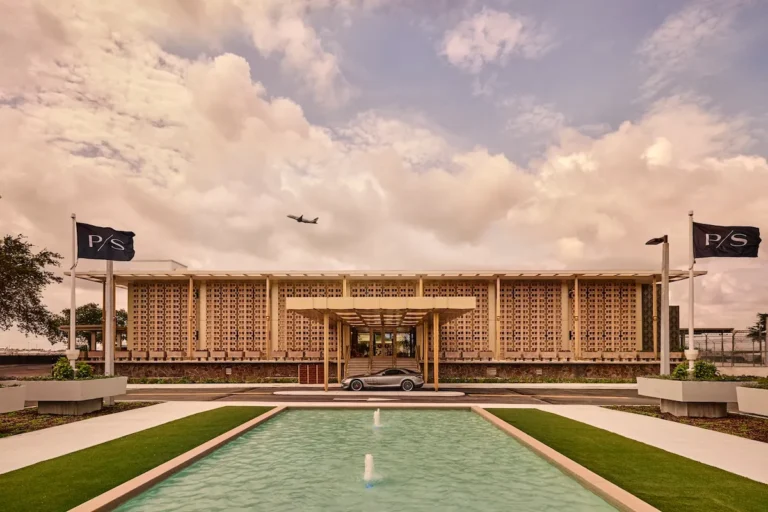
The high-stakes world of ultra-luxury hospitality recently collided with the burgeoning power of the creator economy in a confrontation at the gates of Amanvari, the newest jewel in the Aman brand’s portfolio. Ryan Walker, a prominent luxury hotel reviewer with a dedicated following of over 150,000 subscribers on YouTube, found himself at the center of a viral controversy after being denied entry to the resort despite possessing a confirmed reservation. The incident, which Walker documented in a widely circulated 11-minute video titled "Amanvari Called the Police on Me," has sparked a broader conversation regarding the relationship between legacy luxury brands and modern digital influencers, as well as the legal and ethical obligations of high-end resorts to their confirmed guests.
The confrontation began after Walker completed a two-hour drive across the Baja California peninsula to reach the secluded Costa Palmas development, where Amanvari is located. Upon arrival at the security checkpoint, Walker was met with an unexpected barrier. Despite presenting a confirmation email received from the resort’s own reservations team that very morning, security personnel informed him that they had no record of his booking. The situation escalated when Walker requested to speak with a member of the management team to resolve the discrepancy. Rather than facilitating a dialogue, the security staff reportedly threatened to involve local law enforcement, a move that has been characterized by observers as a significant escalation for a brand that prides itself on "discretion and peace."
The Chronology of the Dispute
To understand the gravity of the incident, it is necessary to examine the timeline of events as presented by the available documentation and Walker’s digital record. The process began with a standard booking procedure through Aman’s official channels. Walker, whose content focuses on objective, often self-funded reviews of the world’s most expensive hotels, sought to evaluate the Amanvari experience following its highly anticipated opening.
On the morning of his scheduled arrival, Walker received a routine confirmation email from the Amanvari reservations department. This communication serves as a final verification of the guest’s itinerary, arrival time, and room preference. With this digital proof in hand, Walker proceeded with the two-hour transit to the resort.
The interaction at the gate, captured in part on video, reveals a paradoxical situation: the security guards were aware of Walker’s name before he presented his identification, yet they maintained that his name was not on the arrival list. This discrepancy has led to speculation among industry analysts that the creator may have been "blacklisted" or flagged by the brand’s corporate office prior to his arrival, possibly due to his reputation as a critical reviewer. When Walker refused to leave without an explanation or a meeting with a manager, the threat of police intervention was issued. Walker eventually departed the premises, later publishing the account that has since garnered nearly 700,000 views and thousands of comments, many of which express concern over the brand’s handling of the situation.
The Aman Brand and the "Amanjunkie" Subculture
The Aman brand, founded by Adrian Zecha in 1988 and currently owned by real estate mogul Vladislav Doronin, occupies a unique space in the travel industry. Known for its minimalist architecture, remote locations, and extreme privacy, Aman has cultivated a cult-like following known as "Amanjunkies." These are high-net-worth individuals who plan their travels specifically around Aman properties, where nightly rates frequently exceed $3,000 and can reach upwards of $10,000 for villas.
Amanvari, located in the East Cape of Los Cabos, represents a strategic expansion for the brand into the North American market, following the successful (though polarizing) opening of Aman New York. The brand’s ethos is built on the concept of "Aman" (Sanskrit for "peace"), promising a sanctuary far removed from the stresses of modern life. However, the incident with Walker suggests a friction between this promise of tranquility and the operational realities of managing a brand’s reputation in the digital age. For a brand that avoids traditional advertising in favor of word-of-mouth exclusivity, a public relations crisis driven by a high-profile reviewer represents a significant threat to its carefully curated image.
Data and Market Context: The Power of the Reviewer
The impact of Walker’s video cannot be understated when viewed through the lens of modern marketing data. According to recent industry reports, approximately 85% of luxury travelers cite social media and independent reviews as primary factors in their booking decisions. While traditional travel publications like Condé Nast Traveler or Travel + Leisure still hold prestige, the "unfiltered" nature of YouTube reviewers provides a level of perceived authenticity that legacy media often lacks.
Walker’s audience of 150,000 subscribers consists of a demographic that is highly sought after by luxury brands: individuals with the disposable income to afford five-star accommodations and a keen interest in the technical details of hospitality, from room hardware to service nuances. The 700,000 views on his Amanvari video represent a reach that far exceeds the circulation of many print luxury magazines. Furthermore, the engagement rate—evidenced by over 5,000 comments—indicates a high level of consumer sentiment that is currently trending negative for the Aman brand.
In the luxury sector, the "Streisand Effect" often takes hold when a brand attempts to suppress or ignore a public grievance. By failing to issue a public statement or resolve the issue privately before it went viral, Aman has allowed the narrative to be shaped entirely by the creator and the court of public opinion.
Institutional Response and Silence
As of the date of this report, Aman has not issued a formal public response to the incident, nor has the company responded to inquiries from major travel news outlets. This silence is consistent with the brand’s historical approach to crisis management, which favors internal resolution and a "dignified silence" over public engagement. However, in an era where "cancel culture" and brand accountability are at the forefront of consumer consciousness, this strategy carries inherent risks.
Industry experts suggest that the lack of response may be due to the complex legalities involved in refusing service. In many jurisdictions, a confirmed and paid reservation constitutes a contract between the hotel and the guest. While private establishments generally have the right to refuse service, doing so without a valid reason (such as a violation of house rules or illegal conduct) can lead to claims of breach of contract. If Walker was turned away solely because of his status as a reviewer, it raises questions about the transparency of the hospitality industry’s vetting processes.
Broader Implications for the Hospitality Industry
The Amanvari incident serves as a bellwether for several emerging trends in the global hospitality landscape:
1. The Vetting of Guests
There is increasing evidence that ultra-luxury hotels are performing background checks or social media audits on guests before arrival. While this is often framed as a way to "personalize the experience," it can also be used to exclude individuals who might provide negative feedback or disrupt the brand’s desired atmosphere. The incident at Amanvari suggests that the "gatekeeper" mentality remains a potent force in high-end travel.
2. The Legal Standing of Digital Confirmations
The case highlights the potential fragility of digital booking systems. If a guest can be turned away despite a "day-of" confirmation email, the reliability of the entire reservation infrastructure is called into question. This has implications for consumer protection laws and the need for more robust guarantees for travelers who invest significant time and money into their itineraries.
3. The Evolution of Travel Criticism
Traditional "fam trips" (familiarization trips where journalists receive free stays in exchange for coverage) are being replaced by independent creators who pay their own way to maintain objectivity. This shift creates a new dynamic where hotels can no longer control the narrative through PR agencies. When a paying guest is also a professional critic, the power balance shifts toward the consumer.
4. Security as a Brand Weapon
The use of security personnel to handle administrative or service-related disputes is a growing concern. Using the threat of police intervention against a guest with a valid reservation is a tactic that can cause irreparable damage to a brand’s reputation, particularly one that markets itself as a "home away from home."
Analysis of the Potential Fallout
For Aman, the fallout from the Walker incident may manifest in several ways. Firstly, the "Amanjunkie" community, which thrives on the idea of being part of an exclusive and welcoming "family," may feel alienated by the perceived hostility shown to a fellow traveler. Secondly, the incident may deter other creators and journalists from covering the brand, or worse, encourage a wave of "investigative" stays aimed at testing the brand’s service recovery.
From a business perspective, Amanvari is in its critical "ramp-up" phase. The success of a new luxury property depends heavily on initial reviews and the establishment of a loyal guest base. A viral video highlighting a failure at the most basic level of hospitality—entry to the property—is a significant hurdle to overcome.
The incident also poses a challenge to the Costa Palmas development as a whole. As a multi-brand destination featuring other high-end names like Four Seasons, the reputation of one property can influence the perception of the entire enclave. If travelers perceive the area as unwelcoming or prone to administrative failures, they may opt for more established luxury corridors in Cabo San Lucas or San Jose del Cabo.
Conclusion
The confrontation at Amanvari is more than a simple misunderstanding at a security gate; it is a symptomatic event reflecting the tension between traditional luxury’s desire for control and the modern world’s demand for transparency. As Ryan Walker’s video continues to circulate, the hospitality industry will undoubtedly watch closely to see how—or if—Aman chooses to reconcile its image with the reality of this encounter. In the interim, the incident serves as a stark reminder that in the age of the smartphone, the "gates" of exclusivity are no longer impenetrable, and the silence of a brand can be just as loud as the most viral video.