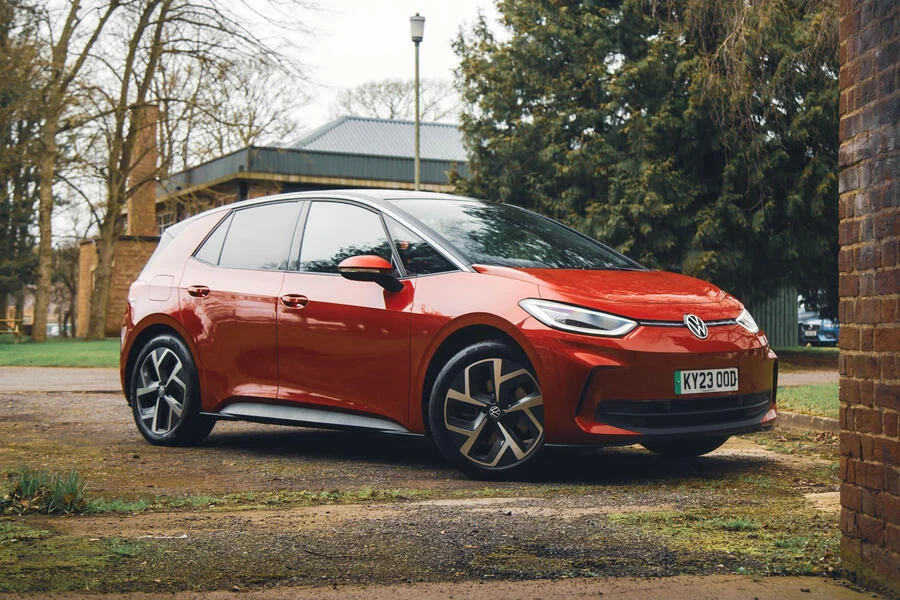
The Volkswagen ID.3 represents a pivotal moment in the history of the German automaker, serving as the inaugural vehicle for the modular electric drive matrix (MEB) platform and the first model in the dedicated "ID." electric family. Since its global debut in late 2019 and subsequent market arrival in 2020, the ID.3 has transitioned from a pioneering newcomer to a staple of the secondary electric vehicle (EV) market. For prospective buyers, the car offers a blend of Golf-like dimensions with the interior space of a larger segment vehicle, but navigating the various battery sizes, software iterations, and trim levels requires a comprehensive understanding of the model’s four-year evolution.
The Evolution of the ID.3: A Chronology of Development
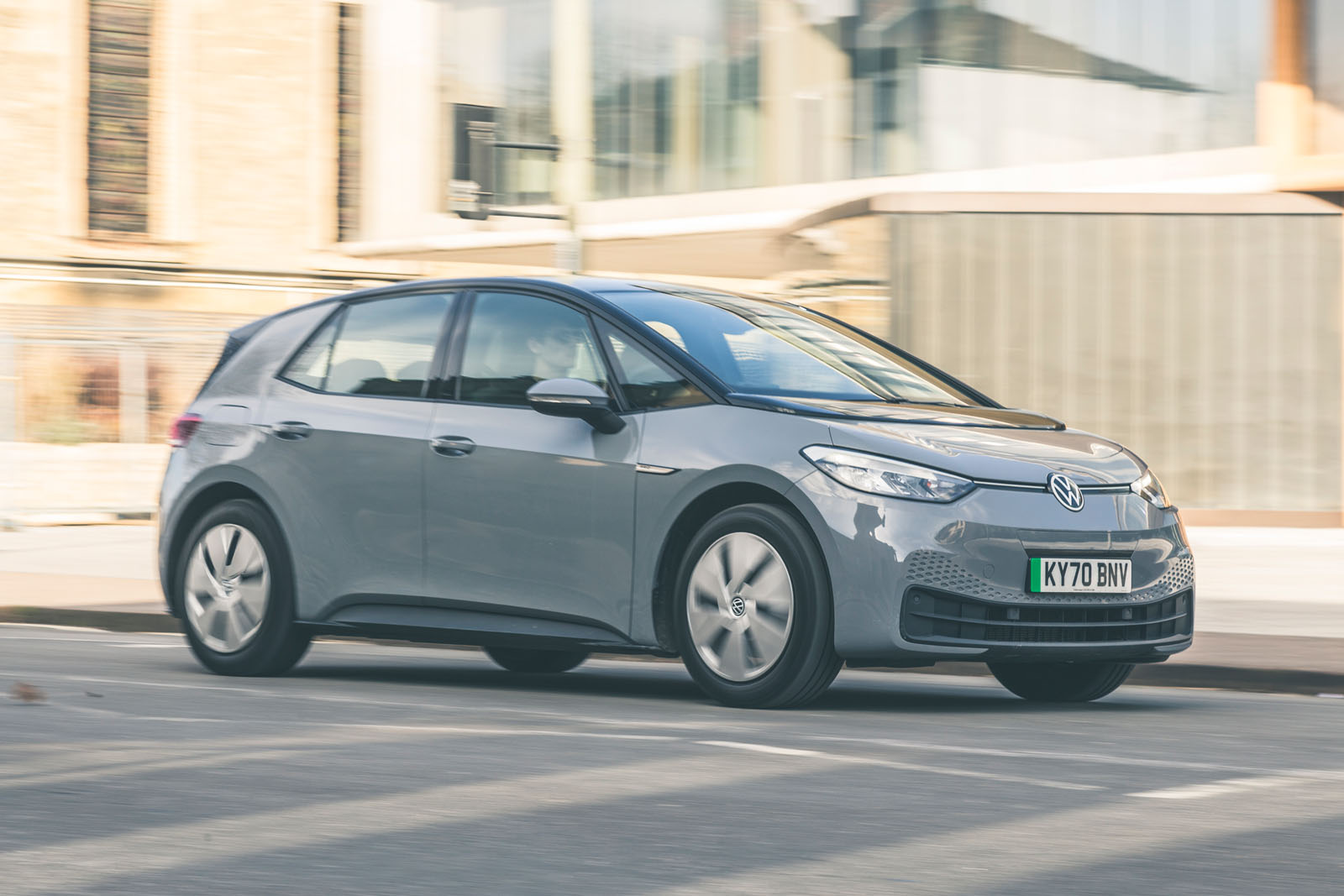
The journey of the ID.3 began as a strategic response to the "Dieselgate" scandal, with Volkswagen aiming to reinvent itself as a leader in sustainable mobility. Launched with the "1st Edition" models, the car initially faced scrutiny regarding its interior material quality and software stability. However, the subsequent years saw a rigorous cycle of updates.
By March 2021, the ID.3 had established itself as a credible contender in the C-segment. Industry experts noted at the time that Volkswagen had performed an "objectively commendable job" in creating an electric car with the right usability credentials for the average consumer. In 2023, the model underwent a significant "facelift" or mid-life update. This refresh addressed one of the primary criticisms of the original car: the interior. Volkswagen replaced hard plastic surfaces with soft-touch materials and improved the standard equipment list.
The most recent significant update occurred in 2024, which saw the introduction of the performance-oriented GTX variant and a general optimization of battery chemistry across the range, leading to incremental gains in range and charging speeds.
Battery Specifications and Range Performance
The ID.3 lineup is categorized primarily by battery capacity, which dictates both the vehicle’s range and its performance characteristics. Understanding these tiers is essential for used car buyers to ensure the vehicle fits their lifestyle.
The Pure and Pro Variants
The entry point to the range is the "Pure" trim. Originally equipped with a 52kWh (net) battery, it offered a respectable 216 miles of range under WLTP testing cycles. Following the 2024 updates, this was optimized to 240 miles. The "Pro" variant serves as the mid-range workhorse, boosting battery capacity to 59kWh. Early Pro models delivered 264 miles of range, while post-2024 versions achieved 268 miles. These models are typically powered by a 143bhp or 201bhp rear-mounted motor, providing the rear-wheel-drive dynamics that have become a hallmark of the MEB platform.
The Pro S and Long-Range Capabilities
For those requiring long-distance touring capabilities, the "Pro S" features a substantial 77kWh battery. Initial iterations provided 341 miles of range, increasing slightly to 345 miles after the 2024 technical revisions. The Pro S is often favored by high-mileage drivers, though it should be noted that the larger battery adds weight, which can slightly affect the nimbleness of the car’s handling compared to the lighter 52kWh versions.
The 2024 GTX Performance Flagship
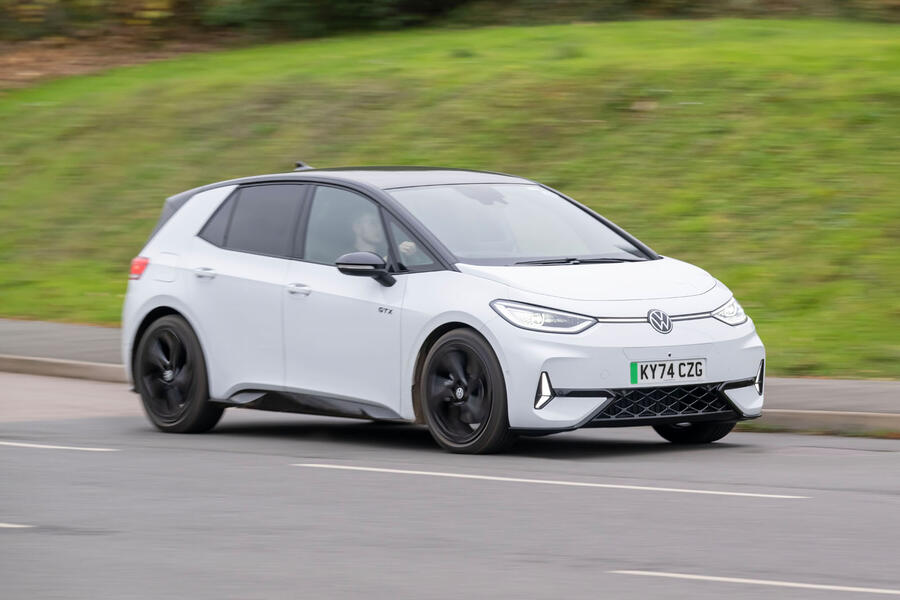
In 2024, Volkswagen introduced the GTX, a performance-focused derivative utilizing a 79kWh battery. This model delivers 322bhp and can accelerate from 0-62mph in just 5.7 seconds. Despite its impressive 370-mile range and straight-line speed, some critics have noted that it lacks the visceral engagement typically associated with Volkswagen’s "GTI" or "R" internal combustion badges. It remains, however, the pinnacle of the ID.3 technical achievement.
Reliability and Battery Health Data
One of the primary concerns for used EV buyers is battery degradation. However, empirical data suggests that the ID.3’s liquid-cooled lithium-ion packs are remarkably resilient. The German Automobile Club (ADAC) conducted a rigorous long-term test, driving an ID.3 for 100,000 miles over a four-year period. At the conclusion of the test, the vehicle had lost only eight miles of its original range, indicating a degradation rate far lower than many early EV skeptics predicted.
This robustness is attributed to Volkswagen’s sophisticated battery management system (BMS), which regulates temperature to prevent the accelerated wear associated with extreme heat or cold. For used buyers, this data provides significant peace of mind, suggesting that even high-mileage examples remain viable daily drivers.
Common Issues and "Buyer Beware" Indicators
While the high-voltage system is robust, the ID.3 has not been without its "teething" problems, particularly in early-production models.
The 12V Auxiliary Battery
While the traction battery powers the wheels, a standard 12V lead-acid battery handles the car’s auxiliary electronics. Early ID.3 models were prone to unexpected 12V drainage, which could lead to the vehicle being unable to "start" or owners being locked out. Volkswagen addressed this through a service campaign to replace the 12V units with more resilient versions capable of handling the demands of frequent over-the-air (OTA) software updates. Buyers should verify that this hardware swap has been performed.
Software and Infotainment
The ID.3’s software was famously problematic at launch, characterized by slow response times, "crashy" infotainment screens, and glitches in the driver-assistance systems. While version 3.0 and subsequent updates have largely stabilized these issues, some owners still express frustration. Dave Evans, a long-term owner, remarked: "The car is comfortable and quiet on long journeys, but I feel like a beta tester for VW. The software is slow to respond." Potential buyers should test the infotainment system thoroughly, checking for smartphone mirroring stability and the responsiveness of the touch-sensitive climate sliders.
Tyre Wear and Maintenance
The ID.3 is a heavy vehicle, weighing approximately 1.8 tonnes due to its battery pack. Because it is rear-wheel drive and delivers instant electric torque, it can be particularly hard on its rear tyres. It is not uncommon for rear tyres to require replacement significantly sooner than those on a traditional front-wheel-drive hatchback. Given that many ID.3s are fitted with specialized low-rolling-resistance tyres, which are more expensive than standard rubber, the condition of the tread should be a key point of negotiation.
Navigating Trim Levels and Equipment
Throughout its lifecycle, Volkswagen has frequently adjusted the ID.3’s trim structure. Initially, the car was sold with a complex "Pack" system (e.g., Design Pack, Infotainment Pack Plus), which can make it difficult for used buyers to determine exactly what features a specific car possesses.
Post-2023, the lineup was simplified into three primary tiers: Life, Essential, and GTX.
- Connectivity: Apple CarPlay and Android Auto are standard across the range, which mitigates some of the native software frustrations.
- The Heat Pump: One of the most critical options to look for is the heat pump. This system uses ambient air and waste heat from the drivetrain to warm the cabin more efficiently. In winter conditions, a car equipped with a heat pump will retain significantly more range than one using a standard resistive heater. This was an expensive option when new, so its presence adds value to a used vehicle.
Market Valuation and Pricing Analysis
The used market for the ID.3 has become increasingly accessible, with prices reflecting the broader stabilization of EV residuals.
- £9,000–£13,999: This bracket represents the entry point. Buyers will find high-mileage early models or cars with prior insurance claims (write-offs). While tempting, these require careful mechanical inspection.
- £14,000–£17,999: This is the "sweet spot" for many buyers. In this range, one can find "Pro" models with roughly 40,000 miles or "Pro S" models with higher mileage. The choice here depends on whether the buyer prioritizes a newer vehicle or the larger 77kWh battery.
Conclusion and Strategic Implications
The Volkswagen ID.3 has matured into a compelling used car proposition. While its early years were marred by software inconsistencies, the underlying mechanical platform and battery technology have proven to be industry-leading in terms of longevity.
The ADAC’s 100,000-mile test serves as a benchmark for the industry, proving that modern EVs can match or exceed the lifespan of internal combustion engines with significantly lower maintenance requirements. For the consumer, the ID.3 offers a spacious, quiet, and efficient driving experience. As long as buyers are diligent in checking software versions, 12V battery status, and the presence of a heat pump, the ID.3 stands as a testament to Volkswagen’s successful, if occasionally turbulent, transition into the electric era. The vehicle’s ability to hold its battery capacity over time makes it not just a sustainable choice, but a financially pragmatic one for the used car market.