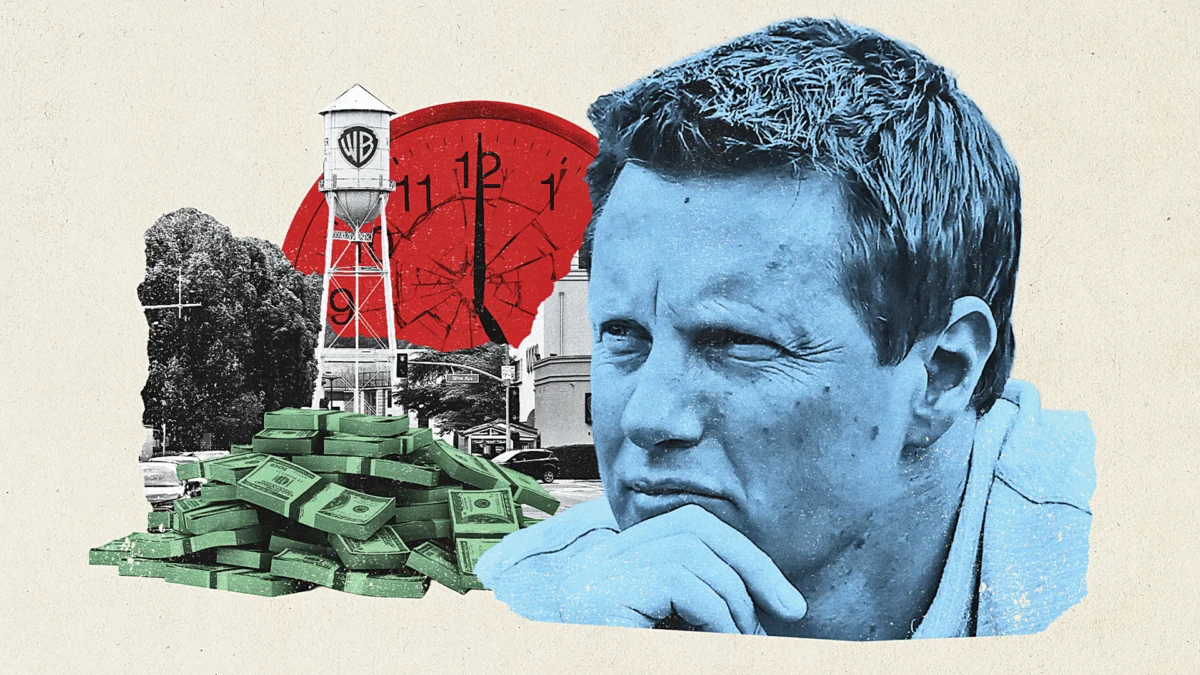
Hollywood, an industry perpetually defined by its appetite for monumental deals, finds itself at a critical juncture. The proposed $111 billion merger between Warner Bros. Discovery (WBD) and Paramount Global, initially hailed as a transformative move, is now ensnared in a complex web of legal challenges and operational anxieties. This protracted uncertainty is casting a long shadow over both companies, impacting talent retention, strategic decision-making, and the very future of entertainment production. The stakes have never been higher in this existential battle for audience attention, where the outcome of this merger could redefine the media landscape for years to come.
A Stalled Union and Pervasive Anxiety
The offices and sprawling studio lots of both Warner Bros. Discovery and Paramount are abuzz with a palpable sense of unease. The envisioned union, spearheaded by David Ellison, is facing significant headwinds. Twelve states have launched a legal offensive, culminating in a winner-take-all trial scheduled for March, which could either greenlight or dismantle the proposed merger. This protracted legal battle has injected a potent cocktail of panic and frustration into the highest echelons of both organizations.
At the television studio level, the uncertainty is directly impacting the ability to secure and retain top-tier talent. The defection of Quinta Brunson, who transitioned from her overall deal at Warner Bros. to Disney’s 20th Television, serves as a stark illustration of this challenge. Industry insiders suggest that the ongoing turmoil within the CBS News division, specifically concerning accusations of interference against its editor-in-chief, Bari Weiss, further exacerbates the situation. For entertainment-focused employees in a predominantly liberal Los Angeles, the perceived unraveling of respected programs like 60 Minutes under new leadership has become a source of considerable concern, creating a ripple effect that undermines confidence in the current leadership and future direction.
The Human Cost of Prolonged Uncertainty
For executives who have navigated the choppy waters of previous megamergers, the current situation at WBD and Paramount is a familiar, yet deeply unsettling, narrative. Despite reassurances from the C-suite to maintain business as usual, the reality on the ground is far more complex. Even for Warner Bros. Discovery, which has already experienced the seismic shifts of being acquired by AT&T and subsequently spun off into Discovery, the prospect of yet another major transaction—this being the third significant deal in a decade for some—represents a profound distraction. This sentiment is mirrored within Paramount, where employees grapple with an equally opaque future.
The specter of significant layoffs looms large over both entities. Estimates from Los Angeles’ Department of Economic Opportunity in June projected nearly 2,500 job losses in L.A. County and approximately 6,000 globally in the event of a combined company. This impending reduction in workforce only serves to amplify the existing anxieties, compelling employees to proactively seek opportunities elsewhere. Competitors, keenly aware of the vulnerabilities exposed during merger processes, are actively positioning themselves to poach key executives. The legal dispute between WBD and Prime Video over marketing executive Pia Barlow is a clear indication of this aggressive talent acquisition strategy.

Navigating the Contractual Minefield
The merger agreement itself contains a series of explicit limitations that govern what Warner Bros. Discovery can and cannot do, and crucially, at what financial thresholds Paramount’s permission is required. While the agreement grants WBD broad operational latitude, and sources within the company indicate that Paramount has thus far not withheld consent on any presented issues, veteran dealmakers caution that prolonged negotiations inevitably erode the ability to maintain the status quo.
Industry experts posit that the initial six months following a merger announcement are typically the most stable. As the timeline extends beyond this period, the complexities multiply. With the six-month mark rapidly approaching and no clear resolution to the ongoing litigation, the pressure on operational continuity is intensifying. The critical tasks of commissioning new shows and seasons, greenlighting blockbuster films, finalizing licensing agreements, and executing streaming deals—many of which have already been completed—demand swift and decisive action. However, any disagreement between Paramount and Warner Bros. over a series pickup, film budget, or licensing deal could rapidly escalate into a significant impediment, potentially derailing crucial business operations.
The "South Park" Precedent: A Warning Sign
The risks associated with these prolonged merger negotiations are not merely hypothetical. The public dispute over the future of the beloved Comedy Central series South Park serves as a potent case study. Negotiations between Skydance, Paramount, and Park County stalled, leading to a public outcry from creators Trey Parker and Matt Stone. Their statement, "This merger is a shit show, and it’s fucking up South Park," following the delayed premiere of the show’s season, underscored the tangible impact of corporate indecision on creative output. The protracted public infighting ultimately concluded with a $1.5 billion agreement, but the bitter dispute highlighted the significant risks inherent in such complex transactions.
Several clauses within the merger agreement are poised to create further complications as the process drags on. Notably, restrictions are placed on deals involving "key property" intellectual property, encompassing both new productions and licensing agreements with third parties. While the agreement does not explicitly define what constitutes a "key property," it is widely understood to include major franchises such as Harry Potter, Game of Thrones, and DC Comics properties.
While the companies are permitted to engage in deals that fall within the "ordinary course of business," these agreements are capped at a duration of two years post-deal closure. Any commitment extending beyond this timeframe would necessitate Paramount’s first right of negotiation. Furthermore, the acquisition or sale of content may require Paramount’s explicit approval if financial thresholds, ranging from $30 million to $400 million depending on the deal’s specifics, are met. This was precisely the contentious point in the South Park negotiations, where Skydance and Park County differed on the valuation and duration of a proposed deal.
Talent Under Pressure: A Creative Exodus?
The prolonged merger process is also prompting some A-list creatives to reconsider committing to projects with Warner Bros. Discovery, fearing that their work could become entangled in bureaucratic limbo. Quinta Brunson’s decision to move her overall deal to Disney, while not solely attributed to the merger, likely factored into her strategic considerations. Nevertheless, Warner Bros. has managed to secure new deals in recent months, including with prominent producer John Wells, Ryan Condal, and Chris Ferguson. Similarly, popular HBO host John Oliver inked a one-year extension, a deal unlikely to trigger Paramount’s approval due to its scope.

A significant number of creatives with existing ties to either or both companies, including acclaimed directors Denis Villeneuve and J.J. Abrams, publicly voiced their opposition to the merger in an open letter earlier this year. Damon Lindelof, who has collaborated with Ellison, acknowledged his positive professional interactions but expressed concern about the broader implications: "Hollywood mergers mean fewer movies and fewer TV shows, and that means fewer jobs."
The legacy of past megamergers continues to cast a long shadow. Creatives still harbor resentment towards WBD for content culling following the Discovery acquisition, and the fallout from the Disney-Fox merger remains a fresh cautionary tale. Writer and producer Dan Gregor, involved in projects like Chip ‘n Dale: Rescue Rangers, recounted how a promising film project at 20th Century Studios was shelved indefinitely after Disney acquired 21st Century Fox. "Mergers are job killers," Gregor stated. "I had a project in a very good spot at Disney. People were interested in producing, but the moment the merger happened, it died. It was a Fox project and Disney wanted to entirely do other things. The new producers had different mandates of what they were going to make."
Similar sentiments were echoed by numerous screenwriters who shared their experiences with the FTC in 2023, advocating for revised merger guidelines that ultimately made dealmaking more stringent. Writer Andrew Baldwin cited two Fox productions that were scrapped post-merger, lamenting that "Disney doesn’t make original films like Fox does. They make only their own IP and live action remakes of their back catalog of old films." These revised guidelines, which lowered the market threshold for antitrust violations, have emerged as a significant legal hurdle in the Paramount-WBD negotiations, with Paramount arguing that courts are not bound by this guidance.
The merger agreement also imposes limitations on deals with HBO Max, such as bundle agreements, mirroring the two-year post-closing restriction.
CNN’s Uncertain Future Amidst Internal Strife
Within CNN, apprehension has been building for months as staff closely monitor the developments at CBS News under Bari Weiss. The potential for significant layoffs is a widely acknowledged consequence of any merger between the two news organizations. Both CNN and CBS News maintain substantial operations in Washington D.C., New York, and Los Angeles, and the drive for cost savings in a combined entity makes substantial staff reductions an almost certainty, despite the complexities of integrating unionized CBS News staff with the non-union CNN workforce.
CNN is increasingly perceived as a political pawn in the ongoing saga. In an August 4th op-ed for The New York Times, David Ellison directly addressed the states’ lawsuit, asserting that its primary motivation stems from his potential ownership of CNN rather than market share concerns in the theatrical landscape.

The strategic direction of CNN is also a point of contention. While CNN is actively pursuing Mark Thompson’s digital transformation plan, Weiss is simultaneously implementing her own strategy at CBS. The abrupt shuttering of CNN+ following Discovery’s takeover of WBD has fueled fears that current initiatives may face a similar fate, only to be replaced by yet another nascent plan. Thompson has sought to assuage staff concerns in recent meetings, urging them to remain focused on company objectives. Rumors of CNN being spun off as part of a settlement with the states have elicited mixed reactions internally. Some are reportedly optimistic about a potential acquisition by Barry Diller, who has publicly expressed his desire to buy CNN "before they ruin it any further."
However, a forced sale could also attract other suitors, including private equity firms and politically motivated billionaires, whose visions for CNN might not align with the staff’s aspirations. Concerns about CNN’s future extend beyond its newsroom, with creative talent in Los Angeles also expressing apprehension. Ellison himself has assured WBD staff that CNN will maintain its independence, a sentiment he reiterated in his New York Times op-ed, stating, "I do not aspire to lead these companies to bend their newsrooms to my views."
Warner Bros. Film Slate: Navigating the "Barbie" Dilemma
On the film front at Warner Bros., the official directive remains "business as usual." Executives acknowledge that the studio has weathered similar periods of transition, citing the previous acquisition by AT&T. Despite the ongoing uncertainty, the pace of development and project acquisition has remained remarkably consistent in recent months. In May, the studio’s specialty label, Clockwork, secured a high-profile package at Cannes: a Western directed by Park Chan-wook, slated to star Matthew McConaughey, Austin Butler, and Pedro Pascal. In June, the studio optioned the book Creation Lake for Maggie Gyllenhaal to direct, a move that raised some eyebrows given the modest box office performance of her previous film, The Bride!.
In the wake of successful horror releases like Obsession and Backrooms, Warner Bros. has actively pursued digital-native horror filmmakers and intellectual property throughout the summer. The studio has engaged in bidding wars for several projects, including a new film from Obsession director Curry Barker, and secured the film rights to the internet sensation Sirenhead, with Weapons director Zach Cregger attached to co-write in a multimillion-dollar deal.
However, a significant question mark hangs over the Warner Bros. film slate: the potential sequel to Barbie. As reported by The New York Times, Margot Robbie, Ryan Gosling, and writer-director Greta Gerwig have yet to finalize deals for a follow-up to the $1.44 billion box office phenomenon. Reports suggest David Zaslav is hesitant regarding the proposed profit participation. The studio faces a December deadline to reach agreements with the talent and filmmakers, after which the rights would revert to Mattel. It is important to note that the current film chiefs, Mike De Luca and Pam Abdy, were not involved in the initial negotiations for the first Barbie film; those discussions were handled by then-studio head Toby Emmerich.
This situation unfolds against the backdrop of a challenging 2026 box office performance for Warner Bros. The disappointing $125 million global gross of Supergirl stands in contrast to the commercial successes of 2025, which included hits like Minecraft and Weapons, as well as critically acclaimed films such as Sinners and One Battle After Another.

International Operations: A Different Pace
Overseas, operations at Warner Bros. Discovery continue with a degree of separation. An executive noted, "We’re still doing our thing, and they’re doing their thing," emphasizing that with the launch of HBO Max in Germany, France, and the U.K. this year, the focus remains on domestic expansion rather than the unfolding US-based merger. Major European productions, including the HBO Max Harry Potter television series and the All Creatures Great and Small reboot produced by Paramount-owned Channel 5, are proceeding as planned. Local film production operations for both studios are comparatively smaller in scale than their U.S. counterparts.
The European Commission approved the Paramount-WBD merger in late July, with a significant condition: Paramount must exit UIP, its international theatrical distribution joint venture with Universal Pictures. Dissolving this 44-year-old partnership will be a substantial undertaking, requiring Paramount to secure alternative distribution channels across Europe. However, the company has a 13-month window to complete this transition, commencing only after the merger officially closes. Until then, it remains business as usual.
A veteran European executive recalled the near-failure of the 2022 merger with Discovery, stating, "People forget that the [2022] merger with Discovery almost didn’t happen. It was touch and go until the deal was finally done. We didn’t wait around then either."
C-Suite Uncertainty and the Path Forward
For the C-suite at Warner Bros. Discovery, the persistent uncertainty surrounding the deal presents its own unique set of challenges. Senior executives, including CEO David Zaslav, stand to receive substantial "golden parachutes" upon the deal’s closure. Conversely, if the merger falters, WBD’s stock is projected to plummet, forcing the company to regroup and potentially revert to its original plan of splitting into two distinct entities: Zaslav leading the studio and HBO business, with CFO Gunnar Wiedenfels taking the helm of Discovery Global.
Sources indicated that prior to the current merger discussions, Zaslav and Wiedenfels were reportedly enthusiastic about leading separate companies, a prospect that was deferred by the ongoing negotiations. Speculation is already mounting regarding potential outcomes beyond June 4, 2027, when Zaslav and the WBD board gain the option to exit the deal and claim the Paramount termination fee.
For the vast majority of individuals within both organizations—from staff and executives to creative talent—the prevailing reality is the necessity of continuing operations amidst profound uncertainty. John Oliver aptly summarized the prevailing sentiment: "We’ll just do what we’ve done—which is continue like it isn’t happening. Nothing’s happening and everything has stayed the same. That’s the only way that we can really move forward. Total denial." This pervasive sense of "business as usual" serves as a coping mechanism in an industry where the only certainty appears to be the relentless pursuit of the next big deal, even if its realization remains shrouded in doubt.