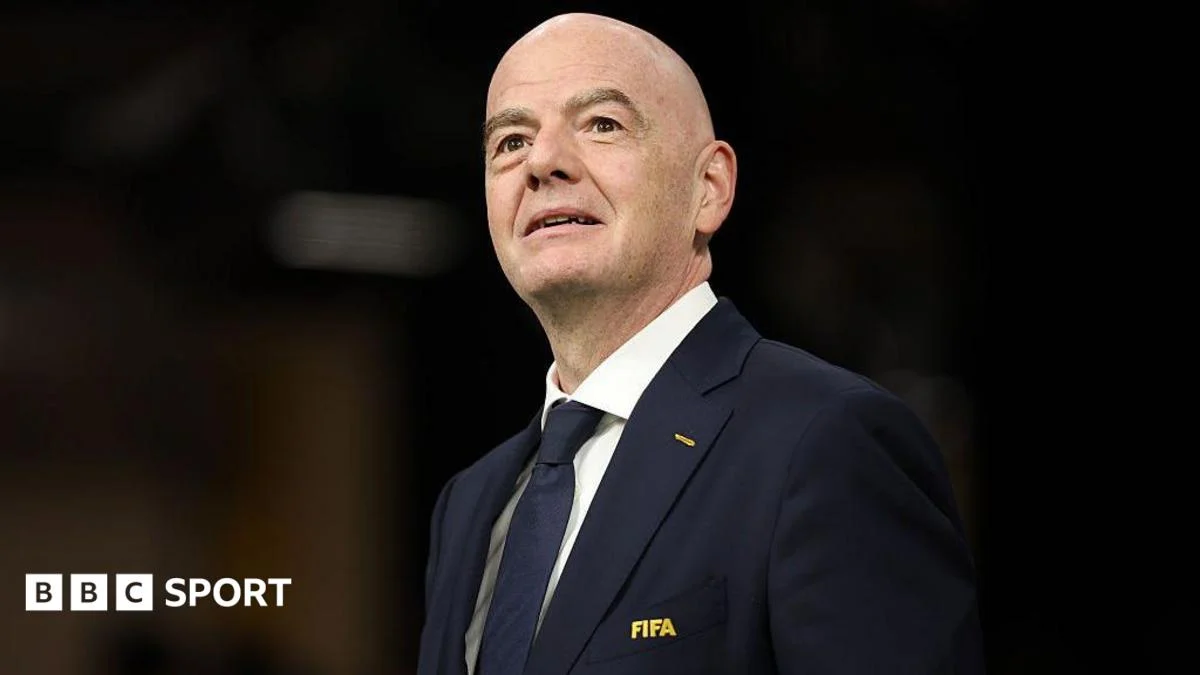
Gianni Infantino, the president of world football’s governing body FIFA, has issued a public apology for "errors" in his controversial proposals to sell off significant stakes in FIFA competitions to private investors. The apology, delivered during a critical meeting in Rabat, Morocco, on Wednesday, came alongside a crucial reaffirmation of his leadership by senior executives, ensuring his immediate tenure despite widespread condemnation, particularly from European football’s governing body, UEFA. The extraordinary summit, convened at FIFA’s Africa office, sought to quell a burgeoning crisis that threatened to undermine Infantino’s authority and raise fresh questions about the organization’s governance just years after a major corruption scandal.
The controversy stemmed from Infantino’s aborted plans, known as the FIFA Forward Enterprise (FFE) proposal, which envisioned the creation of a new subsidiary to manage commercial and ticketing rights for major tournaments, including the lucrative men’s and women’s World Cups. The plan involved offering all 211 member associations $40 million (approximately £30 million) if they backed the proposal, a significant sum for many smaller national federations. However, the secretive nature of the deal, its perceived lack of transparency, and the involvement of private investors—reportedly including Joshua Kushner, brother of former US President Donald Trump’s son-in-law Jared Kushner—sparked a fierce backlash across the football world.
The Genesis of Controversy: The FFE Proposal and Its Critics
The FFE proposal, first revealed to the public by The Times on July 28, quickly became a flashpoint for criticism. The core issue was the planned sale of a significant portion of FIFA’s commercial and ticketing rights, which critics argued represented a dilution of the organization’s control over its most valuable assets. Furthermore, the clandestine manner in which the proposal was developed and presented drew intense scrutiny. Senior FIFA figures and member associations reportedly felt excluded from the process, leading to accusations of a lack of due diligence and proper consultation.
UEFA, European football’s powerful governing body, emerged as Infantino’s most vocal opponent. At the weekend preceding the Rabat meeting, UEFA publicly declared it had lost confidence in Infantino’s leadership, labeling the FFE proposal a "shabby, back room, opaque deal." This was not merely rhetorical; UEFA threatened legal action against FIFA, signaling the depth of its dissatisfaction. The 55 member associations under UEFA’s umbrella had even threatened to boycott FIFA competitions if the plan proceeded, demonstrating a rare show of unity and force against the global body. Countries like Wales, with England expected to follow, had already begun withdrawing their support for Infantino’s re-election bid, adding to the pressure.
Internal dissent within FIFA itself also surfaced. Mattias Grafstrom, FIFA’s secretary general, who was present at Wednesday’s meeting, had earlier circulated an internal memo to staff on Tuesday, describing the situation as "a sad and reproachable series of events." This internal criticism from a high-ranking executive underscored the gravity of the institutional crisis Infantino faced. Carlos Cordeiro, Infantino’s senior adviser on global strategy and governance, had already resigned over the plan, a significant defection that highlighted the deep divisions.
The Rabat Summit: Apology and Reaffirmation of Authority
In response to the escalating crisis, Infantino summoned members of FIFA’s management board to Rabat. The meeting, held at FIFA’s Africa office, was a high-stakes affair designed to address the criticisms head-on and consolidate support for the embattled president. Four hours after the meeting concluded, FIFA released a statement announcing that Infantino had acknowledged "mistakes" regarding the FFE. The statement conceded that it was "not the intention" for the FIFA Council and member associations to "feel excluded from the process and that the process should have been handled differently." It also acknowledged errors in how the organization handled the aftermath of the proposal being leaked to the media.
Crucially, the statement confirmed that Grafstrom and the management board had "reaffirmed their full support" for Infantino as president. Following the meeting, Infantino and Grafstrom jointly signed a letter—reportedly seen by the BBC—addressed to FIFA’s vice-presidents, council, and all 211 member associations. In this letter, they "sincerely apologise" for their errors and "commit to them not happening again," an unprecedented admission of fault from FIFA’s top leadership. The image of Infantino and Grafstrom attending a Women’s Africa Cup of Nations match together in Rabat after the meeting was clearly intended to project a united front and signal a return to normalcy.
Despite the conciliatory tone regarding past errors, FIFA’s statement also included a stern warning, asserting that the organization "will no longer tolerate any attacks on its integrity, good governance and due process and will take all necessary measures to protect and safeguard its name and reputation." This indicated a determination to push back against what it perceives as unfounded criticism, even as it admitted its own shortcomings.
Broader Repercussions and the Fight for Legitimacy
The FFE controversy and Infantino’s subsequent apology represent the latest, and arguably most significant, challenge to his 10-year tenure as FIFA president. Elected in 2016 in the wake of the devastating corruption scandals that brought down his predecessor Sepp Blatter, Infantino had initially promised a new era of transparency and good governance. However, his presidency has been marked by several controversies, from the opaque process by which Saudi Arabia secured hosting rights for the 2034 World Cup to various internal governance issues. The FFE plan, with its secretive origins and potential for private influence, appeared to many as a regression to the very practices Infantino had vowed to eradicate.
Beyond UEFA, other prominent figures have voiced their disapproval. Canadian Prime Minister Mark Carney, whose country co-hosted the recent World Cup, publicly stated he no longer had confidence in Infantino. Legendary former Barcelona, Real Madrid, and Portugal winger Luis Figo, who himself ran for the FIFA presidency in 2015, called for Infantino’s immediate resignation. Figo passionately argued that Infantino had "debased the office that he promised to elevate," adding, "It is too late to save his dignity but it is not too late to save football."
Despite these calls for his departure, Infantino, 56, appears determined to seek re-election for a fourth term. The election is scheduled for the FIFA Congress in Morocco in March 2027, with rivals having until November 18 to put forward their names. A candidate requires a simple majority of 106 votes from FIFA’s 211 member associations to win.
The Geopolitics of Football: FIFA’s Power Base
UEFA’s strong stance, however, highlights a significant geopolitical challenge within global football. While European football wields immense financial power and influence, it cannot realistically unseat Infantino on its own. It requires broader global support, which, so far, has been largely absent.
Infantino has carefully cultivated a powerful support base, particularly within the Asian and African confederations. The FIFA Forward programme, the predecessor to the FFE, has been instrumental in this strategy. This programme provides substantial financial assistance to member associations, with each receiving approximately $8 million (£5.94 million) in each three-year cycle. For many smaller, less affluent national federations, this funding is crucial for developing infrastructure, youth programs, and administrative capabilities. This financial lifeline fosters a strong sense of loyalty to the incumbent president.
Since Infantino’s U-turn on the FFE proposal, only Concacaf (North, Central American, and Caribbean football confederation) has officially criticized the FIFA president as a confederation, but it did not go as far as to express a loss of confidence. The Asian confederation, while initially rejecting the FFE plan, has not issued a blanket statement of no confidence since its abortion. Outside of Europe, only Jordan, one of a handful of the 211 member associations that had not signed a letter of support for Infantino’s re-election before this controversy, has publicly called for his resignation.
Conversely, the list of countries reaffirming their backing for Infantino is extensive, particularly from his strongholds in Africa and Asia. Nations such as Egypt, Morocco, Niger, Mauritania, DR Congo, and the Philippines have all recently pledged their support. This consolidated loyalty, often attributed to the tangible benefits derived from FIFA’s development programs, presents a formidable hurdle for any potential challenger. UEFA faces the difficult task of persuading these associations that an alternative presidential candidate could offer similar financial support with greater transparency and governance, a challenge compounded by Infantino’s established relationships and proven track record of delivering funds.
Charting a Path Forward: Reforms and Reputation
The aftermath of this crisis will likely necessitate more than just apologies. Infantino may be compelled to outline a clearer path for internal reforms to restore confidence in FIFA’s governance. This could involve implementing additional checks and balances to prevent similar secretive deals from being conceived and presented without adequate consultation and oversight. Speculation suggests potential concessions, such as shelving plans for an expanded 64-team World Cup or opening up FIFA’s substantial cash reserves for greater scrutiny and transparent distribution.
The integrity of FIFA, an organization still striving to shed the shadow of past corruption, has once again been called into question. While the official statement from the Rabat meeting claimed the outcomes would "strengthen FIFA’s governance" and "restore confidence in the organisation," it is highly improbable that such declarations will appease UEFA or other critics. The deep-seated anger and mistrust within segments of the football community run too deep.
The events surrounding the FFE proposal underscore the complex power dynamics at play in global football. Infantino’s ability to navigate this crisis, issue an apology, and secure the continued backing of his management board, while simultaneously alienating powerful blocs like UEFA, demonstrates his political acumen. However, the long-term implications for FIFA’s reputation, its commitment to transparency, and the delicate balance of power between its various confederations remain significant challenges that will define the remainder of his presidency and the upcoming election cycle. The football world watches to see if this episode marks a genuine turning point towards greater accountability or merely another instance of political maneuvering within the sport’s highest echelons.