

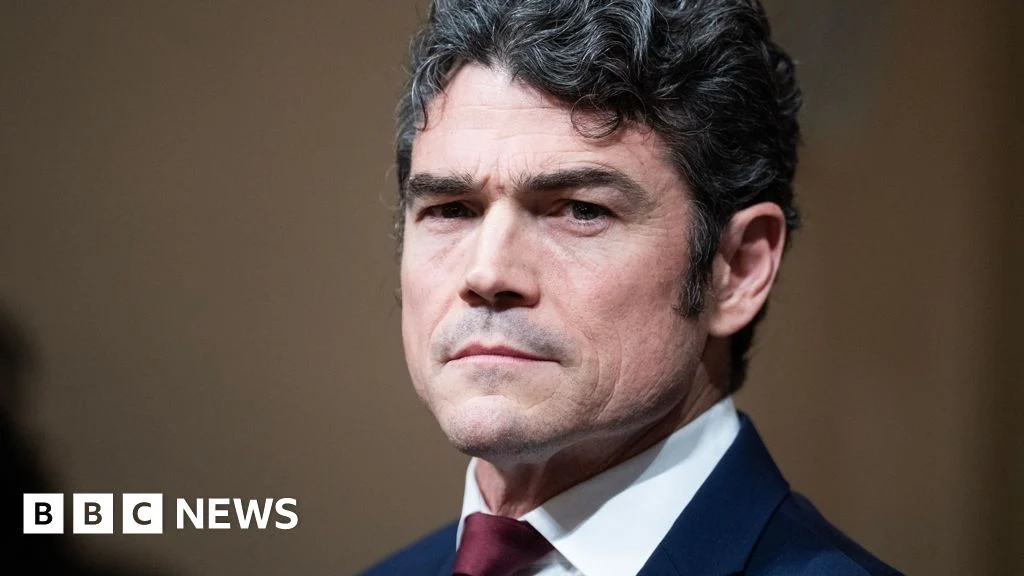
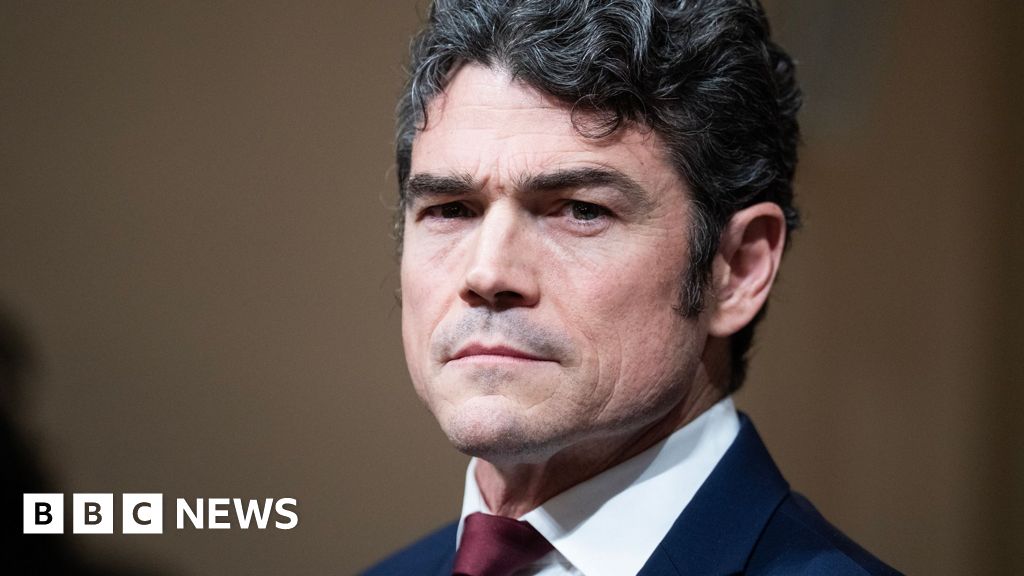
The Trump administration has been rocked by the high-profile resignation of Joe Kent, the Director of the National Counterterrorism Center (NCTC), who publicly denounced the ongoing military operation in Iran and implored President Donald Trump to fundamentally alter his foreign policy trajectory. In a blistering letter posted on his X account, Kent, a decorated veteran of both the US Army Special Forces and the CIA, asserted that Iran presented "no imminent threat" to the United States and controversially claimed that the administration initiated the conflict under duress from "Israel and its powerful American lobby." This departure marks a significant moment of internal dissent, with a top intelligence official directly challenging the rationale for a major military engagement.
Kent’s resignation immediately propelled him into the spotlight as the most senior figure within the Trump administration to vocally criticize the "US-Israeli operation in Iran." His letter, addressed directly to President Trump, painted a picture of a White House misled by an "echo chamber" of "high-ranking Israeli officials" and influential US journalists who, he alleged, sowed "misinformation" to undermine the President’s stated "America First" platform. "This was a lie," Kent starkly concluded regarding the supposed imminent threat. The profound disagreement underscores deep rifts within the national security apparatus regarding the intelligence underpinning the conflict and the broader strategic direction in the Middle East.
White House Dismisses Allegations, Defends Course of Action
The White House swiftly moved to dismiss Kent’s accusations, with President Trump himself publicly rebuking his former appointee. Speaking from the Oval Office, Trump characterized Kent as a "nice guy" but "weak on security," indicating that Kent’s resignation letter only served to reinforce his belief that "it was a good thing that he’s out." The President reiterated his administration’s stance, asserting that he possessed "compelling evidence" that Iran was poised to launch an attack on the United States first.
White House Press Secretary Karoline Leavitt echoed the President’s sentiments, vehemently rejecting Kent’s suggestion that external influences, particularly foreign nations, dictated Trump’s decision-making. Leavitt stated that such an insinuation was "both insulting and laughable," firmly reiterating that President Trump’s decisions were based on robust and incontrovertible intelligence. The administration’s unified front aims to project confidence in its strategic choices and to discredit Kent’s narrative of undue influence.
A Career Forged in Fire: The Profile of Joe Kent
Joe Kent, 45, brings a profound and often tragic personal history to his professional convictions. His military career is distinguished, marked by 11 overseas deployments with the US Army’s special forces, including extensive service in Iraq. Following his time in uniform, Kent transitioned to a role as a paramilitary officer within the Central Intelligence Agency, operating in some of the world’s most dangerous regions. This extensive operational experience in counterterrorism and special operations lends considerable weight to his public pronouncements regarding national security threats.
A deeply personal tragedy irrevocably shaped Kent’s perspective: the death of his wife, Navy Cryptologic Technician Senior Chief Shannon Kent, in a suicide bombing in Manbij, Syria, in January 2019. Shannon Kent was among four Americans killed in the attack, which was claimed by the Islamic State. Her death led Joe Kent to leave government service temporarily, advocating for a re-evaluation of US military engagements overseas. This personal sacrifice is explicitly cited in his resignation letter, where he articulates his inability to "support sending the next generation off to fight and die in a war that serves no benefit to the American people nor justifies the cost of American lives." His anti-interventionist stance, particularly concerning protracted conflicts, is deeply rooted in this personal loss and his extensive experience on the front lines.
Politically, Kent has been a staunch supporter of Donald Trump, aligning himself with the "America First" movement. He unsuccessfully sought election to Congress twice, campaigning on a platform that often echoed Trump’s populist rhetoric and skepticism towards foreign entanglements. His nomination as Director of the National Counterterrorism Center (NCTC) early in the Trump administration’s second term was contentious, narrowly confirmed amidst criticism from Democrats regarding his past associations with extremist groups, including members of the Proud Boys. During his confirmation hearing, Kent notably refused to retract claims that federal agents had instigated the January 6 riots at the US Capitol or that Trump had legitimately won the 2020 presidential election, further solidifying his image as a controversial figure on the political right. At the NCTC, Kent reported to Director of National Intelligence Tulsi Gabbard, overseeing the critical analysis and detection of global terrorist threats.
The Genesis of Conflict: Understanding the "Iran War" Context
The backdrop to Kent’s resignation is a complex and highly volatile geopolitical landscape involving the United States, Israel, and Iran. The term "Iran war" as used in the article implies a significant military confrontation, the specifics of which remain under wraps but have evidently escalated beyond traditional proxy conflicts or targeted strikes. For decades, US-Iran relations have been characterized by mutual distrust and antagonism, punctuated by periods of heightened tension.
A critical turning point was the Trump administration’s withdrawal from the Joint Comprehensive Plan of Action (JCPOA), commonly known as the Iran nuclear deal, in 2018. This move, championed by figures like former National Security Advisor John Bolton and strongly supported by Israel, inaugurated a "maximum pressure" campaign designed to cripple Iran’s economy and force it to renegotiate a more restrictive nuclear agreement and cease its regional malign activities. This campaign involved severe sanctions targeting Iran’s oil exports, financial sector, and key individuals.
While specific details of the "US-Israeli operation in Iran" remain classified, such an endeavor would typically involve coordinated military, intelligence, and diplomatic efforts. Historical precedents suggest a range of actions, from cyber warfare and covert operations to targeted strikes against military facilities or strategic assets. The administration’s justification of an "imminent threat" suggests a perceived immediate danger, potentially related to Iranian nuclear ambitions, its ballistic missile program, or its network of regional proxies, including Hezbollah in Lebanon, various militias in Iraq and Syria, and the Houthis in Yemen. These proxies have frequently been involved in actions targeting US interests or allies in the region.
The mention of "Khamenei’s death" in associated media content suggests a significant inflection point that might have preceded or coincided with the escalation of hostilities. The demise of a supreme leader often ushers in a period of political uncertainty and potential instability, which could be exploited by external actors or trigger internal power struggles. Such a transition could have been perceived by Washington and Tel Aviv as either an opportunity to press for concessions or a moment of heightened risk requiring preemptive action, further complicating the already precarious regional balance.
The "Imminent Threat" Doctrine and Its Historical Echoes
At the heart of Kent’s resignation is the contentious issue of the "imminent threat" – a concept that has historically been a flashpoint in US foreign policy debates. The Bush administration’s justification for the 2003 invasion of Iraq, based on claims of Weapons of Mass Destruction (WMDs) that later proved unfounded, cast a long shadow over subsequent intelligence assessments regarding potential adversaries. Kent’s direct assertion that Iran posed "no imminent threat" directly challenges the core premise used by the White House to justify the current "war."
The National Counterterrorism Center, which Kent led, is specifically tasked with integrating and analyzing intelligence pertaining to terrorist threats against the US. For its director to publicly contradict the administration’s assessment of an "imminent threat" from a state actor like Iran is extraordinary. It suggests a profound disagreement not just on policy, but on the fundamental interpretation of intelligence data at the highest levels. This fuels concerns about politicization of intelligence, an accusation frequently leveled against administrations by their critics, especially in the lead-up to military interventions.
Allegations of External Influence: A Divisive Debate
Kent’s claims about "pressure from Israel and its powerful American lobby" and "high-ranking Israeli officials" sowing "misinformation" are highly sensitive and immediately ignited fierce debate. The influence of pro-Israel advocacy groups, such as the American Israel Public Affairs Committee (AIPAC), on US foreign policy has been a subject of intense academic and political discussion for decades. While these groups openly lobby Congress and executive branch officials on issues related to US-Israel relations and regional security, Kent’s allegations go further, suggesting direct deception and undue influence leading to military action.
Such accusations tap into long-standing debates about the integrity of the foreign policy decision-making process and the potential for special interest groups to shape national security priorities. Pro-Israel organizations and their supporters typically argue that their advocacy aligns with shared strategic interests between the US and Israel in countering threats from states like Iran, and that their influence is a legitimate exercise of democratic participation. Kent’s position, however, implies a subversion of national interest for external agendas, a charge that will undoubtedly draw sharp condemnations from those he implicated. The fact that these allegations come from a former director of a US intelligence agency adds a layer of seriousness, regardless of their veracity.
Wider Ramifications: Political Fallout and Strategic Implications
Joe Kent’s resignation and his accompanying public statement carry significant political and strategic implications for the Trump administration and US foreign policy. Domestically, the dissent from a high-ranking official could energize anti-war factions, both within the Republican party (particularly those aligned with the "America First" isolationist wing) and across the political spectrum. Conservative media commentator Tucker Carlson, a close personal associate of Kent, immediately praised him, calling him "the bravest man I know" and predicting that "the neocons will try to destroy him for that." Carlson’s endorsement amplifies Kent’s message to a considerable audience, potentially deepening divisions among Trump’s base.
For President Trump, Kent’s accusations pose a challenge to his "America First" foreign policy, which ostensibly prioritizes US interests and avoids costly foreign entanglements. If the public perceives that the "Iran war" was indeed initiated due to external pressure rather than a clear and present threat to American lives or security, it could undermine Trump’s credibility on this core tenet of his political identity.
Strategically, the public disagreement over intelligence regarding Iran could complicate efforts to build international consensus or even domestic support for the ongoing military operation. Allies might question the coherence of US policy and the reliability of its intelligence assessments. The "US-Israeli operation" itself, now publicly questioned by a former NCTC Director, faces increased scrutiny, potentially leading to demands for greater transparency and accountability from Congress.
While the Trump administration’s second term has seen less overall turnover compared to the turbulent early years of his first presidency (which saw numerous high-profile resignations, including those of cabinet secretaries and national security advisors), Kent’s departure is particularly noteworthy due to its highly public and critical nature regarding a major military conflict. Other recent resignations, such as Security and Exchange Commission enforcement director Margaret Ryan and Kennedy Center President Ric Grenell, while significant, did not involve such direct challenges to the administration’s core foreign policy decisions.
Looking Ahead
The fallout from Joe Kent’s resignation is poised to continue to reverberate through Washington and beyond. It forces a renewed examination of the intelligence processes that lead to military action, the role of political appointees in national security, and the enduring debate over external influences on US foreign policy. As the "Iran war" unfolds, the administration will likely face increasing pressure to provide more detailed justifications for its actions and to address the serious allegations raised by a former insider. Kent’s decision to speak out, fueled by personal tragedy and a deep-seated conviction, ensures that the debate over the US’s engagement in the Middle East will remain at the forefront of the national conversation, challenging the very premises of the conflict.