

The travel industry reached a significant financial milestone in August 2026 as Fora, a modern travel advisor platform, officially secured a $1 billion valuation, marking the emergence of a new "unicorn" in the distribution sector. The company recently closed a $60 million financing round, a move that signals a profound shift in investor confidence toward human-centric service models augmented by sophisticated artificial intelligence. This development comes at a time when the broader travel market is grappling with the "tyranny of the search box," moving away from traditional keyword-based queries toward conversational, multi-modal booking experiences.
The Rise of the AI-Augmented Travel Advisor
Fora’s ascent to a $1 billion valuation represents a departure from the "online travel agency" (OTA) dominance that has characterized the last two decades. Unlike the automated platforms of the early 2000s, Fora utilizes a network of approximately 15,000 travel advisors, many of whom work part-time or entered the industry from non-traditional backgrounds. The company’s growth is predicated on its proprietary digital platform, which removes the technical barriers historically associated with the Global Distribution System (GDS).
By integrating generative AI into the advisor workflow, Fora has enabled a "revival" of a profession once thought to be obsolete. The platform allows advisors to handle complex itineraries and curation tasks that were previously labor-intensive. Analysts suggest that this "uberification" of travel advisory services is attracting a younger demographic of both workers and travelers who prioritize personalized curation over the self-service model offered by traditional OTAs. The $60 million influx of capital is expected to be directed toward further AI integration, specifically tools that allow for "AI-native" itinerary building and automated client communication.
Amazon and the Shift to Conversational Commerce
While human advisors are leveraging AI to reclaim market share, technology giants are doubling down on conversational interfaces to simplify the booking funnel. Amazon has announced a significant expansion of its Alexa travel booking capabilities, moving beyond simple information retrieval into full-scale transactional commerce. This push is powered by the Model Context Protocol (MCP), a standard that allows various AI agents to communicate and execute tasks across different platforms seamlessly.
Amazon’s current partnership roster for this initiative includes a diverse mix of suppliers and distributors:
- Airlines: Virgin Atlantic
- Ground Transportation: Lyft, Brightline, Flixbus, and Greyhound
- Booking Platforms: Priceline and Viator
This move marks Amazon’s latest attempt to penetrate the travel market after several failed starts over the last decade. In 2018, the company attempted to integrate hotel and flight bookings in international markets like India, but high research burdens and purchase complexity stymied growth. The 2026 iteration of Amazon Travel relies on the premise that Large Language Models (LLMs) have finally reached a level of natural language processing that can handle the "high-consideration" nature of travel planning.

IHG and the "Curation-Led" Search Experience
Simultaneously, InterContinental Hotels Group (IHG) has launched a beta version of a conversational AI search tool on its primary website and mobile application. This tool represents a strategic move from "search-scroll" to "ask-and-decide." Instead of inputting dates and locations into a static grid, users can engage in a dialogue with the platform, describing the "vibe" or specific requirements of a trip—such as "a family-friendly hotel in London with a view of the Thames and proximity to a park."
This transition is part of a broader industry trend where the "front door" of travel booking is fragmenting. For years, Google served as the primary entry point for travel discovery. However, with the rise of direct conversational tools on brand websites like IHG, Marriott, and Hilton, as well as AI-assisted trip planning within the Google ecosystem itself, the traditional search bar is losing its monopoly. Google has responded by integrating IHG as its inaugural hotel partner for a new "Direct Offers Program," which surfaces specific hotel promotions directly within AI-assisted conversations.
Corporate Earnings and the Hotel Owner Squeeze
The financial health of the hospitality sector remains robust at the corporate level, but structural tensions are emerging between global brands and individual property owners. Hilton’s recent earnings report highlighted this dynamic. While Hilton raised its full-year guidance for Revenue Per Available Room (RevPAR), it also took the unusual step of publicly announcing a cut in franchise fees for certain owners.
This move is seen as a response to the "squeeze" hotel owners are facing due to rising operational costs, insurance premiums, and labor shortages. Hilton’s new fee structure is performance-linked; owners who maintain high guest experience scores are eligible for discounted franchise fees. Chris Nassetta, CEO of Hilton, has previously stated that the company’s success is "inextricably linked" to the profitability of its owners. By incentivizing quality through fee reductions, Hilton aims to bolster its competitive position against other major flags while addressing the growing discontent among the small business owners who form the backbone of the franchise model.
JetBlue’s Strategic Pivot and the Low-Cost Carrier Dilemma
In the aviation sector, JetBlue continues to navigate a complex recovery period. Despite reporting continued losses, the airline’s stock price has shown resilience following the announcement of a comprehensive restructuring plan. The "JetForward" strategy involves several high-stakes adjustments:
- Network Optimization: Cutting unprofitable routes and doubling down on core markets, particularly Florida and the Northeast.
- Premiumization: Expanding domestic first-class offerings and introducing new airport lounges to compete with legacy carriers like Delta and United.
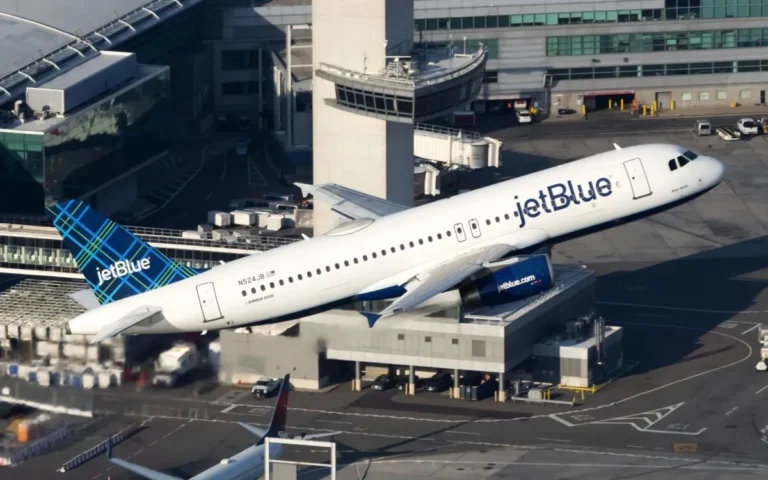
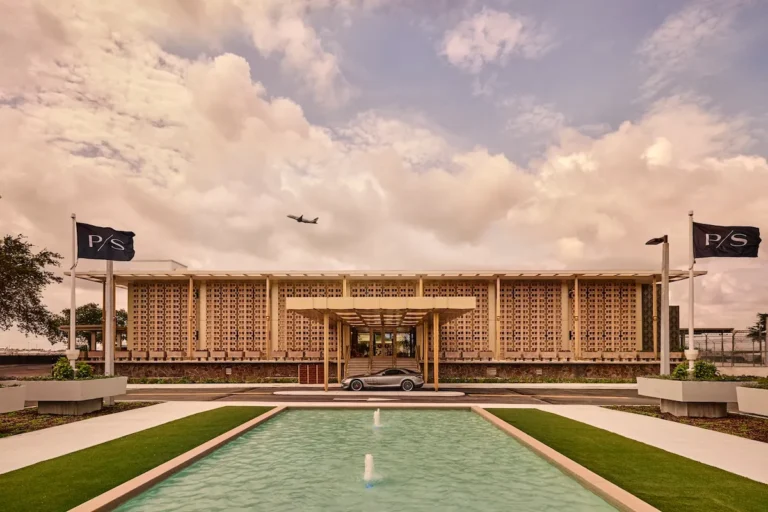
- Infrastructure: Taking over slots and gates previously held by Spirit Airlines, including a move into the historic Marine Air Terminal at LaGuardia Airport.
The airline industry is currently witnessing a "squeezing of the middle." At the top, Delta and United are reaping record profits from premium travelers. At the bottom, ultra-low-cost carriers (ULCCs) like Frontier and Allegiant are struggling with overcapacity. JetBlue, along with Southwest, is attempting to move "upscale" to escape the volatile low-fare market. The move into the Marine Air Terminal—an Art Deco masterpiece originally built for Pan American Airways—is symbolic of JetBlue’s attempt to align itself with a more sophisticated, high-yield traveler profile.
Geopolitical Headwinds and the Cruise Sector
The cruise industry, represented by Royal Caribbean’s recent earnings performance, faces a different set of challenges. While consumer demand for cruising is at an all-time high, geopolitical tensions in the Middle East have begun to impact the bottom line. Royal Caribbean reported that increased fuel costs, driven by volatility in oil markets linked to regional conflicts, necessitated a slight trimming of their growth forecasts.

Unlike airlines, which can often hedge fuel costs more aggressively or adjust routes with relative speed, the cruise sector’s massive fuel requirements and fixed itineraries make it particularly sensitive to energy market shocks. Despite these headwinds, the sector continues to see strong booking volumes, suggesting that the "experience economy" remains a primary driver of consumer spending even in an inflationary environment.
The Long-Term Horizon: Space Tourism and Licensing
Looking toward the end of the decade, the regulatory landscape for commercial space travel is beginning to stabilize. U.S. officials have recently announced a streamlining of the commercial space licensing process. This move is designed to expedite launches by reducing environmental and bureaucratic hurdles that have previously delayed private sector progress.
Market analysts predict that the first significant wave of space travel will not be for tourism, but for "space business travel." As infrastructure is developed for lunar mining and orbital manufacturing, the need for human personnel to oversee these operations will create a new niche in the corporate travel sector. While the "space tourist" remains a luxury outlier for now, the establishment of a simplified licensing framework is the first step toward a functional, multi-planetary travel economy.
Conclusion: A Fragmented Distribution Future
The overarching theme of the 2026 travel landscape is the end of the "single front door." The industry is moving toward a future where decision-making, research, and booking are distributed across multiple platforms—ranging from human advisors and voice-activated devices to direct brand chatbots and AI-integrated search engines.
As the industry continues to experiment with these tools, the winners will likely be those who can balance the efficiency of artificial intelligence with the high-touch service that travelers still crave for complex journeys. Whether it is a $1 billion startup reviving the travel agent or a global hotel brand turning its website into a conversational partner, the goal remains the same: reducing the friction between the desire to travel and the act of booking.