
The logistical challenges of modern automotive journalism have reached a critical juncture, exemplified by the increasingly condensed windows provided to experts for evaluating high-performance vehicles. At the heart of this shift is the Goodwood Festival of Speed, an event that has evolved from a niche historic hillclimb into a primary global stage for the debut of ultra-high-performance electric vehicles (EVs). For a journalist tasked with conducting the first comprehensive test of a 1600bhp tri-motor electric sports car, the process begins long before the wheels touch the tarmac. The schedule often dictates a 4:30 AM departure to manage a 150-mile transit to the Goodwood Motor Circuit, located in West Sussex, a day ahead of the public opening of the festival. This early arrival is necessary to navigate the "media circus" that surrounds the launch of vehicles capable of outputting power figures that were once reserved for top-tier motorsport prototypes.
The Logistics of High-Performance Media Events
The transition of the Goodwood Festival of Speed into a launchpad for the automotive industry has fundamentally altered the nature of car testing. Manufacturers now utilize the days preceding the event to host exclusive, high-pressure media sessions. These sessions are designed to generate immediate digital content and early-impression reviews to coincide with the vehicle’s public unveiling. However, the sheer volume of international media outlets—ranging from traditional print magazines to high-traffic digital platforms—means that the time allotted to any single evaluator is severely restricted.
In the case of a 1600bhp hypercar, the disparity between the vehicle’s complexity and the time allowed to understand it is stark. A five-minute window represents a fraction of the time typically required to assess chassis balance, thermal management of the battery, and the nuances of tri-motor torque vectoring. This "exclusive opportunity" often involves a strict rotation where journalists are funneled through a series of briefings, safety checks, and photography sessions, leaving a minimal amount of time for actual high-speed evaluation.
Technical Profile: The 1600bhp Threshold
The emergence of 1600bhp (approximately 1,193 kW) as a benchmark for modern electric hypercars marks a significant leap in automotive engineering. To put this figure in perspective, it represents more than double the output of a modern Formula 1 car and significantly exceeds the power-to-weight ratios of the internal combustion engine (ICE) "Holy Trinity"—the McLaren P1, Porsche 918 Spyder, and LaFerrari.
Such performance is typically achieved through a tri-motor configuration: usually one motor powering the front axle and two independently controlling the rear wheels. This setup allows for sophisticated torque vectoring, where power can be shifted between wheels in milliseconds to improve cornering and stability. However, the physical demands of managing 1600bhp are immense. The cooling requirements for the battery pack and the inverter systems are substantial, as the heat generated during a full-power deployment can degrade performance rapidly. For a tester, determining whether the car can maintain this output over multiple laps or if it "derates" after the initial burst is a primary objective, yet one that is difficult to confirm in a five-minute session.

Chronology of a Press Launch at Goodwood
The timeline of a modern hypercar test is a study in precision and exhaustion. The process generally follows a structured sequence:
- 04:30 – 07:30: Transit to the West Sussex region. Journalists must arrive early to avoid the localized gridlock associated with the 200,000 visitors expected at the Festival of Speed.
- 08:00 – 09:00: Technical Briefing. Engineering leads provide data on the battery chemistry (often 800V or 900V architectures), aerodynamic downforce figures, and the specific software calibration of the motors.
- 09:30 – 11:00: Static Photography and Videography. Because the driving window is so short, visual assets must be captured while the vehicle is stationary to ensure the "media circus" does not impede the production of the final report.
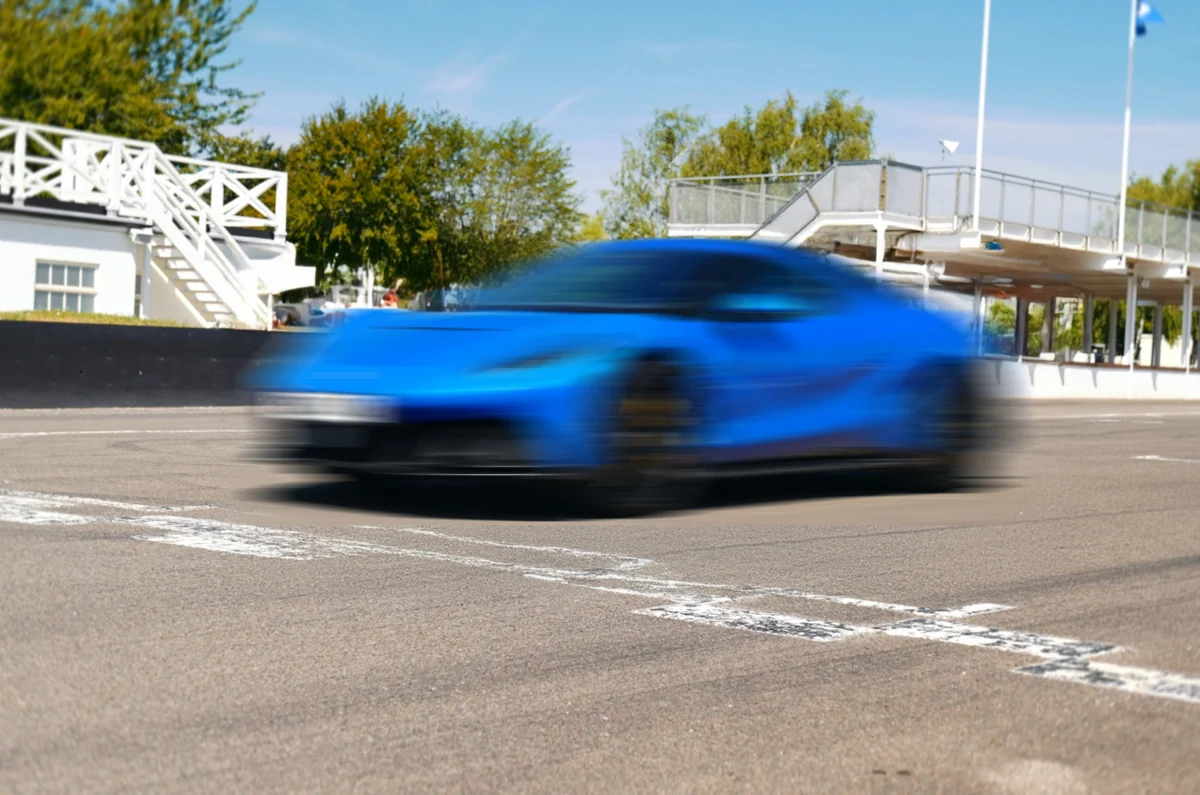
- 11:15 – 11:20: The Drive. The journalist is given a five-minute window on the circuit. This usually equates to two or three flying laps of the 2.36-mile Goodwood Motor Circuit.
- 11:30 – 12:30: Debrief and Data Collection. Journalists interview the development drivers to cross-reference their short experience with the long-term testing data accumulated during the car’s development cycle.
The Evolution of the Goodwood Festival of Speed
The Goodwood Festival of Speed, founded by the Duke of Richmond in 1993, has undergone a radical transformation. Originally a celebration of motor racing history, it has become the "British Motor Show" by proxy. In the last decade, the event’s "First Glance" paddock and the "Electric Avenue" showcase have become the most significant areas for manufacturers like Rimac, Lotus, McMurtry, and Lucid.
The shift toward Goodwood as a testing ground is driven by its unique atmosphere. Unlike traditional motor shows held in static convention centers, Goodwood allows the public to see, hear, and smell the cars in motion. For manufacturers, the proximity of the racing circuit to the hillclimb course provides a dual-purpose venue for both marketing and media evaluation. However, the popularity of the event has made track time a scarce commodity, leading to the five-minute "speed-dating" style of car reviews.
Industry Implications and Expert Analysis
The trend toward condensed testing windows has sparked a debate within the automotive industry regarding the depth and accuracy of media reviews. When a journalist has only five minutes to judge a vehicle of such immense power and technological complexity, the risk of missing subtle handling flaws or software inconsistencies increases.
Industry analysts suggest that these "first drives" are increasingly becoming part of the marketing funnel rather than objective consumer advice. Manufacturers prioritize the "wow factor" of instant electric torque and high horsepower figures, knowing that the limited time prevents a deep dive into long-term reliability or real-world efficiency.
Furthermore, the physical toll on the evaluator cannot be ignored. Managing a 1600bhp vehicle requires intense concentration. The G-forces exerted during acceleration (often 0-60 mph in under 2 seconds) and heavy braking can be disorienting. Attempting to provide a nuanced critique of the steering feel or the transition between regenerative and friction braking while under such physical stress and a ticking clock is a significant professional challenge.

Official Responses and Manufacturer Perspectives
While manufacturers acknowledge the time constraints, they often argue that these preliminary tests are intended to provide a "flavor" of the vehicle’s capabilities rather than a definitive verdict. PR representatives for high-end marques frequently state that more extensive, multi-day testing opportunities are provided to key outlets later in the production cycle.
"The goal of the Goodwood media sessions is to celebrate the debut of the technology and give the world a first look at what the car can do in a dynamic environment," a representative for a leading EV manufacturer noted during a previous festival. "We understand the pressure on the media, but the logistical reality of managing forty journalists in a single day necessitates these short windows."
The Future of Automotive Evaluation
As the automotive industry moves toward an era defined by software-defined vehicles and extreme electric performance, the methods of evaluation must also evolve. The traditional "road test" is being supplemented by data-driven analysis. Journalists are increasingly relying on telemetry provided by the manufacturers and comparing it against their own subjective experiences.
The "media circus" at Goodwood is a symptom of a larger shift. With the decline of traditional auto shows in Geneva, Frankfurt, and Detroit, dynamic events like the Festival of Speed have become the primary battlegrounds for brand supremacy. For the journalist behind the wheel of a 1600bhp hypercar, those five minutes are more than just a drive; they are a high-stakes distillation of years of engineering and months of anticipation, condensed into a few miles of Sussex asphalt.
The reality of car testing in the 2020s is that the "full story" is rarely captured in a single session. It is a mosaic of technical data, brief high-speed encounters, and industry context. As 1600bhp becomes the new standard for the electric elite, the challenge for the media remains: how to provide an objective, factual, and informative account of a machine that operates at the very limits of physics, all within the time it takes to boil a kettle.