



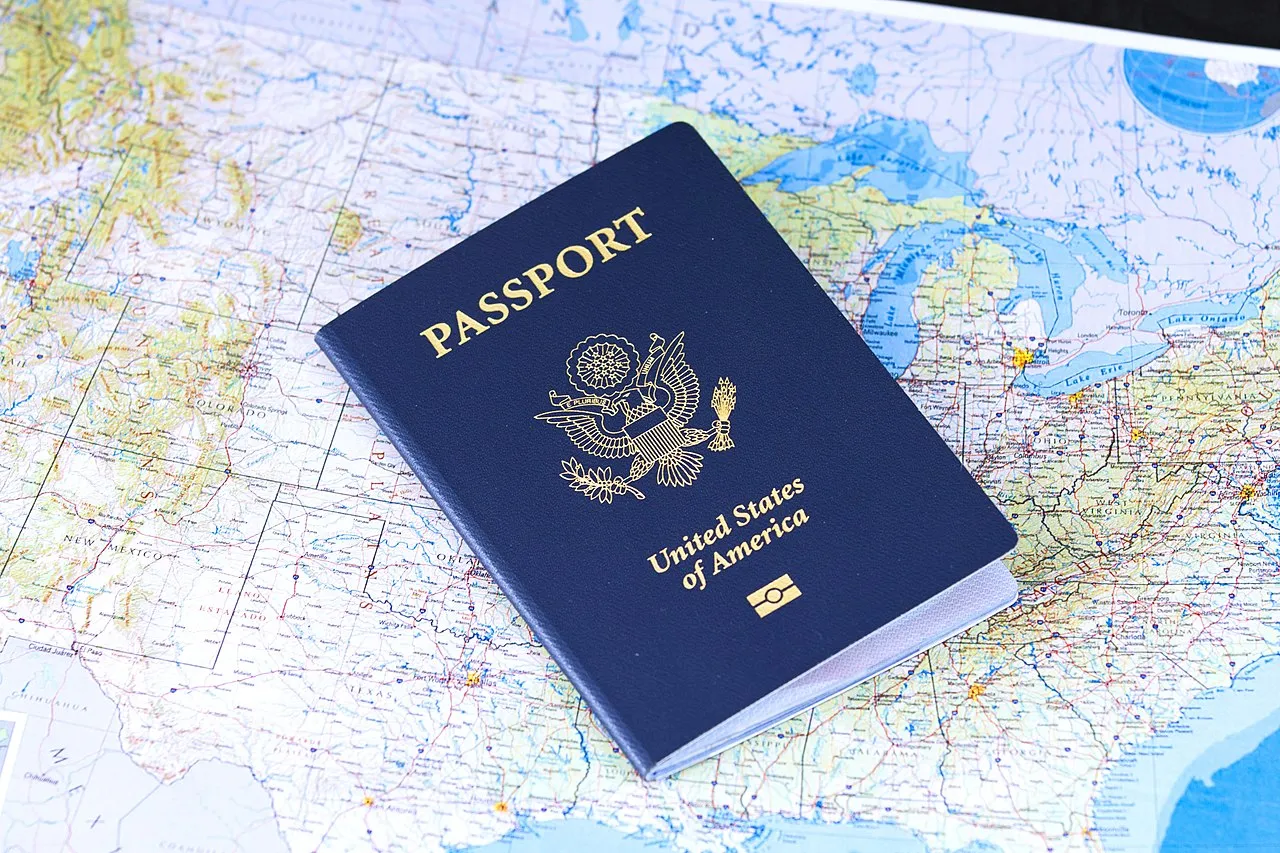
The United States passport has maintained its position at 10th place in the latest iteration of the Henley Passport Index, a stagnation that underscores a decade-long decline in the relative standing of American travel documents compared to global peers. While the U.S. passport currently provides visa-free or visa-on-arrival access to 180 destinations—a marginal increase from the 179 destinations recorded in January—the nation continues to trail 36 other countries due to the index’s ranking system, which allows multiple nations to share a single rank. This latest data point reflects a broader and more significant shift in the landscape of international mobility, as traditional Western powers see their dominance challenged by emerging leaders in Asia and a resurgent European bloc.
For nearly two decades, the Henley Passport Index, which utilizes exclusive data from the International Air Transport Association (IATA), has served as a benchmark for global citizenship and mobility. The current ranking marks a period of relative stability for the U.S. following a historic low in October 2023, when the country fell to 12th place for the first time in the index’s 20-year history. However, the inability to regain its former status at the top of the list suggests that the U.S. is struggling to keep pace with the aggressive visa-waiver programs and diplomatic outreach strategies employed by other nations.
A Comparative Analysis of Global Mobility Leaders
The current hierarchy of the Henley Passport Index reveals a significant gap between the U.S. and the world’s most powerful travel documents. Singapore has solidified its position as the world’s most powerful passport, offering its citizens visa-free access to a record-breaking 195 destinations. Following closely in second place is a five-way tie between France, Germany, Italy, Japan, and Spain, each providing access to 192 destinations. These nations have consistently expanded their diplomatic reach, prioritizing travel freedom as a core component of their foreign policy.
The third-place tier includes Austria, Finland, Ireland, Luxembourg, Netherlands, South Korea, and Sweden, with access to 191 destinations. The United Kingdom, which shared the top spot with the U.S. in 2014, currently sits in fourth place (shared with Belgium, Denmark, New Zealand, Norway, and Switzerland), offering access to 190 destinations. The U.S., at 10th place with 180 destinations, finds itself grouped with countries that were once significantly lower in the rankings, illustrating a narrowing of the gap from the bottom up rather than an expansion from the top down.
The discrepancy between the U.S. and the top-tier nations is not merely a matter of a few missed destinations. It reflects a fundamental difference in how nations approach international reciprocity and the ease of border crossings. While European and Asian leaders have moved toward more open-door policies, the U.S. has maintained a more stringent approach to border control and visa requirements, which in turn limits its ability to secure reciprocal visa-free agreements with other nations.
The Chronology of Decline: From Dominance to Stagnation
The trajectory of the U.S. passport over the last 20 years provides a clear picture of shifting geopolitical influence. In 2014, the U.S. and the United Kingdom jointly held the number one position on the Henley Passport Index. At that time, the transatlantic alliance represented the pinnacle of global mobility, with American and British citizens enjoying unparalleled access to the world’s markets and tourist destinations.
However, the subsequent decade saw a steady erosion of this dominance. By 2015, the U.S. had slipped from the top spot, and by 2018, it had fallen out of the top five. The decline was driven by several factors, including the rise of digital nomadism, the expansion of the European Union’s Schengen Area, and the proactive diplomatic efforts of Asian nations like Japan and Singapore to secure visa-free access to burgeoning markets in Africa, South America, and Southeast Asia.
The most dramatic shift occurred in October 2023, when the U.S. dropped to 12th place. Although it rebounded to 10th place in January 2024, the current ranking confirms that the U.S. has hit a ceiling. Experts at Henley & Partners describe this as part of a "longer-term shift in mobility power away from the traditional transatlantic leaders." This trend is further evidenced by the United Kingdom’s fall from third place to its current position, indicating that the challenges facing the U.S. are part of a broader Western phenomenon.
The Economic and Geopolitical Implications of Passport Strength
The strength of a nation’s passport is increasingly viewed as more than a luxury for travelers; it is a critical economic metric. Dr. Christian H. Kaelin, Chairman of Henley & Partners and the inventor of the passport index concept, has frequently emphasized that travel freedom is a powerful economic tool. "The ability to travel visa-free to a wide array of destinations is no longer merely a convenience—it’s a powerful economic tool that can drive growth, foster international cooperation, and attract foreign investment," Kaelin stated in a recent release.
A powerful passport facilitates international business by allowing executives and entrepreneurs to travel at short notice to meet clients, attend conferences, and explore new markets. Conversely, a weaker passport creates friction in the global economy, imposing costs in the form of visa fees, administrative delays, and missed opportunities. For the U.S., the stagnation at 10th place could have long-term implications for its competitiveness, particularly as other nations use their mobility power to attract talent and capital.
Furthermore, there is a documented correlation between a country’s visa-free access and its economic prosperity. Data suggests that nations with higher Henley Passport Index scores often enjoy higher per capita GDP and more robust foreign direct investment (FDI). By facilitating the movement of people, these nations also facilitate the movement of ideas and capital, creating a virtuous cycle of growth and innovation.
The Openness Index and the Reciprocity Gap
A key factor contributing to the U.S.’s stagnant ranking is the "Henley Openness Index," which ranks countries based on how many nationalities they permit to enter their borders without a prior visa. In this metric, the U.S. performs poorly compared to its peers in the top 10. While the U.S. passport allows its holders to visit 180 destinations, the U.S. government only allows 45 other nationalities to enter the country visa-free.
This lack of reciprocity is a significant hurdle in diplomatic negotiations for expanded travel access. Many nations follow a "tit-for-tat" approach to visa policy; if the U.S. requires their citizens to undergo a rigorous and often expensive visa application process, they are likely to impose similar requirements on Americans. The U.S. focus on national security and border integrity, while essential from a domestic policy perspective, has the secondary effect of limiting the global reach of its own passport.
In contrast, countries like Singapore and many EU member states have embraced more liberalized entry policies, which has helped them secure reciprocal agreements. The rise of the United Arab Emirates (UAE) is perhaps the most striking example of this strategy. Over the last decade, the UAE has been the biggest climber on the index, jumping from 62nd place to 9th place, one spot ahead of the U.S. This was achieved through a concerted effort by the Emirati government to open its borders and build diplomatic ties globally.
The Role of Technological Advancement and Future Trends
As the physical passport remains the primary document for international travel, the digital landscape is rapidly changing how borders are managed. The implementation of Electronic Travel Authorizations (ETAs), such as the U.S. ESTA and the upcoming European ETIAS, represents a middle ground between full visa-free travel and traditional visa requirements. While these systems streamline the process, they still represent a form of digital border control that can influence a nation’s ranking on mobility indices.
Looking forward, the global mobility gap—the difference between the most and least powerful passports—is wider than ever. The top-ranked Singaporean passport provides access to 169 more destinations than the bottom-ranked Afghan passport, which has access to only 26. This disparity highlights a growing "mobility inequality" that defines the modern era.
For the United States, the path toward regaining its former standing remains complex. It would require a significant shift in foreign policy toward greater openness and a willingness to negotiate reciprocal visa-free agreements with a broader range of nations. Without such changes, the U.S. is likely to remain in the lower tiers of the top 10, or perhaps fall further, as other nations prioritize mobility as a pillar of their national strategy.
Conclusion: A New Era of International Mobility
The stagnation of the U.S. passport at 10th place serves as a barometer for the changing world order. The era of unchallenged Western dominance in travel and diplomacy is giving way to a more multipolar world where Asian and European nations are setting the pace for global integration. As mobility becomes increasingly tied to economic resilience and geopolitical influence, the ranking of a passport is no longer just a point of national pride; it is a vital indicator of a country’s readiness to engage with the global community in the 21st century.
The data from the Henley Passport Index suggests that the U.S. is currently at a crossroads. While 180 destinations still represent significant global access, the downward trend relative to other nations indicates a loss of momentum. Whether the U.S. can reverse this trend will depend on its ability to balance security concerns with the economic and diplomatic benefits of a more open and mobile world. For now, the 10th-place ranking stands as a reminder that in the race for global connectivity, standing still is often equivalent to falling behind.