

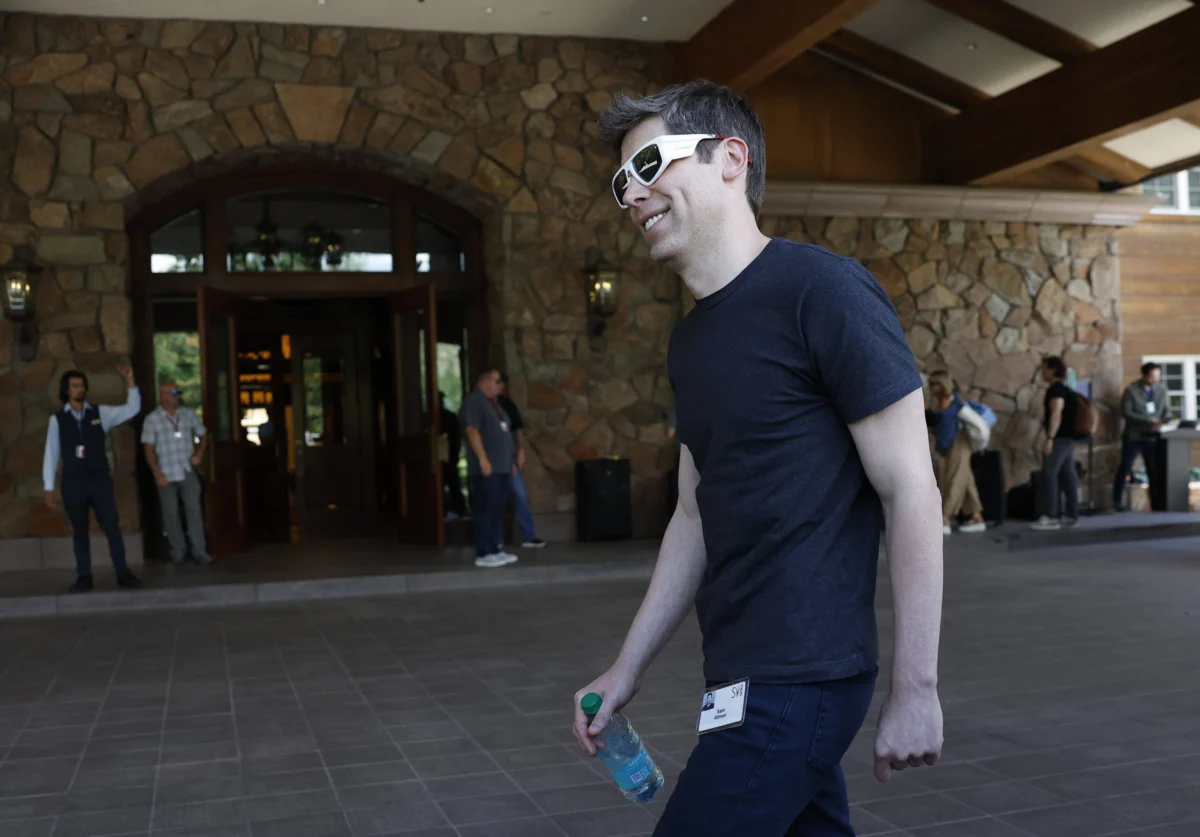
At a vibrant event held at The Midway, a trendy venue near the San Francisco pier, Sam Altman’s identity verification project, World, heralded a significant evolution in its strategy and a rapid expansion of its global ambitions. The centerpiece of this announcement was the integration of its unique "proof of human" technology into a broad spectrum of digital services, notably commencing with the popular dating application, Tinder. Tools for Humanity (TFH), the company spearheading the World project, formally unveiled plans to embed its verification technology across dating platforms, event and concert ticketing systems, business organizations, email, and various other crucial facets of public and private digital life. This strategic pivot underscores a growing urgency to authenticate human presence in an increasingly AI-saturated digital environment, a concern articulated by Altman himself.
The Genesis of a "Proof of Humanity" System
The impetus behind World, initially known as Worldcoin, stems from a fundamental challenge posed by the accelerating capabilities of artificial intelligence. Sam Altman, co-founder of World and CEO of OpenAI, has consistently voiced concerns about the societal implications of powerful AI. Speaking to a packed audience, Altman emphasized, "The world is getting close to very powerful AI, and this is doing a lot of wonderful things. We are also heading to a world now where there’s going to be more stuff generated by AI than by humans." This reality, he noted, leads to growing uncertainty: "I’m sure many of you [have had moments] where you’re like, ‘Am I interacting with an AI or a person, or how much of each, and how do I know?’" This existential query forms the bedrock of World’s mission: to provide a robust, privacy-preserving method for proving that an online entity is indeed a real, living human.
Founded in 2019 by Sam Altman, Alex Blania, and Max Novendstern, the World project (then Worldcoin) initially garnered attention for its ambitious goal of distributing a new cryptocurrency, Worldcoin (WLD), to every human on Earth, predicated on biometric verification. The core of its verification process has always been the "Orb," a bespoke spherical device designed to scan a user’s iris, converting it into a unique, anonymous cryptographic identifier known as a World ID. This ID, crucially, does not store personal biometric data but rather a hash of it, leveraging complex cryptographic techniques like zero-knowledge proof-based authentication. This approach aims to verify humanity while maintaining individual anonymity, a delicate balance that has been central to the project’s design and a point of considerable public and regulatory discussion since its inception. The initial rollout of Orbs in various locations globally, often paired with crypto incentives, sparked debates around privacy, data sovereignty, and the ethics of biometric data collection, even as the company stressed its privacy-preserving architecture.
A Strategic Leap into Everyday Digital Life: Tinder, Concerts, and Beyond
The recent San Francisco event marked a significant expansion beyond its foundational crypto distribution model, focusing instead on the utility of World ID as a digital identity layer. While TFH co-founder and CEO Alex Blania was absent due to a last-minute hand surgery, Altman delivered brief remarks before handing the presentation over to World’s Chief Product Officer, Tiago Sada, and his team, who unveiled the newest version of the World app and a suite of new integrations.
The most prominent integration announced was with Tinder, the globally dominant dating application. Following a successful pilot program launched last year in Japan, Tinder is now set to roll out World ID verification in global markets, including the crucial U.S. market. This integration allows users who have undergone World’s verification process to display a World ID emblem on their profiles, signaling their authenticity as a real person. The implications for online dating are substantial; the perennial problems of catfishing, fake profiles, and scams, often perpetrated by bots or malicious actors, cost users billions annually and erode trust. By offering a "proof of human" badge, World ID aims to enhance safety, foster genuine connections, and improve the overall user experience on dating platforms. This move is particularly relevant given statistics indicating that online romance scams surged by over 80% in recent years, highlighting a critical need for robust identity verification in this space.
Beyond dating, World is actively courting the entertainment industry with its new "Concert Kit" feature. This initiative allows musical artists and event organizers to reserve a specific number of concert tickets exclusively for World ID-verified humans. The primary objective is to combat the pervasive issue of ticket scalping, where automated bots often snatch up large quantities of tickets, driving up prices and frustrating genuine fans. Concert Kit is designed for compatibility with major ticketing systems, including industry giants like Ticketmaster and Eventbrite. To kickstart this, World has secured partnerships with high-profile artists such as 30 Seconds to Mars and Bruno Mars, both of whom plan to utilize the system for their upcoming tours. This addresses a long-standing grievance for fans and artists alike, with the secondary ticket market often seeing markups of 300% or more, largely due to bot interference.

The event also highlighted several new integrations aimed at the business sector. A partnership with Zoom will introduce World ID verification into video calls, seeking to combat the nascent but growing threat of deepfakes and AI-generated impersonations in professional communications. Similarly, a Docusign integration is designed to ensure that digital signatures originate from authentic human users, bolstering the security and legal validity of online agreements. These business-focused applications underscore the widespread need for reliable human authentication in an era where digital impersonation is becoming increasingly sophisticated.
Navigating the Agentic Web: Verifying Human-AI Interactions
Looking ahead to the "Wild West" of the agentic web—a future where AI agents routinely perform tasks on behalf of humans—World is proactively developing features to manage this complex interplay. One such innovation is "agent delegation," which enables a person to securely delegate their World ID to an AI agent, allowing it to carry out online activities on their behalf while maintaining a traceable link to the human principal. This system aims to create a framework where the actions of AI agents can be authenticated as genuinely representing a human’s intent.
Further solidifying this vision, World has partnered with authentication firm Okta to develop a system, currently in beta and dubbed HumanPrincipal.ai. This system is designed to verify that an agent is indeed acting on behalf of a human. As Gareth Davies, Okta’s chief product officer, explained at the event, the setup ties a World ID to a specific agent. When that agent then operates on the web for its human principal, websites and services will be able to recognize that a verified person is behind the agent’s behavior. This represents a crucial step in establishing trust and accountability in an increasingly automated online landscape, preventing malicious agents or unverified AI from operating anonymously. The rise of sophisticated AI chatbots and autonomous agents necessitates such a system to maintain order and security in digital interactions.
Overcoming Scaling Hurdles: A Multi-Tiered Verification Approach
One of World’s most significant challenges since its inception has been scaling its user base. For much of the project’s history, achieving the "gold standard" of World ID verification required users to physically visit one of its designated offices or locations to have their eyeballs scanned by an Orb. This process, while secure, was often described as inconvenient, if not outright "weird," by potential users, significantly hindering mass adoption. Forrester Research has previously highlighted these logistical hurdles as major headwinds for Worldcoin’s mass market penetration.
In response, World has continually innovated to make verification more accessible and incentivized. Earlier efforts included offering its Worldcoin crypto asset to early adopters and strategically placing Orbs in high-traffic retail chains, allowing users to verify themselves while performing everyday tasks like shopping or getting coffee. Building on these efforts, the company announced a significant expansion of Orb saturation in key metropolitan areas, including New York, Los Angeles, and San Francisco. Furthermore, World promoted a new concierge-style service where interested users could request an Orb to be brought directly to their location for remote verification, significantly reducing the friction of the process.
Beyond physical Orb expansion, World has also introduced a multi-tiered verification system to cater to varying levels of security needs and user convenience. As Tiago Sada explained in a conversation with TechCrunch, the highest tier remains the full Orb verification, offering the most robust "proof of human." Below this, World had previously introduced a mid-level tier, which utilizes an anonymized scan of an official government ID via its NFC chip, offering a strong, verifiable identity without the need for biometric data.
The latest addition to this tiered system is a low-level, "low friction" option called "Selfie Check." This tier, as the name suggests, involves merely taking a selfie for verification. While offering maximum convenience, Sada candidly acknowledged its "low security" nature. Daniel Shorr, a TFH executive, highlighted that "Selfie is private by design," emphasizing that the system maximizes local processing on the user’s device, ensuring that "your images are yours" and minimizing data transfer. However, Sada also conceded the inherent limitations of selfie verification, a method that fraudsters have long managed to spoof. "Obviously, we do our best, and it’s like one of the best systems that you’ll see for this. But it has limits," he stated. This tiered approach empowers developers integrating World’s services to select the appropriate level of security for their specific application, balancing user convenience with the integrity of verification.

The Technological Backbone: Zero-Knowledge Proofs and Anonymity
At the heart of World’s claim to privacy-preserving identity verification lies its sophisticated use of zero-knowledge proofs (ZKPs). This cryptographic technique allows one party (the prover) to prove to another party (the verifier) that a statement is true, without revealing any information beyond the validity of the statement itself. In the context of World ID, this means a user can prove they are a unique human, verified by an Orb, without revealing their actual identity, specific biometric data, or any other personal information to the application or service they are interacting with.
When a user’s iris is scanned by the Orb, a unique numerical code is generated, representing their "World ID." This code is a hash, a one-way cryptographic function, meaning the original iris image cannot be reconstructed from it. This hash is then used to generate a ZKP, which attests to the user’s uniqueness and humanity. The World ID is not linked to an individual’s name, email, or other personally identifiable information (PII) within World’s system, upholding its commitment to anonymity. This is a critical distinction from traditional identity systems that often centralize vast amounts of personal data, making them targets for breaches and surveillance. The World ID functions as a digital passport for humanity, allowing individuals to assert their unique human identity online without compromising their privacy, a design choice crucial in a world increasingly wary of digital surveillance and data exploitation.
Broader Implications and the Future of Digital Identity
World’s ambitious expansion and multi-tiered approach signal a pivotal moment in the quest for a reliable digital identity in the age of AI. If successful, World ID could establish a foundational "human layer" for the internet, fundamentally reshaping how individuals interact with digital services, from social media to financial transactions. The implications are vast: a reduction in online fraud, a safer environment for social interaction, fairer access to resources (like event tickets), and a clearer distinction between human and AI-generated content.
However, the path to widespread adoption is fraught with challenges. Regulatory scrutiny, particularly concerning biometric data collection, remains a significant hurdle in many jurisdictions. Public acceptance, which hinges on trust in the privacy and security of the system, will also be critical. Despite the technological assurances of anonymity and zero-knowledge proofs, the concept of iris scanning for a universal ID can still evoke apprehension among some users. Competing identity solutions, both centralized and decentralized, also vie for market share, creating a dynamic and complex landscape.
The ethical considerations surrounding any universal digital identity system are profound. While World emphasizes privacy by design and user control, the power inherent in such a system necessitates ongoing transparency, robust security measures, and democratic governance. The balance between combating AI-driven threats and safeguarding individual freedoms and privacy will be a continuous tightrope walk for World and similar initiatives.
Concluding Thoughts: A Bold Step in the Age of AI
Sam Altman’s World project, through its latest announcements, is taking a bold and expansive step towards addressing one of the most pressing challenges of the AI era: proving human identity in a digital world increasingly populated by sophisticated artificial intelligence. By integrating its "proof of human" technology into everyday applications like Tinder and crucial services like ticketing and business communications, World aims to embed a layer of authenticated humanity across the internet. The introduction of tiered verification, from the high-security Orb to the convenient Selfie Check, demonstrates a pragmatic approach to balancing security with user accessibility, acknowledging the diverse needs of the digital ecosystem. As the line between human and AI blurs, World’s vision of a verified human layer represents a significant effort to maintain trust, security, and integrity in our increasingly complex digital lives. The coming years will reveal whether this ambitious project can overcome its scaling challenges and societal skepticism to become the universal digital identity solution it aspires to be.