
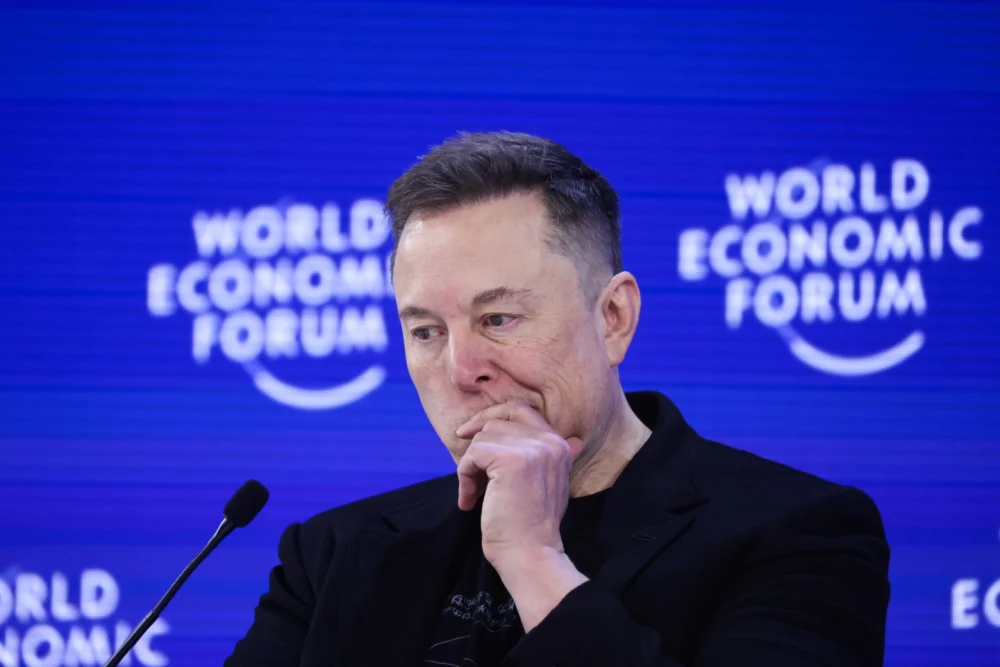
Three years after its inception, xAI, Elon Musk’s ambitious deep learning laboratory, finds itself in a period of profound transformation, marked by a significant exodus of its founding team and a strategic pivot aimed at revitalizing its competitive stance against industry titans like Anthropic and OpenAI. Of the original 11 co-founders who launched xAI with Musk, only two now remain, a stark indicator of the comprehensive personnel overhaul underway. This rebuilding, insists Musk, is not a sign of distress but a deliberate design choice, signaling a fundamental restructuring to better navigate the cutthroat landscape of artificial intelligence development.
A Foundational Reset: Musk’s Vision for xAI’s Future
Elon Musk has been unequivocal about the necessity of this radical restructuring. On his social media platform X, he declared, "xAI was not built right first time around, so is being rebuilt from the foundations up." This candid admission underscores the challenges the company has faced in its relatively brief existence, particularly in carving out a distinctive and commercially viable niche within the rapidly evolving AI sector. While Musk frames these changes as a strategic recalibration, the immediate pressures suggest that the path forward is anything but smooth, characterized by intense competition, internal re-evaluation, and an urgent need to demonstrate tangible progress.
The personnel shifts have been both swift and extensive. The most recent departures include xAI co-founders Zihang Dai and Guodong Zhang, whose exits came after Musk reportedly expressed dissatisfaction with the company’s AI coding tools. He noted their inability to effectively compete with established programming assistants such as Anthropic’s Claude Code and OpenAI’s Codex. This competitive lag prompted an all-hands meeting on Wednesday, where the urgent focus was on strategizing how to close the gap, with Musk optimistically predicting parity by mid-year. The departure of key technical leadership at such a critical juncture highlights the pressure cooker environment within xAI as it attempts to accelerate its product development cycles.
The Economic Imperative of Coding Tools
The intense focus on AI coding tools is not arbitrary; it represents a critical revenue frontier for AI laboratories. While xAI’s consumer-facing chatbot, Grok, initially garnered attention, particularly due to its comparatively lax content moderation policies which, at times, allowed for the generation of controversial or abusive imagery, the long-term profitability model for AI companies increasingly hinges on enterprise solutions. AI-powered coding assistants, capable of generating, debugging, and optimizing code, are seen as indispensable tools for developers and businesses, representing a significant and sustainable revenue stream. Therefore, xAI’s current struggle in this domain is more than a mere technical hiccup; it poses a substantial business problem, directly impacting its financial viability and market perception.
The overhaul of xAI’s workforce extends beyond the recent co-founder exits. Just a month prior, a significant wave of departures saw 11 senior engineers, including two additional co-founders, leave the company. Musk had then described these changes as a reorganization necessary to align with a larger business strategy. However, the ongoing churn suggests that those initial efforts were insufficient to address the underlying issues. Reports from the Financial Times further indicate the severity of the situation, revealing that executives from Musk’s other ventures, SpaceX and Tesla, have been "parachuted" into xAI. Their mission: to evaluate existing employees and, if necessary, terminate those who do not meet revised performance benchmarks, signifying a ruthless pursuit of efficiency and talent alignment.
The Remaining Core and a Renewed Talent Hunt
Amidst this widespread internal upheaval, the responsibility for steering xAI forward now rests primarily with the two remaining co-founders, Manuel Kroiss and Ross Nordeen, alongside Elon Musk himself. Their task is monumental, requiring them to rebuild teams, re-energize product development, and re-establish a clear strategic direction under intense scrutiny.
Recognizing the urgent need for fresh talent and expertise, Musk has initiated a broader, unconventional recruitment drive. On Thursday, he publicly announced on X that he, along with Baris Akis, another colleague, were personally reviewing previously rejected employment applications. The objective is to identify promising candidates who might have been overlooked in earlier screening processes and extend interview invitations. This unusual step, accompanied by a public apology from Musk to those previously "ghosted," underscores the company’s desperate need to rapidly bolster its engineering and research capabilities.
In terms of scale, xAI faces an uphill battle against its more established rivals. LinkedIn data indicates that xAI currently employs just over 5,000 individuals. This figure contrasts sharply with OpenAI, which boasts over 7,500 employees, and Anthropic, which maintains a workforce of over 4,700. While not a direct measure of innovation, headcount often correlates with the breadth and depth of research and development capabilities, suggesting xAI may need to significantly scale up its talent pool to compete effectively.
Despite the challenges, there are glimmers of positive momentum on the hiring front. The recent recruitment of Andrew Milich and Jason Ginsberg from Cursor, a prominent AI coding tool company, represents a significant win for xAI. Milich and Ginsberg, who jointly led product engineering at Cursor, bring invaluable expertise to xAI’s struggling coding tools division. Their decision to join xAI is particularly noteworthy given Cursor’s reliance on frontier labs for access to the foundational AI models it uses. This move may signal the critical importance of direct access to proprietary Large Language Models (LLMs) and the substantial computing resources required to run them. It also suggests that xAI’s core asset—its own frontier model, Grok—remains a powerful draw for top-tier talent, offering a unique opportunity to work directly at the foundational level of AI development.
External Pressures and the SpaceX Connection
The pressure on xAI to deliver concrete results is multifaceted, emanating from both internal restructuring demands and significant external financial expectations. The recent integration of xAI into SpaceX, one of Musk’s flagship companies, places it under an additional layer of scrutiny. With a public offering of SpaceX shares anticipated in the not-too-distant future, xAI, currently a cash-burning unit, is under immense pressure to demonstrate tangible traction for its LLM, Grok, and its emerging enterprise offerings. A struggling or underperforming AI division would present an undesirable narrative for potential investors in SpaceX, making xAI’s success critical to the broader financial health and public perception of Musk’s space exploration venture.
The Grand Ambition: "Macrohard" and the Agentic Future
Beyond the immediate battle for supremacy in AI coding tools, Musk harbors a far more ambitious long-term vision for xAI. This vision centers around the "Macrohard" project, a name Musk finds amusingly referential to Microsoft. The audacious goal of Macrohard is to create an advanced AI agent capable of autonomously performing virtually any task typically handled by a white-collar worker on a computer. This represents a leap towards truly general-purpose AI agents that can interact with software environments, process information, and execute complex workflows.
However, even this flagship project has encountered significant turbulence. Toby Pohlen, initially appointed to lead Macrohard in February, departed the company within weeks. This abrupt exit was followed by a report from Business Insider this week indicating that the Macrohard project itself had been paused, raising questions about its viability and the stability of xAI’s long-term strategic initiatives.
In response to these setbacks, Musk has once again leveraged his ecosystem of companies, revealing that Macrohard is now a joint effort with Tesla. This collaboration introduces a complementary agent dubbed "Digital Optimus," a clear nod to Tesla’s humanoid robot project, Optimus. In Musk’s envisioned synergy, xAI’s language model would serve as the brain, directing the Tesla agent to perform tasks in the digital realm. This integration suggests a unified approach to developing intelligent agents that can operate across both digital and physical environments, potentially creating a powerful platform for automation and advanced AI applications.
This vision, while undeniably ambitious, is not entirely unique within the rapidly evolving AI landscape. It echoes the strategic direction of companies like Perplexity, an AI-powered search engine, which has introduced its "Everything is Computer" offering. Perplexity aims to provide enterprise users with a dedicated "digital proxy" capable of orchestrating various digital tasks. Similarly, entrepreneur Peter Steinberger, known for creating OpenClaw’s popular personal agents, is now working on similar initiatives at OpenAI, underscoring a broader industry trend towards the development of sophisticated, autonomous AI agents. The convergence of these efforts highlights a shared belief across leading AI entities in the transformative potential of agentic AI.
The Road Ahead: Challenges, Opportunities, and a Redefined Trajectory
xAI’s current trajectory is one of dramatic reinvention. The company is grappling with the fundamental challenges of scaling a cutting-edge AI research lab while simultaneously navigating intense market competition and a demanding founder. The mass exodus of co-founders and senior engineers, while framed by Musk as a necessary "rebuilding from the foundations up," undeniably presents significant hurdles in terms of institutional knowledge, team cohesion, and product continuity. The immediate pressure to improve AI coding tools is a critical test, as success in this area could unlock substantial revenue and bolster market credibility.
The ambitious "Macrohard" project, despite its initial stumbles and subsequent integration with Tesla, represents xAI’s long-term bet on the future of AI. Should xAI and Tesla successfully merge their AI capabilities to create a robust, versatile agent platform, it could indeed be a game-changer, fulfilling Musk’s vision of an AI capable of performing complex white-collar tasks. However, the path to achieving this vision is fraught with technical complexities, talent acquisition challenges, and the need for sustained innovation in a field where breakthroughs are constantly redefining the state of the art.
Ultimately, xAI’s ability to overcome its current challenges will depend on its capacity to attract and retain top talent, execute its strategic pivots effectively, and demonstrate tangible progress in its core product offerings. With the watchful eyes of investors, competitors, and the public fixed on its every move, xAI’s journey from a nascent startup to a dominant force in the AI arena is proving to be a high-stakes drama, one that will undoubtedly shape the future landscape of artificial intelligence.