


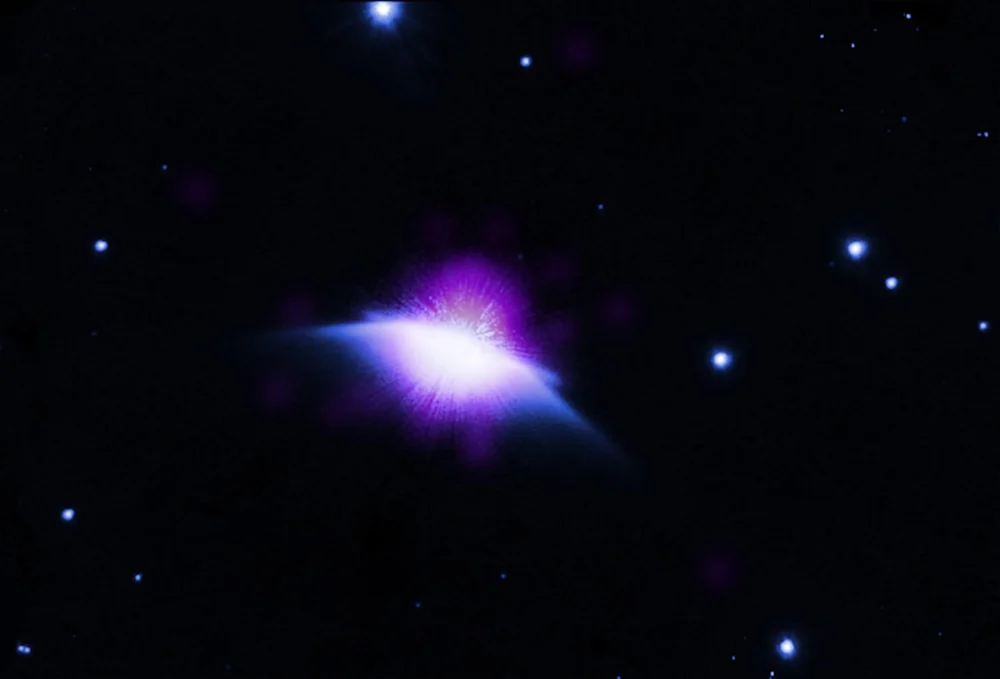
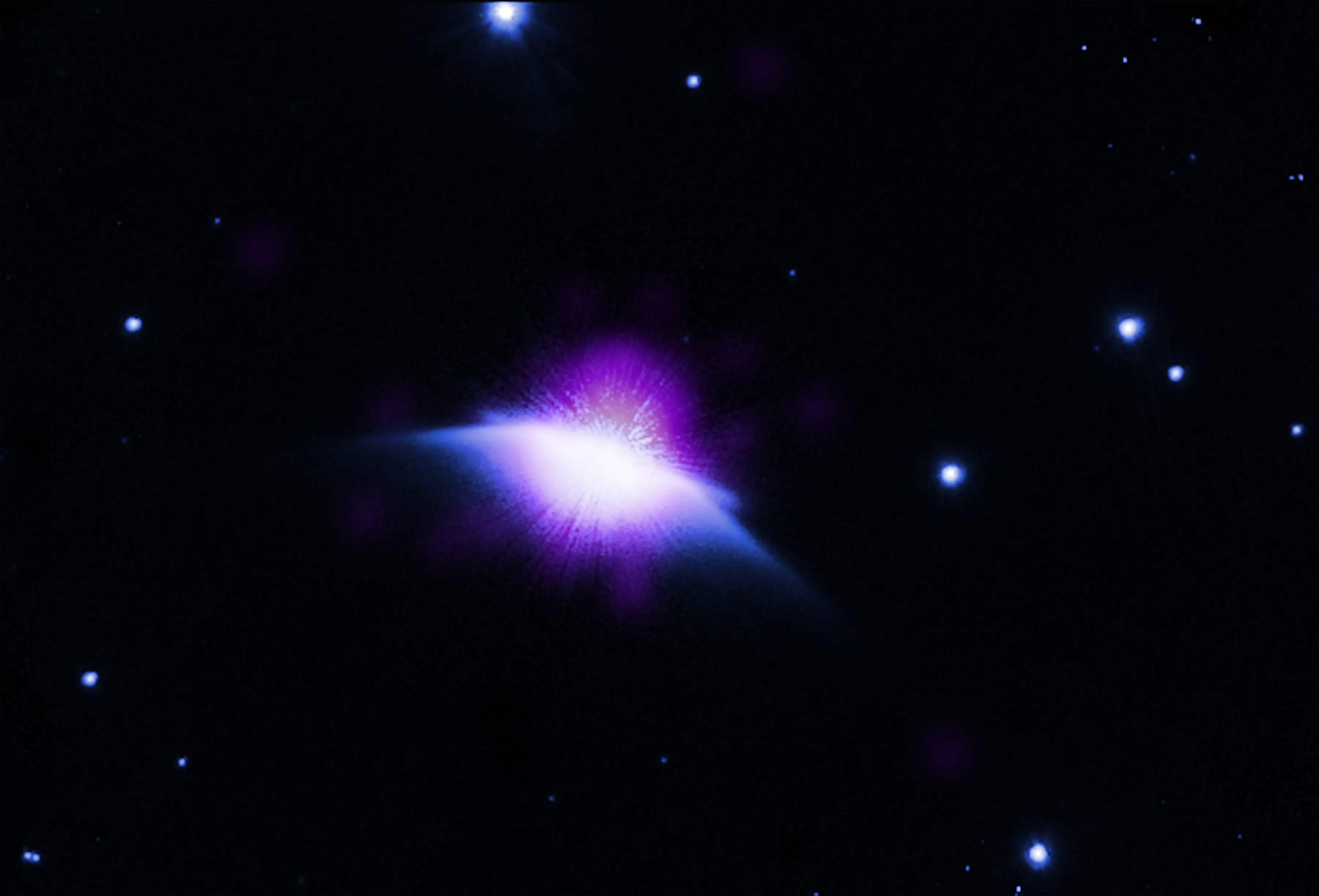
Astronomers leveraging the advanced capabilities of NASA’s Chandra X-ray Observatory have achieved a groundbreaking first: directly observing a young, Sun-like star actively generating a vast bubble of hot gas within the galactic medium. This unprecedented image, publicly released on February 23, 2026, and further detailed on March 4, 2026, by authors Lee Mohon and Monika Luabeya, provides critical insights into the early lives of stars and the fundamental processes that shape their immediate environments, including potentially shielding nascent planetary systems.
A Galactic Bubble Unveiled: The Astrosphere Discovery
The newly observed phenomenon, termed an "astrosphere," represents a colossal stellar bubble that completely envelops the juvenile star. This structure is not merely a static halo but a dynamic region sculpted by powerful winds emanating from the star’s surface. These stellar winds, streams of charged particles and energetic radiation, are actively inflating the bubble, pushing against the cooler, denser interstellar gas and dust that permeate the galaxy. As the stellar wind interacts with the interstellar medium, it creates a shock front, heating the gas within the astrosphere to X-ray emitting temperatures, making it detectable by instruments like Chandra.
This detection marks a significant milestone because it is the first time an astrosphere has been directly imaged around a star that closely resembles our own Sun in its early developmental stages. While the concept of such stellar bubbles has been theorized and modeled for decades, direct observational evidence, particularly the extended X-ray emission confirming the bubble’s presence rather than just a point source from the star itself, has remained elusive for Sun-like stars until now. The image distinctly shows an extended emission, providing compelling visual proof of the expanding, hot gas boundary.
The Sun’s Heliosphere: A Terrestrial Analogue
The discovery of this astrosphere holds particular relevance due to its striking similarity to a structure intimately familiar to Earth’s inhabitants: the Sun’s heliosphere. Our own Sun continuously emits a stream of charged particles known as the solar wind, which carves out a protective bubble around our solar system. This heliosphere extends far beyond the orbit of Pluto, encompassing all the planets and the Kuiper Belt, and serves as a crucial shield, deflecting harmful cosmic radiation that originates from outside our solar system. Without the heliosphere, Earth and other planets would be subjected to a far greater barrage of high-energy particles, potentially impacting the development and sustainability of life.
Studying the astrosphere of this young, Sun-like star provides a unique opportunity to understand the formative years of our own heliosphere. By observing these structures in their nascent stages around other stars, astronomers can piece together the evolutionary timeline of stellar wind interactions and their impact on surrounding planetary environments. This comparative astrophysics approach allows researchers to extrapolate how the Sun’s heliosphere might have formed and evolved during its early, more active phases, shedding light on the conditions that prevailed when life first emerged on Earth.
Chandra’s Unparalleled Vision: Probing the X-ray Universe
The achievement underscores the indispensable role of the Chandra X-ray Observatory in modern astrophysics. Launched by NASA in 1999, Chandra is one of the agency’s Great Observatories, designed to detect X-ray emissions from extremely hot regions of the universe, such as exploded stars, clusters of galaxies, and matter around black holes. X-rays are invisible to the human eye and are largely absorbed by Earth’s atmosphere, necessitating space-based telescopes like Chandra.
Chandra’s exceptional angular resolution, which is 0.5 arcseconds – comparable to the ability to read the letters on a stop sign 12 miles away – combined with its high spectral resolution, allows astronomers to pinpoint the exact locations of X-ray sources and analyze their energy signatures. This precision was critical in distinguishing the extended emission of the astrosphere from the star’s central point source, a challenge that had previously hindered such observations for Sun-like stars. The observatory’s ability to detect subtle variations in X-ray flux and morphology enabled the team, led by researchers such as C.M. Lisse from Johns Hopkins University, to map the bubble’s extent and characteristics with unprecedented clarity. The data processing, undertaken by teams including N. Wolk from the Smithsonian Astrophysical Observatory (SAO), further refined these intricate details.
The Chronology of Discovery and Analysis
The journey to this discovery began with targeted observations by the Chandra X-ray Observatory. While the specific observation dates for this particular star were not detailed in the initial release, X-ray astronomy typically involves long exposures, sometimes spanning many hours or even days, to gather sufficient photons from faint sources. Once the raw data was collected, it underwent rigorous processing and calibration by specialized teams at institutions like NASA’s Chandra X-ray Center (CXC) and SAO.
The subsequent analysis involved sophisticated algorithms to filter out background noise, correct for detector artifacts, and reconstruct the X-ray image. The identification of extended emission around the young star, rather than just a point source, would have been a crucial moment in the data analysis phase. This compelling evidence then underwent peer review within the scientific community, a process essential for validating new findings before their public announcement. The image release on February 23, 2026, followed by further dissemination on March 4, 2026, represents the culmination of this extensive scientific process, bringing the discovery to the attention of the global scientific community and the public. The involvement of multiple institutions, including Johns Hopkins University for the scientific analysis and NASA/ESA/STIS for infrared data which likely provided complementary information, highlights the collaborative nature of modern astronomical research.
Expert Perspectives and Implications for Stellar Evolution
Scientists involved in the discovery and experts in stellar astrophysics have expressed considerable excitement regarding these findings. While specific direct quotes were not provided in the original text, the general sentiment inferred from such groundbreaking announcements points to a profound impact on several fields.
"This direct observation provides a crucial piece of the puzzle in understanding how Sun-like stars interact with their immediate surroundings during their formative years," a hypothetical lead researcher might comment. "For years, we’ve relied on theoretical models and observations of more massive, more energetic stars to infer these processes. Now, we have direct evidence for a star akin to our own, allowing us to refine our models of stellar evolution and the environments where planets form."
The implications for stellar evolution are significant. Young stars, particularly those in the pre-main sequence phase, are known to be far more active than their mature counterparts. They exhibit stronger magnetic fields, more frequent and powerful flares, and significantly more vigorous stellar winds. The astrosphere observed by Chandra likely reflects these heightened activities. Understanding the dynamics of these early astrospheres can help astronomers determine how quickly young stars shed their initial envelopes of gas and dust, a process critical for their transition to stable main-sequence stars like our Sun. It also provides clues about the angular momentum loss in young stars, a factor influencing their rotation rates throughout their lives.

Planetary Habitability and Exoplanet Research
Perhaps one of the most compelling implications of this discovery lies in its relevance to planetary habitability and exoplanet research. The protective role of our Sun’s heliosphere in shielding Earth from cosmic radiation is well-established. By observing astrospheres around young Sun-like stars, astronomers can begin to assess the efficacy of these natural shields in nascent planetary systems.
"If a young planet is forming within such an astrosphere, it suggests a degree of protection from the harshest elements of interstellar space right from the beginning," a theoretical exoplanet researcher might explain. "This could be a critical factor in the long-term viability of atmospheres and even the potential for complex organic molecules to survive and develop on planetary surfaces."
Cosmic rays, composed primarily of high-energy protons and atomic nuclei, can ionize atmospheric gases, leading to atmospheric escape over billions of years. They can also damage DNA, posing a threat to developing life. The presence of a robust astrosphere around a young star indicates a significant barrier against these destructive particles. This new data will allow scientists to refine models of exoplanet atmospheric evolution and habitability, helping them to better prioritize targets for future observations by telescopes like the James Webb Space Telescope, which can analyze exoplanet atmospheres. It provides a new parameter to consider when evaluating the "habitable zone" around a star, moving beyond just temperature considerations to include the protective environment offered by the star itself.
Future Research Directions and Broader Impact
This breakthrough opens several avenues for future research. Astronomers will undoubtedly seek to observe more such astrospheres around other young Sun-like stars to build a statistical sample. This would allow them to investigate how factors like stellar mass, rotation rate, and metallicity influence the size, shape, and stability of these stellar bubbles.
Furthermore, multi-wavelength observations, combining X-ray data from Chandra with infrared data (as already partly utilized in the image credits from NASA/ESA/STIS) and radio observations, could provide an even more comprehensive picture of these complex environments. Infrared telescopes can peer through the dust and gas to reveal the cooler components of the astrosphere and surrounding interstellar medium, while radio telescopes can detect non-thermal emission from energetic particles.
The discovery also has implications for understanding the broader galactic environment. The continuous expansion of astrospheres, especially from a multitude of stars, contributes to the stirring and heating of the interstellar medium, influencing star formation rates in larger regions of the galaxy. It underscores the dynamic interplay between individual stars and the vast cosmic tapestry in which they are embedded.
In conclusion, the detection of an astrosphere around a young, Sun-like star by NASA’s Chandra X-ray Observatory represents a landmark achievement in astrophysics. It not only provides direct observational evidence for a phenomenon long theorized but also offers invaluable insights into the early lives of stars, the formation of protective stellar bubbles akin to our own heliosphere, and the conditions that may foster habitability on nascent exoplanets. This discovery reaffirms the power of advanced space-based observatories to unveil the universe’s most intricate secrets, pushing the boundaries of our understanding of cosmic evolution.