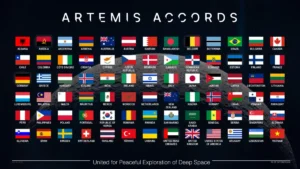



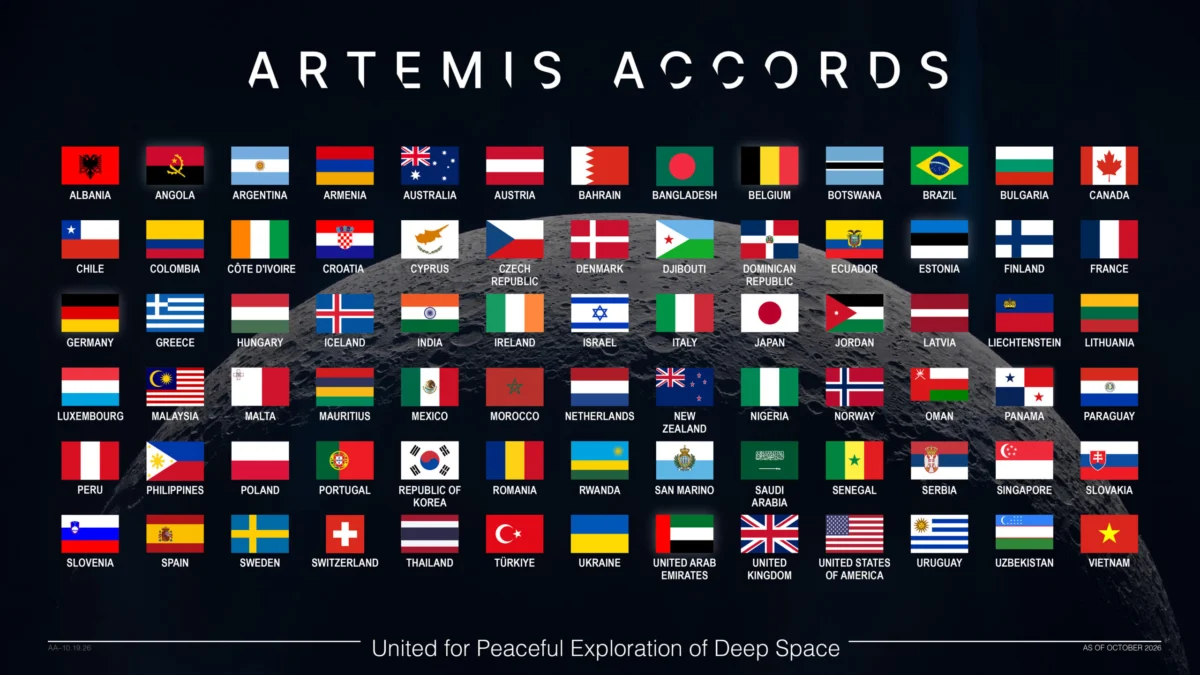
The Socialist Republic of Vietnam has officially become the 78th nation to endorse the Artemis Accords, marking a pivotal moment that extends its burgeoning Comprehensive Strategic Partnership with the United States into the critical domain of space exploration. This adherence signifies Vietnam’s commitment to a framework promoting the peaceful, transparent, and responsible utilization of outer space, aligning with a rapidly expanding global coalition dedicated to establishing clear norms for lunar, Martian, and beyond exploration. The signing ceremony, held during the Vietnam International Digital Week in Ha Long, underscored Vietnam’s growing ambition in space and its strategic alignment with international partners for a sustainable future in the cosmos.
The Artemis Accords: A Blueprint for Collaborative Space Exploration
Established in 2020 by the United States through NASA and the State Department, alongside seven other founding nations, the Artemis Accords emerged as a critical response to the accelerating interest in lunar activities by both governmental and private entities. This non-binding multilateral agreement serves to operationalize key principles of the 1967 Outer Space Treaty, providing a practical framework for nations engaged in civil space exploration. Its core tenets are designed to enhance safety, transparency, and coordination, ensuring that the exploration of the Moon, Mars, and other celestial bodies benefits all humanity and avoids potential conflicts.
The ten foundational principles of the Artemis Accords include: exploring peaceably; transparency of activities; interoperability of systems; rendering assistance to astronauts in distress; registration of space objects; release of scientific data; protecting heritage sites; responsible utilization of space resources; deconfliction of activities; and mitigation of orbital debris. These principles are not merely aspirational but aim to foster a stable and predictable environment for the next era of human expansion into space. The growing number of signatories, which now includes major spacefaring nations like Japan, Canada, the United Kingdom, Australia, Italy, Brazil, India, South Korea, and emerging players like Vietnam, reflects a broad international consensus on the need for common standards in an increasingly complex and competitive space environment.
Vietnam’s Ambitious Trajectory in Space Development
Vietnam’s decision to join the Artemis Accords comes at a significant juncture for its nascent yet rapidly developing national space program. For over two decades, Vietnam has steadily built its capabilities, recognizing space technology as a crucial enabler for socio-economic development, environmental protection, and national security. The country’s journey into space began in earnest with the launch of its first satellite, VNREDSat-1, an Earth observation satellite, in 2013, followed by the establishment of the Vietnam National Space Center (VNSC) in Hanoi. The VNSC, inaugurated earlier this year, serves as the cornerstone of Vietnam’s space ambitions, focusing on research, development, and application of satellite technology.
A flagship initiative within this program is the LOTUSat project, which aims to develop and launch a constellation of domestically built radar Earth observation satellites. These satellites are designed to provide high-resolution imagery regardless of weather conditions, offering invaluable data for critical applications such as natural disaster monitoring and response, climate change adaptation, agricultural management, and coastal surveillance. The LOTUSat program is a testament to Vietnam’s commitment to achieving greater self-reliance in space technology and leveraging it for tangible national benefits.
Beyond satellite development, Vietnam has also invested in cultivating a skilled workforce and fostering international collaboration. NASA Deputy Administrator Matt Anderson, in recorded remarks for the signing ceremony, highlighted the existing momentum between NASA and the VNSC in areas such as satellite innovation, land-use research, and radar-based Earth observation. This collaboration extends to academic partnerships, exemplified by NASA’s earlier partnership with Vietnam’s Vietnamese-German University to support the agency’s Soil Moisture Active Passive (SMAP) mission, which measures surface-soil water worldwide. These initiatives collectively demonstrate Vietnam’s pragmatic approach to space development, combining domestic capacity building with strategic international engagement.
Deepening the U.S.-Vietnam Comprehensive Strategic Partnership
Vietnam’s entry into the Artemis Accords represents a profound extension of the U.S.-Vietnam Comprehensive Strategic Partnership, which was formally elevated in September 2023 during President Joe Biden’s visit to Hanoi. This partnership, built on more than three decades of cooperation since the normalization of diplomatic relations in 1995, has seen remarkable growth across diverse sectors. Initially focused on addressing war legacy issues and fostering economic ties, the relationship has broadened to encompass defense, law enforcement, education, climate change, and advanced technology. Bilateral trade, for instance, has surged from virtually nothing to over $138 billion in 2022, making Vietnam one of the fastest-growing trade partners for the U.S.
The elevation to a Comprehensive Strategic Partnership underscored a shared vision for peace, stability, and prosperity in a free and open Indo-Pacific. Integrating space cooperation into this framework introduces a new dimension of strategic alignment. As U.S. Ambassador to Vietnam Jennifer Wicks participated in the signing event, her presence symbolized the diplomatic significance the United States places on Vietnam’s participation and the broader implications for regional security and technological advancement. This move not only enhances Vietnam’s access to cutting-edge space technology and expertise but also solidifies its position as a reliable partner in international efforts to establish responsible norms in the final frontier.
Official Perspectives and Anticipated Benefits
The official responses surrounding Vietnam’s accession to the Artemis Accords were overwhelmingly positive, reflecting the mutual benefits anticipated from this enhanced collaboration. NASA Deputy Administrator Matt Anderson emphasized the strategic timing of Vietnam’s involvement: "Vietnam is joining at an important point in the development of its own space program. NASA and the Vietnam National Space Center have built momentum in satellite innovation, land-use research, and radar-based Earth observation. Joining the Artemis Accords opens a new chapter in that relationship. We’ve aligned on the principles. The opportunities are in front of us, and now we can build on that foundation together. We are proud to welcome Vietnam to the Artemis Accords community."
From Vietnam’s perspective, the signing by Minister of Science and Technology Vũ Hải Quân on behalf of the country signifies a strong commitment to international cooperation and the peaceful use of outer space. While specific statements from Vietnamese officials were not detailed in the immediate aftermath, it can be inferred that this decision aligns with Vietnam’s national strategy to boost its scientific and technological capabilities, enhance its international standing, and contribute to global efforts to address challenges such as climate change and disaster management through space-based solutions. Access to the Artemis Accords framework is expected to facilitate knowledge transfer, joint research projects, and potentially even participation in future missions led by NASA and other signatory nations, providing an invaluable boost to Vietnam’s burgeoning space industry.
Broader Implications for Global Space Governance and Regional Dynamics
Vietnam’s accession to the Artemis Accords carries significant geopolitical and strategic implications, particularly within the dynamic Indo-Pacific region. As the 78th signatory, Vietnam contributes to the growing legitimacy and universality of the Accords, reinforcing a U.S.-led vision for space governance that prioritizes transparency, safety, and mutual respect. This is particularly relevant in an era where multiple nations and private entities are increasingly eyeing lunar resources and developing advanced space capabilities, raising concerns about potential competition and conflicts in cislunar space.
The Accords stand as a counterpoint to alternative models of space governance, often associated with nations that may not fully embrace the same level of transparency or commitment to international norms. By joining, Vietnam publicly aligns itself with a cooperative, rules-based approach to space exploration, which can help mitigate risks of miscalculation and promote stability. For the United States, Vietnam’s signing further strengthens its network of partners in the Indo-Pacific, a region critical to U.S. foreign policy and economic interests. It demonstrates the enduring appeal of collaborative frameworks that offer tangible benefits for emerging space nations.
Moreover, Vietnam’s enhanced space capabilities, nurtured through international partnerships and adherence to the Accords’ principles, will have practical applications for regional challenges. Improved Earth observation for disaster forecasting, maritime domain awareness, and environmental monitoring can contribute to the collective security and resilience of Southeast Asia. As more countries are expected to sign the Artemis Accords in the months and years ahead, Vietnam’s participation sets a precedent for other developing nations seeking to responsibly advance their space programs while contributing to a peaceful and prosperous future in space for all.
The commitment enshrined in the Artemis Accords to principles such as sharing scientific data and preserving historically significant sites ensures that the benefits of space exploration are broadly distributed, fostering a global scientific community. For Vietnam, this means its researchers and scientists will gain access to a wealth of data and collaborative opportunities, accelerating its own scientific endeavors and contributing to humanity’s collective understanding of the universe. The move represents not just a legal agreement but a strategic investment in Vietnam’s future, positioning it as a responsible and ambitious player in the global space arena.