

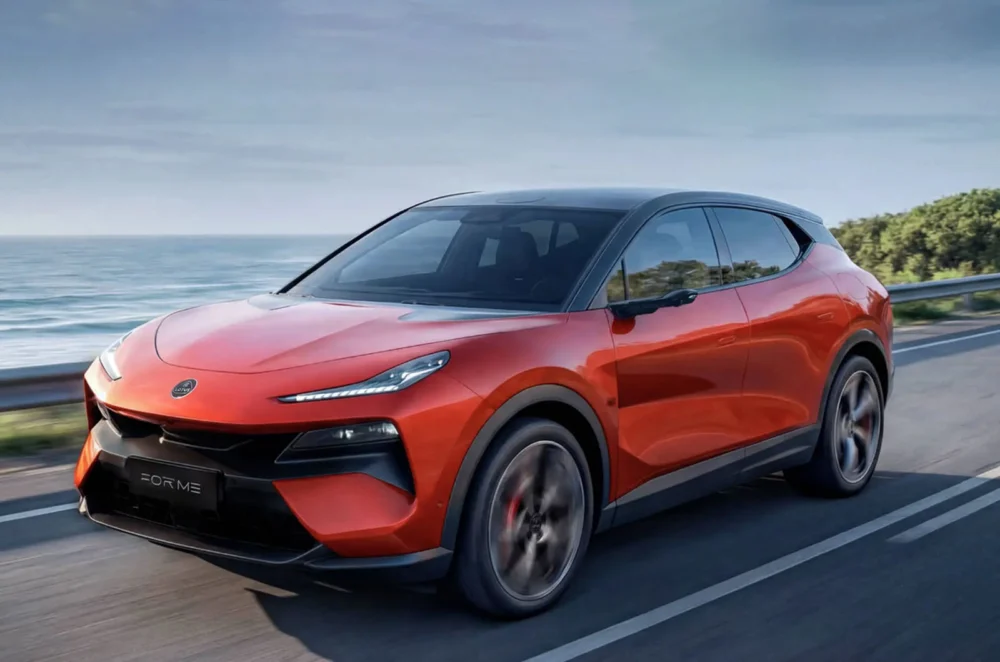
Lotus has officially signaled a major shift in its global product strategy by unveiling a plug-in hybrid (PHEV) version of its Eletre SUV, a move that reintroduces internal combustion power to the brand’s new-era lineup. Launched initially in the Chinese market under the name "For Me," the new model is scheduled to arrive in European showrooms by the summer of 2025. This development marks a significant departure from the company’s previous "Vision80" commitment, which had originally pledged to transition the marque into a purely electric vehicle (EV) manufacturer by 2028. The introduction of the hybrid powertrain reflects broader industry trends where luxury manufacturers are recalibrating their electrification timelines in response to cooling EV demand and regional infrastructure limitations.
A Strategic Pivot in the Geely Era
The decision to integrate a gasoline engine back into the Lotus portfolio is a calculated response to the commercial realities of the global luxury car market. Under the ownership of Geely Holding Group, Lotus had positioned itself as a vanguard of the high-performance electric revolution. However, sales of the all-electric Eletre SUV and the Emeya sedan have not met initial projections, prompting the company to adjust its course to protect its long-term financial viability.
During the launch event in China, Lotus CEO Feng Qingfeng was candid about the necessity of this pivot. He noted that while the transition to electric power remains a long-term goal, the immediate needs of customers in key markets—particularly in regions like Italy, the Middle East, and parts of the United States—require a more versatile solution. By offering a PHEV, Lotus aims to capture "EV-hesitant" wealthy buyers who desire the performance and prestige of a Lotus but remain concerned about charging infrastructure and long-distance touring capabilities.
The financial pressure on the brand is evident in its recent fiscal reporting. Lotus recorded an operating loss of $357 million (£267 million) for the first nine months of 2025. The high costs of developing bespoke electric platforms, coupled with the capital-intensive nature of global expansion, have made profitability a primary concern. The PHEV variant is expected to act as a high-margin volume driver, leveraging existing internal combustion technology from within the Geely ecosystem to reduce development overhead while maximizing market reach.
Powertrain Specifications and Performance Benchmarks
The Lotus Eletre PHEV is not merely an entry-level alternative to the battery-electric versions; it is positioned as a performance flagship. The powertrain utilizes what Lotus calls "X-hybrid" technology, a sophisticated system that pairs a 2.0-litre four-cylinder turbocharged petrol engine with two high-output permanent magnet synchronous motors—one situated on each axle.
The combined system output is a staggering 939 brake horsepower (bhp), which surpasses the 892bhp produced by the flagship all-electric Eletre R. This power allows the heavy SUV to sprint from 0 to 62 mph (100 km/h) in just 3.3 seconds. This performance data places the Eletre PHEV at the very top of the "super SUV" hierarchy, outmuscling several established rivals.
Key performance comparisons include:
- Lotus Eletre PHEV: 939 bhp | 0-62 mph in 3.3 seconds
- Lamborghini Urus SE (PHEV): 789 bhp | 0-62 mph in 3.4 seconds
- BMW XM Label Red: 748 bhp | 0-62 mph in 3.8 seconds
- Aston Martin DBX707: 707 bhp | 0-62 mph in 3.3 seconds
While the Eletre PHEV relies on a smaller battery than its 108kWh EV counterpart, its 70kWh pack is still substantial for a hybrid. According to China’s CLTC test cycle, the vehicle offers an electric-only range of approximately 220 miles. When the petrol engine and battery work in tandem, the total combined range is claimed to be 880 miles, effectively eliminating the range anxiety that has hindered the sales of the pure EV version in less developed charging markets.
Advanced Charging and Chassis Technology
One of the most innovative aspects of the Eletre PHEV is its "6C" fast-charging capability. In the world of battery technology, the "C-rate" refers to the speed at which a battery can be charged relative to its capacity. A 6C rating is exceptionally high for a production vehicle, allowing the 70kWh battery to charge from 30% to 80% in approximately eight minutes when connected to a compatible high-speed charger. This minimizes the downtime typically associated with plug-in vehicles and aligns the user experience more closely with traditional refueling.
To manage the significant weight of the vehicle—which ranges between 2,575kg and 2,625kg—Lotus has equipped the SUV with its 6D Digital Dynamic Chassis system. This suite of technologies includes an active 48V anti-roll bar system designed to counteract the lateral forces experienced during high-speed cornering. Lotus engineers have stated that the goal of this system is to eliminate the "boat-like" pitch and roll often associated with heavy luxury SUVs, ensuring that the Eletre maintains the "Lotus DNA" of precision handling despite its mass.
The weight of the PHEV version is notably similar to the pure EV version. This suggests that the weight saved by moving to a smaller battery pack was largely offset by the addition of the internal combustion engine, transmission components, and fuel tank.
Market Positioning and Competitive Landscape
Lotus is positioning the Eletre PHEV as a direct competitor to the most prestigious names in the automotive industry. CEO Feng Qingfeng explicitly referenced the Lamborghini Urus and the Ferrari Purosangue during the unveiling, signaling that Lotus no longer views itself as a niche sports car maker but as a legitimate rival to the world’s most elite luxury brands.
The competitive landscape for high-performance SUVs has shifted dramatically in the last 24 months. Lamborghini has moved the Urus exclusively to a plug-in hybrid powertrain, and Ferrari’s Purosangue remains a high-demand, high-margin atmospheric V12 offering. By entering the PHEV space with nearly 940bhp, Lotus is betting that it can win over customers who find the BMW XM too polarizing or the Aston Martin DBX lacking in electrification options.
Furthermore, the technology used in the Eletre PHEV shares significant commonality with the Zeekr 9X, a luxury SUV from Lotus’s sibling brand under the Geely umbrella. The Zeekr version reportedly employs up to three electric motors for a combined output of 1,381bhp, suggesting that Lotus has the headroom to release even more powerful "Black Badge" or "Final Edition" variants of the Eletre in the future.
Chronology of the Lotus Transition
To understand the significance of this launch, it is necessary to look at the timeline of Lotus’s recent evolution:
- 2018: Lotus announces "Vision80," a ten-year plan to transform the brand under Geely ownership.
- 2021: The Emira is launched as the brand’s "last" internal combustion engine (ICE) sports car.
- 2022: The all-electric Eletre SUV is revealed, marking the start of the EV-only era.
- 2023: The Emeya electric hyper-GT is unveiled.
- Late 2024: Internal reports suggest slower-than-expected EV uptake; Lotus begins re-evaluating ICE integration.
- Early 2025: Lotus reports a $357 million operating loss, accelerating the need for a diversified powertrain strategy.
- Current: The Eletre PHEV "For Me" is launched in China; PHEV Emira facelift is confirmed for 2027.
Broader Implications for the Automotive Industry
The Lotus pivot is a microcosm of a broader "reality check" occurring across the European and global automotive sectors. Major manufacturers, including Mercedes-Benz and Audi, have recently walked back their aggressive all-electric deadlines, citing a plateau in consumer demand and the high cost of raw materials.
For Lotus, the return to combustion power via hybridization is a pragmatic survival tactic. It allows the brand to remain compliant with tightening emissions regulations—such as the upcoming Euro 7 standards in 2027—while still providing the visceral auditory and mechanical experience that traditional luxury car buyers value. Lotus has already confirmed that the Emira sports car will receive a PHEV powertrain as part of its mid-cycle facelift in 2027 to ensure it remains legal for sale in European markets.
Industry analysts suggest that this move could be the catalyst for a financial turnaround. By catering to markets like Saudi Arabia, where petrol is abundant and EV infrastructure is still in its infancy, Lotus can tap into a pool of capital that was previously inaccessible to their pure-electric models.
Conclusion
The Lotus Eletre PHEV represents a sophisticated compromise between the brand’s storied past and its electrified future. By delivering more power than its pure-electric predecessor and offering a total range that dwarfs current EV capabilities, Lotus is attempting to redefine what a "hybrid" can be. While some purists may view the return to internal combustion as a step backward, the engineering specifications and market positioning suggest that this is a forward-looking move designed to ensure that one of Britain’s most iconic automotive names survives and thrives in a volatile global economy. As the model prepares for its European debut this summer, the automotive world will be watching closely to see if this 939bhp "super-hybrid" can translate technical prowess into the commercial success Lotus so urgently needs.