


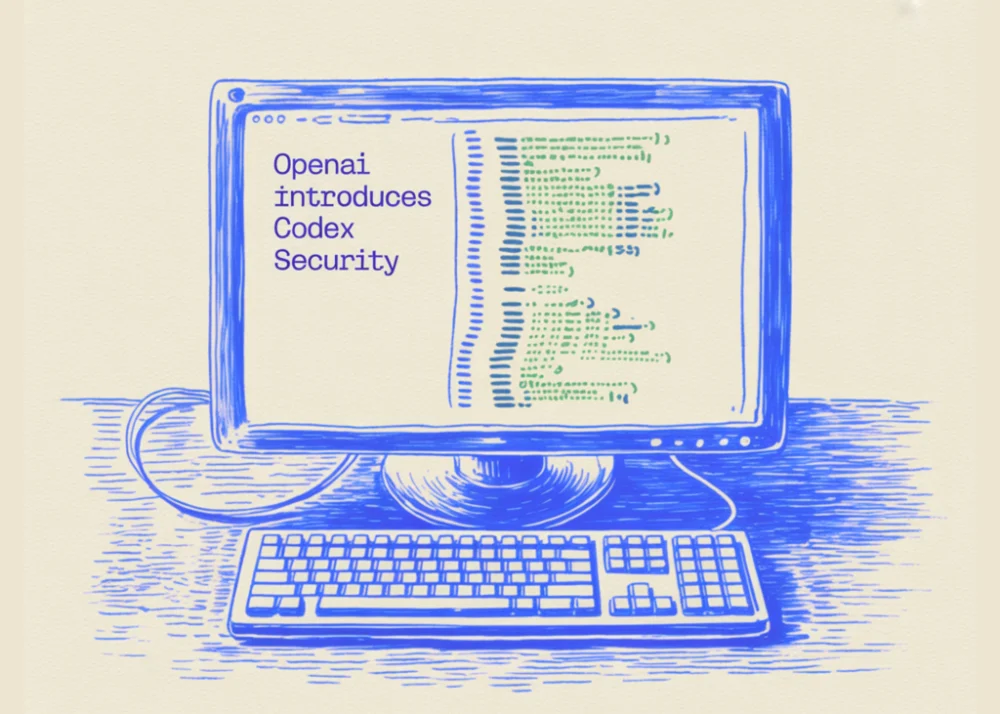
OpenAI has officially announced the launch of Codex Security, a sophisticated application security agent designed to fundamentally transform how engineering teams identify, validate, and remediate vulnerabilities within their software development lifecycles. Currently rolling out in a research preview, the tool is being made available to ChatGPT Enterprise, Business, and Education customers through the Codex web interface. This release marks a significant expansion of OpenAI’s footprint in the DevSecOps space, moving beyond simple code generation toward the more complex and critical domain of automated security engineering.
The introduction of Codex Security addresses a persistent bottleneck in modern software engineering: the "alert fatigue" caused by traditional security scanners. As developers increasingly utilize AI-assisted tools to ship code at unprecedented speeds, the volume of code being produced often outpaces the capacity of security teams to vet it. OpenAI’s new agent seeks to bridge this gap by functioning not merely as a pattern-matching scanner, but as a context-aware reasoning engine capable of understanding the architectural nuances of a specific codebase.
The Evolution of AI in the Software Security Landscape
The release of Codex Security is the culmination of years of iterative development following the 2021 debut of the original Codex model, which famously powered GitHub Copilot. While the initial versions of Codex focused primarily on translating natural language into code, the security community quickly identified both the potential and the perils of AI-generated software. Early studies suggested that while AI could increase developer velocity, it could also inadvertently introduce common vulnerabilities if not properly supervised.
Recognizing these challenges, OpenAI has pivoted toward an "agentic" approach. Codex Security is designed to operate with a degree of autonomy, moving through a multi-stage workflow that mirrors the actions of a human security researcher. This shift reflects a broader industry trend where AI is no longer viewed as a static autocomplete tool, but as a proactive partner capable of performing complex analytical tasks. By focusing on "contextual reasoning" rather than simple signature matching, OpenAI aims to solve the problem of false positives that has plagued the Static Application Security Testing (SAST) and Dynamic Application Security Testing (DAST) markets for decades.
A Three-Stage Architecture for Context-Aware Security
The operational framework of Codex Security is divided into three distinct phases, each designed to ensure that findings are both accurate and actionable within the specific environment of the application.
Stage 1: Dynamic Threat Modeling
The process begins with the generation of a project-specific threat model. Unlike generic security templates that apply the same rules to every repository, Codex Security analyzes the repository’s structure to determine what the application does, where its trust boundaries lie, and which components are exposed to external inputs.
A critical feature of this stage is that the threat model is fully editable by the user. This human-in-the-loop requirement acknowledges that automated tools cannot always infer organization-specific assumptions or legacy architectural decisions. By allowing teams to refine the model, Codex Security ensures that its subsequent analysis is aligned with the actual risks relevant to that specific business logic, rather than flagging theoretical issues that may be mitigated by external controls.
Stage 2: Deep Discovery and Sandboxed Validation
In the second stage, the agent uses the established threat model to hunt for vulnerabilities. However, the innovation lies in its validation process. Codex Security attempts to "pressure-test" its findings within sandboxed environments. If a user provides a configured environment tailored to the project, the system can attempt to execute the code to see if a potential flaw is truly exploitable.
This capability allows the system to generate working proof-of-concepts (PoCs). For a security engineer, a PoC is significantly more valuable than a standard alert; it provides empirical evidence that a vulnerability is not a false positive. By demonstrating how an exploit could occur in the context of the running application, Codex Security allows teams to prioritize remediation efforts based on proven risk rather than estimated severity.
Stage 3: Contextual Remediation and Feedback Loops
The final stage involves proposing fixes. Because Codex Security has access to the surrounding system context, the patches it suggests are designed to be compatible with the existing architecture, reducing the likelihood of functional regressions. Developers can review these proposals and apply them directly, effectively closing the loop from detection to resolution.
Furthermore, the system incorporates a continuous learning mechanism. When a developer adjusts the criticality of a finding or rejects a proposed fix, that feedback is ingested to refine the project’s threat model. Over time, this results in a tool that becomes increasingly precise and attuned to the specific coding standards and risk tolerances of the organization.
Performance Metrics and Real-World Efficacy
In its announcement, OpenAI provided several key performance indicators derived from the tool’s beta testing phase. These vendor-reported metrics suggest a substantial improvement over traditional methodologies. According to the data, scans conducted on the same repositories over time showed a significant reduction in "noise"—the irrelevant or incorrect alerts that often lead to developers ignoring security tools.
OpenAI reported that noise was reduced by 84% following the initial rollout to its beta cohort. Perhaps more importantly, the rate of findings with over-reported severity—where a minor issue is flagged as a "critical" or "high" risk—decreased by more than 90%. Across all repositories scanned during the beta period, false positive rates for detections fell by more than 50%.
The scale of the testing was equally notable. Over a 30-day period, Codex Security scanned more than 1.2 million commits across various external repositories. From this massive dataset, the agent identified 792 critical findings and 10,561 high-severity findings. Notably, OpenAI pointed out that critical issues appeared in fewer than 0.1% of scanned commits, suggesting that while vulnerabilities are rare, they are high-impact when they occur.
Strengthening the Open Source Ecosystem
Beyond its enterprise applications, OpenAI has leveraged Codex Security to bolster the security of the open-source software (OSS) upon which much of the global digital infrastructure relies. Under the "Codex for OSS" initiative, OpenAI has been using the tool to scan prominent open-source repositories, reporting high-impact findings to their respective maintainers.
This proactive outreach has already yielded significant results. OpenAI disclosed that it has identified critical vulnerabilities in several foundational projects, including OpenSSH, GnuTLS, PHP, Chromium, and libssh. To date, 14 Common Vulnerabilities and Exposures (CVEs) have been assigned based on Codex Security’s findings. The company also highlighted a practice of "dual reporting" on two of these instances, ensuring that maintainers received comprehensive data to facilitate rapid patching.
This move into the open-source space is seen as a strategic effort to build trust within the developer community. By demonstrating that the tool can find legitimate flaws in highly scrutinized projects like Chromium and OpenSSH, OpenAI is positioning Codex Security as a top-tier professional grade tool capable of competing with established cybersecurity vendors.
Industry Implications and the Shift Toward Reasoning-Based Security
The launch of Codex Security represents a fundamental shift in the philosophy of application security. For decades, the industry has relied on "pattern matching"—searching for specific strings of code or known-bad configurations. While effective for simple bugs, this method struggles with complex logic flaws or vulnerabilities that only emerge when multiple components interact.
By treating security review as a "reasoning problem" over repository structure and trust boundaries, OpenAI is applying the strengths of Large Language Models (LLMs) to a domain that has traditionally required manual, expert-level human intervention. This does not eliminate the need for security professionals, but it changes their role. Instead of spending hours triaging hundreds of low-quality alerts, engineers can focus on validating the high-confidence proofs provided by the AI agent.
Industry analysts suggest that this could lead to a significant reduction in "security debt"—the backlog of unpatched vulnerabilities that many companies struggle to manage. If an AI agent can handle the "heavy lifting" of detection and initial remediation, organizations can shift their security posture from reactive to proactive.
Availability and Future Outlook
Codex Security is currently available in research preview, a phase that allows OpenAI to gather further data and refine the system before a broader commercial release. By limiting the initial rollout to ChatGPT Enterprise, Business, and Edu customers, OpenAI is targeting environments where codebase complexity and security requirements are highest.
As the tool moves toward general availability, the cybersecurity industry will be watching closely to see how it integrates with existing CI/CD (Continuous Integration/Continuous Deployment) pipelines. The success of Codex Security will likely depend on its ability to integrate seamlessly into the developer’s workflow, providing insights at the moment of code commit without introducing significant latency.
While the metrics provided by OpenAI are promising, independent benchmarks and long-term studies will be necessary to fully evaluate the tool’s impact on software quality. Nevertheless, the introduction of Codex Security marks a clear milestone in the evolution of AI-driven development, signaling a future where security is not an afterthought, but an automated, integral part of the creative process.