

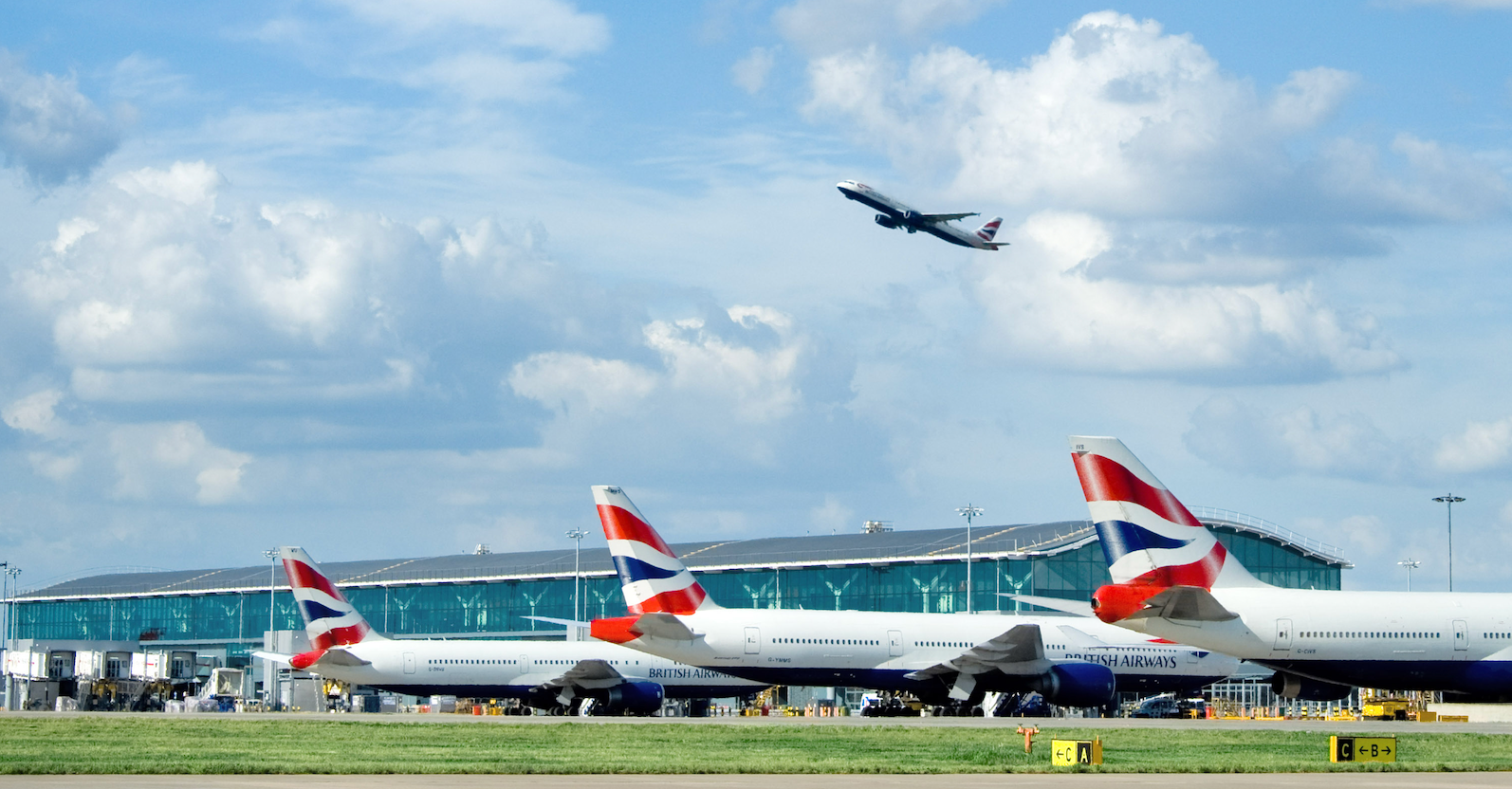
Heathrow Airport, the United Kingdom’s primary international gateway, has announced a significant milestone in its environmental strategy, reporting that carbon emissions from flights in 2025 have decreased by 7% compared to 2019 levels. This data, released as part of the airport’s annual sustainability report on Thursday, marks a critical juncture for the aviation hub as it attempts to reconcile record-breaking passenger demand with increasingly stringent climate targets. The reduction is particularly notable given that the airport handled a record 478,000 passenger-carrying flights over the past year, suggesting a gradual decoupling of traffic growth from carbon output.
The decline in emissions is attributed primarily to a combination of fleet modernization by resident airlines and a strategic push to integrate Sustainable Aviation Fuel (SAF) into the airport’s infrastructure. Matthew Gorman, Director of Carbon Strategy at Heathrow, highlighted the progress in a public statement, noting that the latest carbon footprint assessment demonstrates the tangible impact of the airport’s "Heathrow 2.0" sustainability roadmap. According to Gorman, the 7% reduction against the 2019 baseline serves as evidence that the airport is on a viable path toward its mid-term goal of cutting flight emissions by 15% by 2030.
The Role of Sustainable Aviation Fuel in Emission Reductions
A cornerstone of Heathrow’s current environmental performance is the increased uptake of Sustainable Aviation Fuel. SAF is a "drop-in" fuel produced from renewable waste and residue raw materials, such as used cooking oil or animal fat waste. According to the International Air Transport Association (IATA), high-quality SAF can reduce lifecycle carbon emissions by up to 80% compared to traditional kerosene-based jet fuel.
In the last calendar year, SAF accounted for 3.1% of the total fuel used at Heathrow. While this percentage may appear modest in isolation, it represents one of the highest adoption rates for a major international hub globally. The aviation industry has historically struggled with SAF adoption due to high production costs—often three to five times that of conventional jet fuel—and limited supply chains. Heathrow has sought to mitigate these hurdles through an incentive scheme that shares the price premium of SAF with airlines, effectively encouraging carriers to bunker the cleaner fuel at its terminals.
The airport’s success in reaching the 3.1% threshold is a vital step toward the UK government’s mandate, which requires at least 10% of jet fuel to come from sustainable sources by 2030. For Heathrow, the transition to SAF is not merely an environmental choice but a operational necessity to maintain its "license to operate" in a political landscape increasingly focused on the "Jet Zero" strategy.
Operational Context: Record Traffic vs. Lower Footprint
The achievement of a 7% emissions reduction is underscored by the fact that Heathrow is currently operating at near-maximum capacity. The 478,000 passenger-carrying flights recorded last year surpassed previous records, reflecting a robust recovery in global travel following the disruptions of the early 2020s. The ability to lower absolute emissions while increasing flight frequency points to an acceleration in fleet renewal.
Major carriers operating out of Heathrow, including British Airways, Virgin Atlantic, and various international partners, have been aggressively phasing out older, four-engine aircraft like the Boeing 747 and the Airbus A340. These have been replaced by next-generation twin-engine models such as the Airbus A350 and the Boeing 787 Dreamliner, which offer up to 25% better fuel efficiency. This technological shift, combined with optimized air traffic management and ground operations, has allowed the airport to process more passengers with a smaller carbon footprint per seat-kilometer.
Chronology of Heathrow’s Climate Commitments
The journey toward the 2025 milestone began in earnest in 2019, which serves as the airport’s fixed baseline for carbon accounting.
- 2019: Heathrow sets its baseline year, recording peak pre-pandemic emissions and flight volumes.
- 2020-2021: The global pandemic causes a temporary, artificial drop in emissions. Heathrow uses this period to refine its "Heathrow 2.0" sustainability plan.
- 2022: The airport launches a SAF incentive scheme, the first of its kind for a major airport, aimed at kickstarting the local market for renewable fuels.
- 2023: Flight volumes return to 2019 levels, but emissions begin to show a downward trend relative to traffic as newer aircraft enter service.
- 2024: Heathrow reports that SAF usage has climbed to over 3%, and flight volumes hit a record 478,000.
- 2025: The current report confirms a 7% absolute reduction in flight emissions from the 2019 baseline.
Looking ahead, the airport has set a target of a 15% reduction in carbon from flights by 2030 and aims for net-zero emissions by 2050, in alignment with the Paris Agreement and the UK’s statutory climate goals.
The Third Runway and Environmental Accountability
The disclosure of these emission figures arrives at a critical moment for the airport’s long-term expansion plans. The proposal for a third runway at Heathrow has been a subject of intense legal and political debate for over two decades. Critics of the expansion, including environmental advocacy groups and local community organizations, have long argued that a third runway would make it impossible for the UK to meet its carbon reduction obligations.
However, the 7% reduction in emissions provides Heathrow’s management with a data-driven counter-argument. By demonstrating that growth in flight numbers does not necessarily lead to a linear increase in carbon emissions, the airport can argue that expansion is compatible with environmental stewardship. The argument hinges on the premise that a larger, more modern airport can facilitate the transition to a low-carbon aviation sector by providing the infrastructure and economic incentives necessary for SAF and, eventually, hydrogen or electric flight.
Proponents of the expansion suggest that a third runway would reduce "holding" patterns—where aircraft circle the airport waiting for a landing slot—thereby reducing unnecessary fuel burn and local air pollution. Nevertheless, the project remains contingent on the airport proving it can stay within strict "green slots" and carbon caps set by the government.
Stakeholder Reactions and Industry Implications
The reaction to the 2025 sustainability report has been cautiously optimistic across the aviation and environmental sectors. Industry analysts suggest that Heathrow’s performance serves as a blueprint for other major hubs, such as Dubai International or Paris Charles de Gaulle, which are also facing pressure to decarbonize.
Aviation trade bodies have praised the results as a sign that the industry’s "Net Zero 2050" goal is moving from theoretical modeling to empirical reality. "Heathrow’s progress demonstrates that with the right policy levers and airport-led incentives, we can begin to bend the curve of aviation emissions even as the world returns to the skies," an IATA representative noted in response to the report.
Conversely, environmental groups remain vigilant. Organizations such as Greenpeace and the Aviation Environment Federation (AEF) have pointed out that while a 7% reduction is positive, it must be viewed in the context of the total global warming impact of aviation, which includes non-CO2 effects like contrails and nitrogen oxides. They argue that the focus on SAF should not distract from the need to manage total demand for flights.
Future Challenges: Scaling the SAF Supply Chain
Despite the positive trajectory, significant challenges remain if Heathrow is to reach its 15% reduction goal by 2030. The primary hurdle is the scalability of SAF production. Currently, global SAF production accounts for less than 1% of total jet fuel demand. For Heathrow to increase its SAF blend from 3.1% to the levels required for its 2030 and 2050 targets, there must be a massive increase in refinery capacity and a stable supply of sustainable feedstocks.
There is also the matter of cost. As long as SAF remains significantly more expensive than fossil fuels, the financial burden on airlines—and by extension, passengers—will increase. Heathrow has called on the UK government to implement a "revenue certainty mechanism" to de-risk investments in domestic SAF plants, ensuring that the transition does not compromise the airport’s competitiveness as a global hub.
Conclusion and Analysis of Implications
The 2025 sustainability report from Heathrow Airport provides a rare piece of evidence that the aviation industry may be finding a way to mitigate its environmental impact without sacrificing operational growth. The 7% reduction in carbon emissions against a 2019 baseline, achieved during a year of record flight activity, represents a successful integration of technology, policy, and operational efficiency.
The implications of this report extend beyond the runways of West London. It validates the "Jet Zero" approach favored by the UK government, which relies on technological innovation and sustainable fuels rather than mandates to limit flying. For Heathrow, these figures are a powerful tool in its ongoing quest for expansion. If the airport can continue to drive down emissions while increasing capacity, the path to a third runway may become politically and legally smoother.
However, the next five years will be the true test. Reaching the 15% reduction target by 2030 will require a doubling of the current progress rate and a significantly deeper integration of SAF. As the aviation industry watches Heathrow’s experiment in sustainable growth, the results of the 2025 report suggest that while the climb to net zero is steep, the industry has finally cleared the initial hurdles of the ascent.