

The global automotive industry is currently witnessing a significant shift in design paradigms, highlighted most recently by the unveiling of interior components for the upcoming Ferrari Luce, the Italian marque’s first fully electric vehicle. Designed in collaboration with LoveFrom, the creative collective founded by former Apple Chief Design Officer Jony Ive and renowned designer Marc Newson, the Luce’s interior represents a departure from traditional cabin layouts. While the full exterior of the vehicle is not scheduled for a public debut until May 2025, the release of these specific interior elements has triggered a wide-ranging debate regarding the aesthetic and functional direction of ultra-luxury electric vehicles (EVs). This development follows closely on the heels of Jaguar’s controversial unveiling of the Type 00 concept, suggesting a broader industry trend where legacy manufacturers are utilizing the transition to electric powertrains to fundamentally reimagine their brand identities.
The Strategic Collaboration Between Ferrari and LoveFrom
The genesis of the Ferrari Luce’s design language lies in a long-term multi-year partnership established in 2021 between Ferrari, its holding company Exor, and LoveFrom. This alliance was formed with the explicit goal of marrying Ferrari’s performance heritage with the minimalist, user-centric design philosophy associated with Jony Ive’s tenure at Apple. The Luce serves as the primary vessel for this collaboration.
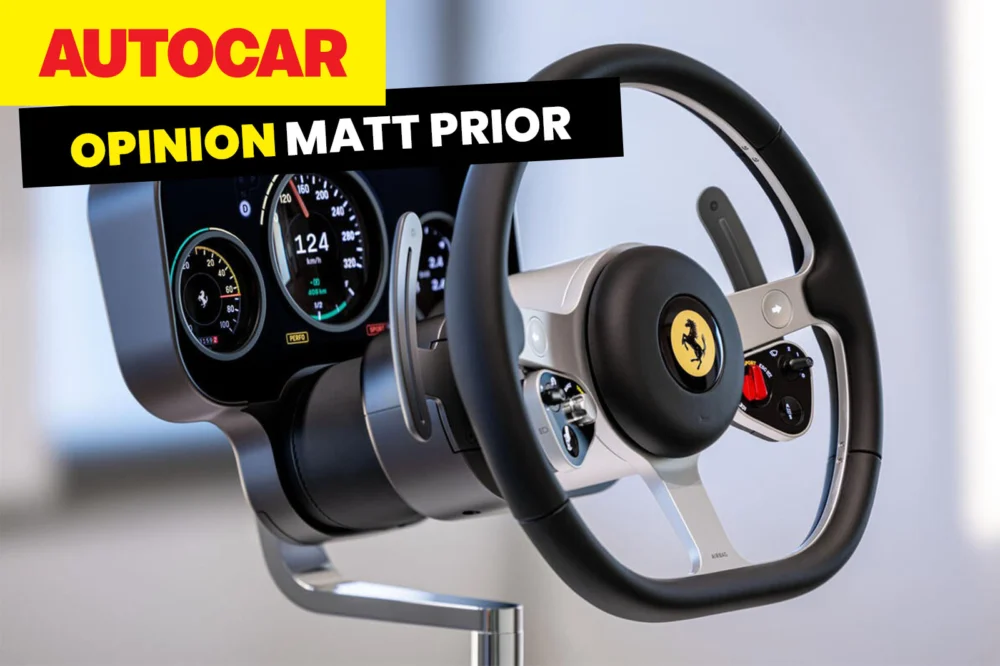
Early technical previews of the interior reveal a focus on "tactile permanence"—a reaction to the industry-wide trend of over-reliance on flat touchscreens. The components showcased include a refined three-spoke steering wheel, a redesigned manettino dial, and a multi-layered instrument cluster. The cluster utilizes high-grade glass layered over a physical needle, which sits atop a deep-set digital display. This hybrid approach aims to provide the depth and mechanical feel of traditional horology while maintaining the data flexibility required by a modern EV.
Comparative Analysis: Ferrari Luce and the Jaguar Type 00
The public reaction to the Luce has been frequently compared to the reception of the Jaguar Type 00. Both brands are currently navigating the "EV chasm," where they must attract a new demographic of technology-focused buyers without alienating a core enthusiast base built on internal combustion engine (ICE) legacy.
Jaguar’s approach with the Type 00 involved a radical rebranding effort characterized by "Exuberant Modernism," which moved away from its traditional feline motifs toward abstract geometry and bold color palettes. Ferrari, by contrast, appears to be pursuing a "reductionist" strategy. While Jaguar’s transformation was met with significant resistance due to its perceived abandonment of heritage, Ferrari’s strategy with the Luce focuses on refining ergonomics. The Luce interior addresses long-standing criticisms of recent Ferrari cabins, such as the cluttered haptic controls on the SF90 Stradale and 296 GTB steering wheels, by returning to more deliberate, physical switchgear.
Chronology of Ferrari’s Electrification Path
Ferrari’s journey toward the Luce has been a calculated progression over the last decade, moving from hybrid assistance to full electrification:
- 2013: Launch of the LaFerrari, the brand’s first mild-hybrid hypercar using KERS technology.
- 2019: Debut of the SF90 Stradale, Ferrari’s first series-production Plug-in Hybrid Electric Vehicle (PHEV).
- 2021: Formal announcement of the partnership with LoveFrom and the commitment to a 2025 full EV launch.
- 2022: Introduction of the 296 GTB, further refining the V6 hybrid powertrain.
- June 2024: Opening of the "e-building" in Maranello, a 42,500-square-meter facility dedicated to the production of electric motors, battery packs, and power inverters.
- Late 2024: Reveal of the Luce interior components.
- May 2025 (Projected): Global premiere of the Ferrari Luce exterior and full technical specifications.
Technical Specifications and Material Innovation
The Luce is expected to set new benchmarks for material quality in the EV sector. Observers of the recent component demonstrations noted the use of high-perceived-quality materials that differ from the standard carbon fiber and Alcantara combinations found in previous models. The use of multi-layered glass for the instrument panel is intended to eliminate the "flat" look of traditional LCD screens, providing a holographic effect that keeps the driver’s focus on essential telemetry.
Furthermore, the integration of the "iPhone-style" interface—a term coined by industry analysts to describe the fluid, gesture-based logic of the software—is balanced by the retention of the manettino. This physical toggle remains the centerpiece of the driving experience, allowing for instantaneous adjustments to the vehicle’s dynamic setup. Reports suggest that Ferrari has invested heavily in acoustic engineering to ensure that the electric motors provide a unique "sound signature" that compensates for the absence of a V12 or V8 exhaust note.
Market Context and Financial Implications
The shift toward electrification is a financial necessity as much as an environmental one. Ferrari’s 2023 financial results showed a record net profit of €1.25 billion, with hybrid models accounting for approximately 44% of total shipments. However, the ultra-luxury segment is facing increasing pressure from global emissions regulations, particularly in the European Union and China.
Data from automotive market analysts indicates that while the "early adopter" phase of EVs is plateauing, the luxury "collector" market remains robust. Ferrari’s strategy involves maintaining a three-pronged approach: ICE, Hybrid, and EV. By 2030, the company targets a product mix of 20% ICE, 40% Hybrid, and 40% Electric. The Luce is the cornerstone of this 40% electric ambition. The success of the Luce is critical to proving that the brand’s "intangible value"—the prestige and emotion associated with the badge—can transcend the method of propulsion.
Stakeholder Reactions and Expert Analysis
Reaction from the Ferrari owner community has been polarized. On one side, traditionalists argue that a Ferrari without a combustion engine loses its primary identity. On the other, technology investors and design critics have praised the collaboration with Jony Ive as a necessary step toward modernization.
Industry analysts suggest that the loud critical voices surrounding the Luce’s design might be conflated with a general resistance to electrification. If the same minimalist, button-heavy design had been introduced in a flagship ICE model like the 12Cilindri, the reception might have been more universally positive. The ergonomics of recent Ferrari models have been a point of contention among owners, specifically regarding the capacitive touch indicators and volume sliders. The Luce’s return to tactile quality is seen by many experts as a direct response to customer feedback requesting a more "analog" feel in a digital cockpit.
Impact on the Future of Automotive Design
The Ferrari Luce represents more than just a new model; it is a test case for the future of the automotive interior. As vehicles become more autonomous and digitally integrated, the role of the designer shifts from creating a "cockpit" to creating a "living space." However, Ferrari’s insistence on a driver-centric layout with physical needles and tactile switches suggests a refusal to follow the "rolling smartphone" trend popularized by manufacturers like Tesla and various emerging Chinese EV brands.
The broader implications for the industry are significant. If Ferrari can successfully market an EV that retains the "soul" of its ICE predecessors through superior tactile design and material craftsmanship, it provides a blueprint for other high-end manufacturers like Lamborghini, McLaren, and Aston Martin. The May reveal of the Luce’s exterior will be the final piece of the puzzle, determining whether the minimalist interior philosophy is matched by a revolutionary or evolutionary aerodynamic form.
In conclusion, the Ferrari Luce stands at the intersection of traditional Italian craftsmanship and Silicon Valley design logic. While the move to electric power remains a point of contention for many, the focus on high-quality, tactile interior components indicates that Ferrari is prioritizing the sensory experience of the driver. As the industry moves closer to the 2025 reveal, the Luce will continue to be a focal point for discussions on how heritage brands can evolve without losing the essence that defined their century-long histories.