


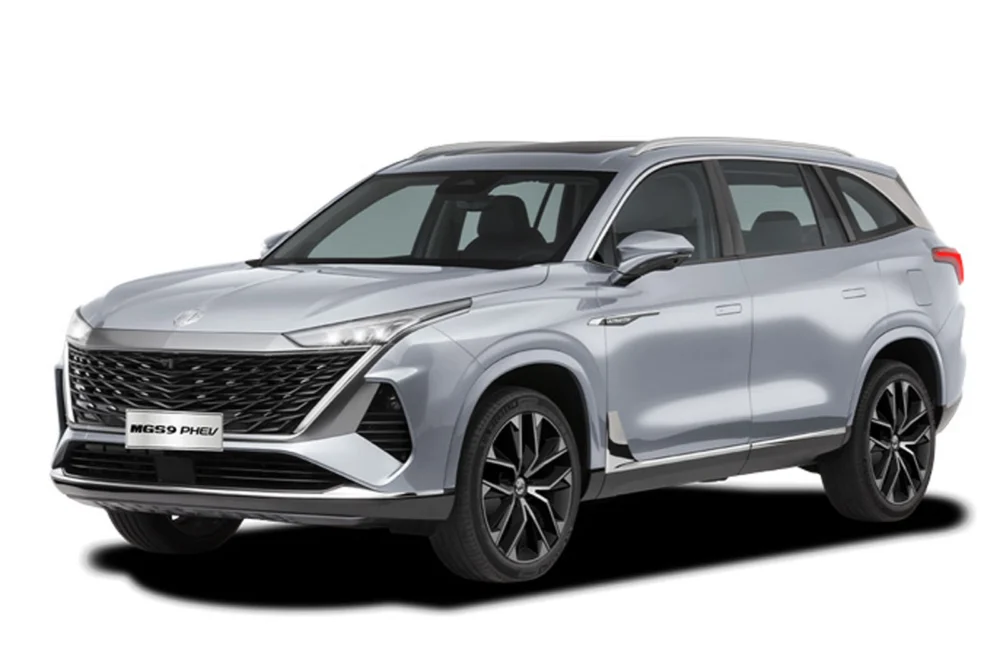
The MG S9 PHEV is scheduled to arrive in the United Kingdom this summer, marking a significant milestone as the largest model the Chinese-owned brand has introduced to the British market to date. This new flagship SUV represents a strategic move by MG Motor UK to capture a larger share of the family vehicle segment, specifically targeting the high-demand market for seven-seater vehicles. While the official launch is slated for the coming months, much of the vehicle’s critical data was brought to light following its recent assessment by Euro NCAP, the independent European safety body. In these tests, the S9 secured a prestigious five-star safety rating, providing a crucial endorsement of its structural integrity and advanced driver assistance systems ahead of its commercial debut.
As a 4.99-meter-long plug-in hybrid (PHEV) equipped with three rows of seating, the S9 is positioned to disrupt the premium SUV sector. Industry analysts anticipate that MG will market the vehicle as a high-value, cost-effective alternative to established luxury stalwarts such as the Land Rover Discovery and the Volvo XC90. By offering a similar footprint and seating capacity at a significantly lower price point, MG continues its strategy of leveraging manufacturing efficiencies from its parent company, SAIC Motor, to challenge European and Japanese legacy manufacturers.
Chronology of Development and Global Rollout
The emergence of the MG S9 in the UK is part of a broader global product offensive by SAIC Motor. The vehicle is closely related to models sold under different monikers in other international markets, illustrating the brand’s complex global naming architecture. In Australia, the vehicle is nearing its market launch where it will be badged as the QS Super Hybrid. This regional variation is common for MG, which often adapts its branding to suit local market perceptions and heritage.
The UK arrival follows a period of rapid expansion for MG, which has transitioned from a niche player focused on affordable hatchbacks to a major volume brand. The timeline of the S9’s introduction began with the successful rollout of the MG HS and MG ZS, both of which established the brand’s credentials in the SUV space. The S9 represents the next logical step in this evolution, moving MG into the "E-segment" or large SUV category. The recent Euro NCAP disclosure served as an unofficial "soft launch," confirming the vehicle’s readiness for European roads and ensuring it meets the stringent safety requirements necessary for high-volume sales in the UK.
Technical Specifications and Powertrain Performance
The MG S9 PHEV utilizes a sophisticated hybrid architecture designed to balance internal combustion power with electric efficiency. Based on the specifications confirmed for the Australian market, the S9 is powered by a 1.5-litre turbocharged petrol engine paired with a single electric motor. This combination is mated to a single-speed gearbox, a configuration designed to provide smooth power delivery while minimizing the complexity and weight associated with multi-speed transmissions in hybrid setups.
The powertrain produces a combined output of 201bhp, which is directed exclusively to the front wheels. While some competitors in the large SUV segment offer all-wheel drive as standard, the front-wheel-drive configuration of the S9 highlights its focus on urban and suburban family use rather than heavy off-road performance. Data from Euro NCAP confirms that the vehicle has a kerb weight of 2,160kg. This mass is reflective of the S9’s substantial dimensions and the inclusion of a high-capacity battery pack necessary for its plug-in hybrid functionality.
The integration of the battery is a critical component of the S9’s design. While specific battery capacity for the UK model has yet to be finalized, the PHEV system is expected to provide a competitive electric-only driving range, likely meeting the requirements for lower Benefit-in-Kind (BiK) tax brackets for corporate fleet drivers—a vital demographic for large SUVs in the UK.
Interior Design and Practicality Standards
Inside the cabin, the S9 adopts a design language that builds upon the foundations laid by the recently updated MG HS. The dashboard is dominated by a dual-screen setup, featuring high-resolution displays for both the driver’s instrument cluster and the central infotainment system. However, in a departure from the trend toward entirely touch-based interfaces, the S9 includes a dedicated row of physical switches. These tactile controls provide quick access to essential functions, such as climate control and infotainment shortcuts, addressing common consumer feedback regarding the usability of touchscreens while driving.
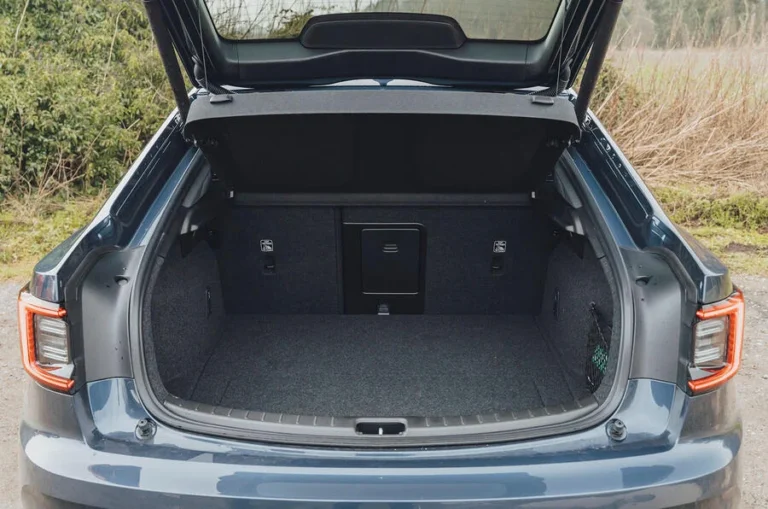
As a seven-seater, the S9’s primary appeal lies in its interior versatility. The 4.99-meter length allows for a 2+3+2 seating configuration. While the plug-in hybrid powertrain offers efficiency benefits, it does impose some constraints on cargo capacity due to the placement of the battery and electrical components. For context, the pure-combustion (ICE) version of the vehicle sold in Australia offers:
- 203 litres of boot space with all three rows of seats in use.
- 503 litres with the third row folded flat.
- 1,052 litres with both the second and third rows folded.
It is highly probable that the PHEV variant for the UK will see these figures slightly reduced. In most PHEV designs, the battery is situated beneath the rear seats and the boot floor, which can raise the load height and decrease total volume. Despite this, the S9 remains one of the most spacious vehicles in its price bracket, offering significantly more utility than standard five-seat SUVs.
Market Positioning and Competitive Analysis
The MG S9 is expected to enter the UK market with a starting price in the region of £40,000. This pricing strategy places it in a unique position within the MG lineup; it is notably more expensive than the MG HS PHEV, which currently tops the internal combustion range at £32,345. However, when compared to the broader market, the S9 appears highly competitive.
Its most direct rival is likely to be the Chery Tiggo 9, another Chinese entrant seeking to establish a foothold in the UK’s large SUV market with similar pricing and specifications. Beyond Chinese rivals, the S9’s price point undercuts the Land Rover Discovery and Volvo XC90 by tens of thousands of pounds. Even mainstream seven-seat competitors like the Kia Sorento and Hyundai Santa Fe, which have moved upmarket in recent years, are expected to carry higher price tags than the MG S9.
This "value-premium" positioning is a cornerstone of MG’s strategy. By offering a vehicle that matches the dimensions and safety ratings of luxury brands but at a price point closer to mid-range family cars, MG aims to attract "badge-blind" consumers who prioritize space, safety, and modern technology over traditional prestige.
Safety Performance and Regulatory Compliance
The five-star rating from Euro NCAP is a pivotal achievement for the MG S9. Modern Euro NCAP protocols are increasingly rigorous, testing not only crashworthiness but also the effectiveness of Active Safety systems, such as Autonomous Emergency Braking (AEB), Lane Support Systems, and Vulnerable Road User protection.
The S9’s high score suggests that MG has integrated a comprehensive suite of sensors and software. This likely includes radar and camera-based systems capable of detecting pedestrians and cyclists, as well as providing adaptive cruise control and traffic jam assist. For a large vehicle weighing over two tonnes, maintaining high safety standards is essential for consumer confidence, particularly in a segment where the primary occupants are often children.
Strategic Implications for MG and the UK Market
The launch of the S9 PHEV signifies a broader shift in the UK automotive landscape. The arrival of large, well-equipped, and safe SUVs from Chinese manufacturers indicates that the "entry-level" stigma formerly associated with these brands is rapidly dissolving. MG’s ability to secure a five-star safety rating and deliver a 4.99-meter PHEV demonstrates a level of engineering maturity that poses a direct challenge to European OEMs.
Furthermore, the focus on a plug-in hybrid powertrain aligns with the UK’s transitional phase toward full electrification. While pure electric vehicles (EVs) continue to grow in popularity, many families in the seven-seater segment remain hesitant due to concerns over charging infrastructure and towing capabilities. The S9 PHEV offers a compromise, allowing for emission-free local commuting while retaining the long-distance flexibility of a petrol engine.
As MG prepares for the summer launch, the industry will be watching closely to see if the S9 can replicate the success of the MG4 and MG HS. If the brand manages to maintain its reputation for value while delivering a flagship-level experience, the S9 could become a common sight on UK roads, further cementing MG’s position as a top-ten manufacturer in the British market. Official UK pricing, final trim specifications, and exact electric range figures are expected to be announced by MG Motor UK in the coming weeks, ahead of the first customer deliveries.