

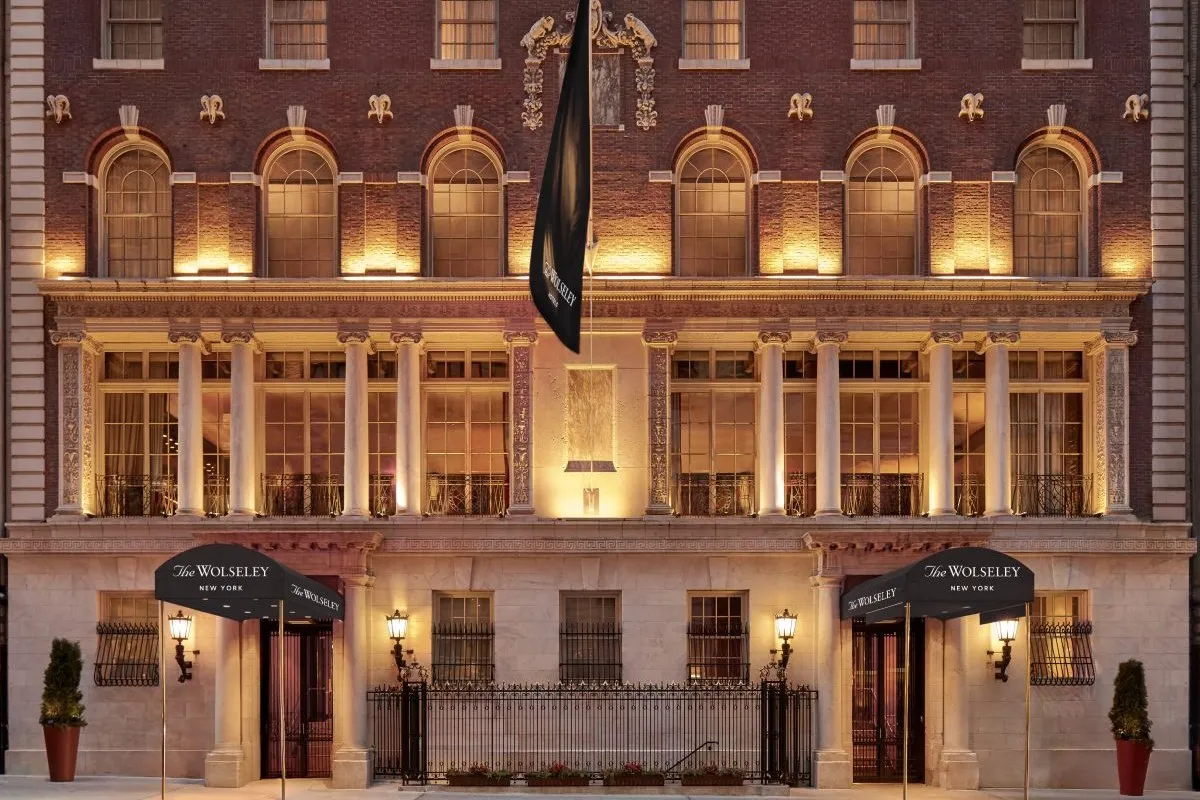
Minor Hotels, the Bangkok-based international hospitality group, has officially confirmed the transformation of the iconic London restaurant brand, The Wolseley, into a comprehensive luxury hotel platform, beginning with a high-profile debut in New York City scheduled for 2027. This strategic pivot marks a significant milestone for the company as it seeks to leverage the prestige of one of London’s most storied dining institutions to create a new category of lifestyle-driven luxury accommodation. Following the New York launch, the group has identified Dubai as the primary candidate for its second location, signaling a rapid global rollout for the nascent hotel brand.
The announcement was formalized by Amir Golbarg, Chief Operating Officer for the Middle East and Africa at Minor Hotels, who noted that the transition from a single-site culinary landmark to a multi-national hotel chain is a calculated move to capture the growing demand for "lifestyle luxury." The project represents the culmination of years of brand development following Minor Hotels’ full acquisition of the brand’s parent company, formerly known as Corbin & King, in 2022.
The Strategic Evolution of an Iconic Culinary Brand
The Wolseley, located at 160 Piccadilly in London, has long been regarded as one of the world’s most successful restaurants. Originally built in 1921 as a prestigious showroom for Wolseley Motors and later serving as a branch of Barclays Bank, the site was converted into an Austro-Hungarian style grand café in 2003. Its reputation for "all-day dining" excellence, combined with its grand architectural heritage, has made it a staple for the global elite, from heads of state to Hollywood celebrities.
Minor Hotels’ decision to translate this specific aesthetic and service philosophy into a hotel brand is a response to a shifting hospitality landscape. While traditional luxury hotels often focus on rooms first and dining second, The Wolseley Hotels will lead with the brand’s established culinary identity. The objective is to create a "social hub" environment where the lobby and dining areas serve as the primary draw, mirroring the high-energy, sophisticated atmosphere of the original Piccadilly location.
By moving into the hotel sector, Minor Hotels is testing a thesis: that a brand with deep roots in the food and beverage (F&B) industry can successfully anchor a 360-degree luxury guest experience. This model follows in the footsteps of brands like Nobu and Baccarat, which successfully parlayed niche luxury reputations into global hotel portfolios.
New York City as the Launchpad for Global Expansion
The selection of New York City for the first The Wolseley hotel is a deliberate choice aimed at the heart of the North American luxury market. New York remains a critical gateway city for international travelers and shares a cultural and financial synergy with London, the brand’s home base. Scheduled to open in 2027, the New York property is expected to replicate the "grand café" architecture that defined the original site, adapted for the Manhattan skyline.
Industry analysts suggest that the New York luxury hotel market is currently experiencing a period of robust recovery and evolution. According to data from STR, a global hospitality analytics firm, New York City’s Average Daily Rate (ADR) for luxury properties has seen a 15% increase compared to pre-pandemic levels, driven by a resurgence in high-net-worth individual (HNWI) travel. Minor Hotels intends to capitalize on this trend by offering a product that feels "established" despite being a new entrant to the market.
While the specific neighborhood for the New York site has not been publicly disclosed, the brand’s requirement for architectural grandeur suggests a location in either the Upper East Side or a revitalized historic building in Midtown. The project will likely include a signature Wolseley restaurant as its centerpiece, ensuring that the brand’s core identity remains the primary attraction for both local residents and international guests.
Dubai and the Middle Eastern Growth Strategy
The announcement regarding Dubai highlights the Middle East’s importance in Minor Hotels’ long-term growth strategy. Amir Golbarg confirmed that the group is actively scouting sites in the United Arab Emirates, with a formal announcement expected in the "very near future." Dubai’s luxury hospitality sector is one of the most competitive in the world, yet it remains a high-growth area for unique, concept-driven brands.
Dubai’s Department of Economy and Tourism (DET) reported that the city welcomed 17.15 million international overnight visitors in 2023, a record high. The city’s shift toward "lifestyle" and "boutique" luxury, moving away from the massive gold-plated resorts of the early 2000s, aligns perfectly with The Wolseley’s sophisticated, understated elegance.
The expansion into Dubai is also a logistical move. Minor Hotels already maintains a strong operational base in the region, with its Middle East and Africa headquarters located in Dubai. The group currently operates several brands in the UAE, including Anantara and Avani. Integrating The Wolseley into this ecosystem allows for shared resources and a deep understanding of the local regulatory and consumer landscape.
Historical Context: The Acquisition of The Wolseley Hospitality Group
The path to this global expansion was not without its challenges. The transition began in earnest in April 2022, when Minor Hotels took full control of Corbin & King after a highly publicized legal and financial battle with the group’s co-founder, Jeremy King. Minor Hotels, which had held a majority stake since 2017, moved to buy the company out of administration, eventually rebranding it as The Wolseley Hospitality Group.
Following the acquisition, Minor Hotels’ CEO Dillip Rajakarier emphasized that the intent was never to merely maintain the status quo but to scale the brand’s unique intellectual property. While some critics initially feared that the soul of the "grand café" would be lost under corporate ownership, Minor has since opened The Wolseley City in London’s financial district to critical acclaim, proving that the concept is scalable. The move into the hotel sector is the logical next step in Rajakarier’s vision to transform Minor Hotels into a diversified global powerhouse.
A Chronology of The Wolseley’s Evolution
To understand the weight of this expansion, one must look at the timeline of the brand’s development:
- 1921: The Wolseley building is completed in London as a luxury car showroom.
- 1927: The building is sold to Barclays Bank after Wolseley Motors goes into liquidation.
- 2003: Restaurateurs Chris Corbin and Jeremy King transform the site into The Wolseley restaurant.
- 2017: Minor Hotels acquires a majority stake in Corbin & King for approximately £58 million.
- 2022: Minor Hotels acquires the remaining shares and full control of the company for over £60 million following a bidding war in an administration process.
- 2023: The Wolseley City opens in London, the first expansion of the dining brand in two decades.
- 2024: Minor Hotels announces the first Wolseley Hotel for New York (2027) and confirms site-seeking in Dubai.
Market Analysis: The Rise of F&B-Driven Hospitality
The Wolseley’s expansion into hotels reflects a broader trend in the hospitality industry known as "F&B-led development." Historically, hotel restaurants were often loss leaders—amenities provided for the convenience of guests but rarely profitable on their own. In the modern era, the "Nobu Effect" has reversed this dynamic. When a hotel is attached to a world-class restaurant brand, it creates an immediate sense of place and destination.
For Minor Hotels, The Wolseley offers a distinct advantage over traditional hotel brands: it already possesses a loyal, global customer base. The "Wolseley experience"—characterized by silver service, bespoke chinaware, and a specific European aesthetic—is something that high-end travelers are willing to pay a premium for in a lodging context.
Furthermore, the "Austro-Hungarian grand-café" niche is currently underserved in the global hotel market. While there are many French-inspired or ultra-modern luxury hotels, the specific intellectual and cultural atmosphere of a Central European grand hotel provides a unique selling proposition in crowded markets like New York and Dubai.
Official Responses and Industry Implications
Amir Golbarg’s statements to Skift underscore the company’s confidence in the brand’s adaptability. "We’ve announced our first Wolseley in New York, which will come very soon, and we’re looking actively at sites in Dubai as well," Golbarg stated, emphasizing that the UAE announcement is imminent.
From an industry perspective, this move signals Minor Hotels’ intent to compete directly with established luxury giants like Accor’s Ennismore, LVMH’s Cheval Blanc, and the Maybourne Hotel Group. Minor Hotels currently operates more than 540 hotels across 56 countries. By adding a flagship "lifestyle luxury" brand like The Wolseley to its portfolio, which already includes the high-end Anantara and the NH Collection, the group is diversifying its risk and tapping into different psychographic segments of the travel market.
The success of the New York and Dubai properties will likely determine the future of the brand in other global hubs. Cities like Hong Kong, Tokyo, and Paris are logical subsequent steps, provided the initial "test" in New York proves that the brand can maintain its intimacy and high service standards at scale.
Future Outlook
As Minor Hotels prepares for the 2027 New York opening, the focus remains on maintaining the "storied" nature of the brand. The challenge for the group will be to ensure that the "grand café" spirit—which relies heavily on a sense of history and permanence—can be successfully manufactured in new-build or renovated properties thousands of miles away from Piccadilly.
If successful, The Wolseley Hotels could redefine the relationship between fine dining and luxury lodging, proving that a restaurant’s reputation can indeed serve as the foundation for a global hospitality empire. For now, the industry watches closely as Minor Hotels attempts to translate London’s most famous breakfast spot into a global overnight sensation.