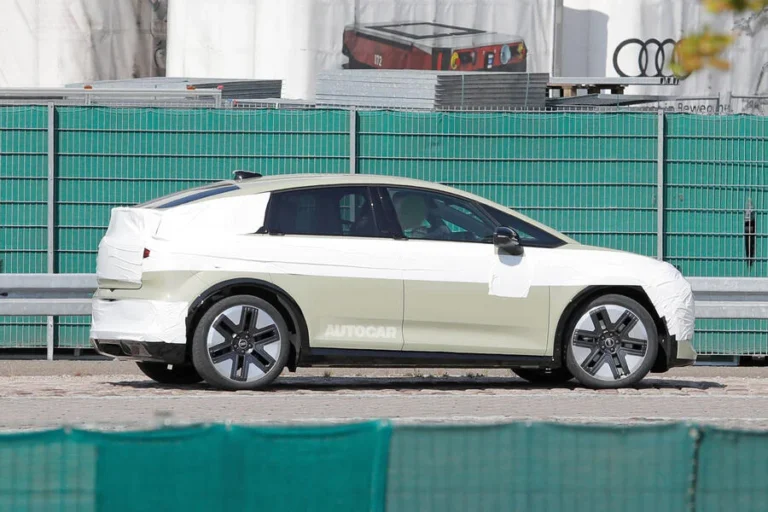



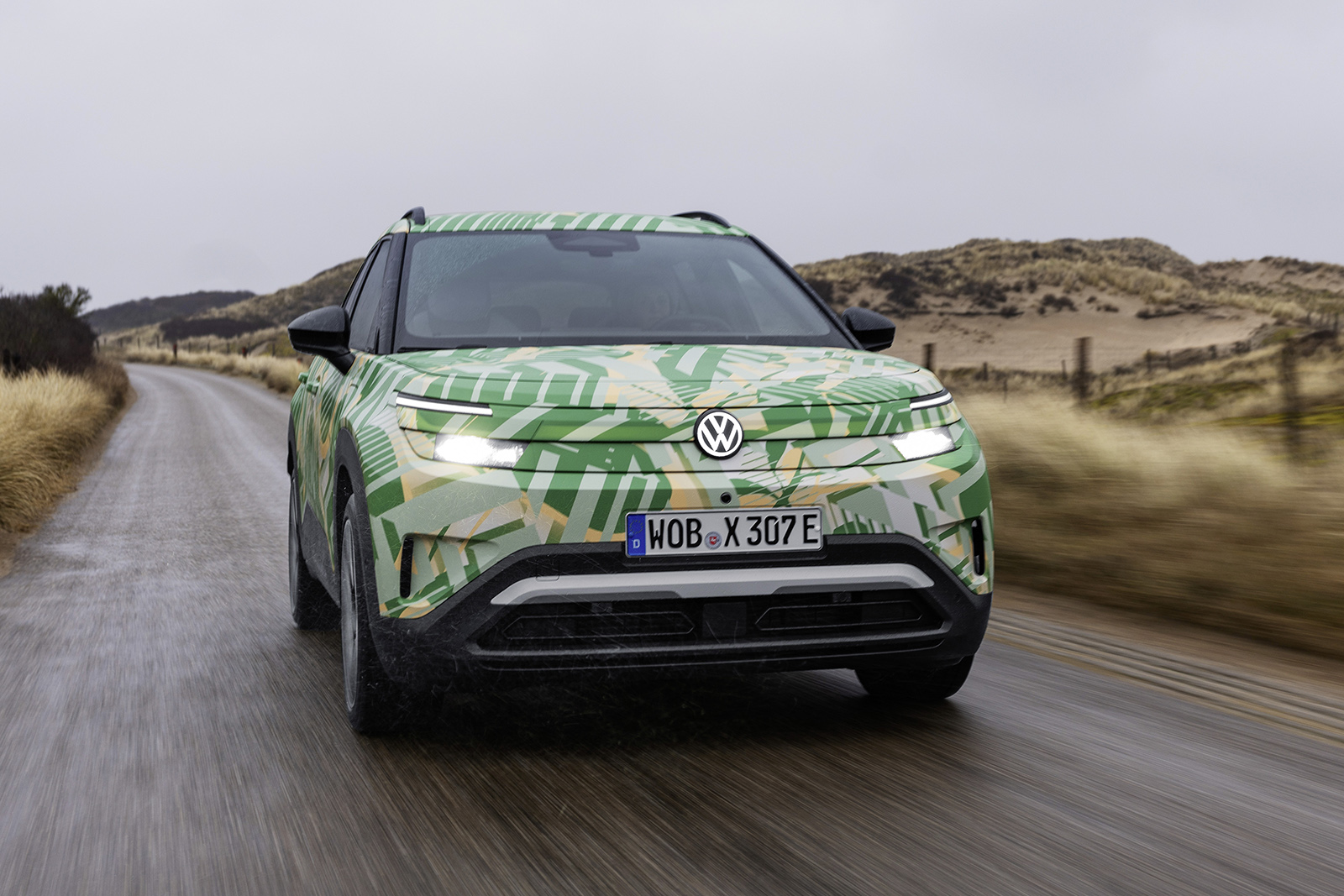
The automotive industry is witnessing a significant strategic pivot from Volkswagen as the German manufacturer prepares to launch the ID Cross, a compact electric SUV that signals a departure from the controversial "touch-only" interface philosophy of its predecessors. This new model represents a direct response to consumer and critical feedback regarding the ergonomic challenges found in earlier ID-series vehicles, such as the ID.3 and ID.4. By reintroducing physical buttons and tactile controls, Volkswagen aims to reconcile modern electric drivetrain technology with the traditional user-friendly ergonomics that defined the brand’s global reputation for decades.
A Strategic Shift in User Experience and Ergonomics
The development of the ID Cross marks a turning point for Volkswagen’s interior design language. Since the debut of the ID.3 in 2019, the company had aggressively pursued a minimalist aesthetic, replacing physical switches with capacitive touch pads and haptic sliders. However, this "overzealous minimalism" faced persistent criticism for being unintuitive and distracting for drivers.
In the ID Cross, Volkswagen has implemented what engineers describe as a "back to basics" ethos. The cabin features dedicated "hard" buttons for primary climate control functions, moving away from the previous reliance on software-embedded menus. The steering wheel has also been redesigned, replacing the sensitive haptic panels with traditional physical buttons that provide clear tactile feedback. Even fundamental components, such as window controls and door handles, have been returned to conventional layouts to ensure ease of use.
A notable feature of the new interior is the digital instrument cluster. In a nod to the company’s heritage, the display is housed in a binnacle designed to evoke the aesthetic of the original Mk1 Golf. This screen provides critical data, including speed, energy consumption, and battery percentage, while remaining visible through a uniquely squared-off steering wheel designed to optimize the driver’s line of sight.
Technical Specifications and Platform Architecture
The ID Cross is built upon a front-wheel-drive architecture, a shift from the rear-wheel-drive configuration seen in the larger ID.3 and ID.4 models. This platform is shared with several upcoming Volkswagen Group siblings, including the ID.Polo, the Skoda Epiq, and the Cupra Raval. By utilizing a single motor mounted on the front axle, Volkswagen has been able to optimize interior space and reduce manufacturing complexity.
The vehicle’s performance figures are tailored for the urban and suburban environments it is intended to navigate:
- Peak Power: 208 brake horsepower (bhp)
- Peak Torque: 214 pound-feet (lb-ft)
- Curb Weight: Approximately 1,500 kg
- Battery Capacity: 52kWh Nickel Manganese Cobalt (NMC) unit
- DC Charging Rate: Up to 105kW
- Range: An estimated 271 miles under the Worldwide Harmonised Light Vehicles Test Procedure (WLTP)
One of the most significant engineering achievements of the ID Cross is its weight management. At roughly 1,500 kg, the vehicle is considerably lighter than many contemporary electric SUVs, which often exceed 1,800 kg. This reduced mass contributes to improved agility, more natural braking feel, and enhanced efficiency. Preliminary real-world testing indicates an efficiency rating of approximately 4.5 miles per kilowatt-hour (mpkWh), which would outperform the existing ID.3.
Suspension and Chassis Engineering
Despite its positioning as an affordable compact SUV, the ID Cross features sophisticated chassis engineering. The front suspension utilizes standard MacPherson struts, but the rear employs a specialized torsion beam setup. To balance ride quality with acoustic comfort, Volkswagen engineers developed two-component bushings for the rear axle. These components feature high stiffness in longitudinal movement to ensure a soft ride over undulations, paired with low stiffness in vertical directions to minimize cabin noise and vibrations.
The braking system also represents a high degree of integration. The vehicle uses an electronically controlled system that seamlessly blends regenerative braking with traditional friction discs. The regenerative system is capable of producing up to 2.2g of retardation. By utilizing front-wheel drive, the engineers have ensured that this high level of energy recovery remains stable even during cornering, as the braking force is applied to the wheels responsible for steering and primary traction.
Space Utilization and Practicality
A primary objective for the ID Cross was to deliver "class-above" interior space within a compact footprint. Measuring roughly the size of a conventional Volkswagen T-Cross, the ID Cross offers internal volume comparable to the larger T-Roc. This is achieved through the inherent packaging advantages of an electric drivetrain, which lacks a traditional internal combustion engine and transmission tunnel.
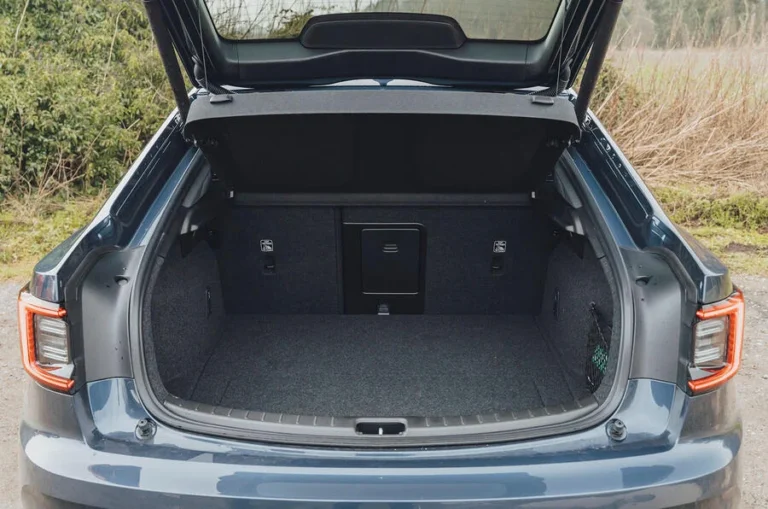
The cargo area is particularly noteworthy, featuring a large boot with a substantial underfloor storage compartment. This design mirrors the practical layout of competitors like the Ford Puma Gen-E. However, some ergonomic hurdles remain; early evaluations indicate that the controls for adjusting the strength of the regenerative braking are currently buried within a digital sub-menu, rather than being accessible via steering wheel-mounted paddles—a feature many EV drivers prefer for on-the-fly adjustments.
Chronology of Development and Market Context
The trajectory of the ID Cross can be traced back to the mid-2020s, when Volkswagen leadership, including CEO Thomas Schäfer, publicly acknowledged that the brand needed to improve its interior quality and software usability.
- 2019-2021: Launch of the ID.3 and ID.4, introducing the touch-heavy "ID" interface.
- 2022: Internal reviews at Wolfsburg identify ergonomics as a primary area for improvement following negative customer feedback.
- 2023: Development of the "MEB Entry" platform (front-wheel drive) accelerates, focusing on affordability and traditional controls.
- 2024: Prototype testing of the ID Cross begins, featuring the "back to basics" interior.
- Forecast 2025-2026: Full production launch of the ID Cross and its Skoda/Cupra variants.
The ID Cross enters a highly competitive segment of the European market. It must contend not only with established rivals like the Renault Megane E-Tech and the Ford Puma Gen-E but also with an increasing number of affordable electric offerings from Chinese manufacturers.
Future Variants and Technological Complexity
While the initial launch focuses on simplicity and affordability, Volkswagen plans to expand the ID Cross lineup with more advanced configurations. Future iterations are expected to include the Dynamic Chassis Control (DCC) system, which allows for continuous adjustment of the dampers to suit different driving conditions. There is also potential for a high-performance variant featuring a limited-slip differential—borrowed from the Cupra Raval VZ—and the possibility of a dual-motor, four-wheel-drive version.
Industry analysts suggest that while these additions will appeal to enthusiasts, the core strength of the ID Cross lies in its current "uncomplicated" state. By avoiding the temptation to over-engineer the base model, Volkswagen is better positioned to meet its price targets and provide a reliable, approachable entry point for consumers transitioning from internal combustion engines to electric power.
Broader Impact and Industry Implications
The ID Cross represents a broader trend in the automotive industry toward "corrective design." After a period of rapid experimentation with digital-only cockpits, several major manufacturers are returning to physical switchgear for safety and ergonomic reasons. Euro NCAP, the independent safety body, has recently signaled that it will begin docking points from vehicles that do not have physical controls for essential functions like turn signals and wipers by 2026.
Volkswagen’s decision to prioritize physical buttons in the ID Cross is both a strategic move to regain consumer trust and a proactive step toward meeting future safety standards. If successful, the ID Cross could serve as the blueprint for all future Volkswagen models, effectively ending the era of the touch-slider and restoring the brand’s reputation for functional, high-quality interiors.
The vehicle’s efficiency and charging capabilities also set a new benchmark for the "affordable" EV segment. A 10-80% charge time of 24 minutes at a 105kW rapid charger ensures that the ID Cross is viable for longer journeys, addressing one of the primary concerns of first-time EV buyers. As the market matures, the focus is shifting from "revolutionary" tech to "reliable" daily usability—a shift that the ID Cross appears perfectly positioned to lead.