


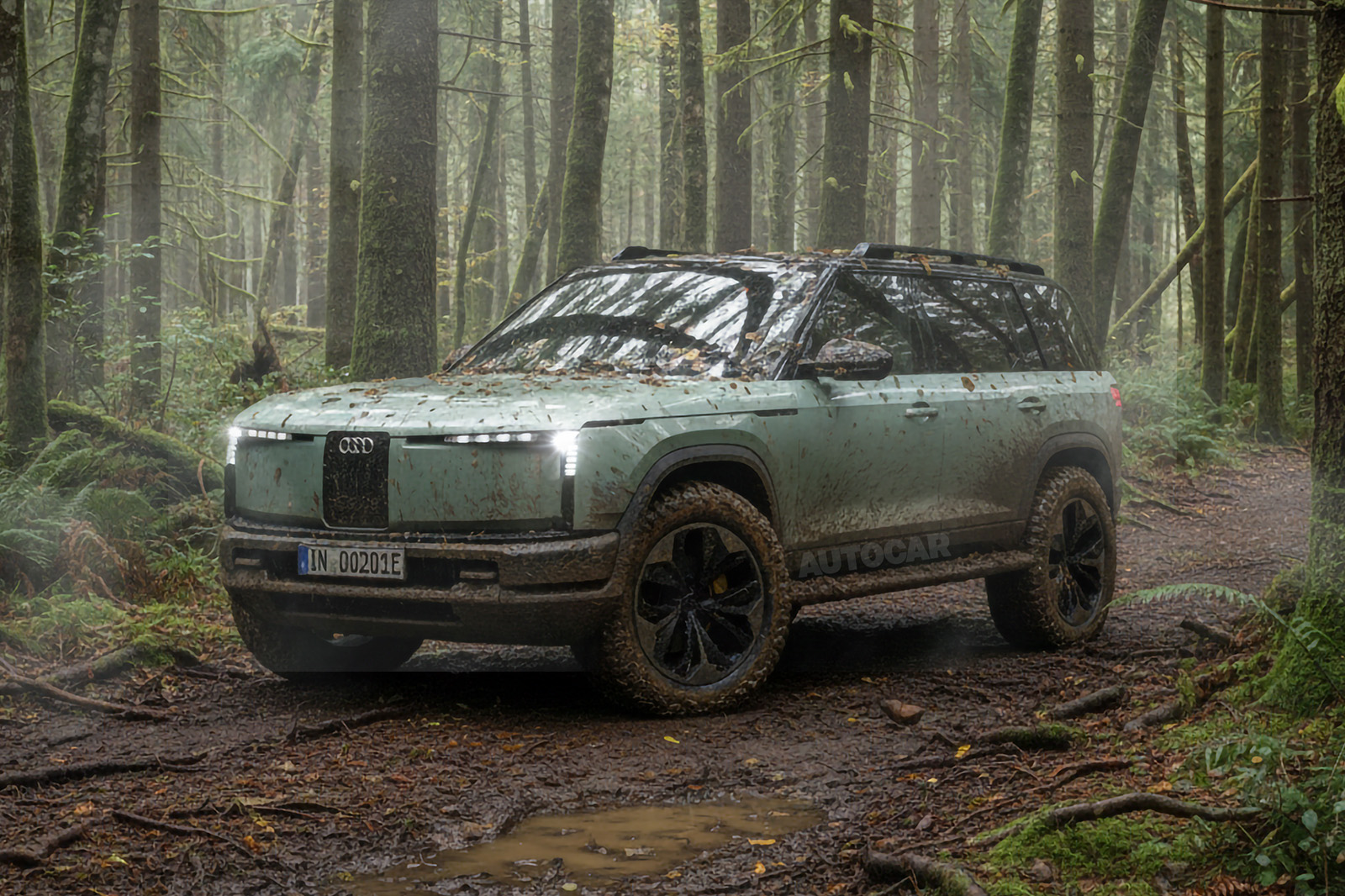
The global automotive landscape is witnessing a significant shift as Audi AG moves closer to confirming the development of a dedicated electric off-roader designed to challenge the established hegemony of the Land Rover Defender and the Mercedes-Benz G-Class. During Audi’s recent annual media conference, Chief Executive Officer Gernot Döllner provided the strongest indications yet that the Ingolstadt-based manufacturer is preparing to enter the high-margin, rugged SUV sector. While the company has historically focused on road-biased crossovers and performance sedans, this potential pivot represents a fundamental expansion of the brand’s "Vorsprung durch Technik" philosophy into the realm of authentic all-terrain capability.
Döllner’s remarks come at a critical juncture for Audi as it navigates a complex transition toward full electrification while attempting to capture a larger share of the lucrative North American and Chinese markets. When questioned about the prospect of a 4×4 flagship, Döllner declined to issue a denial, instead highlighting the inherent flexibility of the Audi brand architecture. He noted that Audi possesses the engineering breadth to span the entire automotive spectrum, from entry-level electric vehicles to high-performance sports cars and, crucially, rugged SUVs. This statement aligns with a broader corporate strategy to revitalize the brand’s product portfolio under his leadership, which began in late 2023.
The Strategic Shift Toward Localized Luxury
The impetus for a rugged Audi off-roader is deeply rooted in the company’s revised global sales strategy, which places a renewed emphasis on localized product development. For decades, German luxury manufacturers followed a "one-size-fits-all" approach, but Audi is now pivoting toward vehicles tailored specifically for regional preferences. The United States market, in particular, has shown an insatiable appetite for large, capable, and prestigious SUVs—a segment where the Land Rover Defender and Mercedes-Benz G-Class currently enjoy significant pricing power and brand loyalty.
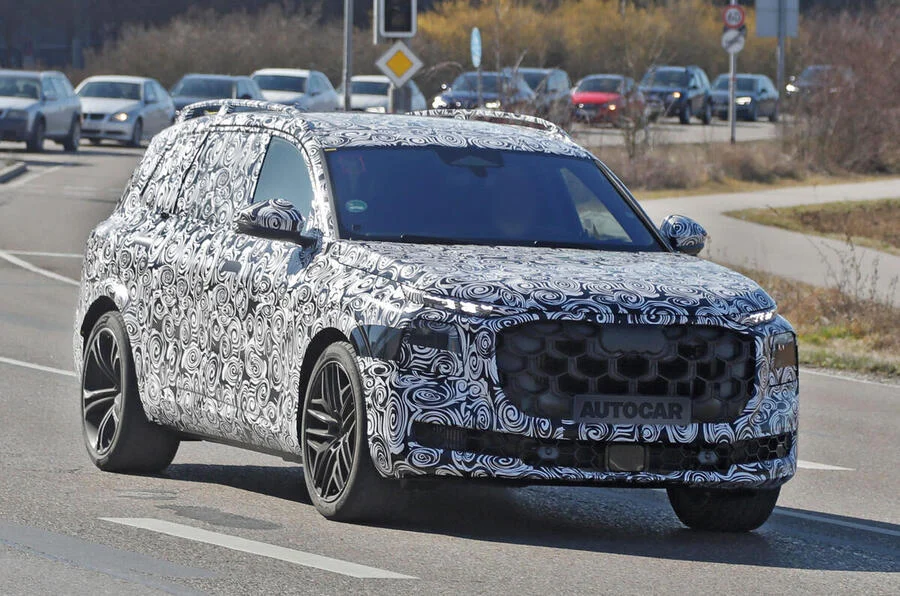
Central to this strategy is the upcoming Audi Q9, a vehicle that Döllner highlighted as a bellwether for Audi’s future ambitions. The Q9, currently undergoing final testing in camouflage, is set to be the brand’s largest and most opulent internal combustion engine (ICE) SUV to date. By launching the Q9 in the United States first, Audi is signaling that it no longer views the North American market as a secondary recipient of European-spec models. Instead, the U.S. is becoming the primary incubator for Audi’s largest platforms. A rugged electric 4×4 would logically follow this trajectory, offering a zero-emission alternative to the traditional luxury off-roaders that dominate affluent suburban and rural landscapes in North America.
Evolution of the Project: From Concept to Corporate Priority
The concept of an Audi "G-Class rival" is not a recent development but rather the culmination of several years of internal deliberation. The project first gained public visibility in early 2023 through comments made by Marc Lichte, Audi’s then-head of design. Lichte argued that Audi’s historical "Quattro" legacy provided the perfect emotional and technical foundation for a serious off-roader. He pointed out a significant market gap, noting that the premium rugged SUV segment was currently a duopoly between Land Rover and Mercedes-Benz. In Lichte’s view, there was ample "space for a third player" to introduce a design-led, technologically superior alternative.
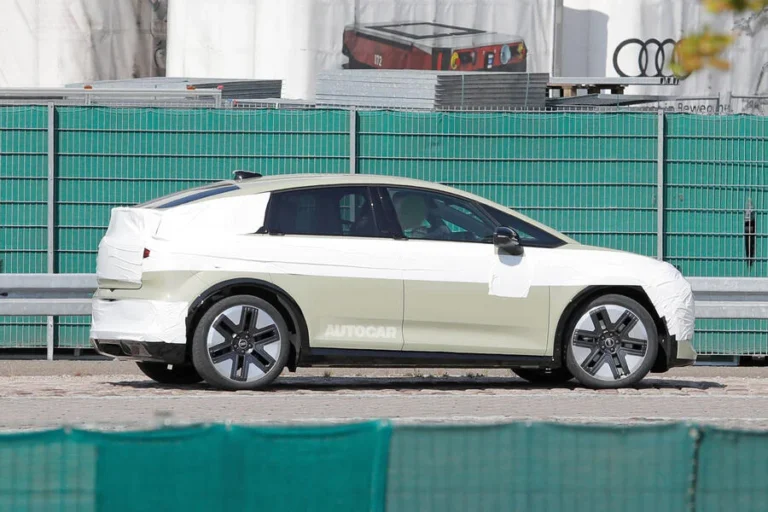
The timeline of the project’s development has been marked by several key organizational changes. Following Lichte’s departure, Audi appointed Massimo Frascella as the new Head of Design. Frascella’s appointment is widely regarded by industry analysts as a strategic move to bolster the off-roader project. Prior to joining Audi, Frascella held a senior design role at Jaguar Land Rover (JLR), where he was instrumental in shaping the aesthetic of the modern Land Rover Defender. His expertise in balancing rugged utility with contemporary luxury is seen as essential for ensuring that a future Audi 4×4 carries the necessary visual gravitas to compete in this specialized segment.
Technical Foundations and Platform Synergy
While Audi has not yet released specific technical specifications for the proposed off-roader, the vehicle is expected to leverage the Volkswagen Group’s extensive electric vehicle architecture. Two primary possibilities exist for the vehicle’s underpinnings. The first is the Premium Platform Electric (PPE), co-developed with Porsche, which currently powers the Audi Q6 e-tron and the electric Porsche Macan. The PPE architecture supports 800-volt fast-charging and high-output dual-motor configurations, which would be necessary for a heavy, high-drag off-road vehicle.
The second, and perhaps more intriguing possibility, involves synergy with Scout Motors, the newly revived American brand owned by the Volkswagen Group. Scout is currently developing a dedicated body-on-frame electric platform for its own upcoming SUV and pickup truck. By utilizing Scout’s rugged "ladder-frame" style EV architecture, Audi could produce a vehicle with genuine rock-crawling capabilities and high ground clearance that a unibody crossover platform might struggle to achieve. This cross-brand collaboration would allow Audi to minimize development costs while ensuring the vehicle meets the mechanical expectations of serious off-road enthusiasts.
Market Analysis and Competitive Landscape
The rugged luxury SUV segment has proven to be remarkably resilient to economic fluctuations, often yielding some of the highest profit margins in the automotive industry. The Mercedes-Benz G-Class, for example, has seen its demand consistently outstrip supply, leading to the development of the electric G580 with EQ Technology. Similarly, JLR’s Defender has become the company’s most profitable model line, successfully expanding from a single utility vehicle into a diverse family of 90, 110, and 130 variants.
Data from global automotive market research firms suggests that the "overlanding" and luxury adventure trend shows no signs of slowing down. Consumers are increasingly seeking vehicles that offer a "go-anywhere" persona, even if the primary use case remains urban or suburban. For Audi, entering this space is not merely about volume; it is about brand equity. A flagship electric 4×4 would serve as a "halo car," showcasing the brand’s ability to master the toughest terrains using sustainable propulsion. This would effectively bridge the gap between Audi’s rally-winning Quattro heritage and its future as an e-mobility leader.
Balancing Innovation with Portfolio Simplification
One of the primary challenges facing Gernot Döllner is his stated objective to simplify Audi’s sprawling product lineup. In recent years, the brand has been criticized for having an overly complex array of models and trim levels that can confuse consumers and inflate manufacturing costs. Introducing a niche, low-volume off-roader might seem contradictory to a simplification mandate.
However, Döllner has defended the necessity of flagship models. In his view, a simplified lineup does not mean a boring one. He has emphasized that Audi must maintain "lighthouse" projects—vehicles that push the boundaries of technology and design. These flagship models serve as development laboratories for features that eventually trickle down to high-volume models like the A4 and Q5. An electric off-roader would likely debut advanced torque-vectoring systems, new battery cooling techniques for high-load scenarios, and sustainable interior materials that could define the next generation of Audi interiors.
Broader Implications for the Audi Brand
The potential launch of a rugged electric SUV represents a significant moment in Audi’s transformation. It signifies a departure from the "bubble" design language of the previous decade toward a more muscular, upright, and assertive aesthetic. This shift is expected to be a hallmark of Frascella’s design leadership.
Furthermore, the project highlights the increasing importance of the "software-defined vehicle." A modern off-roader relies heavily on sophisticated sensors and software to manage traction, suspension damping, and energy distribution. By developing these systems for a flagship 4×4, Audi can strengthen its position within the Cariad software division of the Volkswagen Group, which has faced challenges in meeting delivery timelines for new vehicle software.
As Audi moves toward its goal of launching only electric vehicles from 2026 onwards, the inclusion of a rugged off-roader in its portfolio serves as a powerful statement of intent. It demonstrates that electrification does not have to come at the expense of capability or character. While a formal reveal date has not been set, industry insiders suggest that a concept version of the vehicle could appear as early as 2025, with production following shortly thereafter.
In conclusion, Audi’s pursuit of a Land Rover Defender rival is a calculated move to capture a high-growth, high-margin segment while reinforcing its technical credentials. Under the leadership of Gernot Döllner and the creative vision of Massimo Frascella, the brand is positioning itself to offer a unique blend of German engineering precision and authentic off-road adventure. Should the project reach fruition, it will likely stand as one of the most significant additions to the Audi stable since the introduction of the original Quattro in the 1980s, marking a new chapter in the brand’s storied history of all-wheel-drive excellence.