


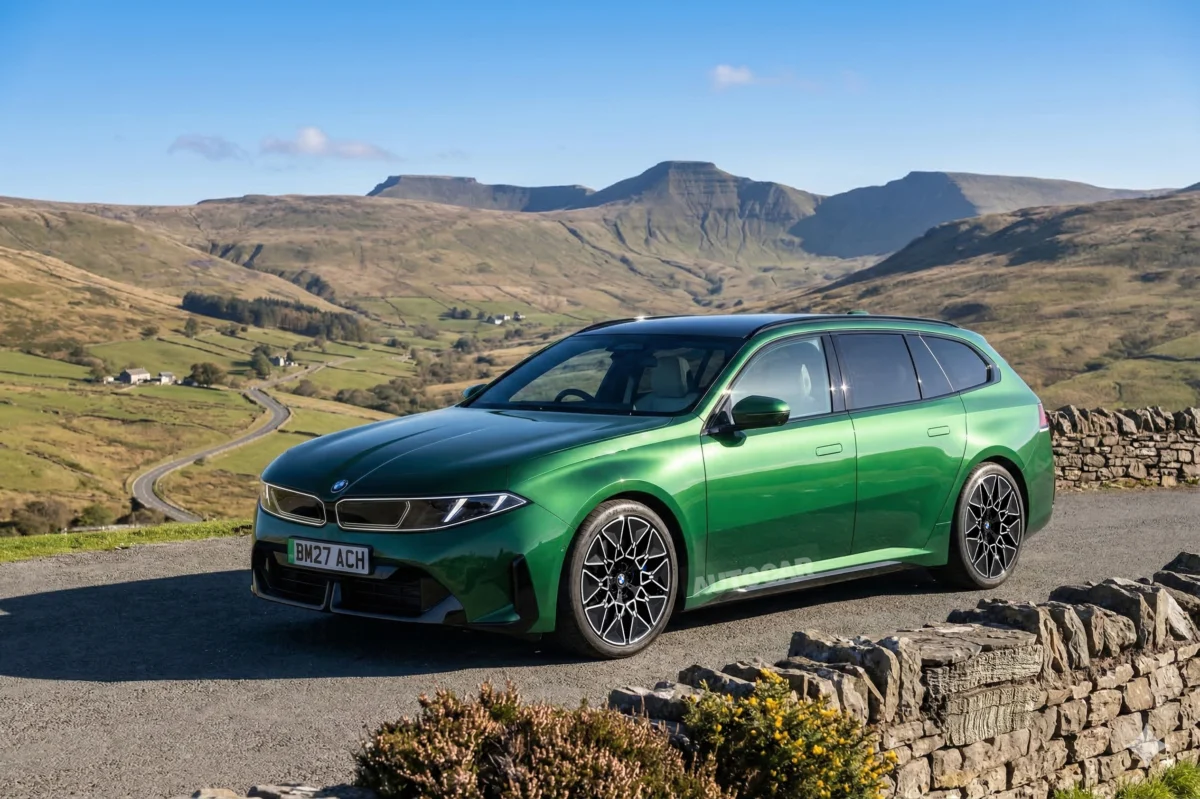
BMW has officially confirmed that the upcoming i3, its flagship electric 3 Series successor, will be offered in a Touring estate body style, complementing the previously announced saloon. The announcement, which took place during the unveiling of the i3 concept and technical specifications, included a brief but significant visual reveal: a silhouette of the Touring model projected on-screen, showcasing a distinct elongated roofline and the practical hatchback boot that has defined BMW’s estate offerings for decades. This move signals BMW’s commitment to maintaining its core heritage of functional performance as it transitions into a purely electric future under the "Neue Klasse" banner.
The introduction of the i3 Touring is a calculated strategic move designed to secure BMW’s dominance in the European premium market, where estate cars remain a staple for professional fleets and active families. BMW Group Chief Executive Oliver Zipse emphasized the importance of this variant, noting that business customers and families have historically gravitated toward the Touring format for its blend of driving dynamics and utility. Zipse characterized the i3 as more than just a new model, stating that it "marks a new beginning" for the brand, representing a total transformation of the company’s technological and design philosophy.
The Neue Klasse Architecture: A Technological Paradigm Shift
The i3 and its sibling, the iX3 SUV, represent the vanguard of the Neue Klasse era. This designation is a deliberate nod to the original "New Class" of the 1960s, a series of cars that saved BMW from financial ruin and established its identity as a manufacturer of sporty, high-quality executive vehicles. The modern Neue Klasse is a dedicated electric vehicle (EV) platform that moves away from the "power of choice" strategy—where internal combustion engine (ICE) and EV models shared architectures—to a bespoke, electric-first engineering approach.
Central to this shift is the implementation of an 800-volt battery architecture, which allows for significantly faster charging times and improved efficiency. While the current BMW i4 and iX models utilize 400-volt systems, the jump to 800 volts is expected to allow the i3 to recoup approximately 186 miles (300 km) of range in just 10 minutes of charging at a high-power DC station. This technological leap is essential for BMW to compete with high-end rivals from Porsche, Hyundai, and Audi, who have already adopted 800-volt systems.
Battery Technology and the 559-Mile Benchmark
Perhaps the most striking detail of the i3 announcement is the confirmed range of 559 miles (approximately 900 kilometers) for the top-tier saloon variant. This figure establishes the i3 as the longest-range electric vehicle currently slated for the UK market, comfortably surpassing the range of the Tesla Model 3 Long Range and the Mercedes-Benz EQE.
This performance is made possible by a massive 108kWh battery pack utilizing a new generation of nickel-manganese-cobalt (NMC) cells. These Gen6 battery cells move away from the prismatic format used in current BMW EVs in favor of a cylindrical design. According to BMW engineers, these new cells offer a 20% increase in energy density by volume and a 30% increase in range compared to the fifth-generation technology. Furthermore, the integration of the battery pack directly into the vehicle structure—a "pack-to-chassis" approach—improves torsional rigidity and allows for a lower floor, benefiting both the car’s center of gravity and interior passenger space.
The i3 will feature a dual-motor setup in its xDrive configurations, with new-generation electric motors on both the front and rear axles. These motors are designed to be more compact and efficient, utilizing a hair-pin winding technique that increases torque density. For the Touring model, while the added weight and aerodynamic profile of an estate might slightly reduce the ultimate range compared to the saloon, BMW expects the Touring to remain at the top of its class for long-distance capability.
Practicality and the Touring Legacy
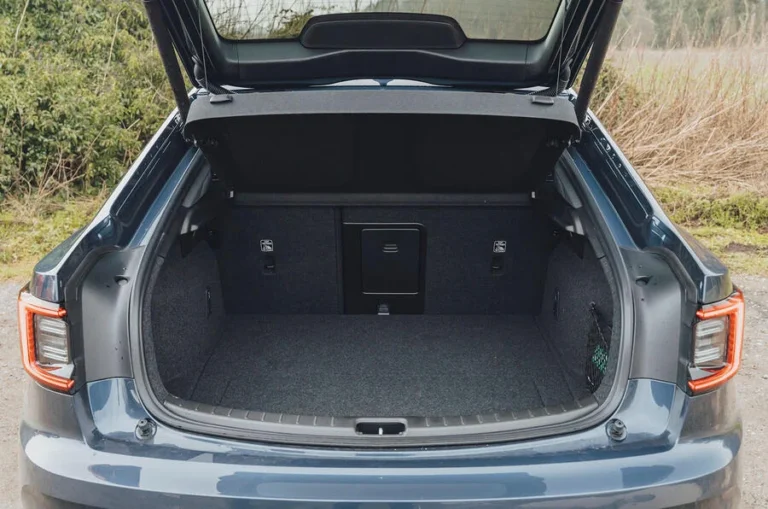
A critical aspect of the i3 Touring’s appeal lies in its utility. Historically, the 3 Series Touring has offered a marginal but important increase in cargo capacity over the saloon. The current petrol-powered 3 Series (G20/G21 generation) provides 480 liters of boot space in the saloon and 500 liters in the estate. While BMW has not yet released the specific volume figures for the i3, the Neue Klasse platform’s flat-floor design is expected to yield significant improvements in cabin room and storage.
The silhouette shown during the unveiling suggests that BMW will retain the iconic "Hofmeister kink" on the D-pillar, while the longer roofline will provide more headroom for rear passengers—a common pain point in electric sedans with sloping rooflines. The hatchback opening of the Touring is expected to feature the split-tailgate functionality that has become a signature of BMW estates, allowing users to open just the rear glass for quick access to the cargo area.
The Dual-Track Strategy: Co-existence with Internal Combustion
Despite the focus on the all-electric i3, BMW is not yet ready to abandon the internal combustion engine. In a move that highlights the complexity of the global energy transition, BMW engineers confirmed to Autocar that the current petrol-powered 3 Series will receive a heavy update to remain on sale alongside the i3.
This updated ICE 3 Series is described as "basically a new car," featuring significant revisions to the chassis, interior, and electronics to bring it into alignment with the design language of the Neue Klasse. This ensures that customers in markets with less developed EV infrastructure still have access to the brand’s core model. By running the Neue Klasse i3 and an updated ICE 3 Series in parallel, BMW is hedging its bets, ensuring it can meet varied global demand while transitioning its primary production lines to electric power.
Chronology of Development and Production
The roadmap for the i3 and the Neue Klasse era has been carefully staged:
- 2023: Reveal of the BMW Vision Neue Klasse concept, showcasing the design direction.
- 2024: Confirmation of the i3 saloon technical specs and the first silhouette reveal of the i3 Touring.
- 2025: Start of production for the Neue Klasse SUV (the iX3 successor) at BMW’s new plant in Debrecen, Hungary.
- 2026: Launch of the i3 saloon and Touring estate, with production expanding to the main plant in Munich, Germany.
- 2027 and beyond: Expansion of the Neue Klasse architecture to include at least six different models across various segments.
The Debrecen plant is particularly noteworthy as it is designed as an "iFACTORY," a facility that operates entirely without fossil fuels, relying instead on renewable energy and a "circular" economy approach to manufacturing.
Market Positioning and Competitive Landscape
The i3 Touring enters a market that is increasingly crowded but remains hungry for premium electric estates. Its primary competitors will include the Audi A6 e-tron Avant and the Volkswagen ID.7 Tourer. While Tesla has dominated the electric sedan market with the Model 3, it famously lacks an estate variant, giving BMW a significant advantage in markets like Germany, the UK, and Scandinavia, where estates are preferred over sedans.
The 559-mile range figure is a direct challenge to the "range anxiety" often cited as a barrier to EV adoption among long-distance business travelers. By offering a range that rivals or exceeds many diesel-powered cars, BMW is positioning the i3 as a no-compromise replacement for the traditional long-haul executive cruiser.
Broader Implications for the BMW Brand
The i3 Touring is more than just a new body style; it represents the survival of the "Ultimate Driving Machine" ethos in a digital age. BMW has promised that the Neue Klasse vehicles will feature a new software stack called "Heart of Joy," which integrates powertrain, chassis, and braking control into a single high-performance computer. This is intended to provide the sharp, communicative handling that 3 Series owners expect, even with the added weight of a 108kWh battery.
Furthermore, the i3 will debut the "BMW Panoramic Vision," a new head-up display that spans the entire width of the windscreen. This technology, combined with a minimalist interior design that eschews traditional buttons for gesture and voice control, signals a move toward a more immersive, tech-forward driving experience.
As BMW moves toward its goal of having more than 50% of its global sales be fully electric by 2030, the i3 Touring will play a pivotal role. It bridges the gap between the brand’s storied past and its high-tech future, offering a familiar silhouette powered by groundbreaking technology. For the automotive industry, the i3’s 559-mile range sets a new benchmark that will likely force competitors to accelerate their own battery development programs. For the consumer, it represents the most significant evolution of the 3 Series since its inception in 1975, promising a future where utility and sustainability do not come at the expense of performance.