



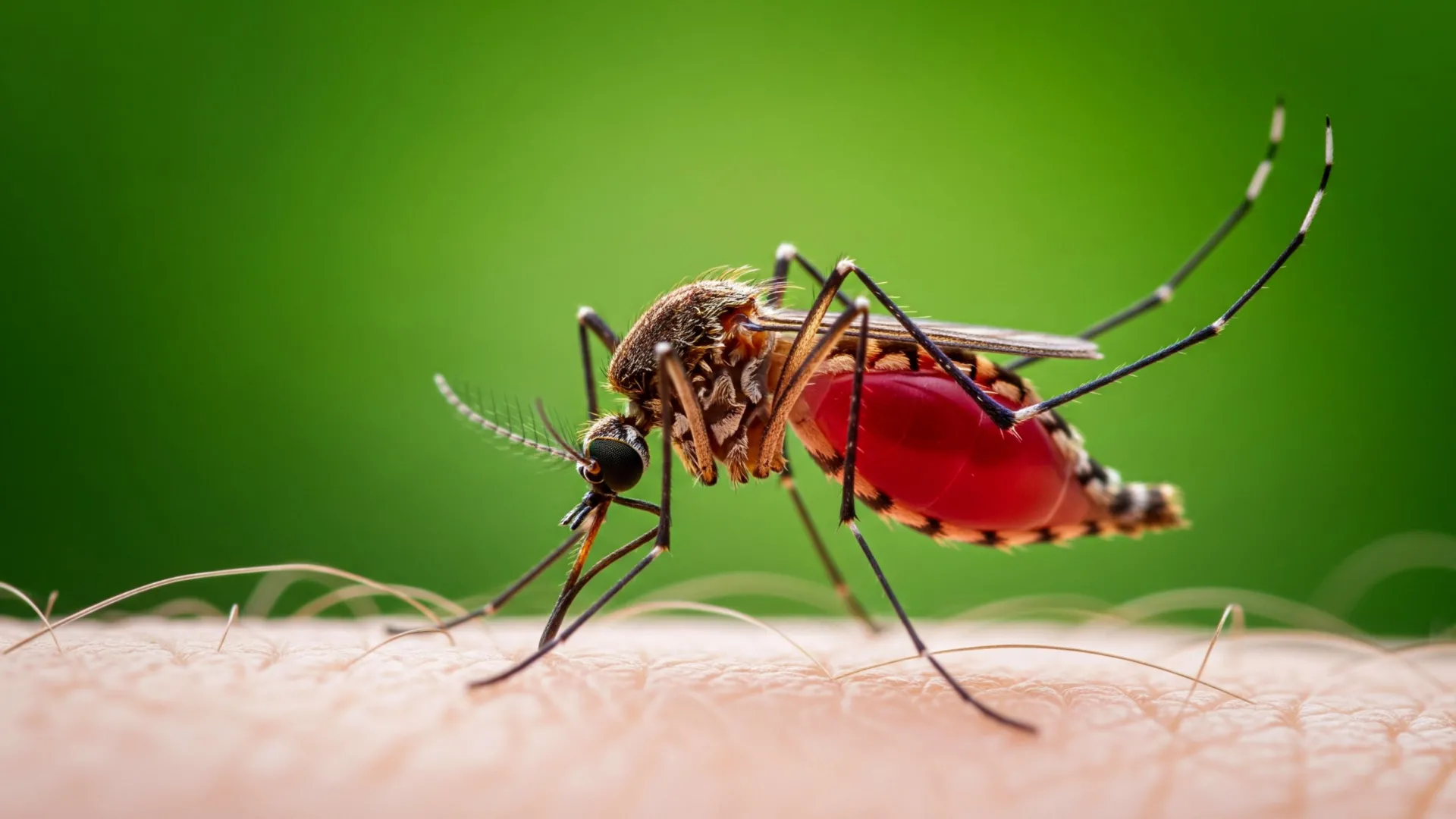
A groundbreaking discovery by researchers at the University of Utah may unlock new avenues for combating malaria and revolutionize the field of microscopic robotics. Scientists have pinpointed the surprising propulsion mechanism behind the constant, chaotic movement of iron crystals found within the deadly malaria parasite, Plasmodium falciparum. This revelation, published in the prestigious journal PNAS, sheds light on a decades-old mystery and offers a novel target for drug development.
Unraveling a Microscopic Mystery
For years, scientists have observed a peculiar phenomenon within every cell of the Plasmodium falciparum parasite: microscopic iron crystals, known as hemozoin, are in perpetual motion. These crystals, essential for the parasite’s survival, whirl, bounce, and collide with an unpredictable energy, resembling a shaken container of loose change. This frenetic activity has eluded explanation, leaving a significant gap in our understanding of this devastating pathogen.
"People don’t talk about what they don’t understand, and because the motion of these crystals is so mysterious and bizarre, it’s been a blind spot for parasitology for decades," stated Dr. Paul Sigala, an associate professor of biochemistry at the Spencer Fox Eccles School of Medicine (SFESOM) at the University of Utah. The enigmatic nature of these movements has made them a challenging target for antimalarial drug development, despite their known importance.
The breakthrough came when Dr. Sigala’s team identified a chemical reaction, remarkably similar to the propellant used in rocket engines, as the driving force behind this microscopic ballet. This discovery not only demystifies the crystal’s motion but also opens up exciting possibilities for both medical interventions and the burgeoning field of nanotechnology.
Rocket-Like Chemistry Fuels Microscopic Motion
The core of the discovery lies in the chemical breakdown of hydrogen peroxide (H₂O₂). The researchers found that this common molecule, naturally produced as a byproduct within the parasite’s cellular environment, is decomposed into water and oxygen. This decomposition releases energy, acting as a tiny, internal engine to propel the heme-based crystals.
"This hydrogen peroxide decomposition has been used to power large-scale rockets," explained Dr. Erica Hastings, a postdoctoral fellow in biochemistry at SFESOM. "But I don’t think it has ever been observed in biological systems." The concept of a chemical reaction generating propulsion is well-established in aerospace engineering, where hydrogen peroxide serves as a potent and reliable fuel for spacecraft launches. However, its application at the nanoscale within a living organism represents a significant paradigm shift.
Hydrogen peroxide is not only abundant within the compartment housing the hemozoin crystals but is also a natural metabolic byproduct of the parasite. This inherent presence made it a prime candidate for the energy source. To confirm their hypothesis, the researchers conducted experiments where isolated crystals, removed from the parasite, were exposed to hydrogen peroxide. The results were conclusive: the crystals began to spin and move independently, validating the chemical propulsion theory.
Further evidence emerged when the researchers cultured the parasites under low-oxygen conditions. This environmental change significantly reduced the parasite’s production of hydrogen peroxide. As predicted, the hemozoin crystals slowed to approximately half their usual speed, even though the parasites themselves remained otherwise healthy, underscoring the critical role of hydrogen peroxide in maintaining the crystals’ energetic motion.
The Evolutionary Advantage of Moving Crystals
The persistent motion of these hemozoin crystals is not merely a byproduct of the parasite’s metabolism; it is believed to be a crucial survival mechanism. Scientists have proposed two primary theories for why this constant movement is so vital for the parasite’s viability.
One prominent explanation centers on the detoxification of hydrogen peroxide. Hydrogen peroxide, while essential for crystal propulsion, is a highly reactive and potentially toxic molecule. The vigorous spinning of the hemozoin crystals may act as a mechanism to efficiently neutralize excess hydrogen peroxide, thereby preventing cellular damage that could be caused by uncontrolled chemical reactions. This internal "scrubbing" system allows the parasite to maintain a delicate metabolic balance.
Dr. Sigala further suggests that the dynamic movement of the crystals plays a critical role in preventing them from clumping together. Hemozoin crystals are formed as the parasite digests hemoglobin from red blood cells, releasing toxic heme. The parasite sequesters this heme into crystals to render it harmless. If these crystals were to aggregate, their surface area would be reduced, significantly hindering their ability to process and store additional heme efficiently. By remaining in constant motion, the parasite ensures that the crystals maintain their optimal surface area, facilitating efficient heme detoxification and storage. This dynamic process is crucial for the parasite’s ability to multiply within its host.
Implications for Novel Therapies and Nanotechnology
The discovery of self-propelled metallic nanoparticles within a biological system has far-reaching implications. Researchers believe that this phenomenon, the "chemical propulsion of hemozoin crystal motion in malaria parasites," may not be unique to Plasmodium falciparum and could exist in other natural systems, opening up new avenues for scientific exploration.
The insights gained from studying these microscopic crystal engines hold immense promise for the advancement of nanotechnology. The development of nano-engineered self-propelling particles is a rapidly growing area with potential applications ranging from targeted drug delivery systems to advanced materials science and industrial processes. "Nano-engineered self-propelling particles can be used for a variety of industrial and drug delivery applications, and we think there are potential insights that will come from these results," Dr. Sigala commented. The parasite’s natural mechanism offers a blueprint for creating efficient and self-sustaining nanoscale robots.
From a medical perspective, the findings offer a compelling new strategy for combating malaria. The hemozoin crystals and their associated propulsion mechanism are unique to the parasite and are not found in human cells. This stark difference makes them an ideal target for drug development. By designing drugs that interfere with the hydrogen peroxide breakdown chemistry at the crystal surface, scientists could potentially disrupt the parasite’s detoxification and heme management systems, leading to its demise.
"We think that the breakdown of hydrogen peroxide likely makes an important contribution to reducing cellular stress," Dr. Sigala elaborated. "If there are ways to block the chemistry at the crystal surface, that alone might be sufficient to kill parasites." The advantage of targeting a mechanism absent in human cells is the reduced likelihood of significant side effects. "If we target a drug to an area that’s very different from human cells, then it’s probably not going to have extreme side effects," Dr. Hastings added. "If we can define how this parasite is different from our bodies, it gives us access to new directions for medications."
A Timeline of Discovery and Support
The journey to understanding the hemozoin crystal’s propulsion likely began with the initial observations of their movement, dating back to early microscopy studies of the malaria parasite. However, the precise mechanism remained elusive for decades, a testament to the complexity of the parasite’s internal machinery and the limitations of scientific tools.
The current breakthrough is the culmination of dedicated research by Dr. Sigala’s team at the University of Utah, involving meticulous experimentation and advanced imaging techniques. The funding for this pivotal research was provided by substantial grants from the National Institutes of Health (NIH), specifically through grant numbers R35GM133764, R21AI185746, R35GM14749, and T32AI055434. Additional support was received from the Utah Center for Iron & Heme Disorders (grant number U54DK110858), the Price College of Engineering at the University of Utah, and the 3i Initiative at University of Utah Health. This robust financial backing underscores the significance and potential impact of the research.
The publication of their findings in PNAS marks a critical milestone, bringing this complex scientific discovery to the forefront of the global research community. The research community will undoubtedly be keen to build upon these findings, exploring the therapeutic potential and the broader implications for nanoscience. Official responses from malaria research organizations and nanotechnology institutes are anticipated as the implications of this work are further disseminated and analyzed.
Broader Impact and Future Directions
The discovery that Plasmodium falciparum utilizes a rocket-like chemical reaction to power its internal iron crystals is more than just a scientific curiosity; it represents a paradigm shift in how we understand parasitic biology and opens up a wealth of new possibilities.
For malaria control, this finding offers a renewed sense of optimism. With drug resistance remaining a persistent threat in the fight against malaria, the identification of novel, parasite-specific targets is paramount. The hemozoin crystal propulsion system provides a unique biochemical pathway that can be exploited for drug development, potentially leading to new treatments that circumvent existing resistance mechanisms. The development of drugs that specifically inhibit this process could offer a highly targeted and effective way to eliminate the parasite from infected individuals.
In the realm of nanotechnology, the parasite’s natural propulsion system serves as an elegant and efficient model for artificial nanomachines. The ability to harness chemical energy for controlled movement at the nanoscale is a fundamental challenge in the field. By studying how the parasite achieves this, researchers can glean valuable principles for designing more sophisticated and autonomous nanorobots for a variety of applications, from delivering drugs precisely to diseased tissues to performing intricate repairs at the cellular level.
The research team emphasizes that this is just the beginning. Future work will likely focus on further characterizing the precise interactions between hydrogen peroxide, the hemozoin crystals, and the surrounding cellular environment. Understanding the intricate details of this process could lead to the development of highly specific inhibitors or even novel delivery systems. Furthermore, exploring whether similar chemical propulsion mechanisms exist in other microorganisms could reveal broader biological principles and unlock further therapeutic targets.
The work, published as "Chemical propulsion of hemozoin crystal motion in malaria parasites," is a testament to the power of interdisciplinary research, bridging the gap between parasitology, biochemistry, and engineering. It highlights the vast untapped potential that lies within understanding the intricate mechanisms of even the smallest living organisms and underscores the ongoing need for robust scientific funding to support such transformative investigations.