

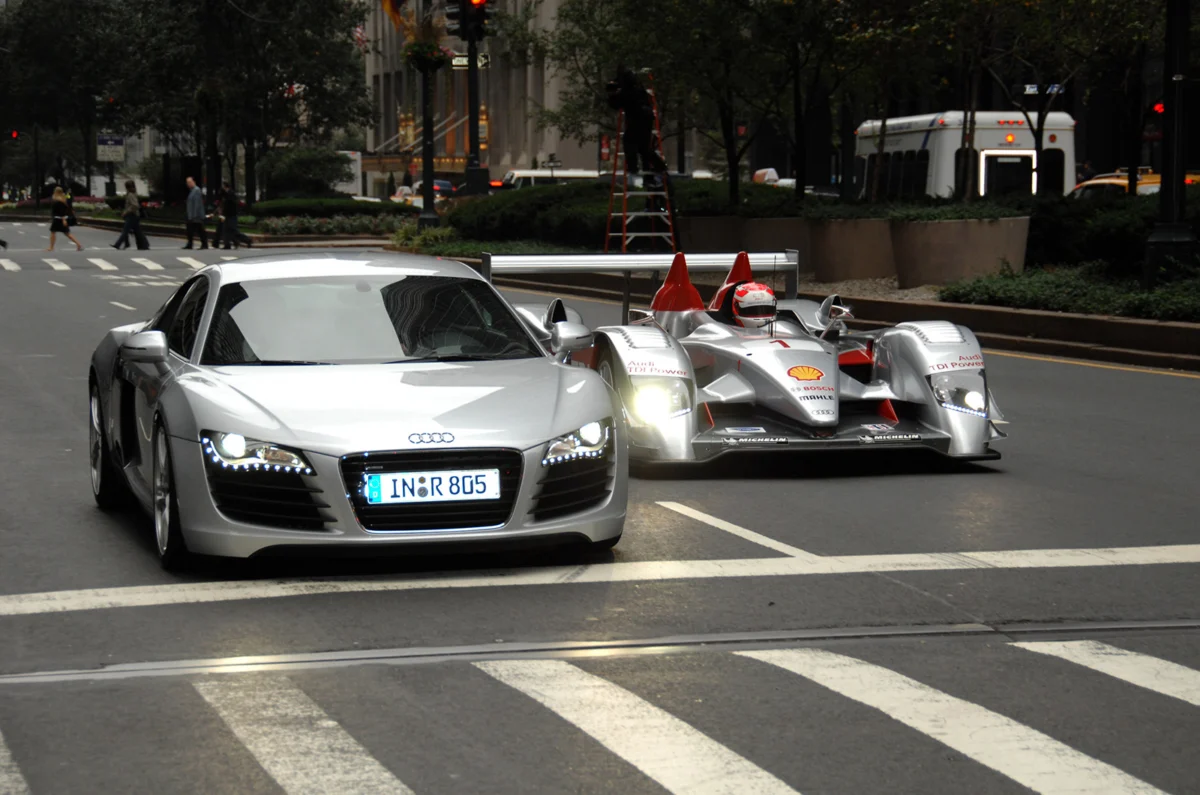
In December 2005, following several years of undisputed dominance at the 24 Hours of Le Mans with the petrol-powered R8 prototype, Audi AG made a strategic announcement that would redefine the trajectory of endurance racing and automotive marketing for the next decade. The Ingolstadt-based manufacturer revealed that its next contender for the world’s most prestigious endurance race would be powered not by gasoline, but by diesel. The vehicle, designated the R10 TDI, represented a massive technological gamble that aimed to prove diesel technology was not merely a fuel-efficient choice for long-distance commuters, but a viable powerhouse for world-class performance.
While the R10 TDI was not technically the first diesel-powered entry to contest the 24 Hours of Le Mans, it was the first to achieve an outright victory. In its debut year in 2006, the R10 TDI secured the top podium spot, a feat it repeated in 2007 and 2008. This unprecedented success served as a cornerstone for Audi’s global marketing strategy. During this era, European Union regulations were increasingly focused on reducing CO2 emissions, and many member states applied lower tax rates to diesel vehicles compared to their petrol counterparts. Audi’s racing success provided the perfect "halo effect" to justify and promote its TDI (Turbocharged Direct Injection) technology to a global audience.
The Strategic Shift to Diesel Performance
The transition to diesel in the mid-2000s was fueled by a convergence of regulatory pressure and engineering breakthroughs. At the time, diesel engines were prized for their inherent thermal efficiency and high torque output, characteristics that are particularly advantageous in endurance racing where fuel economy translates directly into fewer pit stops. Audi’s victory at Le Mans in 2006 was not just a sporting win; it was a proof of concept for "Clean Diesel" technology.
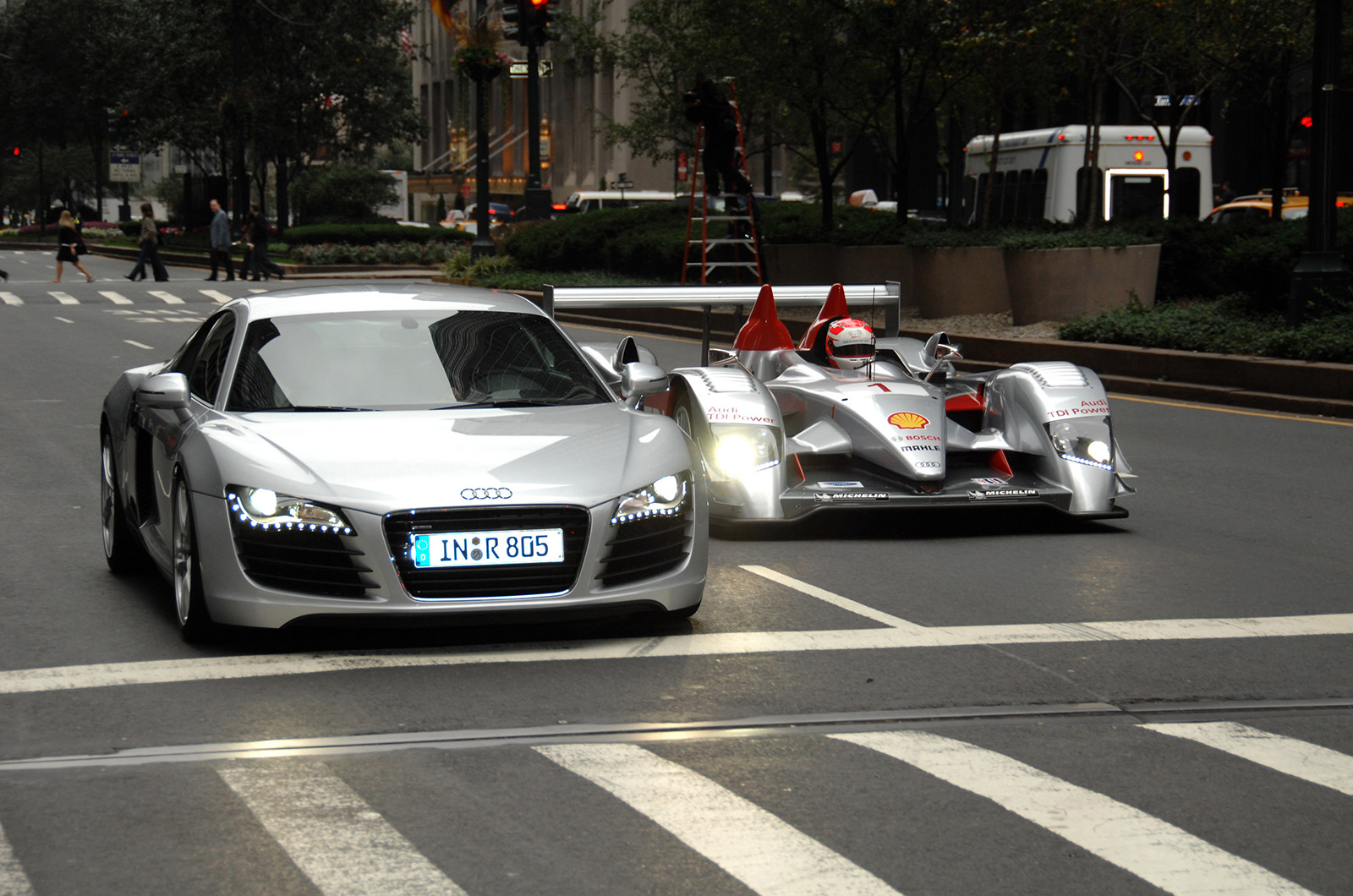
By early 2008, Audi’s confidence in the TDI platform reached its zenith. The company began a brief but intense period of unveiling high-performance, diesel-powered concept models that drew a direct line between the R10 TDI race car and the brand’s road-going portfolio. This era was characterized by an attempt to shift the public perception of diesel from a utilitarian, "tractor-like" fuel to a sophisticated, high-performance alternative to traditional high-octane gasoline.
The Unveiling of the R8 V12 TDI Concept
In January 2008, at the North American International Auto Show in Detroit, Audi unveiled what it termed "the world’s first diesel supercar": the R8 V12 TDI concept. This vehicle was a radical departure from the mid-engine supercar norms of the time. While the standard R8 was already gaining acclaim for its balance and daily usability with a 4.2-liter V8, the V12 TDI concept aimed to provide a level of effortless torque and efficiency previously unheard of in the segment.
The heart of the concept was a new twin-turbocharged 5.9-liter V12 engine. This massive powerplant was engineered to produce 493 brake horsepower (bhp), comfortably eclipsing the 414 bhp of the contemporary V8 R8. However, the most startling figure was the torque. The R8 V12 TDI produced a staggering 738 lb-ft of torque, nearly double the output of the petrol V8. Furthermore, Audi claimed the vehicle was capable of achieving 25 miles per gallon (mpg), a significant improvement over the 19 mpg of the standard model, highlighting the efficiency gains of the diesel cycle even in a high-performance application.
To maintain the visceral engagement expected of a supercar, Audi engineers made the surprising decision to retain the six-speed manual gearbox with its iconic open-gate shifter. This choice underscored the car’s identity as a driver’s machine, despite the unconventional fuel source.
Technical Innovations and Driving Dynamics
Unlike many automotive concepts that serve as non-functional design studies, the R8 V12 TDI was a fully operational prototype. In April 2008, early testing sessions in Miami allowed journalists to experience the sheer physics of a 1,000-Newton-meter (738 lb-ft) torque curve. The engine reached its peak torque at just 1,750 rpm, providing a linear and relentless surge of acceleration that differed significantly from the high-revving nature of traditional Italian or German supercars.
The engineering required to fit a V12 diesel into the R8 chassis was extensive. The engine itself was longer than the V8 and V10 units, requiring a redesign of the rear subframe and cooling systems. To manage the heat generated by the twin turbochargers and the massive displacement, Audi added a prominent NACA duct to the roof of the vehicle to feed air directly into the engine bay.
One of the most notable characteristics of the R8 V12 TDI was its refinement. The engine utilized a sophisticated common-rail injection system and a complex array of filters and catalytic converters to meet Euro 6 emission standards—which were not even in effect at the time. These systems had the secondary effect of muffling the traditional diesel "clatter" and exhaust drone, resulting in a driving experience that was exceptionally quiet and smooth, even at high speeds.
The Production Reality: The Q7 V12 TDI
While the R8 V12 TDI remained a concept, its mechanical DNA found its way into a production vehicle: the Audi Q7 V12 TDI. Launched in late 2008, the Q7 V12 TDI became the most powerful diesel SUV in the world. It utilized the same 5.9-liter engine architecture, incorporating a crankshaft and injection system derived directly from the R10 TDI Le Mans racer.
The Q7 V12 TDI produced 500 PS (493 hp) and 1,000 Nm of torque, allowing the massive SUV to accelerate from 0 to 62 mph in just 5.5 seconds. This vehicle served as the ultimate expression of Audi’s diesel engineering, featuring carbon-ceramic brakes as standard to cope with the immense weight and power. It remains a high-water mark for internal combustion SUV engineering, though its high price tag and niche appeal kept production numbers relatively low.
Expanding the Diesel Portfolio: The A3 Clubsport Quattro
The diesel offensive extended beyond the top-tier halo models. Audi also introduced the A3 Clubsport Quattro concept, a smaller, more accessible take on the high-performance diesel theme. Powered by a 2.0-liter four-cylinder TDI engine tuned to produce 221 bhp and 332 lb-ft of torque, the A3 Clubsport demonstrated that diesel could be fun in a hot-hatch format.
This concept featured a six-speed manual transmission and Audi’s signature Quattro all-wheel-drive system. It was designed to show that the lessons learned at Le Mans could trickle down to the vehicles driven by average consumers. The A3 Clubsport showcased advanced aerodynamics and a lightweight chassis, further reinforcing the message that TDI was synonymous with "Vorsprung durch Technik" (Progress through Technology).
The Economic and Regulatory Pivot
At the height of its diesel development in 2008, Audi executives were confident that a production version of the R8 V12 TDI was approximately 18 months away from showrooms. However, several external factors converged to halt the project.
The first was the 2008 global financial crisis. As markets collapsed, the appetite for high-cost, low-volume experimental supercars evaporated. Audi, like all major manufacturers, had to rationalize its research and development budget. The engineering costs required to make the V12 TDI pass stringent U.S. emissions tests and to strengthen the drivetrain to handle the torque reliably over the vehicle’s lifespan were deemed too high for the projected sales volume.
Furthermore, the complexity of the V12 engine meant it occupied significantly more space than the petrol V10 that was also under development for the R8. When the R8 V10 was released, it provided supercar performance with less weight and lower manufacturing complexity, effectively rendering the V12 TDI redundant from a performance standpoint.
Legacy and the Shift Toward Electrification
The era of the diesel supercar was short-lived, but its impact on Audi’s brand identity was profound. The R10 TDI’s success at Le Mans cemented Audi’s reputation as an engineering powerhouse capable of winning with unconventional technology. It paved the way for the R18 e-tron quattro, which later combined diesel power with hybrid electrification, continuing Audi’s winning streak at Le Mans.
In retrospect, the R8 V12 TDI concept represents a fascinating "what if" in automotive history. It was the pinnacle of a period where diesel was seen as the future of both efficiency and performance. While the automotive industry has since shifted its focus toward battery electric vehicles (BEVs) and hydrogen fuel cells, the Audi V12 TDI remains a testament to a time when engineering boundaries were pushed to their limits in the pursuit of diesel perfection.
Today, the R8 V12 TDI and the Q7 V12 TDI are viewed as mechanical curiosities from a bygone era of internal combustion. They serve as a reminder of Audi’s willingness to experiment and the massive marketing power of motorsport. While the "Clean Diesel" narrative eventually faced significant challenges in the mid-2010s, the technical achievement of placing a Le Mans-winning engine architecture into a road-going format remains one of the most ambitious chapters in Audi’s century-long history.