


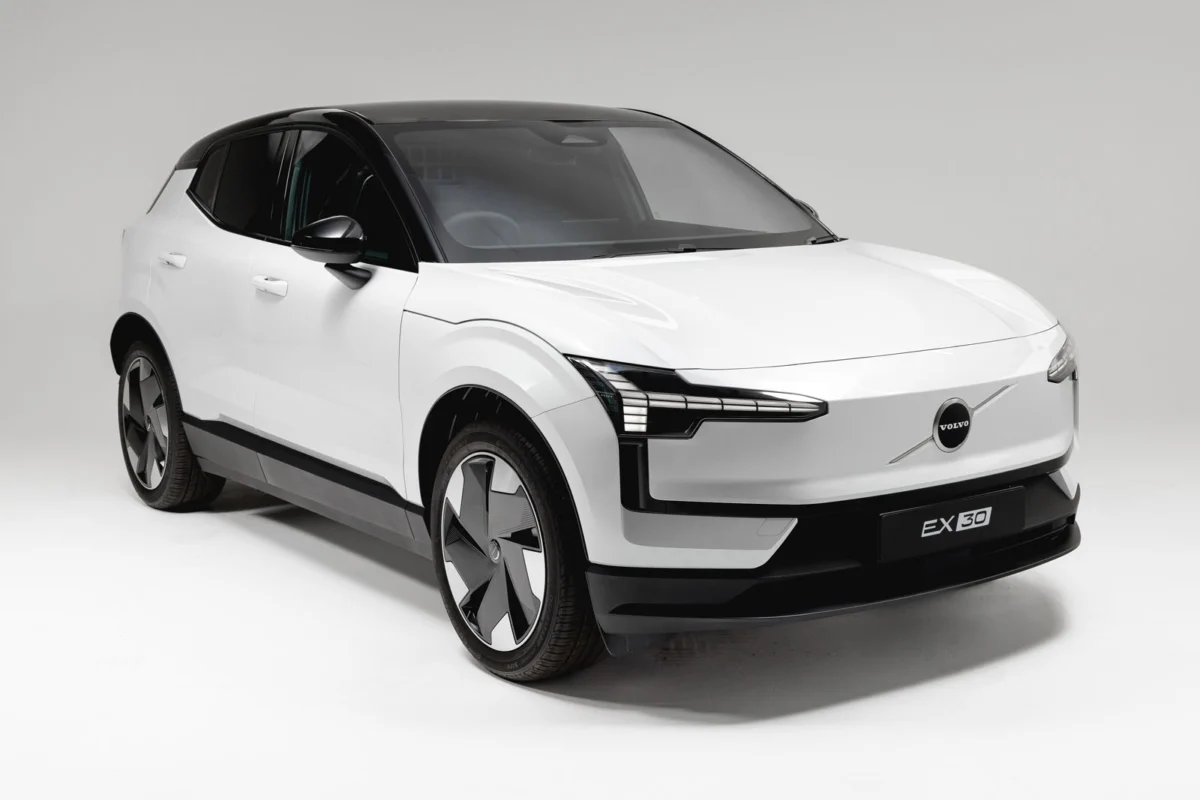
Volvo UK has officially announced the launch of the EX30 Cargo, a specialized commercial adaptation of its smallest all-electric SUV designed to meet the growing demand for premium, zero-emission urban logistics. This strategic move marks a significant departure for the Swedish automaker in the British market, as it repurposes the award-winning EX30 platform into a load-hauling vehicle capable of delivering up to 423bhp. By removing the rear seating and optimizing the interior for volume, Volvo is targeting a niche yet expanding demographic of business owners, boutique delivery services, and fleet managers who require the prestige and safety of a Volvo alongside the utility of a traditional van.
A Strategic Transformation of the Compact SUV Platform
The EX30 Cargo is not merely a passenger car with the seats folded down; it represents a comprehensive structural conversion tailored for the UK’s commercial vehicle sector. The primary modification involves the complete removal of the rear passenger bench, replaced by a meticulously engineered flat-floored cargo bay. To ensure the vehicle meets the rigorous demands of professional use, Volvo has introduced unique door cards and specialized interior paneling throughout the rear compartment. These adjustments are designed to protect the vehicle’s interior from wear and tear while maximizing every available millimeter of storage space.
The resulting cargo capacity is a substantial 1,000 liters, a nearly threefold increase over the 318 liters provided by the standard passenger version when its seats are in place. Furthermore, the EX30 Cargo is rated to carry a payload of up to 390kg. While this payload capacity is modest compared to larger dedicated electric vans like the Volvo-affiliated LEVC VN5 or the Ford E-Transit, it positions the EX30 Cargo as a premier choice for "last-mile" deliveries where the volume of goods is high but the individual weight of items—such as pharmaceutical supplies, high-end electronics, or luxury floral arrangements—is relatively low.
Engineering for Accessibility and Security
Recognizing that commercial operators require frequent and efficient access to the load area, Volvo engineers have modified the rear door hinges. The doors on the EX30 Cargo open significantly wider than those on the standard SUV, facilitating the loading of bulky items that might otherwise be difficult to maneuver into a compact vehicle. The interior of the cargo bay is also equipped with a series of integrated attachment points and lashing eyes, allowing drivers to secure smaller or fragile loads to prevent shifting during transit.
Security and privacy are paramount for business users transporting valuable goods. Consequently, the EX30 Cargo comes standard with heavy window tinting on the rear glass. This feature serves a dual purpose: it shields the contents of the van from the prying eyes of passersby when parked in urban environments and maintains the vehicle’s sleek, professional aesthetic. From the exterior, the vehicle retains the sophisticated "Thor’s Hammer" LED headlight signature and the minimalist Scandinavian design language that has made the EX30 a critical success since its debut.
Unprecedented Performance in the Commercial Sector
One of the most striking aspects of the EX30 Cargo is the retention of the passenger car’s diverse powertrain lineup. Customers can choose from four distinct power outputs, ranging from a sensible 148bhp entry-level motor to the flagship 423bhp dual-motor, all-wheel-drive variant. In its most powerful configuration, the EX30 Cargo mirrors the performance of the passenger-spec Twin Motor Performance model, which is capable of accelerating from 0-62mph in just 3.6 seconds.
This level of performance is virtually unheard of in the compact van segment. While most commercial vehicles prioritize efficiency and durability over raw speed, the EX30 Cargo offers a unique proposition for emergency rapid-response services or businesses that operate in environments where high-speed capability is a functional requirement. The inclusion of the 423bhp powertrain ensures that even when fully loaded to its 390kg limit, the vehicle maintains exceptional agility and power reserves, allowing it to navigate complex traffic scenarios with ease.
Trim Levels and Fleet-Exclusive Availability
Volvo is offering the EX30 Cargo in three distinct trim levels: Core, Plus, and the rugged Cross Country Plus. The inclusion of the Cross Country trim is particularly noteworthy, as it features increased ground clearance, bespoke wheel designs, and protective body cladding. This variant is expected to appeal to utility companies, park rangers, or technical service providers who need to transport tools and equipment across unpaved or uneven terrain without upgrading to a full-sized 4×4 van.
In a departure from traditional retail models, the EX30 Cargo will not be available through Volvo’s standard consumer dealership network. Instead, it is being sold exclusively through Volvo UK’s dedicated fleet sales channels. This decision reflects Volvo’s intent to build direct relationships with corporate clients and small business owners, offering tailored financing, maintenance packages, and fleet management software integration that are specific to the commercial sector.
Chronology of the EX30’s Evolution
The development of the EX30 Cargo is the latest chapter in what has been a rapid rollout for Volvo’s smallest electric offering.
- June 2023: Volvo officially reveals the EX30 in Milan, Italy, as its first purpose-built compact electric SUV, emphasizing a low carbon footprint and sustainable materials.
- Late 2023: Production begins at the Zhangjiakou plant in China, with plans later announced to expand production to Ghent, Belgium, to meet high European demand.
- Early 2024: The EX30 enters the UK market, quickly becoming one of the best-selling EVs in the region due to its competitive pricing and premium branding.
- Mid-2024: Industry rumors begin to circulate regarding a commercial variant, following the success of "car-derived vans" from other manufacturers in the UK and European markets.
- Late 2024: Volvo UK officially confirms the EX30 Cargo, revealing the specifications for the 1,000-liter conversion and opening the order books for fleet customers.
Context: The Rise of the Car-Derived Van (CDV)
The EX30 Cargo enters a market that has seen a resurgence of the car-derived van. Historically popular in the UK due to tax incentives and ease of parking in congested cities, the CDV segment has recently pivoted toward electrification. Competitors like the Dacia Duster Commercial and the Land Rover Defender Hard Top have proven that there is a significant appetite for vehicles that offer SUV-like driving dynamics and comfort with a specialized cargo area.
Volvo’s entry into this space is unique because it leverages a dedicated EV platform (the SEA architecture developed with Geely) rather than an internal combustion engine platform converted to electric. This allows for better packaging, a lower center of gravity, and superior cabin technology. As many UK cities implement or expand Ultra Low Emission Zones (ULEZ), the demand for high-quality, electric commercial vehicles has reached an all-time high.
Official Responses and Industry Impact
Jack Munford, Volvo UK’s Head of Fleet, emphasized the brand’s commitment to meeting the diverse needs of the modern business landscape. "While we are best known for our passenger vehicles, we recognise that business owners and fleets also want the quality, safety and technology that Volvo is renowned for in a compact commercial vehicle too," Munford stated. "This is why we created the extremely practical EX30 Cargo."
Industry analysts suggest that the EX30 Cargo could serve as a powerful branding tool for companies. A business using a fleet of Volvo EVs signals a commitment to sustainability and premium service. Furthermore, the safety suite included in the EX30—which includes a door opening alert to protect cyclists and advanced driver monitoring systems—is expected to lower insurance premiums and reduce workplace accidents for fleet operators, providing a tangible economic benefit beyond the lack of fuel costs.
Economic and Environmental Implications
The introduction of the EX30 Cargo is expected to have several long-term implications for the UK automotive market:
- Tax Efficiency: As a commercial vehicle, the EX30 Cargo may qualify for different Benefit-in-Kind (BIK) rates and VAT reclamation for VAT-registered businesses, making it a more cost-effective option than the passenger version for professional use.
- Sustainability Targets: By providing a high-performance EV option for fleets, Volvo is helping companies meet their ESG (Environmental, Social, and Governance) targets. The EX30 is marketed as having the lowest carbon footprint of any Volvo to date, which extends to the Cargo variant.
- Market Expansion: If successful in the UK, the EX30 Cargo could serve as a blueprint for other European markets where compact, stylish, and fast delivery vehicles are in demand for historic city centers with narrow streets.
As Volvo moves toward its goal of becoming a fully electric car maker by 2030, the EX30 Cargo demonstrates the versatility of its electric platforms. It bridges the gap between luxury personal transport and functional commercial utility, proving that the transition to electric power does not require a compromise in performance or brand identity. With its combination of 1,000 liters of space and sports-car-rivaling acceleration, the EX30 Cargo is poised to become a landmark vehicle in the evolution of the British commercial fleet.